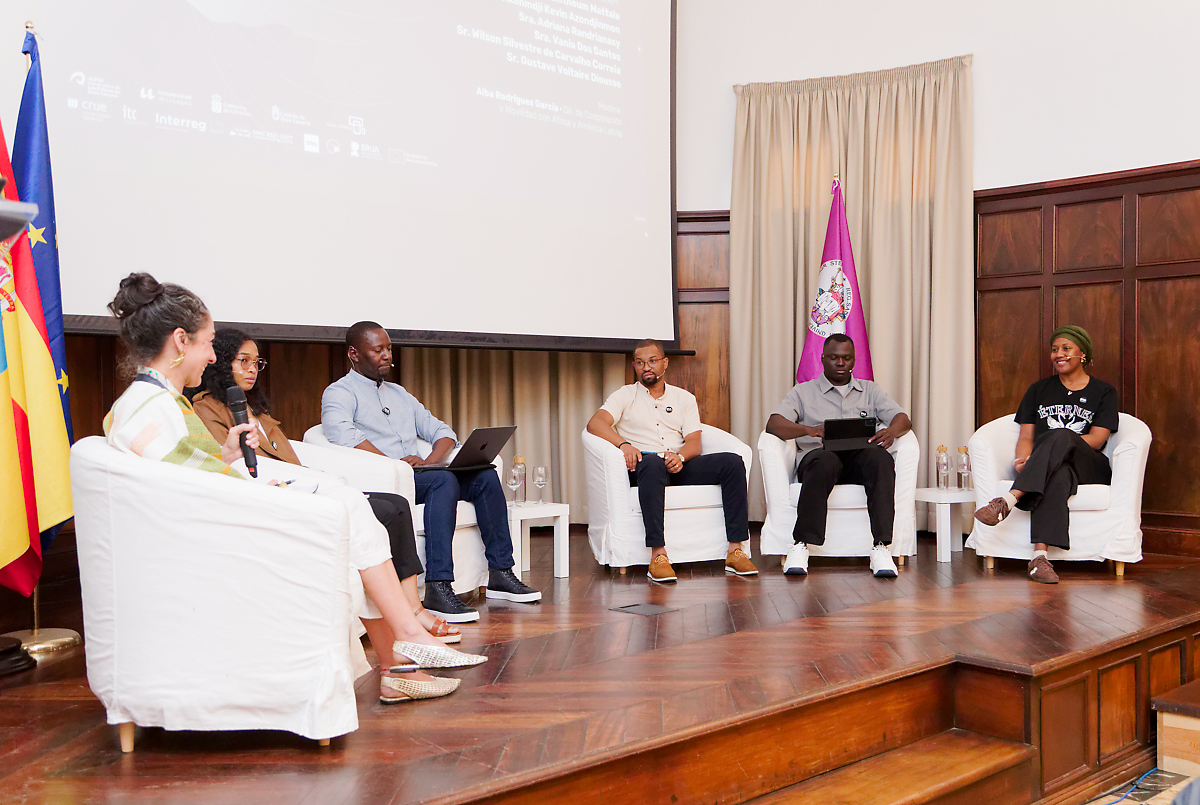
African students trained at the University of La Laguna were the protagonists of the first activity of the program today, May 29. Bridge to Africa at the University of La Laguna. The improvement and expansion of mobility programs, streamlining of certifications, the need for scholarships for training abroad, joint international degrees, and greater investment from local governments were some of the suggestions made by these outstanding students who, although many of them are already integrated into the professional life of their countries of origin, remain linked to this institution.
Today's session began with a brief presentation by the Vice-Rector for Internationalization and Cooperation, Inmaculada González, who endorsed the union of the two universities, stating that they "do not work in isolation from their surroundings and must partner with institutions and businesses." After two years of work, they have a working document that serves as a roadmap for creating a competitive project and submitting it soon to the EU with the ultimate goal of building an academic hub. The hub is intended to have five key areas: institutional and political, commercial, development cooperation, academic and scientific, and finally, cultural and sporting.
Alba Rodríguez, director of international programs at the University of La Laguna, moderated the first debate among African students who have studied at the University of La Laguna, from Cape Verde, Benin, Madagascar, and Senegal. All are fluent in Spanish, as most came from backgrounds in Hispanic philology.
Kevin Azondjnmon, from Benin, is studying for a Master's degree in Tourism Planning. His time at the University of La Laguna has been a turning point: "It has profoundly transformed me. This exchange program has allowed me to develop my listening skills and resilience, enabling a more critical perspective." He emphasized the importance of inter-university academic networks.
Adriana Randrianasy, from Madagascar, noted that her time at the University of La Laguna has been a rebirth for her. “Eighteen years ago, I presented a paper on the Canary Islands, and ever since, I've been eager to come. It's an opportunity for language immersion, and I've fulfilled two dreams: to study here and to work in the cultural field.” In her opinion, the Canary Islands are a laboratory for delving into the world of historical heritage, which is why she doesn't rule out spending more time there.
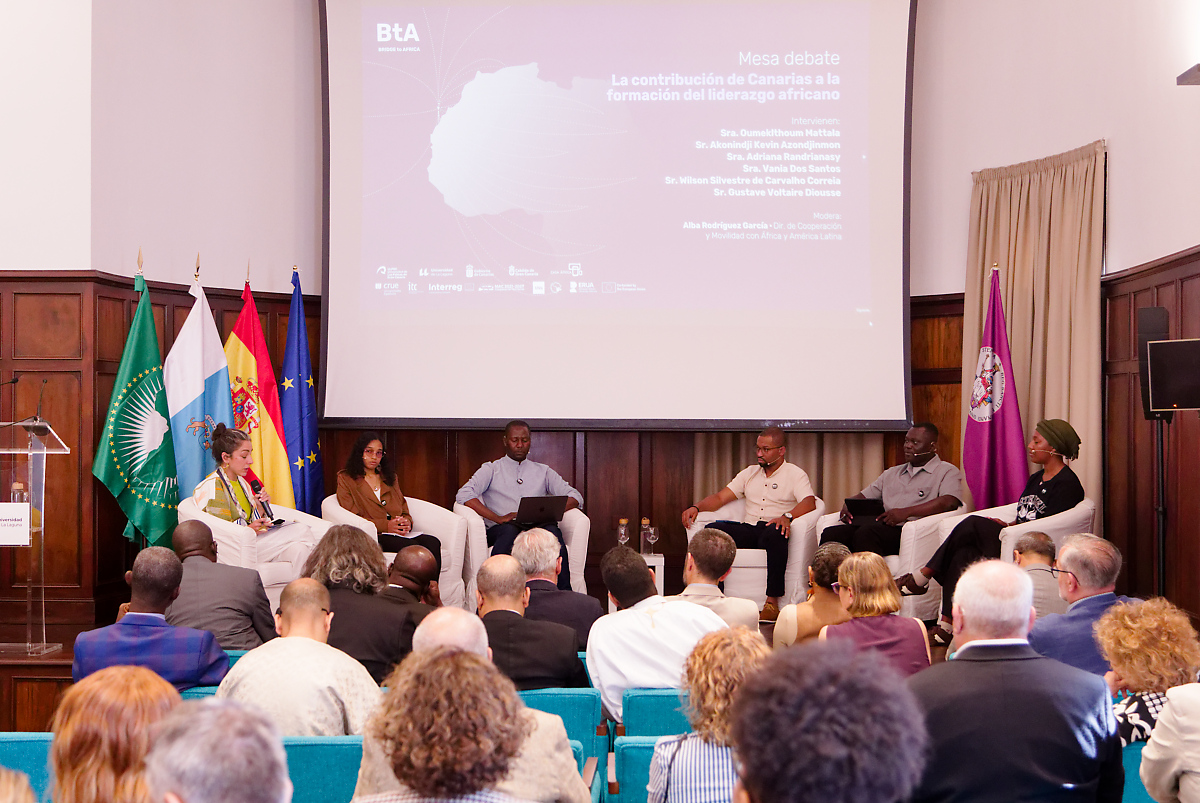 Wilson de Carvalho, from Cape Verde, first encountered the University of La Laguna through his participation in Campus Africa. He had some academic experience in Brazil, where he initially wanted to return, until he landed at the Tenerife center, where he never wanted to leave. He pursued doctoral studies with the researcher Emma Carmelo, He thanked them for all the support he received. He completed his Master's degree in Tropical Diseases at the University of La Laguna and now works at the National Institute of Public Health, but he visits the Canary Islands academic institution every six months, with which he maintains a very close collaboration.
Vania dos Santos, also from Cape Verde, participated in the program. She completed a law degree and then interned at the International Centre for Cooperation on Heritage, based in La Laguna. Many students are interested in this type of training with the aim of restoring cultural heritage looted in their countries of origin as a result of colonization. Bridge to Africa has proven to be a very enriching experience for her, from which she has gained many ideas, and she hopes there will be more editions.
Gustave Diousse, from Senegal, has also had many experiences at the University of La Laguna, where, he says, the welcome he receives gets better every time he returns. Gustave expressed his deep gratitude to the faculty at the university where he also completed his doctoral thesis. In Senegal, he is a university professor, a collaborator with the Cervantes Institute, and an examiner for the DELE program. “For me, Spanish is a tool that allows me to go much further. It has more than just sentimental value.”.
Alba Rodríguez explained that these students are closely connected to the African communities in the Canary Islands, and in fact, they participate in festivals and celebrations with them. Now that they have completed their studies, they continue to collaborate with the University of La Laguna, especially through the faculty with whom they continue to work in their respective fields of study. The moderator also emphasized the importance of better tracking students to more closely monitor their time at our institutions, while advocating for more scholarships to further develop academic networks and opportunities.

 Spanish
 English
 French