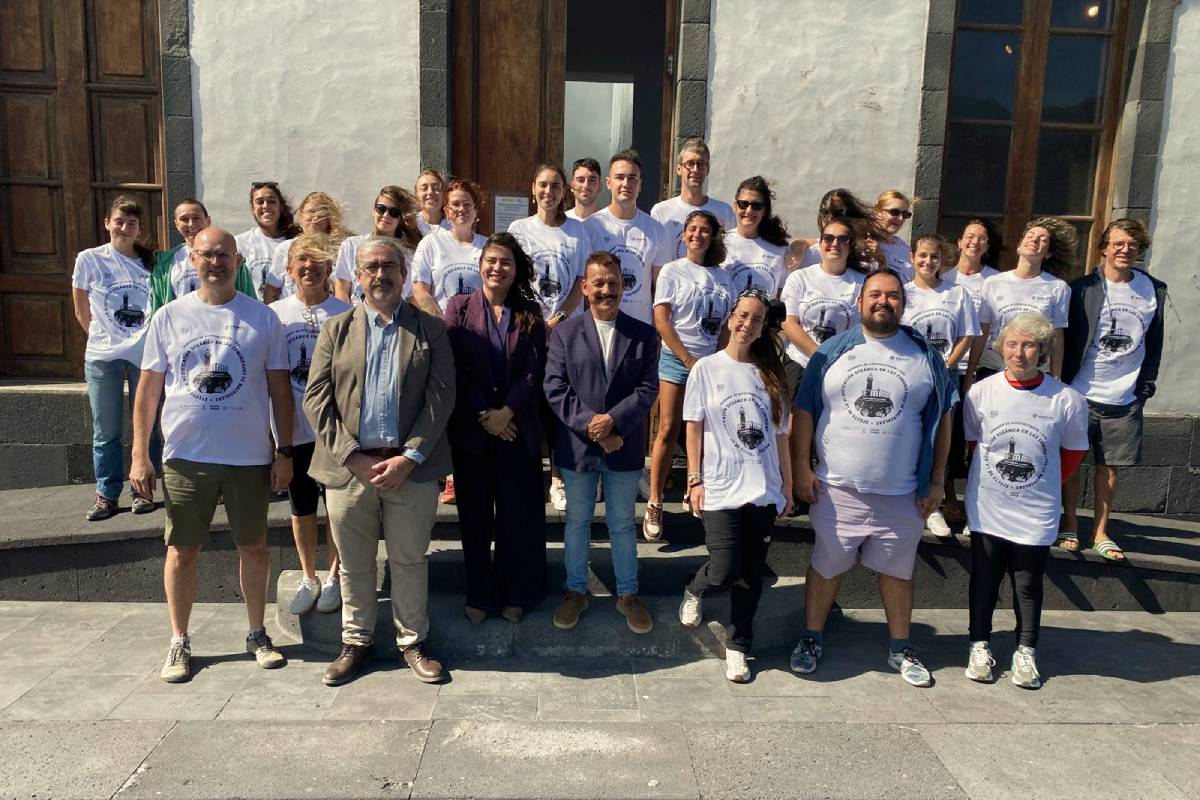
The University of La Laguna today, June 1st, inaugurated the specialized seminar “Biodiversity and Ecophysiology of Macroalgae in the Oceans of the Future: Methods and Techniques for their Study” at the Marine Observatory of Climate Change (OMCC) in Punta de Fuencaliente and the El Charco Nature Classroom in La Palma. Until the 6th, national and international experts, university students, and environmental professionals will analyze how the increase in atmospheric carbon dioxide (CO₂) and ocean acidification affect macroalgal communities and marine biodiversity.
The opening ceremony was attended by the mayor of Fuencaliente, Gregorio Alonso; the Councilor for the Environment, Ecological Transition and the Fight Against Climate Change of the Cabildo of La Palma, Mónica Gómez; and the director of the Secretariat of University Institutes and Publications at the University of La Laguna, Roberto González.
The training has been organized by the research group of Marine Botany from the University of La Laguna, made up of Martha Samson, Carlos Sangil y Daniel Alvarez. This activity includes theoretical sessions, practical workshops, laboratory work and field trips to offer specialized training on marine biodiversity and macroalgae study techniques.
The scientific interest of the course lies in the possibility of working on the natural CO₂ outcrops located in the OMCC enclave, as they are considered unique natural laboratories for analysis in situ The effects associated with increased dissolved CO₂ in seawater. These environments allow us to analyze how variations in carbonate chemistry affect the development, physiology, and distribution of different marine organisms, especially benthic species.
The program includes the participation of researchers from various national and international universities. Among them are Marta Sansón and Julio Afonso-Carrillo., Águeda González, Daniel Álvarez and Carlos Sangil, from the University of La Laguna; Viviana Peña, from the University of A Coruña; Ana Tronholm, from the University of Gothenburg; and Rosa Donadio, from the University of Naples.
The sessions will cover topics related to macroalgae taxonomy and biodiversity, molecular tools applied to their study, ecophysiological approaches used to assess their response to global change, and methodologies used to analyze their productivity and functional status. Sampling will also be carried out at the CO₂ upwellings of Punta de Fuencaliente and La Bombilla.
This activity, organized in collaboration with the Cabildo of La Palma and the Spanish Phycological Society, takes advantage of the unique natural conditions offered by the island of La Palma to study the effects of increased CO₂ in the ocean.

 Spanish
 English
 French