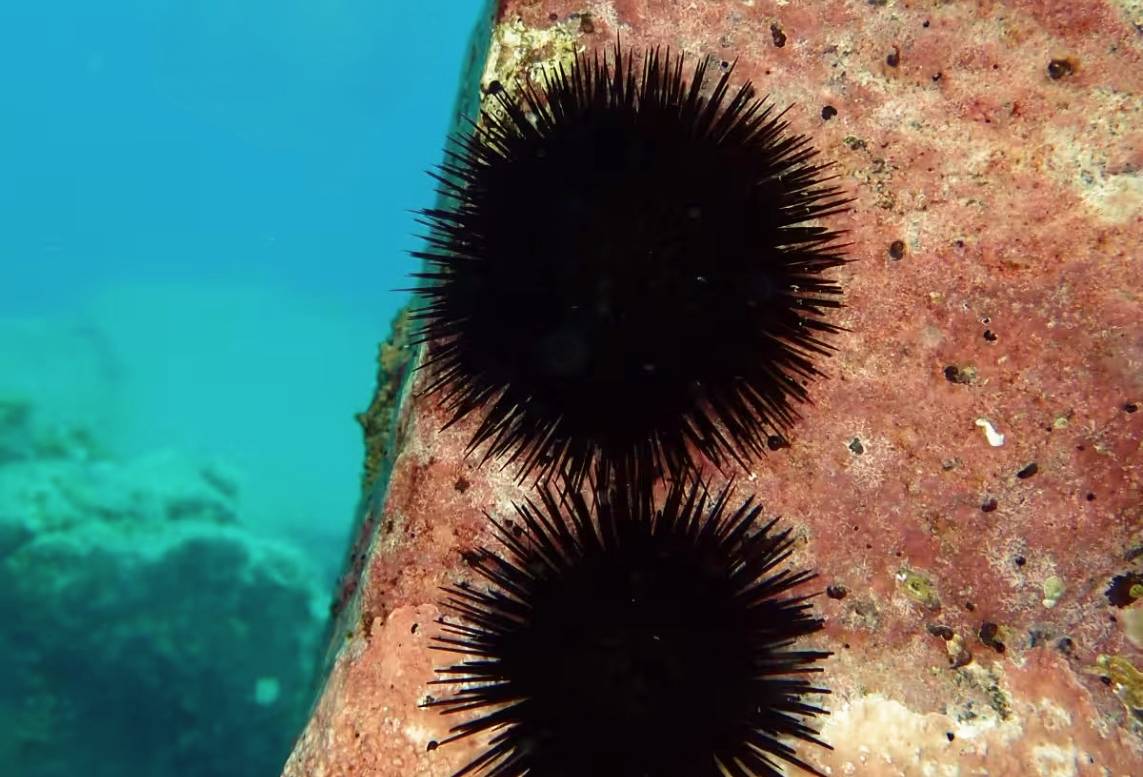
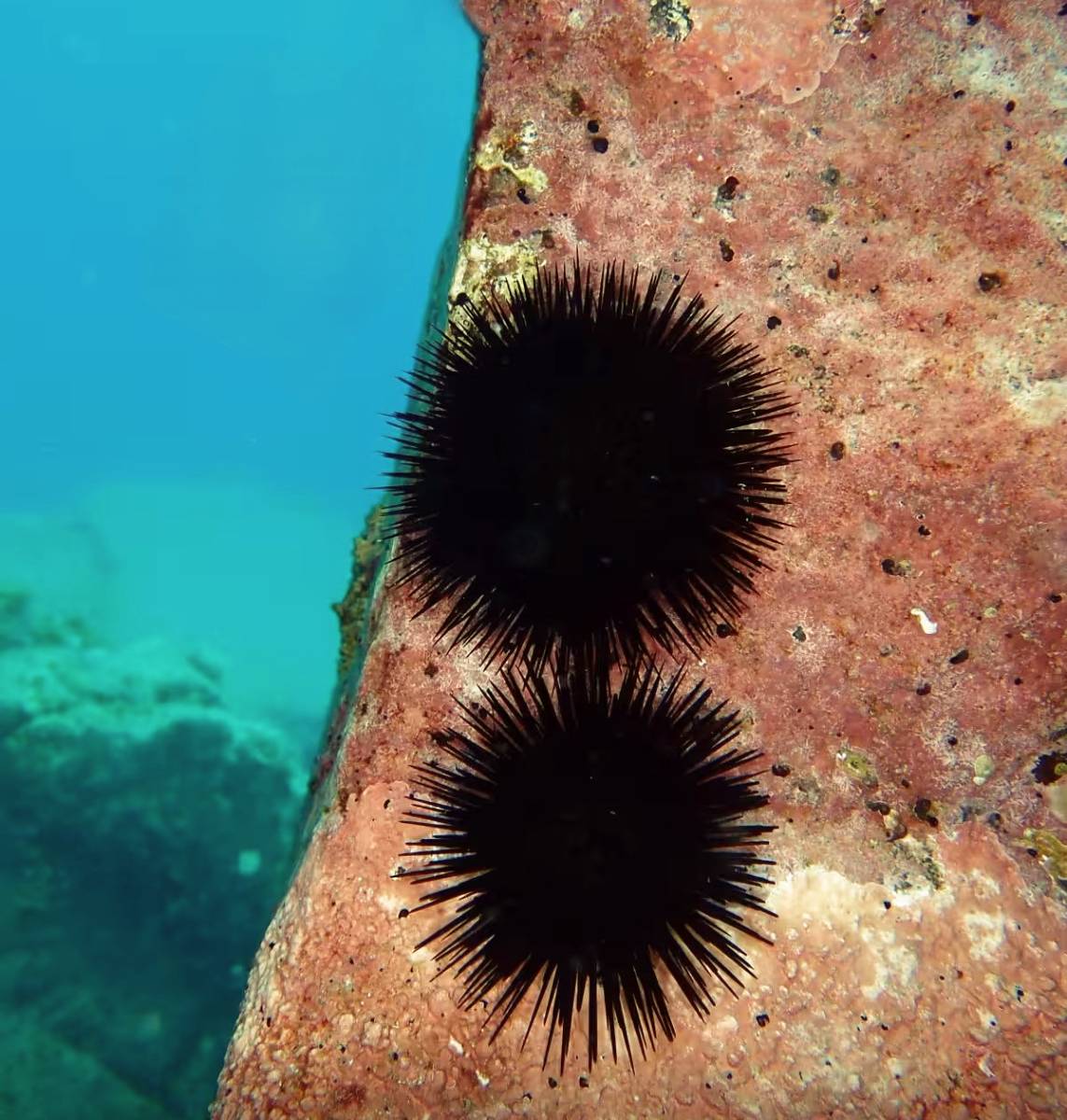
Sea urchins Arbacia Lixula
A research project involving the University of La Laguna has demonstrated for the first time that an animal can transmit certain functional structures from another kingdom of life—in this case, algae—to its offspring. The finding, based on the study of sea urchin larvae, opens the door to a new way of understanding biological inheritance.
The work has been published in the scientific journal PLoS Biology and is part of an international collaboration involving research centers in Germany (University of Kiel) and the United States (University of California San Diego), although the experimental phase was developed at the University of La Laguna, within the framework of Andrés Rufino Navarro's doctoral thesis under the direction of the researcher José Carlos Hernández.
This research aimed to analyze the developmental strategies of marine organisms from fertilization to juvenile stages, in order to determine if certain factors can influence their growth and survival. To this end, the team examined sea urchin larvae. Arbacia lixula They were able to establish symbiotic relationships with photosynthetic cyanobacteria.
However, during microscopic analysis, the team discovered a previously unknown form of interaction between species: the eggs of this sea urchin can integrate certain components of chromoplasts (cellular organelles or plastids present in algae) into their interior. Experiments demonstrated that carotenoid crystals derived from these chromoplasts increase the viability of the larvae, which could help explain the species' wide geographic distribution in the Atlantic Ocean.
From there, the research team analyzed how these components influenced the growth and development of the larvae. The presence of carotenoid crystals led to the hypothesis that their effect might depend on light, so the researchers compared larval development under light and dark conditions.
The results showed that the larvae develop more rapidly and exhibit a 50% higher survival rate thanks to these plastid-derived components. Furthermore, the study identified metabolic effects associated with their presence, such as alterations in fat metabolism and an increase in phytohormone production, processes that also contribute to improved larval survival.
This finding represents the first evidence of plastid DNA in the germ cells of an animal, in this case derived from diatoms, a group of microscopic algae. This international study, whose experimental phase was carried out at the University of La Laguna, concludes that the incorporation of algal-derived structures into sea urchin larvae increases their biological fitness and enhances the species' dispersal capacity in the Atlantic Ocean.

 Spanish
 English
 French