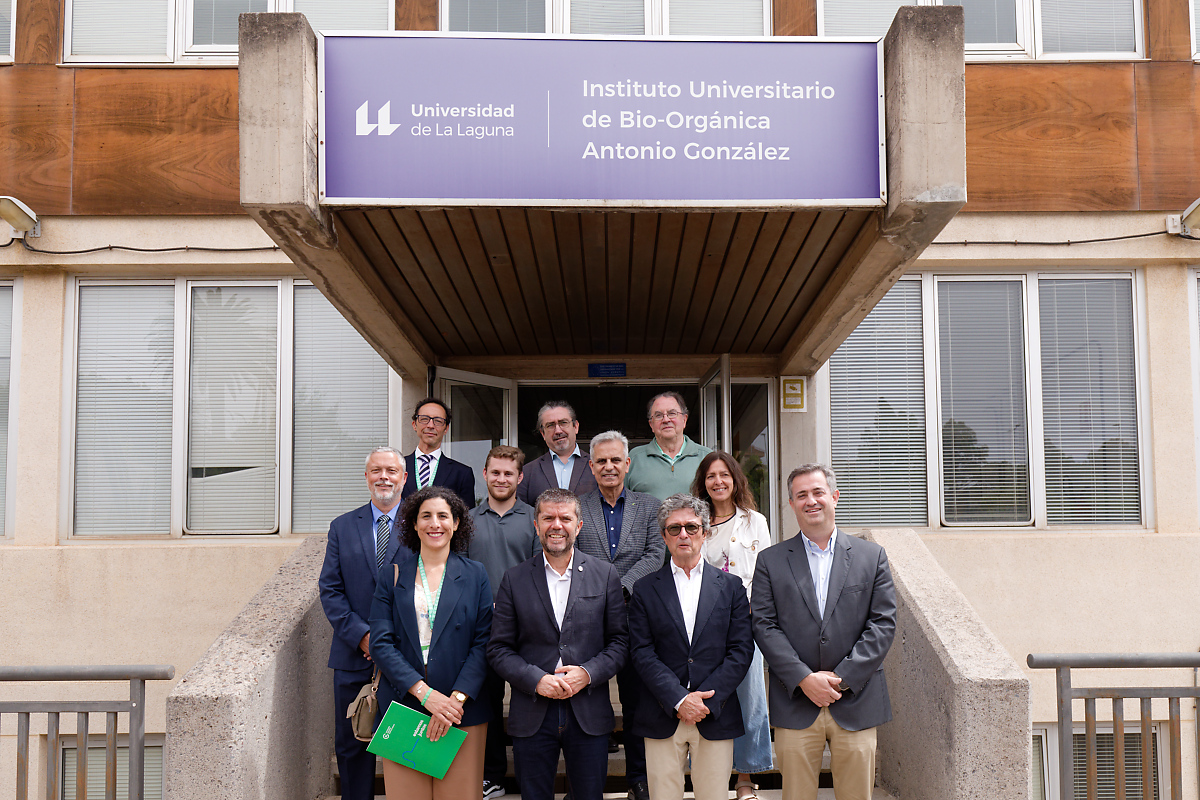
The University of La Laguna received a visit this Tuesday, June 2nd, from a delegation from the Provincial Board of the Spanish Association Against Cancer (AECC) to the Antonio González University Institute of Bio-Organic Science, with the aim of highlighting the collaboration between both entities and the association's support for the development of cancer research projects.
The meeting was attended by the rector, Francisco García, and the director of the Secretariat of University Institutes, Roberto González Zalacaín, on behalf of the University of La Laguna; and, on behalf of the AECC, its president, Andrés Orozco Muñoz; the manager, Ana Belén Prado Prieto; and the members Manuel Javier Barcos Aguilera and Carlos Díaz González, the latter also president of the Official College of Pharmacists of Santa Cruz de Tenerife.
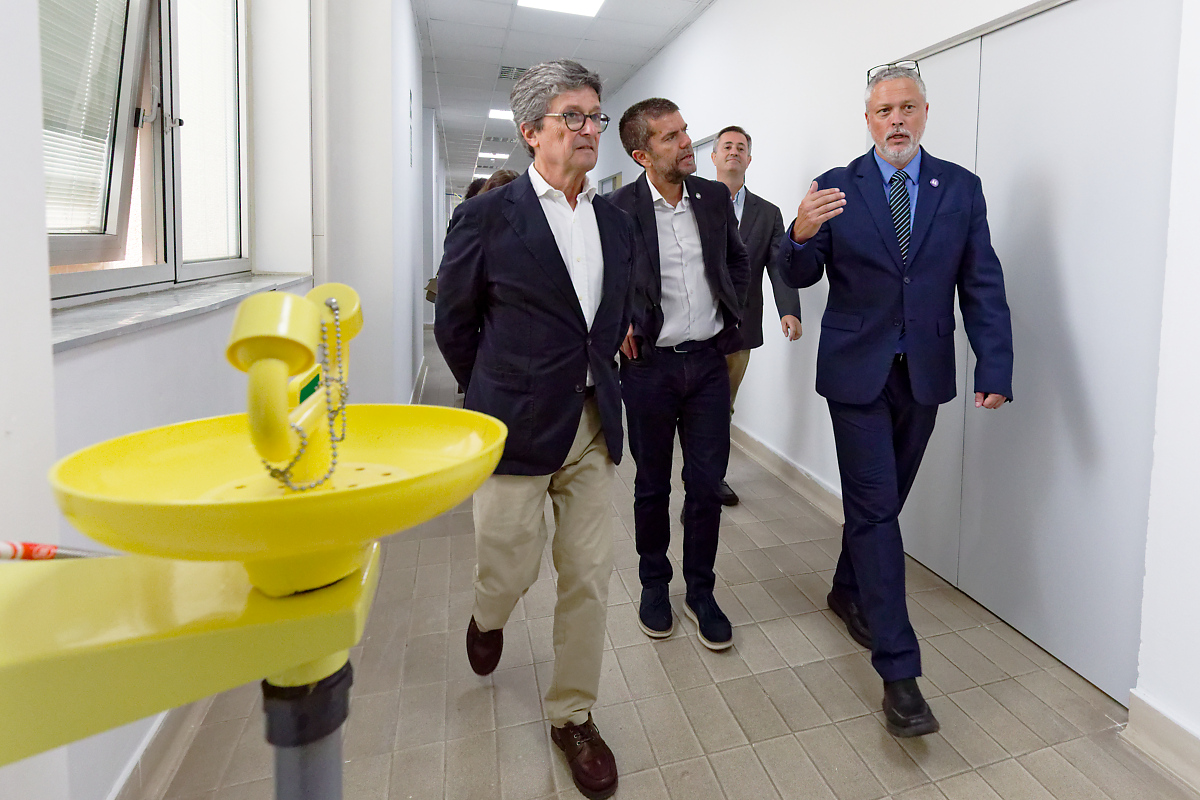
During the meeting, the AECC delegation toured the university institute's laboratories to learn firsthand about its scientific activity, its lines of work, and the projects developed by its scientific staff in the field of cancer research.
The rector emphasized the importance of collaboration between the public university and organizations like the AECC to promote research aimed at addressing major social problems. “Science is the primary answer to the great challenges facing humanity, through rigor and by avoiding simplistic solutions to complex problems,” he stated.
García also emphasized the public service vocation of the research carried out at the University of La Laguna and stressed that “science has a focus, and that is to improve the well-being of society and of those who need it.” In this regard, he thanked the Spanish Association Against Cancer for its commitment to research and its support of scientific talent.
 Predoctoral research
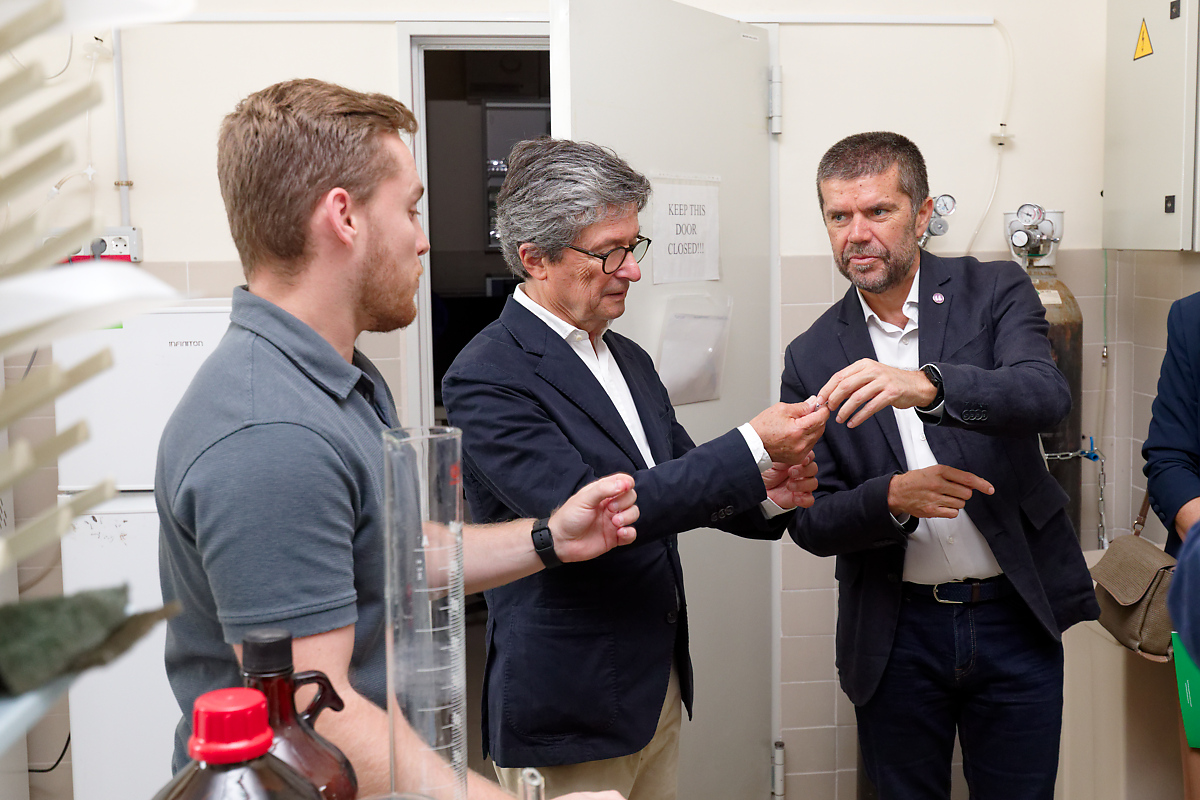
One of the central moments of the day was the presentation by the predoctoral researcher Aday González Bakker, a beneficiary of aid from the association, who presented the progress of the project “Validation of inhibitors of glutamine uptake and metabolism for the treatment of pancreatic ductal adenocarcinoma”.
González Bakker explained the work he carries out within the research group BioLab, His research focuses on finding new therapeutic strategies for difficult-to-treat tumors, especially pancreatic cancer. Specifically, his research analyzes glutamine metabolism in tumor cells with the aim of identifying new vulnerabilities that could become future therapeutic targets.
The predoctoral researcher recalled that his connection with the institute began during his undergraduate and master's studies at the University of La Laguna and highlighted the role the AECC has played in continuing his scientific career. "Thanks to the Spanish Association Against Cancer in Santa Cruz de Tenerife, I am fortunate to have a three-year predoctoral contract to carry out this project validating glutamine metabolism inhibitors," he noted.
Furthermore, he emphasized the importance of preclinical research as a starting point for advancing towards new therapeutic solutions. “We are in the first stage, but if we don't carry out this phase, we will never have candidates that can reach the clinic and have an impact on potential treatments,” he explained.
The director of the university institute, José Manuel Padrón, opened the round of interventions by highlighting the work developed in the institute and the importance of bringing the scientific activity carried out in its laboratories closer to entities that support research.
For his part, the president of the Provincial Board of the Spanish Association Against Cancer, Andrés Orozco Muñoz, praised the work carried out by the research staff and the need to guarantee resources that allow these projects to continue. “If there is no research, it's not that there is no life, it's that there isn't even hope for life,” he stated.
Orozco also highlighted the association's role in supporting science and noted that the AECC currently maintains around 800 research projects with the participation of nearly 3,000 researchers. "We are the private institution that invests the most in science, and we have this focus on research because we believe it is important and necessary," he pointed out.

 Spanish
 English
 French