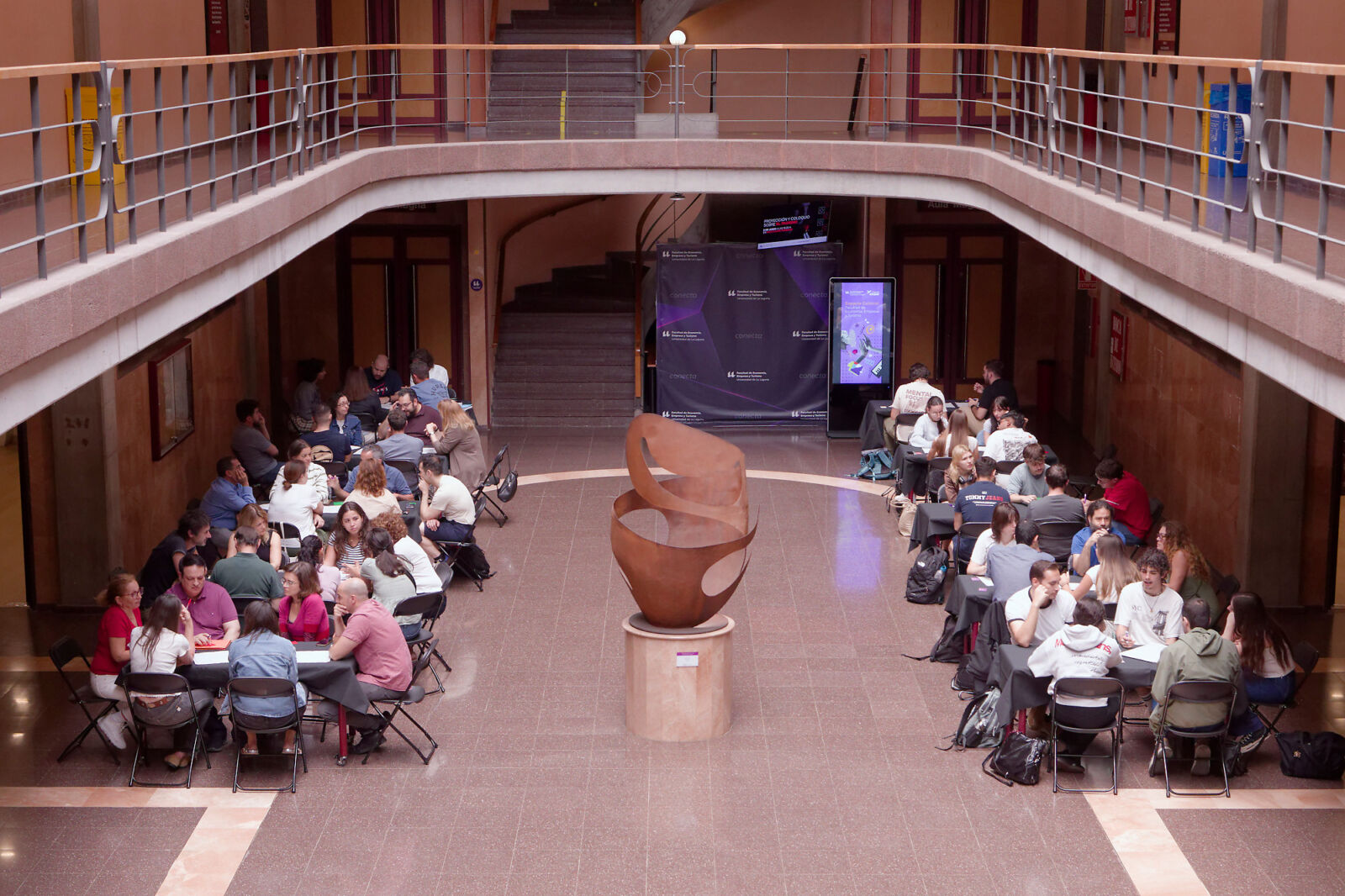
The Faculty of Economics, Business and Tourism of the University of La Laguna held this week the conference “Rethinking the Educational Experience: In-Person Learning and Assessment Under Debate”, integrated into the institutional cycle Conecta Campus Guajara and which brought together teachers and students in a horizontal forum aimed at analyzing the tensions of the current educational system and co-creating practical solutions for the classrooms.
During the opening, the Vice-Rector for Teaching, José Manuel García Fraga, emphasized the impact of this issue, noting that it is a challenge shared by all Spanish universities. The event, which was attended by more than 50 people, half students and half faculty, was led by Professor [Name Missing]. Tamara González González, from the Department of Business Management and Economic History and Vice Dean of Students and Employability of the faculty, co-coordinated by postgraduate student Rocío Do Nascimento Santamaría.
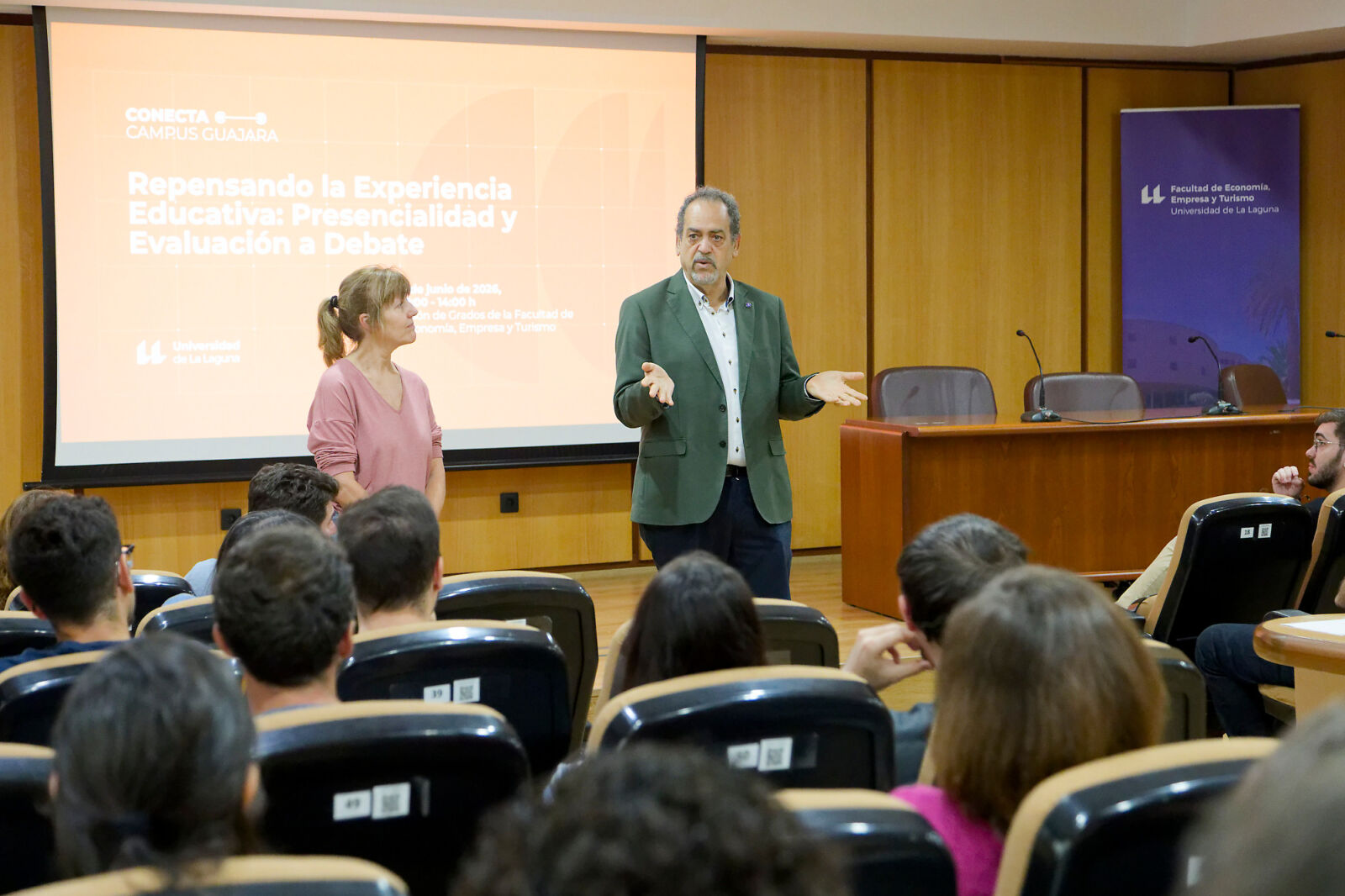
The dean of the faculty, Inés Ruiz, and the vice-rector of Teaching, José Manuel García.
The meeting was structured as a participatory diagnostic process, building upon an internal investigation that compiled 45 qualitative analysis forms. These forms were developed in separate, independent phases (by students and faculty) and in mixed phases of joint discussion. One of the process's conclusions is that the university community does not reject in-person learning, but rather the passive lecture model. The data from the integrated report show complete agreement between faculty and students: teaching that merely reproduces presentations or texts in PDF format already available in the virtual classroom eliminates the incentive to attend.
“The in-person classroom must be redefined as a space for exchange, interpretation, and collective construction, and not merely as an obligation to sit still,” the organizers of the event emphasized. Logistical factors such as transportation difficulties and work conflicts also contribute to absenteeism, but transforming classroom dynamics is emerging as the primary solution.
The second major section of analysis addressed current assessment systems. Although there is an absolute and widespread preference for continuous assessment, the session highlighted the rigidity of current practices, which often result in fragmented rather than continuous evaluation. The excessive use of multiple-choice tests and the lack of elimination criteria in midterm exams lead to a disproportionate workload for students, which does not always encourage critical thinking.
Among the improvement proposals that will be submitted to the corresponding institutional bodies, the request to modify the evaluation and grading regulations of the University of La Laguna stands out, in order to make the criteria more flexible, give more weight to applied projects, oral presentations and teamwork, and ensure that the exam formats maintain strict consistency with the tools used in day-to-day teaching (such as avoiding paper exams when practice has been carried out using computer support).
The key outcome of this day of open discussion was the drafting of a ten-point plan of concrete actions aimed at combating mutual apathy and connecting academic content with the realities of the workplace. The mixed debate highlighted innovative proposals such as the constructive use of artificial intelligence in learning and the importance of raising student awareness about the true cost of public university services to strengthen civic engagement.

 Spanish
 English
 French