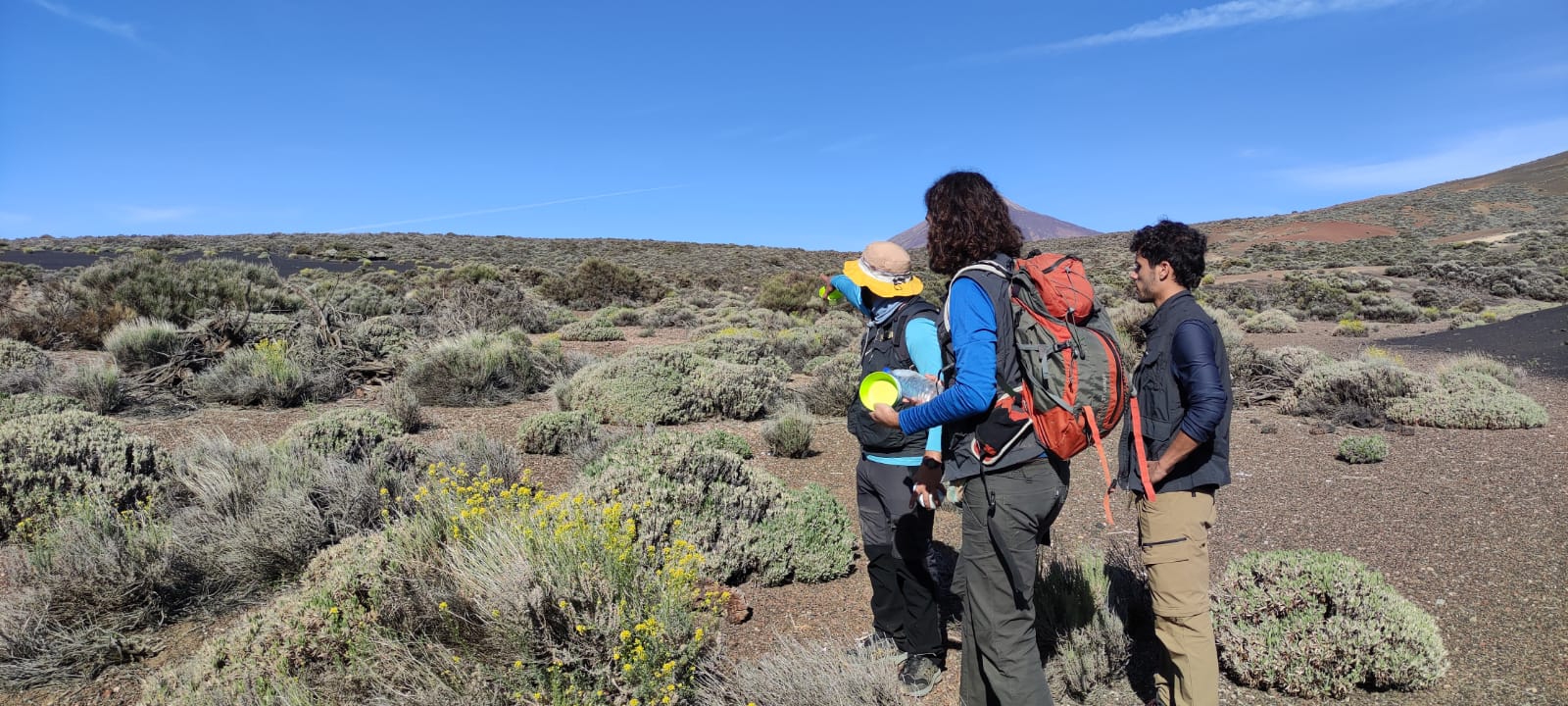
Researchers from the University of La Laguna have analyzed the impact of climate change on arthropod biodiversity in Teide National Park and warn of a process of faunal homogenization. The study, led by Nuria Macías Hernández y Carlos Ruiz Carreira, The study, conducted by the Systematics, Biogeography and Evolution of Arthropods of the Canary Islands research group, has consisted of a comparative analysis of the arthropod biodiversity of the Park compared to that sampled 30 years ago.
This work is part of the project “Extinctions at the Summit: Impact of Climate Change on Arthropod Biodiversity in Teide National Park,” funded by the 2022 Research Projects Call of the CajaCanarias Foundation and the “la Caixa” Social Welfare Foundation, in collaboration with Gesplan, and recently concluded after three years of research. Some of its results have been published in the journal Biodiversity Data Journal.
The project arose with the aim of replicating the standardized sampling carried out in the 1990s by Professor Pedro Oromí, in order to compare and analyze the changes occurring in the arthropod fauna of Teide National Park, one of the most unique high-mountain ecosystems in Europe. To this end, an intensive sampling campaign was conducted between 2024 and 2025, reproducing the original protocols in 12 representative locations within the Park, selected for their diverse habitats and environmental conditions, and combining different capture and observation techniques. An analysis of the impact of climate change was also performed to establish possible relationships between the decline of arthropod communities, rising temperatures, and vegetation transformation in the studied areas.
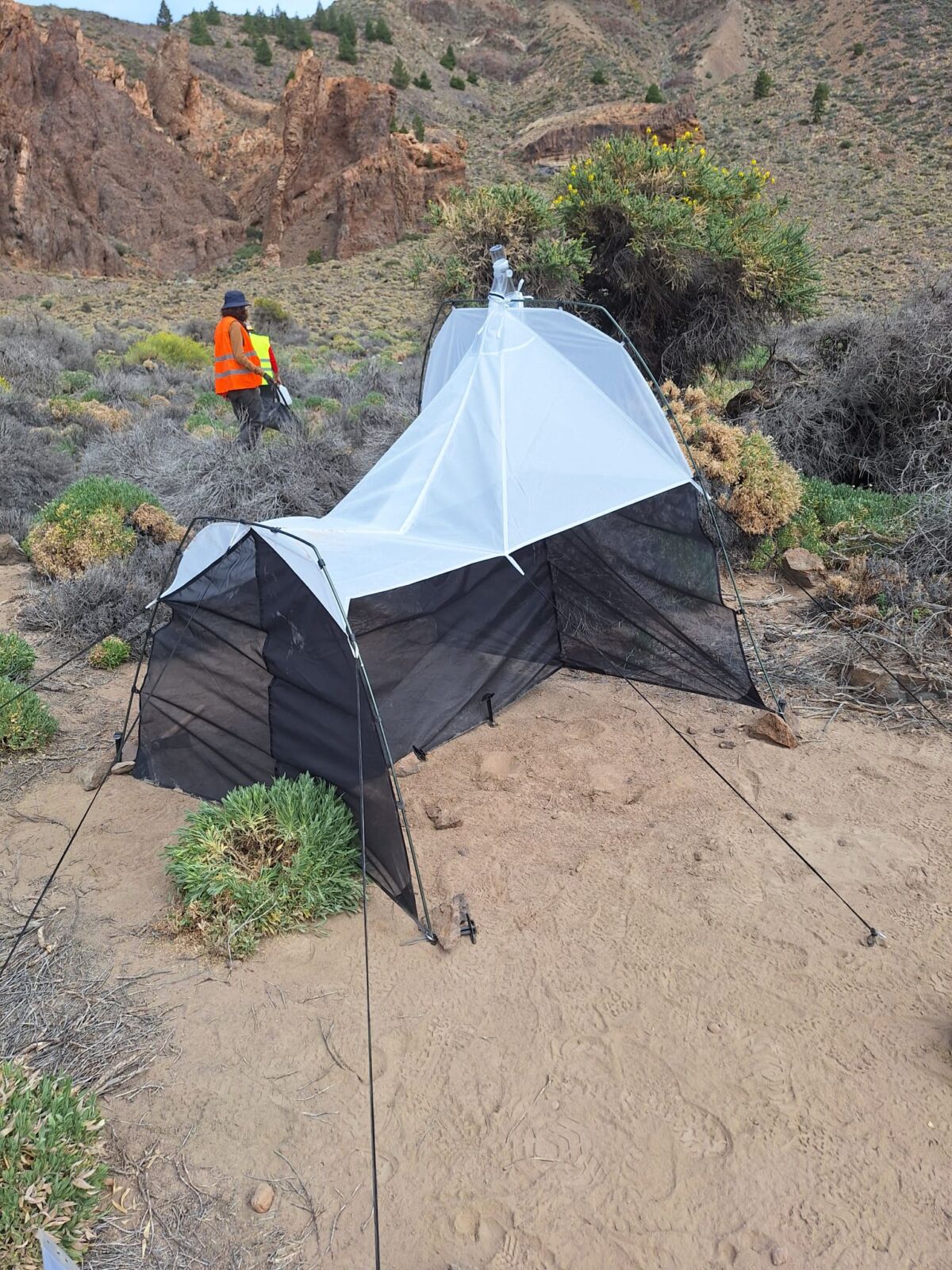 Nuria Macías highlights that the study has yielded several significant results. Firstly, in terms of diversity, a high biological richness of arthropods was observed, with more than 21,000 individuals recorded and more than 500 taxa identified. The researchers also emphasize the discovery of 57 species not previously recorded in the National Park.
However, when comparing these data with those obtained three decades ago, a decrease in species diversity and changes in population structure, tending towards homogenization, are observed. This decline does not affect all groups equally: insects of the orders Diptera (flies and mosquitoes) and Hymenoptera Bees, wasps, and ants are among the most affected. The data show not only the loss of certain species, but also processes of replacement and a growing trend toward faunal homogenization. Daniel Suárez, also a participant in this project, points out that these patterns indicate a loss of uniqueness among the analyzed plots.
In addition, vegetation surveys were conducted using the same methodology as Oromí and his collaborators. The results confirmed notable changes in plant composition, with a decrease in broom and an increase in species such as the mountain rose. They indicate that these transformations, along with rising temperatures, may be contributing to the observed changes in arthropods.
In addition, DNA barcoding was carried out on groups such as spiders, beetles, and pollinators to create a reference genomic library. The goal of this effort is to progressively advance the creation of a database that compiles the genetic information of the species present in the Park. This approach has already allowed the identification of cryptic species—that is, those that are morphologically identical or very similar, but genetically distinct and isolated from one another, as researcher Carlos Ruiz explains.
Another advantage of sequencing these taxonomic groups is that it allows for the analysis of their evolutionary history, known as phylogenetic diversity, and their functional diversity over the last 30 years. The researchers emphasize that many of these invertebrate species, largely endemic, play essential roles in their ecosystems and form complex ecological networks. Therefore, the objective was not only to determine how many arthropod species inhabit Mount Teide, but also to understand whether their roles in nature have changed. Daniel Suárez points out that there have been no significant changes in these two components of diversity, suggesting that species replacement has not occurred.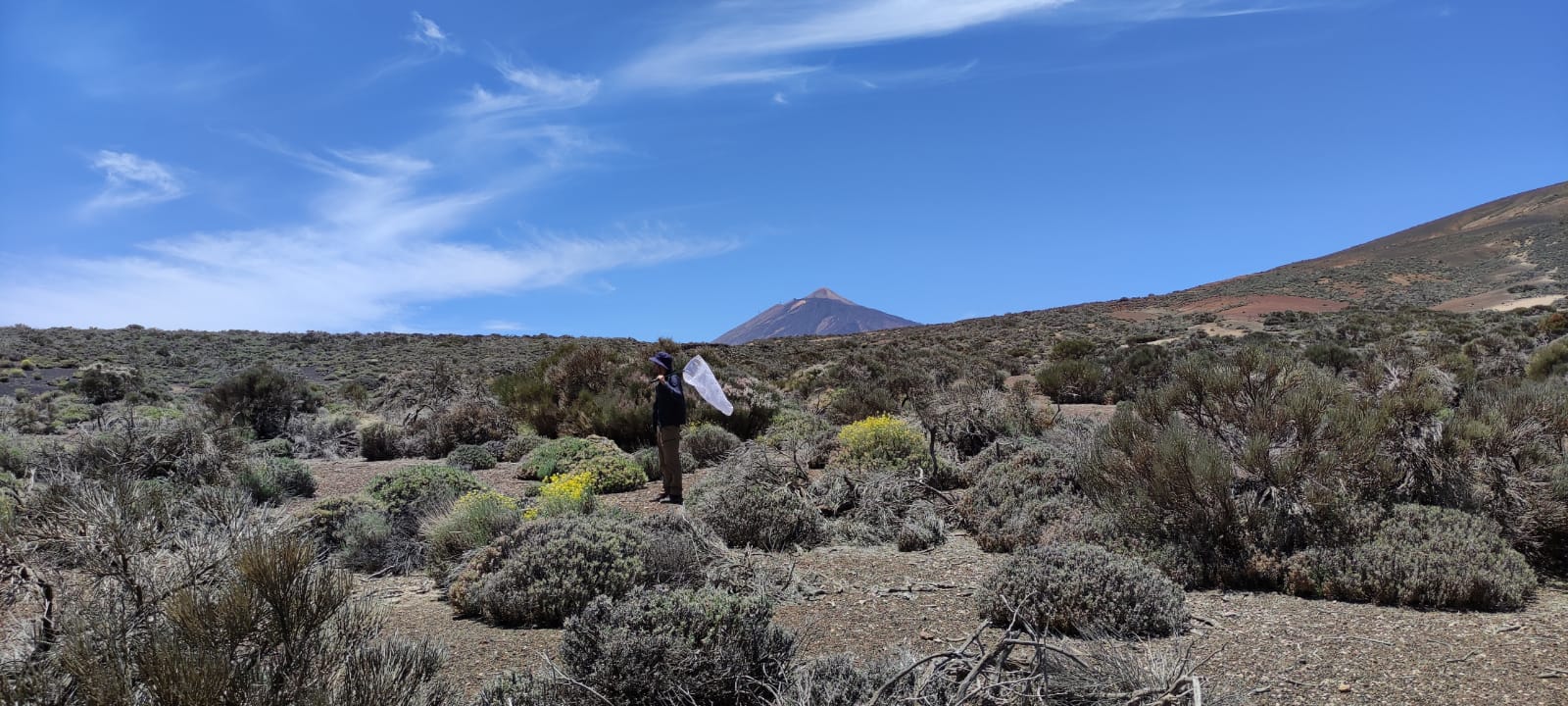 has not led to substantial modifications in ecological functions or in the evolutionary history of communities.
The researchers add that these findings highlight the vulnerability of island mountain ecosystems, which act as biological refuges against global warming. The lower diversity observed among the different sampling points in the 2020s points to a loss of the spatial beta-diversity characteristic of high-mountain gradients. Furthermore, the analyses identify temperature and precipitation as the main factors explaining these changes.
On the one hand, the increase in minimum temperatures appears to favor the arrival of species from lower elevations, which could increase the total number of species. On the other hand, the increase in average temperature has a negative effect by reducing biodiversity. Annual precipitation also emerges as a key factor in determining which species can persist in this drier environment, as it directly influences the survival of their populations.
Taken together, the evidence of these structural changes in the insect fauna highlights the need to implement long-term biological monitoring programs, as well as to update conservation strategies, with the aim of mitigating biodiversity loss and preserving ecosystem functions in this important biodiversity hotspot.

 Spanish
 English
 French