The Adeje Summer University, The event, which will take place from July 6 to 10, dedicates a significant portion of its program to reflecting on culture and heritage as tools for understanding the present and shaping the future of the Canary Islands. Through three courses and a workshop, the initiative will address topics related to agri-food heritage, transatlantic literature, interpreting the territory through hiking, and the performing arts linked to literary adaptation, highlighting key elements of the archipelago's cultural identity.
The programs are aimed at students and professionals in fields such as culture, education, tourism, and heritage, as well as anyone interested in deepening their understanding of Canarian culture. The courses combine in-person and online learning and offer a certificate recognized for ECTS credits, while the workshop provides a practical and participatory approach to the content. Registration can be completed through the Adeje Summer University website and the [website/platform name - context needed]. University of La Laguna.
Agri-food heritage and literature
The course will take place on July 6th and 7th. “Canary Islands agri-food heritage: science, territory and tradition”, a proposal that invites reflection on the importance of products,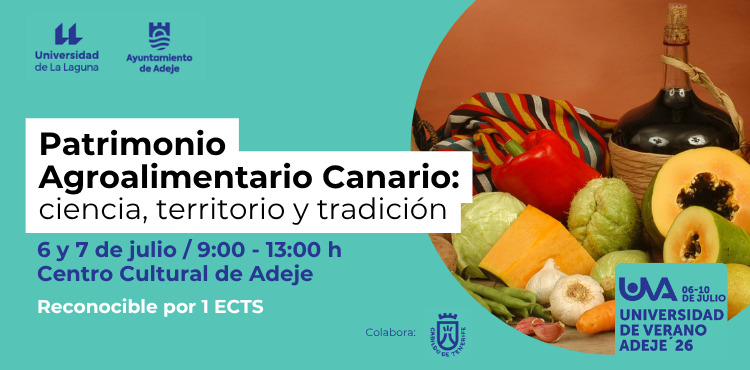 knowledge and practices linked to the primary sector as an essential part of the cultural heritage of the Islands.
The training will analyze the relationship between tradition, innovation, and sustainability, addressing the role that agri-food systems play in shaping the landscape, economy, and identity of the Canary Islands. Furthermore, it will offer a multidisciplinary perspective on the current challenges of conserving and enhancing this cultural heritage.
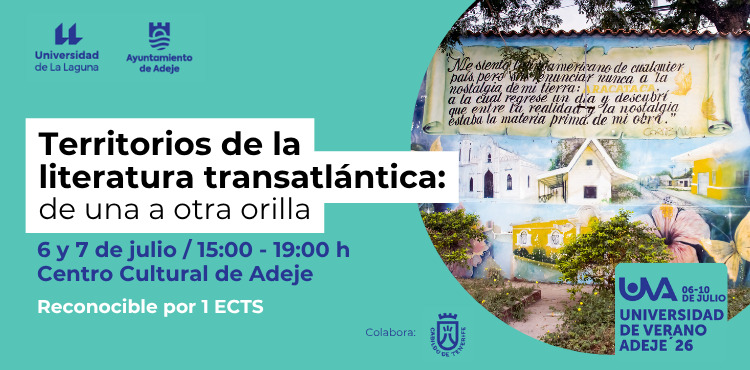
The cultural and literary dimension of the program will be represented by the course “Territories of transatlantic literature: from one shore to the other”, which will take place on July 6 and 7.
The proposal will explore the historical and cultural ties that bind the Canary Islands to other Atlantic territories, especially Latin America, through literary creation. Students will be able to delve into the connections established by migration processes, cultural exchanges, and shared experiences on both sides of the ocean, analyzing how these elements have contributed to shaping different literary imaginaries and discourses.
 Chess and astrotourism
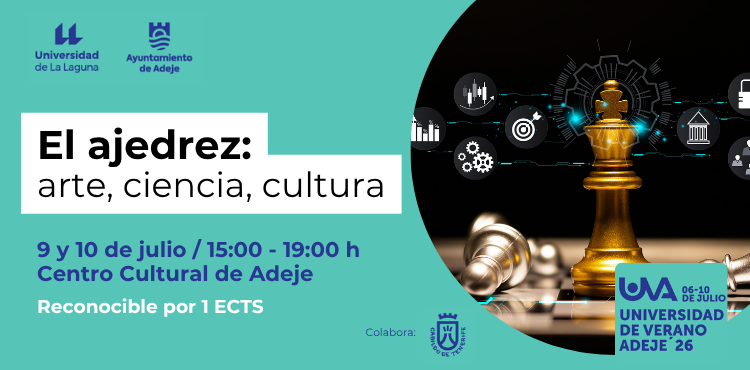
The course “Chess: art, science and culture”, The event, which will be held on July 8, proposes an approach to chess as a cultural phenomenon that transcends its recreational or sporting dimension.
The training will address chess as an educational tool, as an artistic expression, and as a space for developing strategic and creative thinking. Through different approaches, the course will analyze its presence in history, culture, and society, as well as its potential as a pedagogical and cultural resource in various fields.
The course “Creating astrotourism experiences with telescope operation” It will take place on July 8 and 9 and proposes an approach to the night sky as a cultural, scientific and tourist resource of high value for the Canary Islands.
The training will focus on developing astrotourism experiences linked to the local area, emphasizing the interpretation of the sky as part of the natural heritage and the possibilities it offers for creating sustainable and distinctive tourism products. In addition, students will learn the basic use of telescopes and astronomical observation tools applied to outreach and tourism experiences.
Hiking and heritage
The workshop will take place on July 6th. “Hiking and heritage interpretation: what the paths tell us”, an activity that proposes to discover the territory from an integrated perspective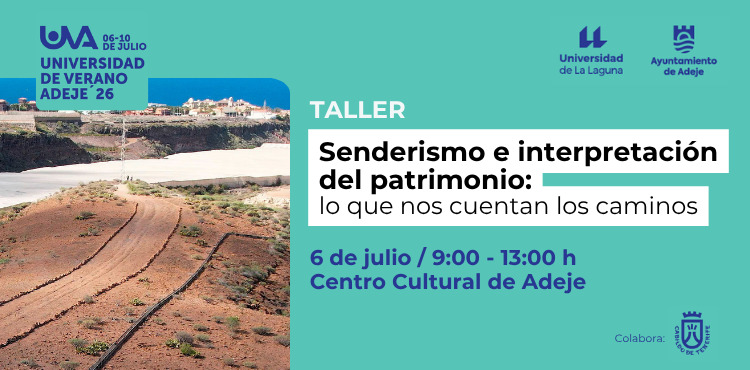 Nature, history, and culture. Through a journey through different areas, participants will learn to identify heritage elements present in the landscape and understand the importance of trails as part of the collective memory and historical development of communities. The initiative presents hiking as a tool to promote knowledge and conservation of the environment.
With this set of proposals, the Adeje Summer University reaffirms its commitment to promoting culture and highlighting heritage as tools for knowledge, participation, and social cohesion. The program invites participants to rediscover the Canary Islands from different perspectives, connecting territory, memory, and identity through educational experiences that combine reflection, creativity, and learning.

 Spanish
 English
 French