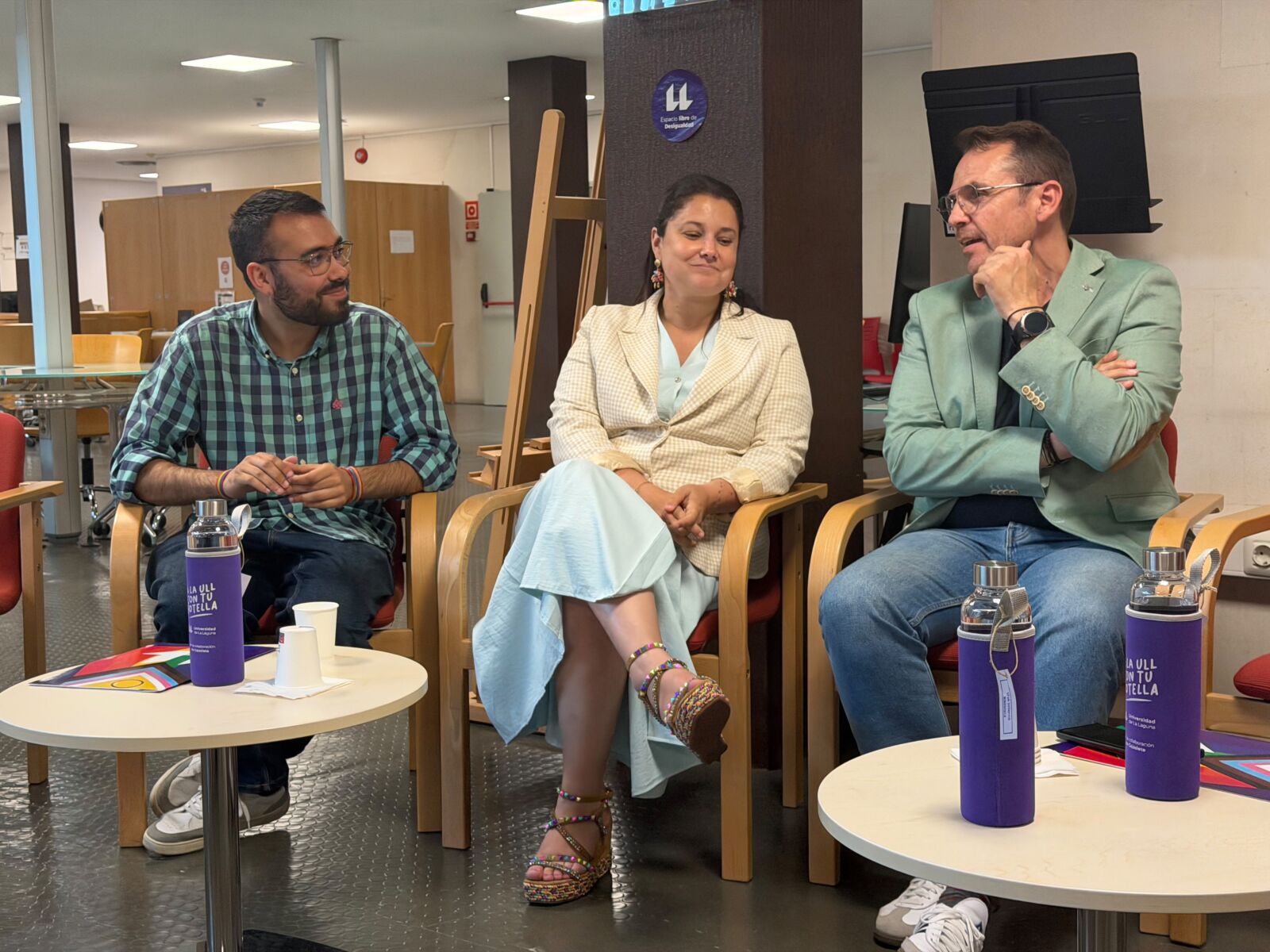
The Equality Space of the General Library of the University of La Laguna hosted a day in commemoration of LGBTIQA+ Pride yesterday, June 29, which served as the final activity of the Certificate of Specific Training in LGBTIQA+ Diversity, which has been developed in its first edition in the current academic year as a joint initiative of this teaching center, the University School of Nursing Nuestra Señora de la Candelaria (EUENSC) and the Island Council of Tenerife.
 The presentation of the day was given by the island director of Equality and Diversity of the Cabildo, Patricia León Pérez, who was accompanied by the director of the EUENSC, Francisco Castro, and the director of the LGBTIQA+ Diversity Cultural Classroom of the ULL, Sergio Siverio, the latter being responsible in turn for the academic co-direction of the aforementioned course.
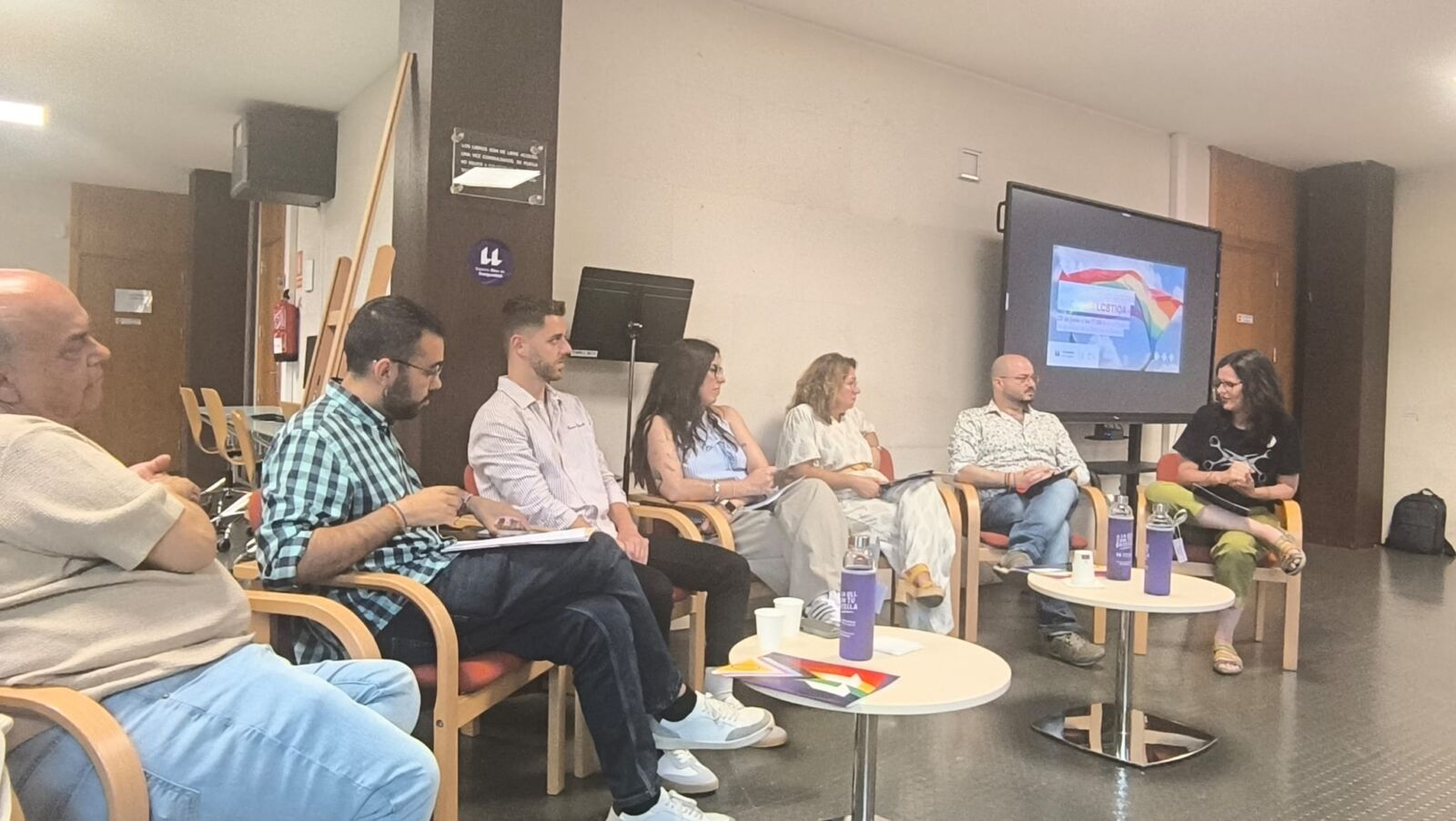
The centerpiece of the day was a round table with a representation of the teaching staff who taught in the various training itineraries of the own degree, such as the professor of Social Work of the University of Las Palmas de Gran Canaria Alejandro Hernández, the political scientist and equality agent Ana Román, the professor of Social Psychology of the ULL Dolores Morera, the professor of the EUENSC Jesús García, the co-educator and advisor in public policies on equality Kika Fumero and the professor of Spanish Philology of the ULL José Antonio Ramos.
The interventions were able to address in a cross-cutting and intersectional way the main challenges of the LGBTIQA+ community in the various disciplines in which the speakers were specialists, with the aim of focusing on some of the fundamental elements of the university micro-credentials that make up the Certificate of Specific Training in LGBTIQA+ diversity.
The faculty members participating in the event, as well as the authorities present, agree on the positive assessment of the specialized degree program that has started this academic year as a pioneering initiative that responds to the Island Strategic Framework for Attention to LGBTIQA+ Diversity and the current university regulations in this area. For this reason, they consider it essential to promote a second edition to propose improvements and, above all, to continue offering society quality and interdisciplinary university training in matters of sexual, family and gender diversity.

 Spanish
 English
 French