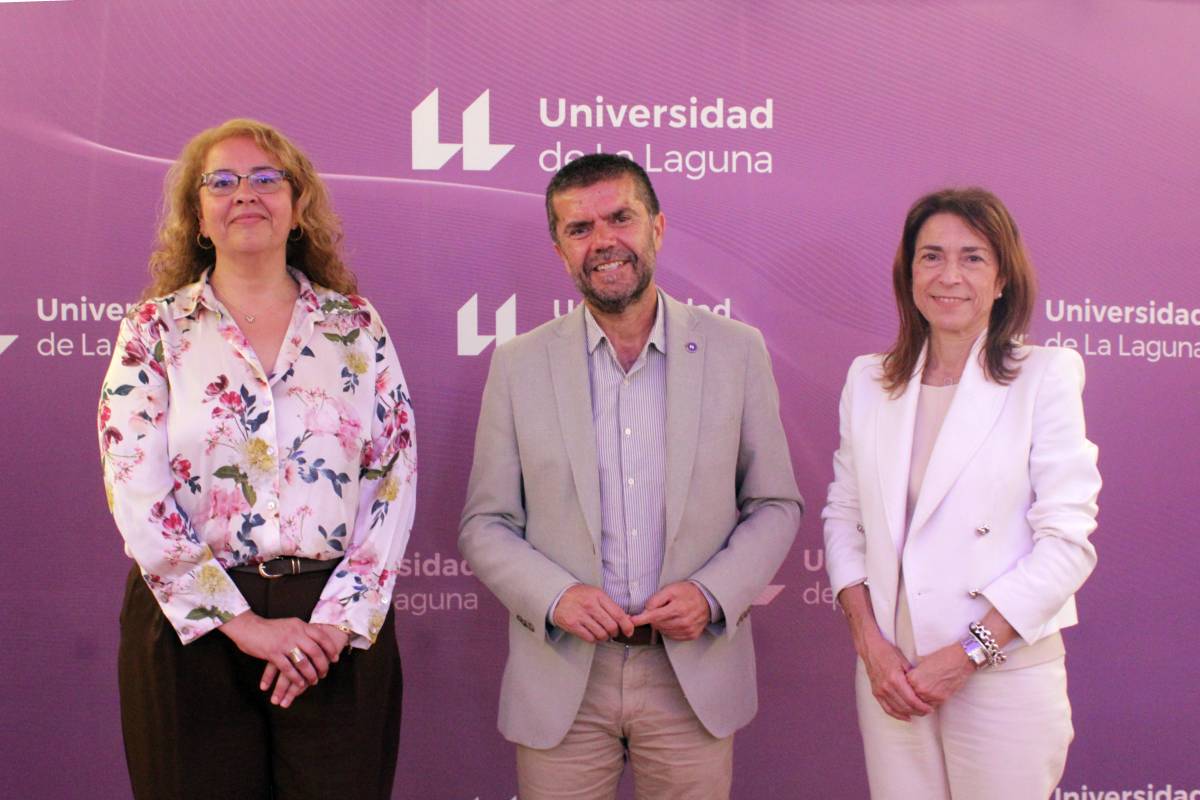
The rector of the University of La Laguna, Francisco García, and the president of the Association of Social Integration Companies of the Canary Islands (ADEICAN), Eugenia de León, have signed today, June 30, a general collaboration protocol that will allow, among other things, the academic center to advise on the design of the training pathways of the almost twenty entities that make up this group.
This is one of the conclusions derived from this agreement, which provides for collaboration in research, knowledge transfer and social innovation, with the aim of promoting the employability of people exposed to vulnerability or social exclusion who are part of the staff of these organizations.
Social enterprises are non-profit organizations whose beneficiaries are groups generally excluded from the mainstream labor market. These often include people receiving minimum income support, migrants, women who are victims of gender-based violence, people experiencing homelessness, former inmates, and former drug addicts undergoing a documented rehabilitation process.
These types of companies operate in a multitude of sectors, from cleaning and gardening, elderly care, call centers, graphic design or parking management, etc., and all of them have specialized personnel in monitoring these processes, hence they are ideal professional destinations for people graduated in education, labor relations, social work or economics.
Therefore, these types of entities that are part of ADEICAN require professional profiles for the development of training models in personal and professional skills, strategies for labor reintegration, innovative methodological tools in the execution of the aforementioned itineraries in a personalized way, while it is necessary to observe their application, monitoring indicators and results.
The agreement also includes the possibility of collaboration in the creation of guides and educational materials that serve as technical, social and psychological support and the access of university students to the reality of social enterprises and, more generally, to the intricacies of the social economy.

 Spanish
 English
 French