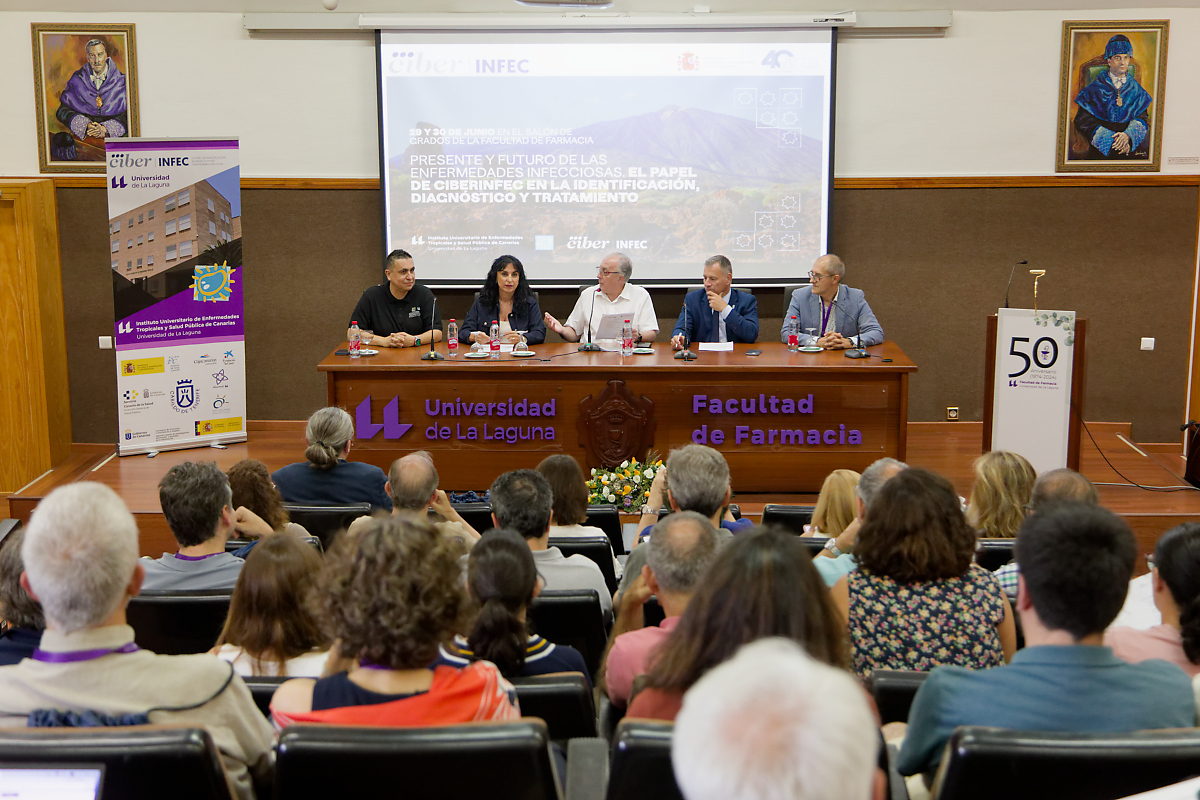
CYBER It is a state-run public consortium promoted by the Carlos III Health Institute and the Ministry of Science, Innovation and Universities that fosters Spanish biomedical research with a collaborative approach and covers thirteen different specialties. One of these branches, corresponding to infectious diseases (CIBERINFEC), meets at the University of La Laguna since yesterday, Monday, June 29, to discuss the present and future of these pathologies, and to determine the role of this network in their identification, treatment and diagnosis.
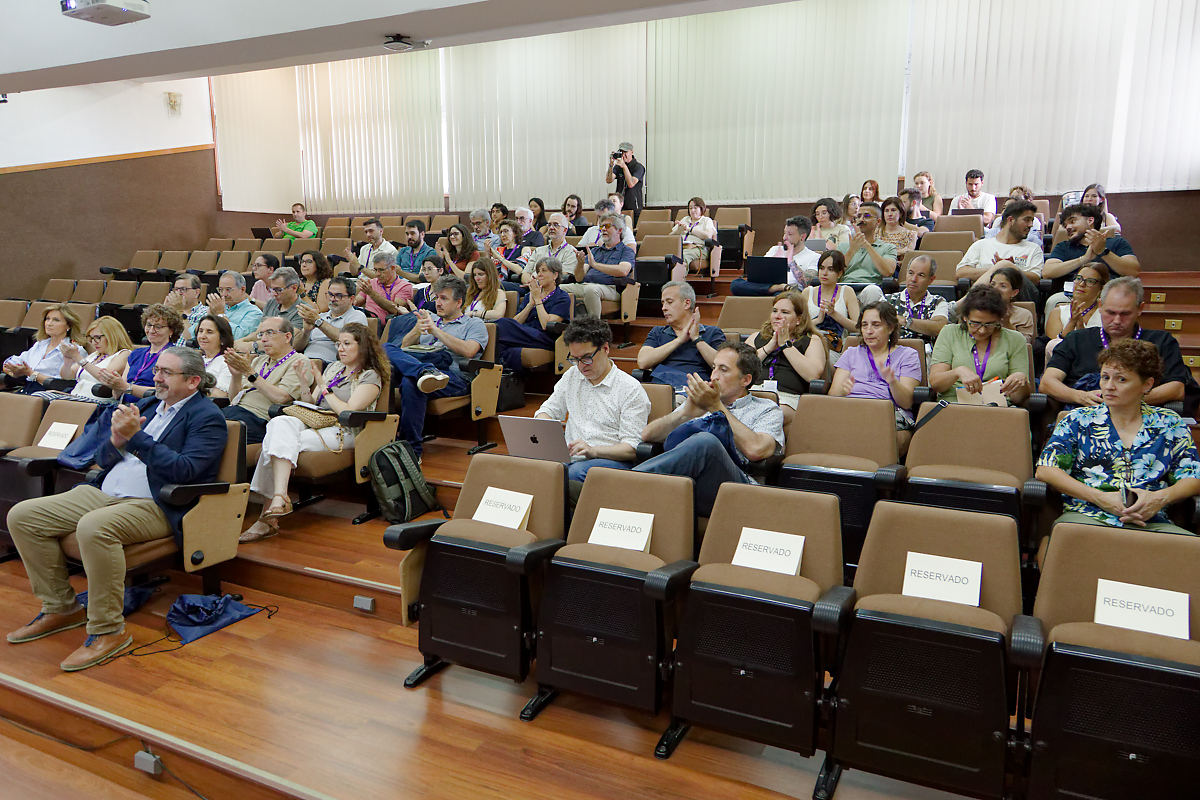
The CIBERINFEC collaborative research consortium of excellence is made up of 46 research groups from all over Spain, of which the only one is from the Canary Islands. Institute of Tropical Diseases and Public Health of the Canary Islands The University of La Laguna is the host and co-organizer of this meeting, although due to space limitations, the sessions are being held in the Faculty of Pharmacy. Representatives from 43 of the centers integrated into the network have attended, demonstrating the event's strong appeal in the Canary Islands.
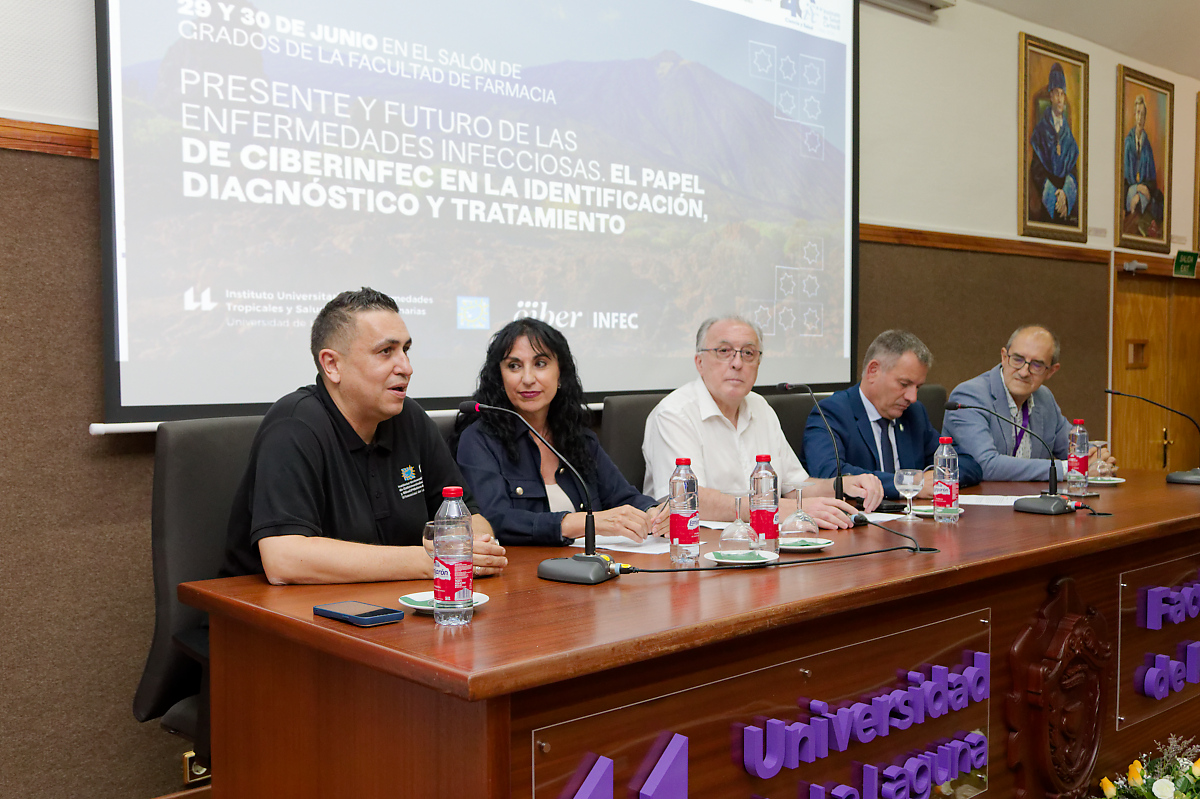
Jacob Lorenzo, Susana Abdalá, Antonio Aparicio, Pedro Ángel González and Jesús Otero during the inauguration.
The meeting was inaugurated yesterday afternoon, June 29, in an event attended by the island director of Foreign Action of the Tenerife Island Council, Pedro Ángel González Delgado; the dean of the Faculty of Pharmacy, Susana Abdalá Kuri; the director of the Institute of Tropical Diseases and Public Health of the Canary Islands, Jacob Lorenzo Morales; and the scientific director of CIBERINFEC, Jesús Otero.
Also present at the opening of the meeting on behalf of the University of La Laguna was the Vice-Rector for Research and Transfer, Antonio Aparicio Juan, standing in for the Rector, Francisco García, who was unable to attend as he was on another island at the time. However, Mr. García made sure to attend the meeting, and today, Tuesday, June 30, he visited the Faculty of Pharmacy to personally greet this group of outstanding researchers.
During the opening ceremony, participants emphasized ideas such as advocating for collaborative research developed by centers linked to the different specialties of CIBER, as it allows for a more agile and consensual response to the health needs of society.
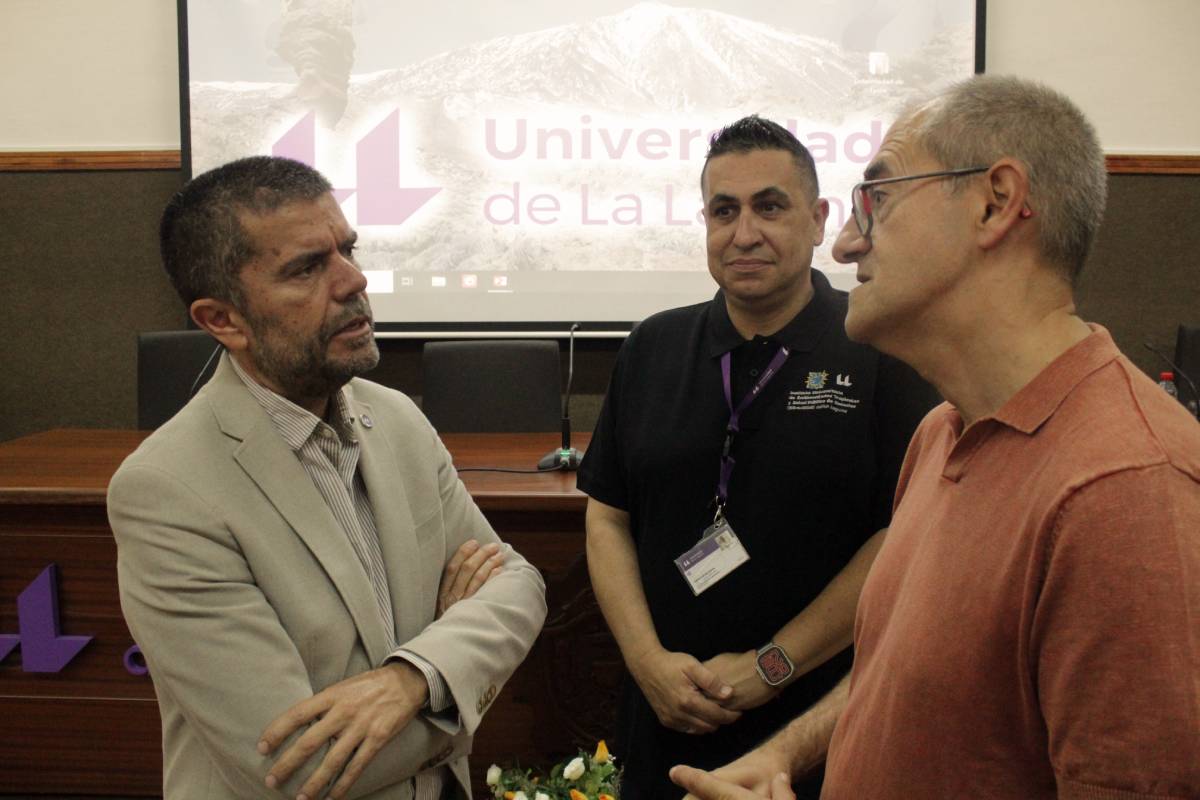
Rector Francisco García chatted with Lorenzo and Otero during his visit on June 30.
The importance of public awareness campaigns was also emphasized, particularly at a time when it is crucial to counter the abundance of misinformation with rigorous scientific data, as the rector stressed today. Likewise, the need to prioritize preventative measures to limit the effects and spread of infections was highlighted, especially given that antibiotic resistance is becoming a major challenge for global health authorities.
CIBERINFEC
Following the inauguration, Jesús Otero gave a presentation on the CIBER initiative in general, and on CIBERINFEC in particular. He explained that this consortium stands out from other existing health research networks in Spain due to its structural, thematic, and permanent nature, given its objective of conducting sustained and cross-cutting research on a wide range of health issues. This strength stems from its own legal entity, which grants it greater freedom of action than other models.
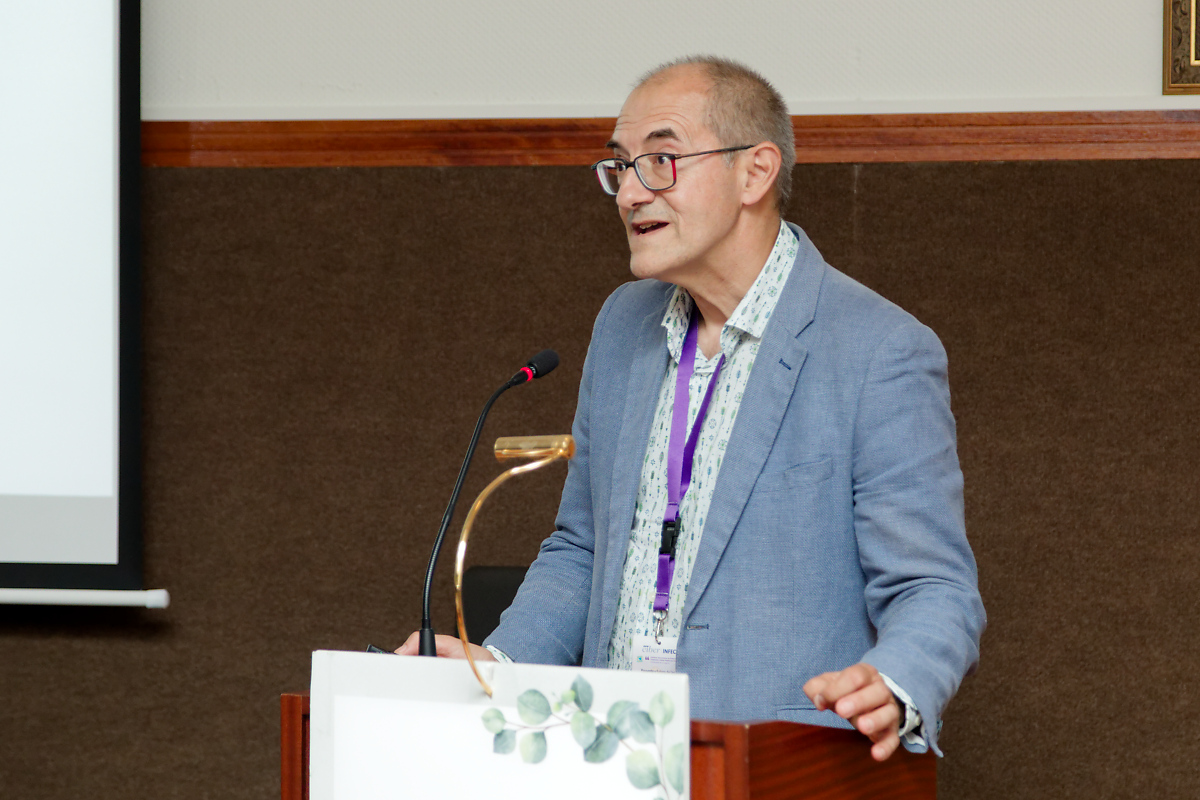
Jesus Otero.
Otero explained that the first CIBERs (Centers for Biomedical Research in Biomedical Research) were established in 2006, with seven consortia joined by two more the following year, and that they initially operated in a very disparate manner. This proved problematic as significant structural differences began to emerge between them, so in 2013 it was decided to merge them all under a single institutional umbrella, which remains in place today. Since then, more areas of specialization in health have been added, including infectious diseases, which was launched in 2022.
In total, CIBER, with all its specializations, comprises 518 groups with a total of 6,535 researchers across 13 areas of specialization. To date, they have secured over €42 million in competitive funding, been awarded 37 projects, and produced more than 9,500 scientific publications and 24 new inventions.
 For their part, the 46 entities linked to CIBERINFEC bring together health professionals, academics, public administrations and research centers and are organized into four scientific programs: global health, emerging and re-emerging infections (Program 1), co-directed by the University of La Laguna through Jacob Lorenzo Morales; antimicrobial resistance (Program 2); HIV/AIDS and sexually transmitted infections (Program 3); and infections in non-HIV immunocompromised individuals and healthcare-associated infections (Program 4).
The program dedicated to global health was detailed this morning by the other co-director, Cristina Calvo, who explained that it encompasses 31 research groups from across the country and focuses not only on tropical diseases but also on other diseases with a high prevalence in the Western world, such as influenza, measles, enterovirus, and hepatitis. Furthermore, its members participate in national alerts for rapid response to specific crises. It is a multidisciplinary, transnational effort supported by a robust research network.

 Spanish
 English
 French