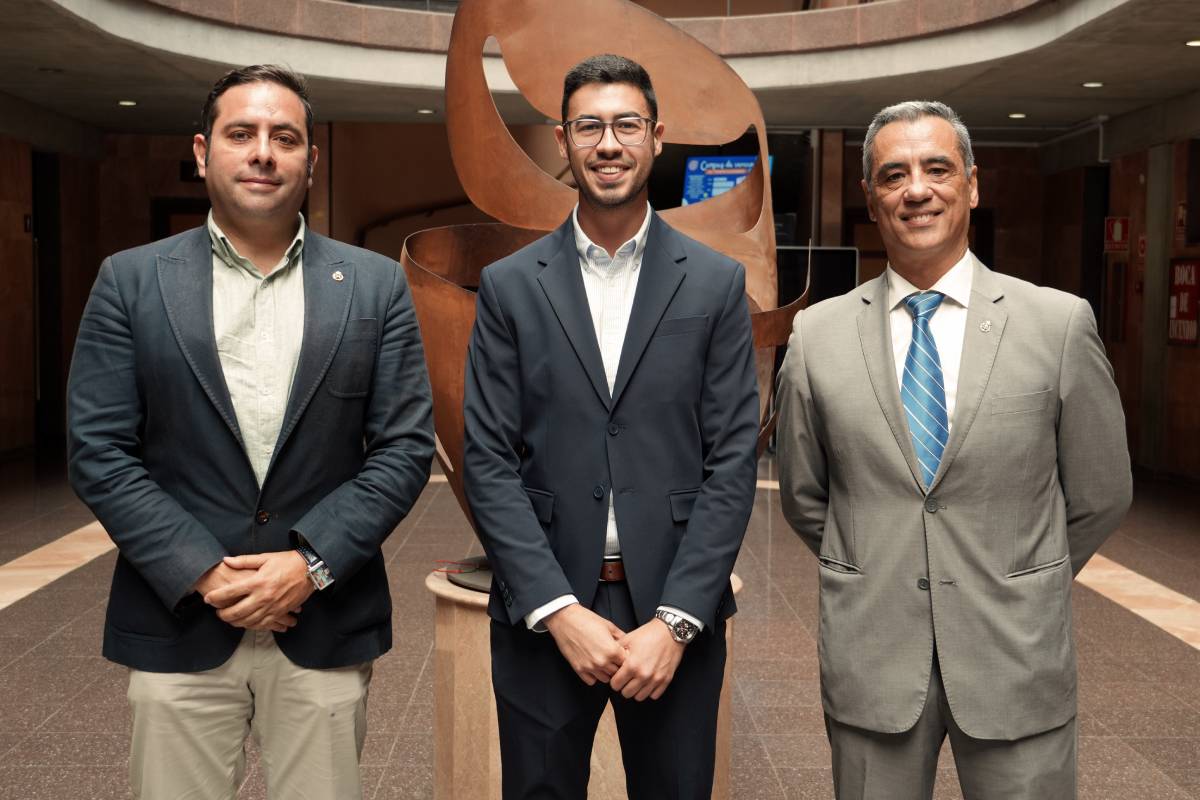
The Graduation Hall of the Faculty of Economics, Business and Tourism of the University of La Laguna recently hosted the defense of the doctoral thesis “Valuation and Sustainability Factors of Island Agricultural Soil: From Representative Crops to the Viticultural System in Tacoronte-Acentejo, Tenerife”, presented by Santiago Manuel Barroso Castillo within the Doctoral Program in Regional Development of the academic institution.
The work, which received the highest possible grade (summa cum laude), was directed by Juan Carlos Santamarta Cerezal and co-directed by Ignacio de Martín-Pinillos Castellanos y Pablo Alonso González. The tribunal was chaired by Eduardo Rojas Briales, from the Polytechnic University of Valencia, and included Dirk Godenau, from the University of La Laguna, as secretary, and María Mercedes Hernández González, from IPNA-CSIC, as member.
The analysis addresses the sustainability of agricultural land in island territories, where this resource is limited and subject to urban development pressure, farm fragmentation, and the effects of climate change. In Tenerife, these conditions directly impact the viability of the primary sector, access to arable land, and the conservation of the agricultural landscape.
Barroso Castillo explains that he decided to focus on this area due to “the historical importance of the primary sector for the Canary Islands and, specifically, for the island of Tenerife,” as well as the lack of studies that integrate different dimensions of agricultural sustainability. His approach combines economic, environmental, and soil perspectives to study how soil value is formed, what impacts productive activity generates, and what role soil quality plays in crop efficiency.
The Tacoronte-Acentejo wine-growing system serves as a benchmark case study due to its area, wine production, and historical trajectory. Furthermore, it was the first area in Tenerife to have a Designation of Origin, established in 1992. Among its main contributions is the completion of the first Life Cycle Assessment applied to a specific crop in the Canary Islands and in Tenerife, focusing on grape and wine production.
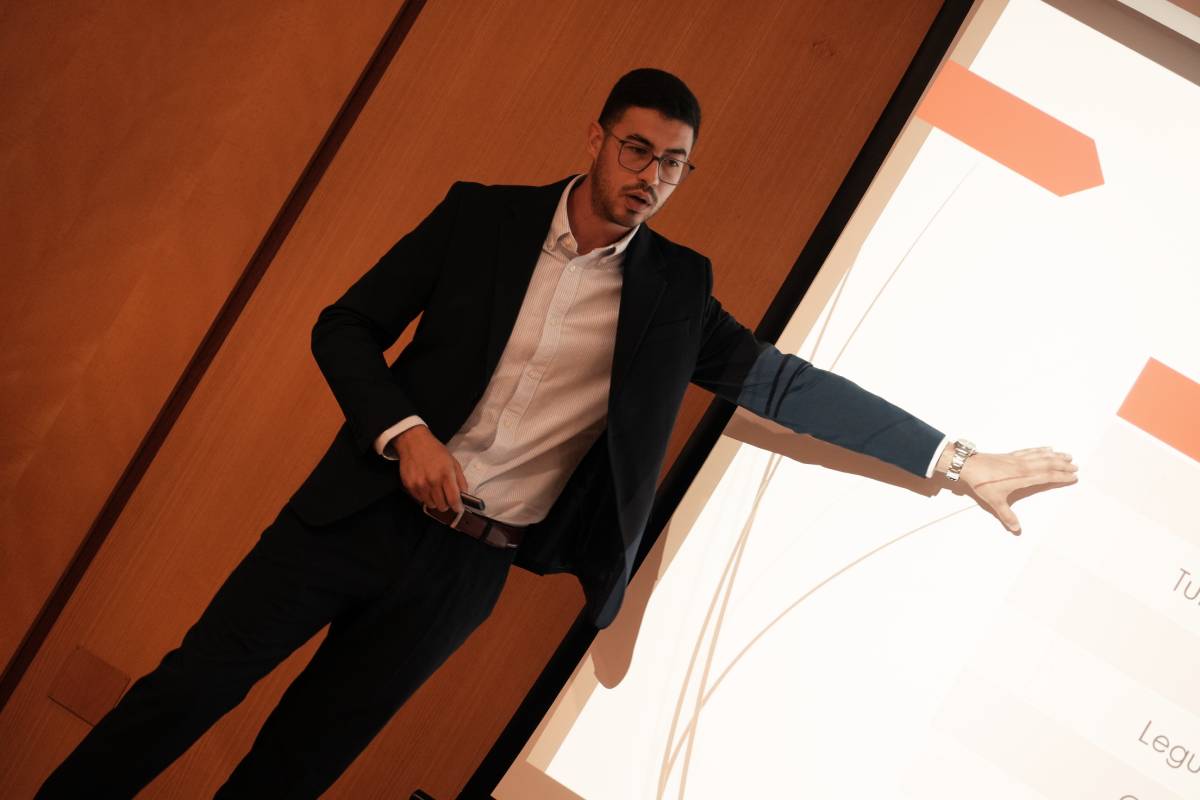
Santiago M. Barroso during his presentation.
One of the findings indicates that the price of agricultural land depends not only on its productive capacity, but also on factors such as proximity to urban areas, the availability of irrigation, and the presence of buildings. According to the newly minted PhD, this reality helps explain one of the sector's main problems: the lack of generational succession, since the increased cost of land in island territories creates "barriers to entry" for potential young farmers.
In the environmental sphere, the main impacts of the wine system are identified as fuel used in fieldwork, the application of plant protection products, the use of glass bottles, and electricity consumption in the winery. According to Barroso Castillo, these results have direct practical applications for public administrations, the agricultural sector, and wineries, as they allow for the identification of where the greatest impacts are concentrated and the proposal of measures such as optimizing the use of plant protection products, using lighter bottles, or incorporating renewable energy into the winemaking process.
The analysis of fifteen vineyard plots in the Tacoronte-Acentejo Designation of Origin also shows that soil quality directly influences vineyard productivity. A more balanced soil can promote better yields and reduce the need for external inputs, reinforcing the importance of conserving this resource as the foundation of agricultural activity.
The main contribution lies in integrating, within a single framework, the economic valuation of the land, the environmental sustainability of the production system, and the soil conditions of the crops. Barroso Castillo argues that these types of approaches “are becoming key” for making more appropriate decisions in the agricultural and wine sectors, and insists on the need for the relevant institutions to rely on scientific findings to encourage young people to enter the field and promote sustainable and long-lasting production models.
The study concludes that the sustainability of island agriculture depends not only on producing more, but also on conserving the soil as a strategic resource, improving the environmental efficiency of farms, and ensuring the economic and generational viability of the primary sector.

 Spanish
 English
 French