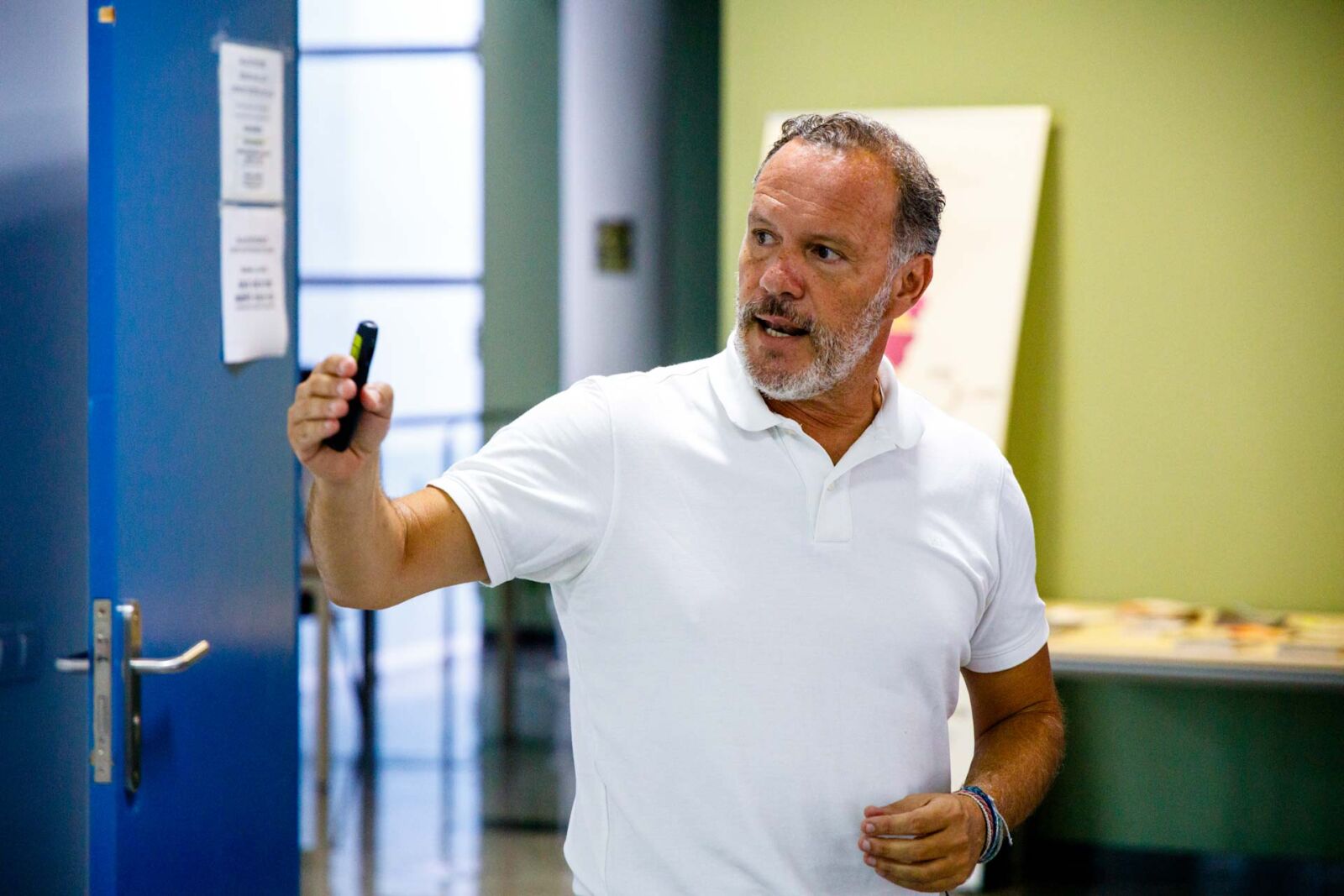
The Professor of Human Geography at the University of La Laguna Moses Simancas, who has dedicated a large part of his career to studying the tourism phenomenon, believes that, despite the signs of unease on the part of the Canary Island population towards the prevailing tourism model, one cannot speak of tourismphobia: "What does exist is a rejection of a tourist use of the territory without limits, without defining certain thresholds.".
In his opinion, certain elements directly or indirectly related to tourism are generating tensions. “What is clear is that any planning process right now has to establish limits. And many of the tensions we have in tourism are due to the fact that these limits haven't been established,” he points out. He cites as an example the growth of vacation rentals, which contributes to the housing shortage and creates tense areas where residents can end up being evicted.
“This creates discontent, exorbitant prices, and makes things inaccessible to the local population. That's why I believe we must plan and make decisions right now, some of them very radical and courageous. For example, regarding the use of natural spaces and protected areas. It's clear that quotas must be established because there is a carrying capacity, and it can't be that there's 'free rein' in a space as sensitive as a national park or a natural park.‘.
To counteract this unease and develop a tourism model that can be profitable without endangering the environment, it is necessary to create new experiences for a public that no longer places as much importance on where they have traveled, but rather on what they do at their destination. “Tourists increasingly demand positive feelings and emotions. They want to be the protagonists of their vacations, to learn, to enjoy themselves actively, and to integrate themselves into the local area,” he explains.
The workshop brought together a diverse group of students, including university students in fields such as Geography and Tourism, as well as municipal technical staff and businesspeople from the tourism sector. The methodology employed was group work to design experiences tailored to the profile of tourists staying in Adeje.
“The groups are choosing three attractions on the island, and the idea is to develop a comprehensive strategy, a narrative thread, so that a tourist who leaves their hotel for a day can enjoy a series of exciting experiences. For example, one group is proposing a whale watching excursion that could end with a scuba diving baptism, and then, having already seen the seabed, they could explore the depths of space and the stars at night. Activities that evoke emotions and, ultimately, create lasting memories.”.
This type of strategy is possible because the tourist profile has diversified; obviously, there is still a type of traveler who spends a week confined to an all-inclusive hotel, "but almost 50% of the tourists who arrive in Tenerife now like to explore the island," and that's why it's necessary to create these experiences. In Simancas's opinion, that's one of the successes of the Canary Islands model: a great diversity of profiles that allows for a lot of market segmentation. "That's fantastic, and we have to take advantage of it.".
He explains that this situation is precisely what is known as the tourism multiplier effect: greater integration of the tourism product into the local environment, with travelers moving around the region and spending money in its businesses and services, generates more employment because these new experiences need to be met. It also increases the spending of each tourist, which in turn improves the quality of life for the resident population.
“The Canary Islands are a model that is constantly incorporating innovations and trends in the tourism sector,” explains Simancas. Thus, new practices are being implemented in terms of diversification, activities, differentiation, skills development, and so on. “That’s the basis of this workshop’s strategy: to incorporate many activities that promote the creation of cluster tourism packages, generating a whole network of stakeholders. Because the taxi driver who takes travelers from Costa Adeje to Mount Teide is just as important as the person in the restaurant serving tourists.”.

 Spanish
 English
 French