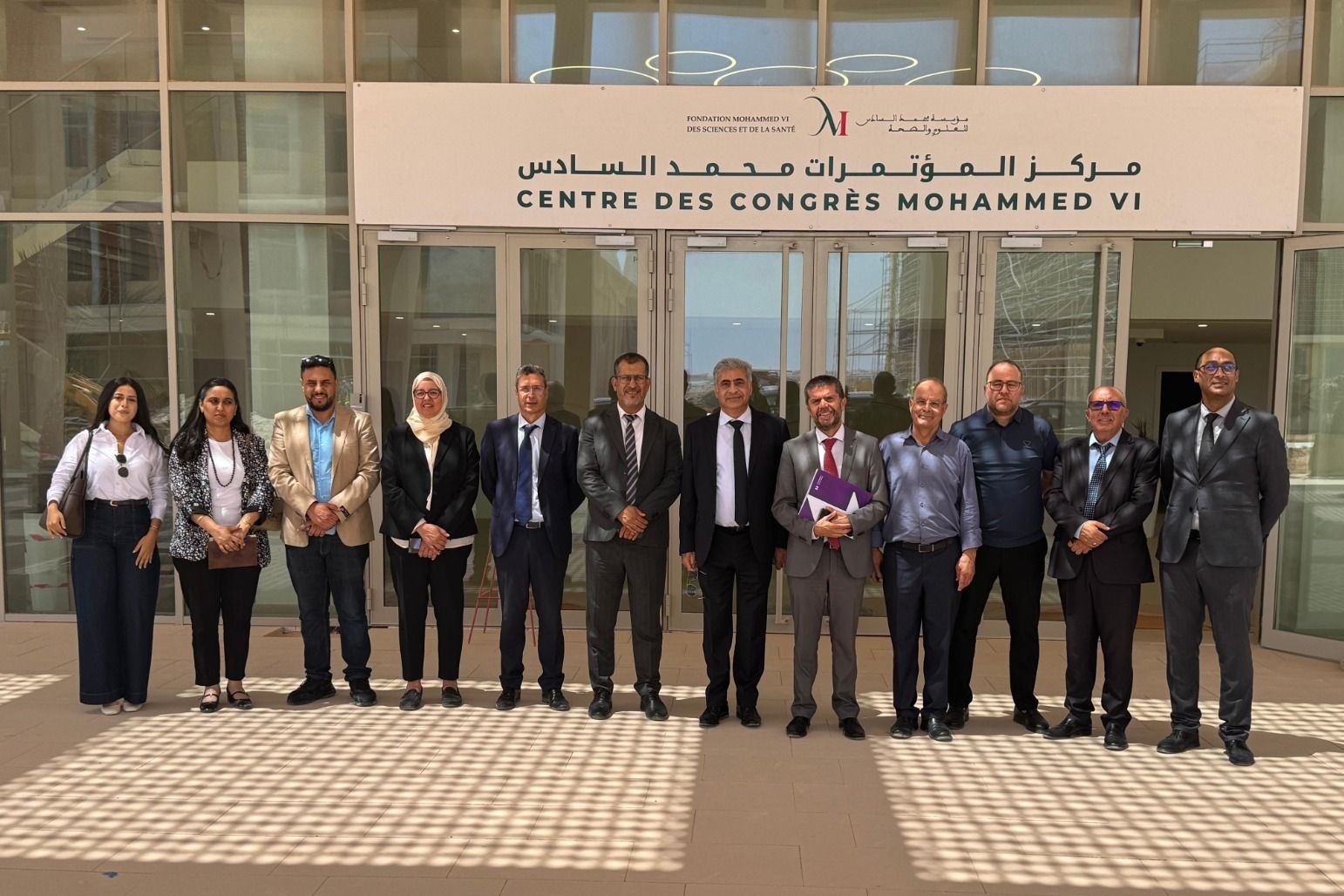
The rector of the University of La Laguna, Francisco García, participated last week in an institutional visit to the cities of Dakhla and El Aaiún, representing the Association of Public Universities of the Canary Islands (UPCAN), an entity that includes the University of La Laguna and the University of Las Palmas de Gran Canaria.
The agenda, which ran until the morning of Wednesday, July 8, aimed to get to know different higher education centers, strengthen academic and institutional relations and explore possible lines of cooperation in the areas of training, research, knowledge transfer and innovation.
During the day of Monday, July 6, the Canary Islands university delegation held several institutional meetings and made working visits to several higher education centers, including the École Supérieure de Technologie de Dajla, the École Nationale des Technologies Avancées de Dajla, the École Nationale de Commerce et de Gestion de Dajla and the Dajla campus of the Université Mohammed VI des Sciences et de la Santé.
During these meetings, Francisco García emphasized the importance of fostering broad, intensive, and stable university cooperation based on the principles of reciprocity, shared responsibility, and mutual benefit. He also highlighted the geographical proximity between the Canary Islands and the African Atlantic coast, as well as the shared challenges that can be addressed through academic and scientific collaboration.
During his speech, the rector defended the role of universities as agents of knowledge, innovation and international cooperation, capable of contributing to the social and economic development of their respective environments through the training of qualified professionals and the generation of quality research.
The visit also served to exchange experiences in relation to common challenges such as the sustainable management of water resources, adaptation to climate change, the protection of marine ecosystems, innovation applied to the primary sector, youth employment or digital transformation.
The contacts made it possible to identify potential areas of academic and scientific collaboration of interest. These included the blue economy, food transformation, applied digital technologies, business management, entrepreneurship, advanced engineering, renewable energies, green hydrogen, logistics, public health, telemedicine, and innovation linked to Atlantic territories.
Another key theme addressed during the meetings was the need to consolidate cooperation networks among higher education institutions to share experiences, optimize resources, and strengthen the impact of teaching and research. In this regard, Francisco García noted that "knowledge has become one of the main strategic assets for the economic, social, and cultural development of societies."«
The institutional agenda continued in El Aaiún with new meetings and visits to university centers and spaces linked to the academic and productive activity of the territory.
The contacts developed during this visit will serve to assess future initiatives of academic and scientific cooperation between the public universities of the Canary Islands and the participating higher education institutions.

 Spanish
 English
 French