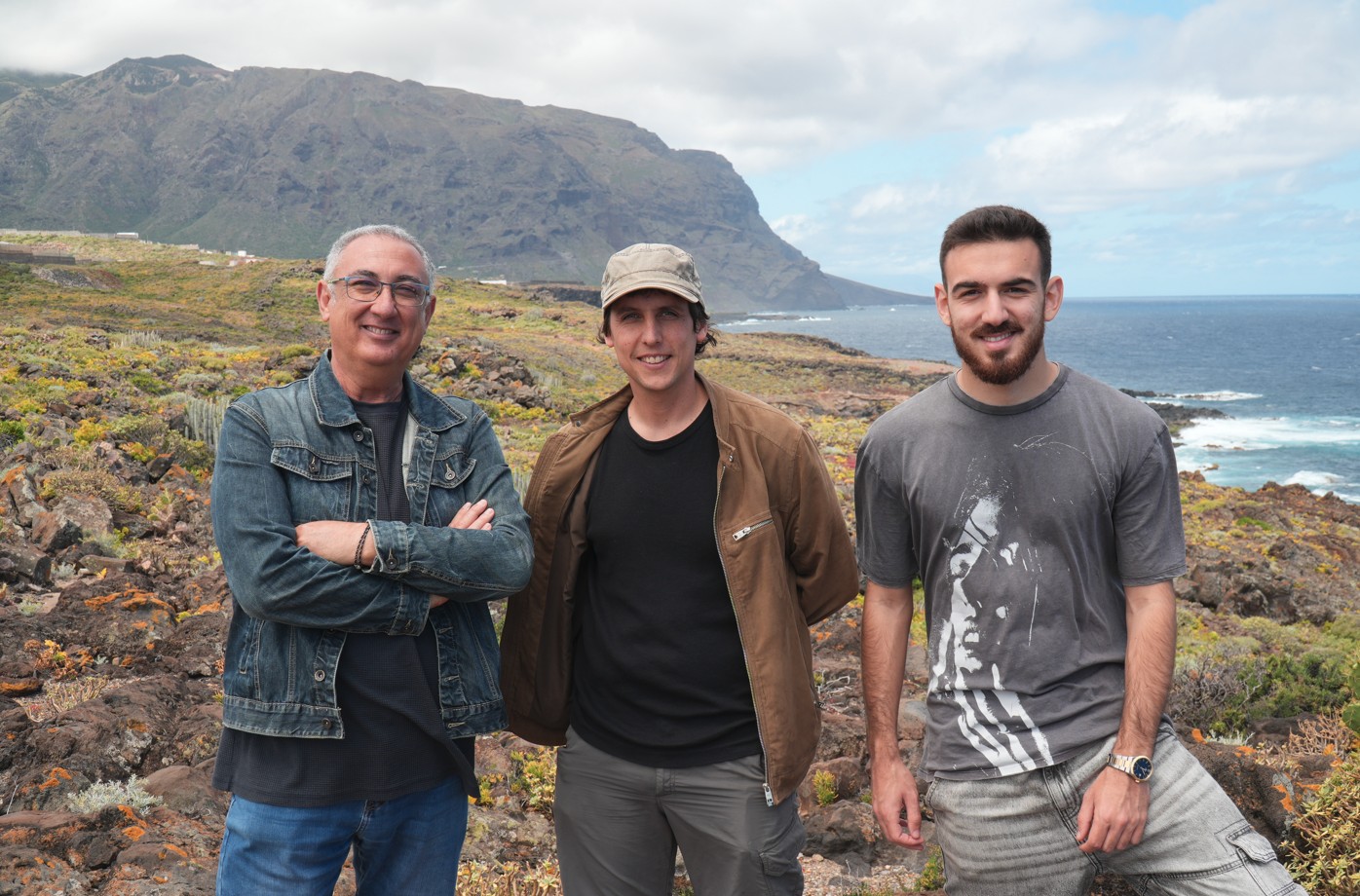
The coast of Buenavista del Norte is one of the most important archaeological sites for understanding the relationship between the Guanche people and the Tenerife coastline. Research by the University of La Laguna has reconstructed nearly a thousand years of marine resource use and analyzed how human activity transformed the landscape of Isla Baja from the earliest stages of settlement.
The results, published in the scientific journal The Holocene, They show that the collection of mollusks was developed continuously between the 2nd and 12th centuries through sustainable strategies adapted to the characteristics of the coastline, which provides new perspectives on the management of natural resources by the aboriginal communities of Tenerife.
The work has been co-directed by researchers from the University of La Laguna Álvaro Castilla Beltrán y Christ Manuel Hernandez Gomez and developed by a multidisciplinary team made up of research staff from the Chair of Disaster Risk Reduction and Resilient Cities, he Laboratory of Archaeological Micromorphology and Biomarkers (AMBI Lab), he Island Ecology and Biogeography group and the Prehistory and Archaeology of Space and Time (PAST) group. It also has the collaboration of the General Directorate of Cultural Heritage of the Government of the Canary Islands and the team of Tibicena, Archaeology and Heritage (Las Palmas de Gran Canaria).
The University of La Laguna has been working continuously in this territory for more than two decades, where there are habitation caves, funerary spaces and nearly a hundred shell middens, deposits formed mainly by accumulations of limpets, with the presence of periwinkles and other mollusks that demonstrate the relationship of the Guanche communities with the sea.
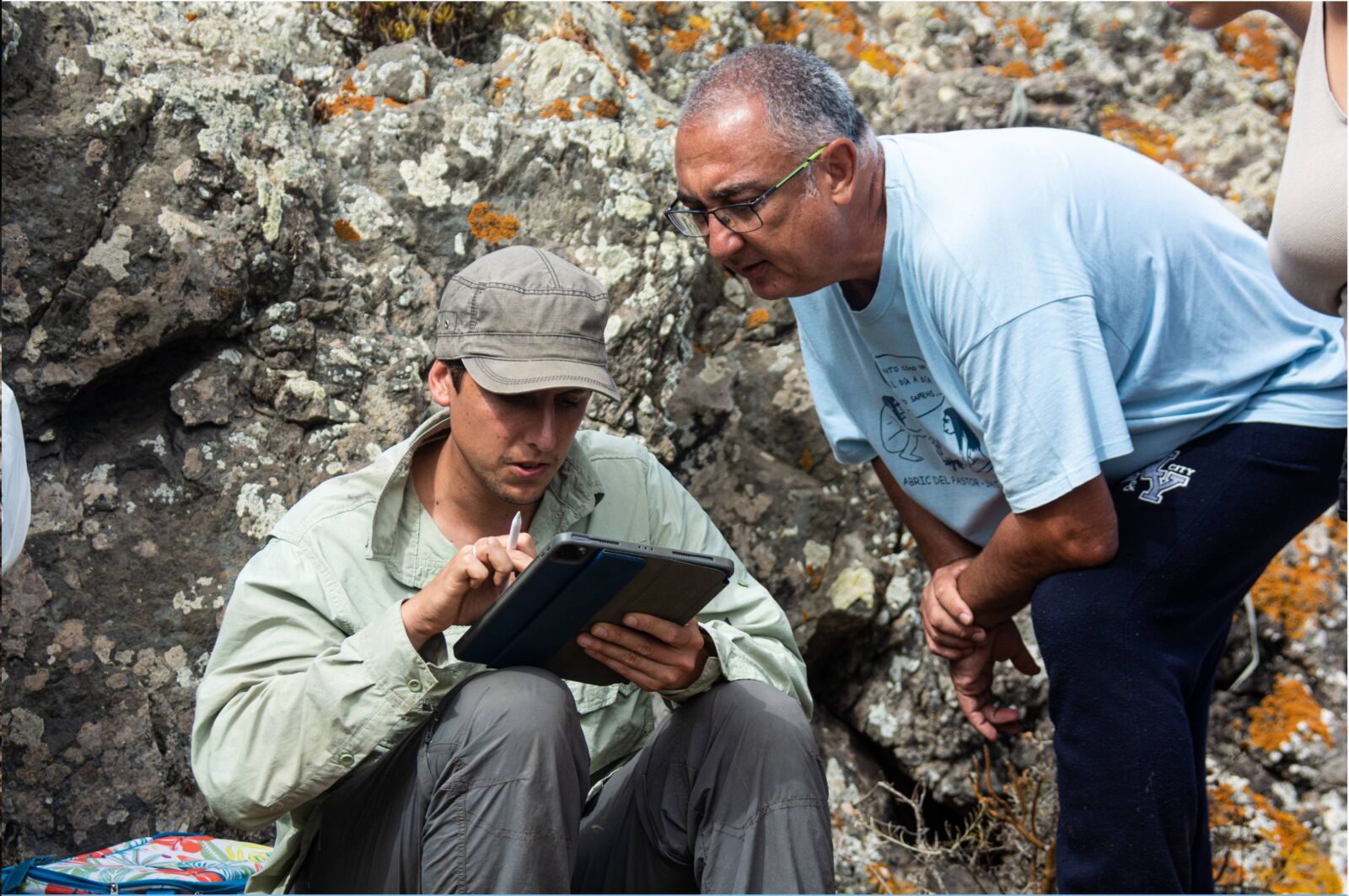
ULL researchers during fieldwork in Buenavista del Norte.
“The exploitation of mollusks was one of the most important economic activities for the populations that settled in this territory,” explains Cristo Manuel Hernández Gómez. The researcher points out that the project introduces an innovative perspective by studying shell middens not only as places associated with the processing of marine resources, but also as records capable of revealing the historical evolution of the landscape.
To achieve this, the team combines the analysis of molluscs with the study of plant microfossils, such as pollen and phytoliths, preserved at the sites. This methodology has allowed them to reconstruct the changes experienced by coastal vegetation from the first settlement to the present day and to understand how different communities interacted with the territory over time.
“We wanted to go beyond the shell midden as a mollusk processing archive and extract information that would complete the landscape perspective,” explains Álvaro Castilla. The work has revealed a before and after in the configuration of the coastal scrubland and thermophilic species associated with human activity, providing insights into what coastal landscapes were like in the early stages of settlement and how they can be preserved today.
The study has also allowed researchers to date both the excavated shell middens and the materials associated with the nearby terraces to between the 2nd and 12th centuries, a chronology that exceeded the research team's initial expectations and confirmed the long-standing nature of these coastal land management practices. The interdisciplinary approach is one of the project's main strengths. Professionals in archaeology, geography, and ecology are working together to interpret the landscape as a dynamic reality where environmental and cultural processes converge. For Castilla, integrating different perspectives broadens the scientific and social scope of the research and strengthens the connection between citizens and their historical and natural heritage.
Learning archaeology in the field
In addition to its contribution to the historical and environmental knowledge of the Canary Islands, the project plays a fundamental role in the training of university students. Undergraduate students, final degree projects, and pre-doctoral and post-doctoral researchers developing various lines of research related to the territory have participated in the field campaigns.
“An archaeological field investigation is an ideal framework for increasing knowledge about the past of the islands, but also a key space for the training of our students,” Hernández emphasizes.
One of these students is Joel Pérez Ruiz, a History student, whose final degree project analyzes the spatial relationship between shell middens, habitation caves, and coastal exploitation areas in Buenavista del Norte. His project studies how the arrangement of the sites and the species present in them allows for the identification of adaptive and sustainable strategies in the use of marine resources. Beyond its scientific contributions, the project demonstrates the value of field research as a teaching tool, integrating students into multidisciplinary teams and exposing them to the challenges of the field.

 Spanish
 English
 French