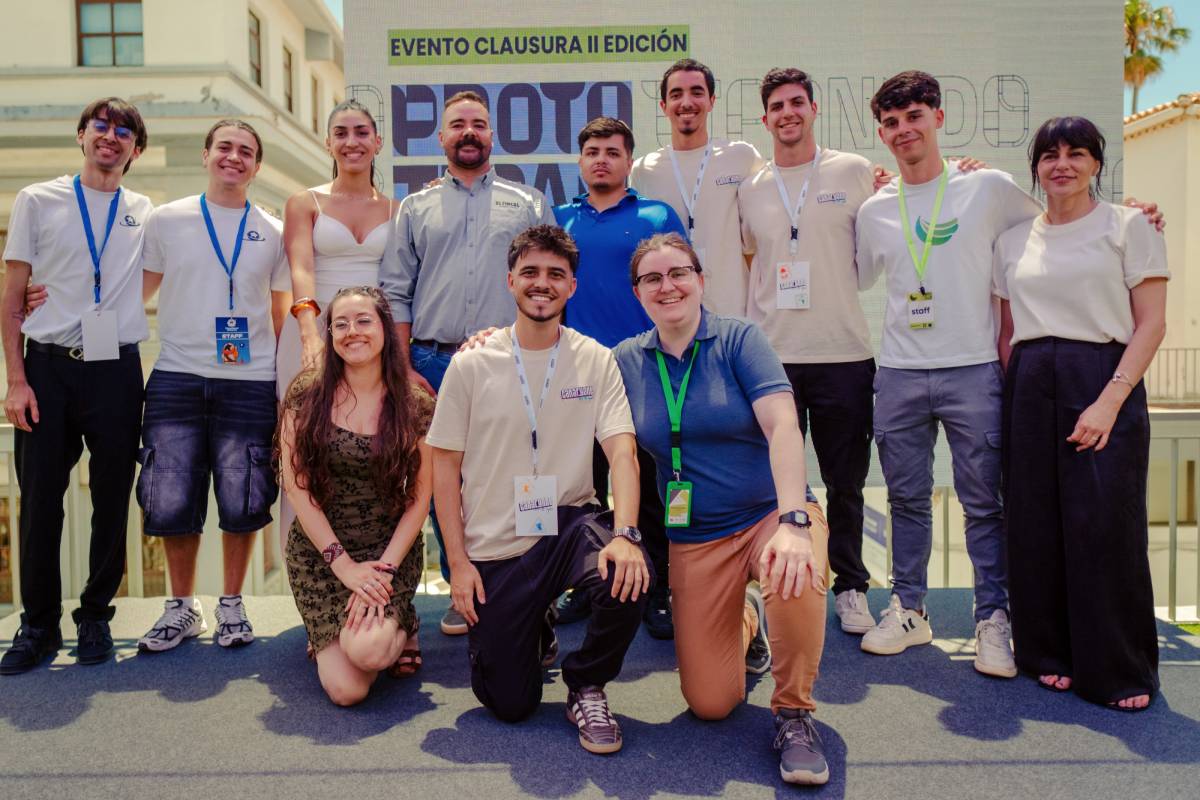
The General Foundation of the University of La Laguna hosted last Friday, July 10, the closing ceremony of the program promoted by the Center for Guidance, Entrepreneurship, Advice and Innovation for Employment (COE) of the Canary Islands Employment Service, in which nine entrepreneurs presented the prototypes developed after four months of training, mentoring and validation of their business ideas.
The meeting brought together institutional representatives, professionals from the entrepreneurial ecosystem and interested members of the public to learn about the nine prototypes developed during this edition, the result of a process of specialized training, mentoring, funding and validation of ideas.
The institutional opening was attended by the Rector of the University of La Laguna, Francisco García; the Deputy Minister of Employment of the Government of the Canary Islands, Isabel León Villalobos; the Managing Director of the General Foundation of the University of La Laguna, Julio Brito Santana; the Deputy Director of Promotion of Social Economy and Entrepreneurship of the Canary Islands Employment Service, Francisco Javier Santana Martín; the Director of the Center for Guidance, Entrepreneurship, Advice and Innovation for Employment (COE), Daniela Saputi; and the Director of the Training and Employment Area of the General Foundation of the University of La Laguna, Basilio de León Poleo.
Rector Francisco García emphasized the evolution of entrepreneurship support models and the role of prototyping as a tool for validating ideas before they reach the market. “Today, entrepreneurship is no longer about spending months developing a business plan, but about creating a minimum viable product, testing it, and learning from the market. That is the revolution this program represents,” he noted. He also congratulated the entrepreneurs for turning their ideas into real projects and for contributing, through innovation, to building a future with greater economic and social impact for the Canary Islands.
The director of the Canary Islands Employment Center (COE), Daniela Saputi, highlighted the innovative nature of the program and the support it offers to those who decide to become entrepreneurs. “Entrepreneurship is like taking a leap of faith without a parachute. With Prototyping for Entrepreneurship, we want to support those who decide to take that step so that their projects mature faster and have a greater chance of success,” she stated. She also emphasized the value of the collaboration between the Canary Islands Employment Service (SCE) and the public universities of the Canary Islands in developing an initiative that aims to become a best practice within the National Employment System.
For her part, the Deputy Minister of Employment for the Canary Islands Government, Isabel León Villalobos, highlighted the regional government's commitment to promoting entrepreneurship and noted that the Canary Islands Employment Service offers various support programs to facilitate the creation and consolidation of new business ventures. In this regard, she encouraged entrepreneurs to continue developing their initiatives and affirmed that "this closing ceremony does not represent the end of the road, but rather the starting point for projects that will contribute to generating employment, innovation, and economic development in the Canary Islands.".
During the four-month program, the entrepreneurs worked with methodologies such as Customer Experience and Design Thinking, practically applying all phases of the innovation process—empathizing, defining, ideating, prototyping, and evaluating. This itinerary was complemented by training in market research, product and service definition, visual identity, business models, economic viability, marketing, and solution validation, allowing each participant to evolve their idea into a functional prototype.
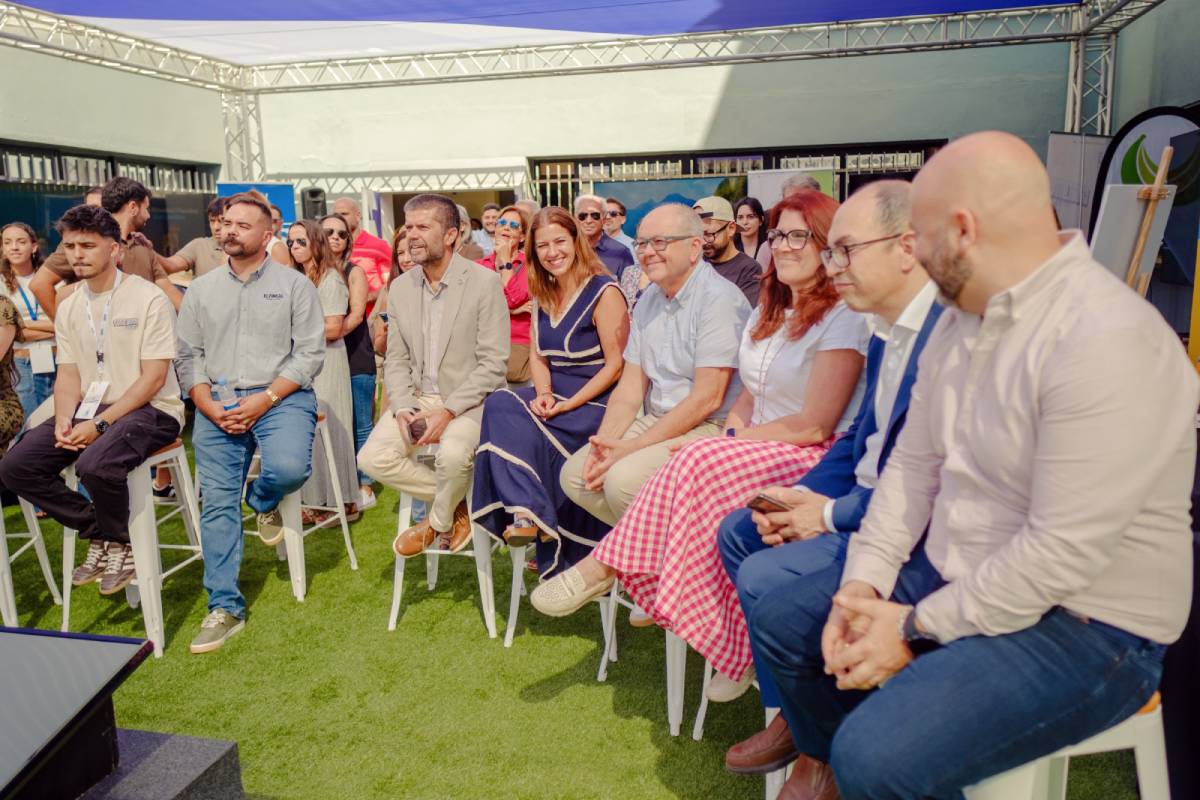
Authorities and participants in the event.
Finalist projects
The finalist projects reflected the diversity and potential of innovative entrepreneurship in the Canary Islands. Among them were: The Farm, by Joaquín Poggio, based on regenerative agriculture; CanaryOne, promoted by Rubén Dorta and his team to highlight Canarian culture through play; ISLIA, by Sonia González, a platform that connects the eight islands with experiences of nature, culture and leisure; The Sarpeta, by Denisse da Rocha, who is committed to sustainable craftsmanship through the reuse of textile materials; Cultural Periphery, by Gara G. Garzón, focused on a more inclusive cultural management.
Also presented Visual Novel Universe, developed by Tomás De Armas to facilitate the creation of visual novels without programming knowledge; Green Banana EcoSolutions, by Guillermo González, focused on the circular economy and soil regeneration; Psychometric, by Darío Pérez, a digital tool to optimize management and research in the field of psychology; and Lazarillo, by Mila Garcia, a technological solution that automates the creation of graphic materials while maintaining the consistency of the visual identity.
Following the presentations, attendees were able to get a close look at the prototypes during the networking space and the visit to the different stands, promoting the exchange of experiences between entrepreneurs, institutions and agents of the innovation ecosystem.
The day concluded with the presentation of awards to the projects most highly rated by the jury. El Fincal, by Joaquín Poggio, received the award for Potential to become a profitable and successful business; ISLIA, by Sonia González, was recognized as the project that best identifies and addresses a need in the Canary Islands; Visual Novel Universe, presented by Tomás De Armas, was recognized for its level of innovation and creativity; while Periferia Cultura, by Gara G. Garzón, was awarded for its social and economic impact.
With this second edition, Prototyping for Entrepreneurship consolidates a methodology based on prototyping, experimentation, and idea validation as tools to promote innovative entrepreneurship in the Canary Islands. The projects presented reflect the potential of the archipelago's entrepreneurial talent to generate solutions capable of addressing social, economic, and environmental challenges from an innovative perspective.

 Spanish
 English
 French