Their role is strategic for sustainable development, the economic revitalization of rural areas, and the promotion of employment for the most vulnerable groups in society. Therefore, these companies are fundamentally important in achieving Sustainable Development Goals such as reducing inequalities and ending poverty, which significantly affect disadvantaged people, young people, and women.
In the Canary Islands, 99.91% of the business fabric consists of SMEs and micro-enterprises, some 146,001 companies, according to the Canary Islands SME 2025 report. They sustain most of the regional employment, although they face a paradoxical reality: they stand out for their level of digitalization, but continue to register low productivity and a constant trickle of closures due to the instability of costs.
Alicia Correa Rodríguez, Correa Rodríguez, a tenured professor in the area of Financial Economics and Accounting within the Department of Economics, Accounting, and Finance at the University of La Laguna, focuses one of her lines of research on the economic and financial reality of SMEs in the Canary Islands. “These are companies with few employees, very low initial investment, and a high business failure rate,” explains the economist. Her studies on survival show that most SMEs disappear before reaching three years. “There is a percentage that do consolidate and manage to survive for more than 15 years, the longest period we have studied, but these percentages range between 30% and 40%,” notes Correa Rodríguez.
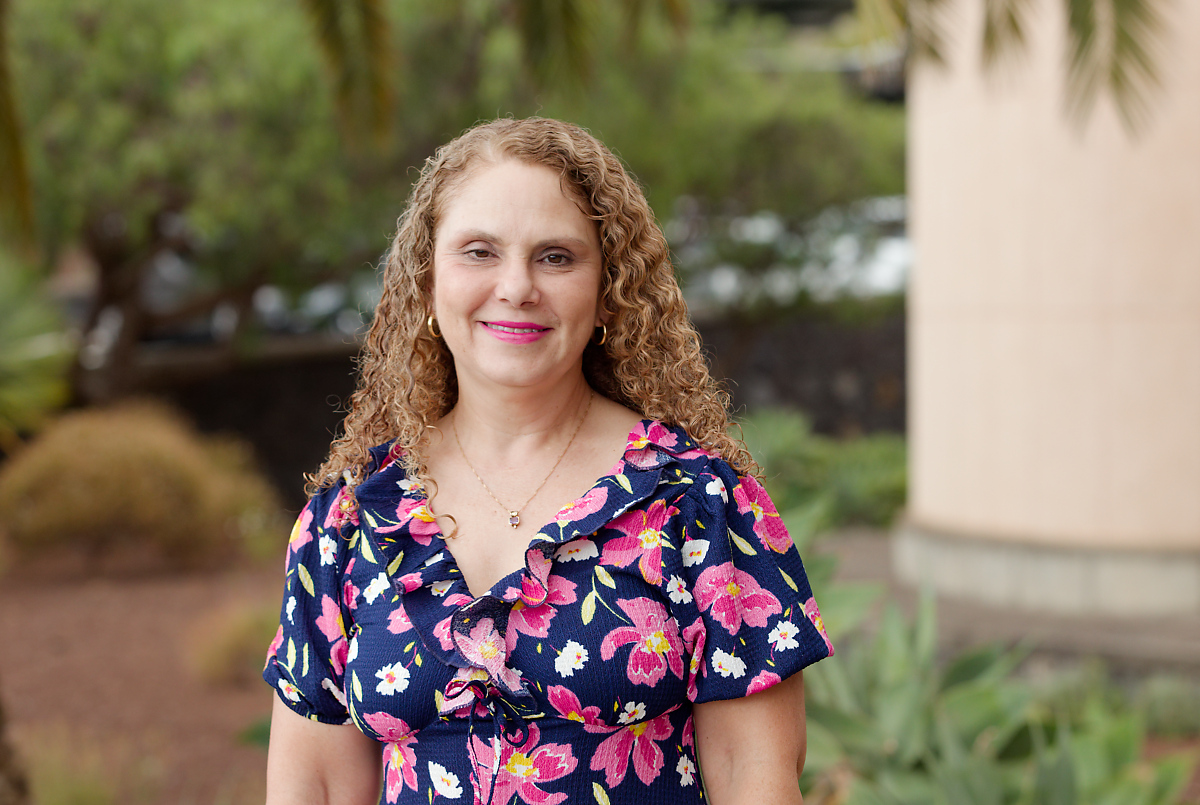
Alicia Correa Rodríguez
According to the researcher, productivity and profitability rates in the Canary Islands tend to be slightly lower than those of companies on the Spanish mainland. This is partly due to overinvestment resulting from tax incentives, which lead many companies to invest in order to reduce their tax burden. To understand this situation, it's important to remember that the Canary Islands have the Economic and Fiscal Regime (REF), a framework of fiscal and economic measures designed to compensate for the archipelago's remoteness and insularity.
This regime recognizes the Canary Islands as an Outermost Region (OR) of the European Union. Some tax incentives under the REF (Special Economic Regime), such as the Canary Islands Investment Reserve (RIC), have led to Canary Islands SMEs being more capitalized than their mainland counterparts, as many of these investments aim to reduce the tax burden. As a result, “some sectors have higher levels of investment than necessary, which can translate into lower productivity and profitability when comparing the results obtained with the volume of resources invested,” says Correa Rodríguez.
It should be noted that there are clear differences across sectors. “When we talk about higher survival rates, we must point to the agricultural sector. Agriculture, livestock farming, and some industrial activities, interestingly, are the ones with the best figures,” the professor explains. However, the commercial sector faces a high business mortality rate, reaching as high as 60% of these small businesses.
Correa Rodríguez is part of the Inter-University Chair of Commerce, This is a collaboration with the Government of the Canary Islands, which has conducted research studies on SMEs and their high turnover rate in the commercial sector. "The truth is that walking through the streets of any city center, we observe how businesses related to the service sector constantly appear and disappear," the researcher emphasizes.
Family businesses: between closeness and professionalization
Another key characteristic of these businesses is their family-owned nature. In fact, according to data from the Canary Islands SME 2025 report, 67.31% of all family-owned SMEs meet this condition, with the retail sector accounting for the largest share in the Canary Islands, representing approximately 84.41% of all family-owned SMEs. Jose Alberto Martinez Gonzalez, Professor, a senior lecturer in the area of Business Organization, in the Department of Business Management and Economic History, points out that this predominance of micro-enterprises and family-owned SMEs (mipymes) has advantages and disadvantages within their organizational behaviors.

José Alberto Martínez González
Having these types of entities in the archipelago means “a close relationship with the client and respect and responsibility towards their environment,” says Martínez González. One of their great advantages is that they exhibit greater longevity and resilience to closure or dissolution of their businesses.
On the contrary, “there is a confusing culture of leadership and business management, in which a symbiosis of family and work life occurs, sometimes resulting in less professionalization in areas such as marketing or human resources, which are largely neglected in these companies due to their limited hiring capacity,” the professor points out. This reality has also been identified by Correa Rodríguez in her research. “Around 20% of SMEs report a lack of training in business management. That is, one in five companies that end up closing considers that they lacked the necessary knowledge to manage their business,” the researcher notes.
Martínez González is a member of the research group REHUCO (Human Resources and Behavior in the Business Context) at the University of La Laguna. In the context of these small and medium-sized enterprises (SMEs), limited capital often restricts the number of employees, resulting in a lack of professionals dedicated to digital marketing or human resources. Therefore, many resort to external services that can be outsourced to perform these functions. “A company without marketing cannot orient its business externally, nor compete or conduct research effectively. If it also lacks human resources, it will have more difficulty organizing and developing itself internally,” explains the researcher.
An opportunity to diversify tourism
In a region where tourism is one of the main economic drivers, small and medium-sized enterprises (SMEs) are playing an increasingly important role in diversifying the Canary Islands' tourism model. Martínez González emphasizes that these types of businesses allow for the exploitation of new market niches and the creation of experiences more closely linked to the region and sustainability. "It doesn't simply have to be a large hotel in the south and sun and beach tourism; there can be more nature-based tourism or other alternatives," the professor points out.
Tourism SMEs are capable of transforming local, heritage, or cultural resources into new experiences for visitors. “Before, it was enough to simply visit Mount Teide; now, you have to create an experience there,” the researcher emphasizes. This trend opens up new opportunities for small businesses linked to heritage, gastronomy, nature, or cultural activities.
 Furthermore, their small size allows them to work with local resources and establish closer ties with the surrounding area, fostering more sustainable tourism and a greater distribution of economic benefits among the resident population. “SMEs focused on tourism can be a very important solution,” emphasizes Martínez González, who believes that cooperation, creativity, and the ability to generate these experiences will be key to the future of the sector in the Canary Islands.
The arrival of new generations in the labor market is forcing small and medium-sized enterprises to rethink their management and leadership models. Martínez González points out that one of the keys to business success lies in understanding the needs of the people they want to attract and retain. “When we talk about the employer branding, ”We’re talking about a new way to attract talent. I need to know what kind of young people I’m going to hire because I’m going to have to negotiate with them and adapt the jobs and processes they’ll be doing,” the teacher explains.
This is a highly digital generation, accustomed to project-based work, and one that particularly values autonomy, professional recognition, and sustainability. Furthermore, they exhibit less loyalty to organizations. “If they see that their expectations are not being met, they don't hesitate to leave the company,” the researcher states. Therefore, he believes that SMEs must move towards more transformative and less authoritarian leadership models.
These new generations don't see company size as an obstacle. "What matters to them is feeling comfortable, committing to a project, and having a professional career," says Martínez González. In fact, the researcher believes that Generation Z has a particularly favorable profile for intrapreneurship, that is, for driving new projects and innovative ideas from within these small and medium-sized enterprises.
Canary Islands micro-enterprises and their challenges
According to data from the Canary Islands Statistics Institute (ISTAC), over 951% of the Canary Islands' business sector consists of micro-enterprises and self-employed individuals with no employees or fewer than ten employees. Furthermore, over 811% of these businesses are located in the capital islands.
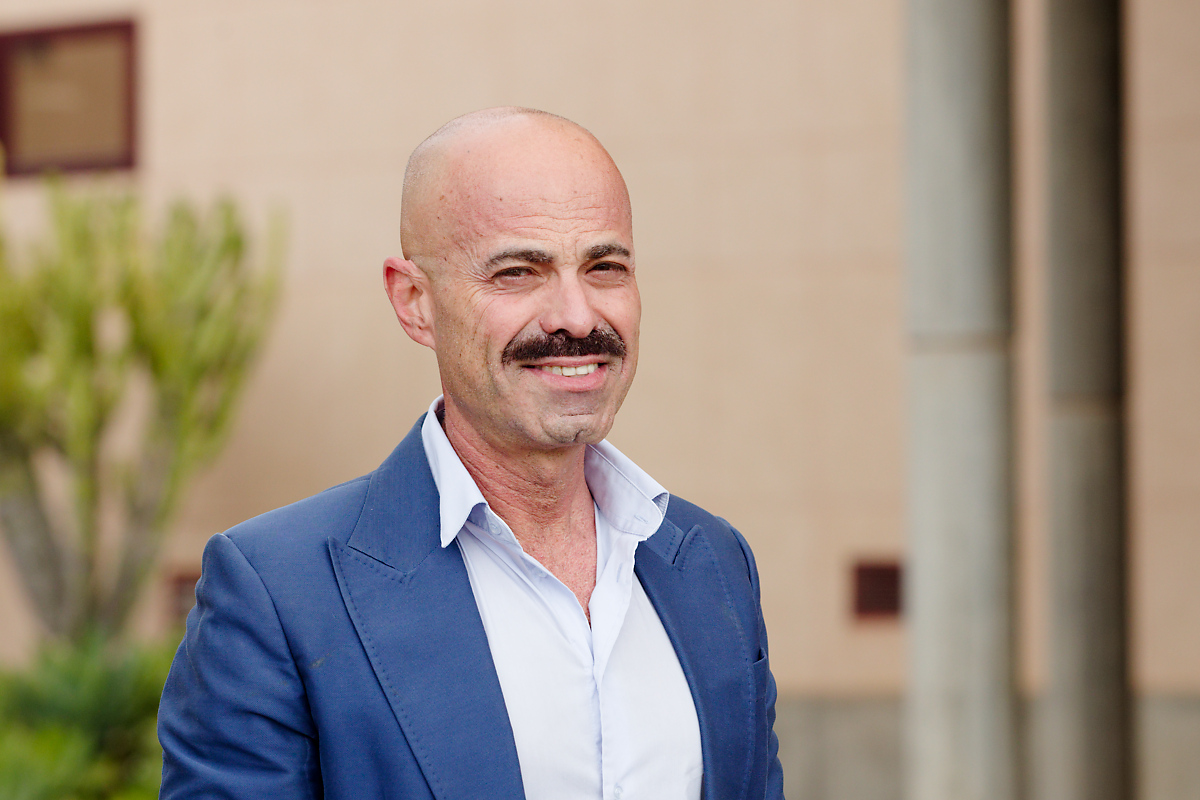
Marcel Manuel Bonnet School
Marcel Manuel Bonnet School, Professor [Name], a tenured professor in the area of Applied Economics, within the Department of Applied Economics and Quantitative Methods, focuses several of his research lines on these companies. Their main characteristics include a high presence of self-employed workers, strong family ties, a heavy reliance on tourism and the service sector, and limited capacity for innovation and internationalization.
This profile is compounded by the difficulties in accessing European Union funding. “Despite the large amount of European funding allocated to businesses, micro-enterprises face serious difficulties accessing it, due to capacity issues related to infrastructure and time,” notes Bonnet Escuela. The administrative complexity of the application processes and the lack of human resources and time prevent many small businesses from applying for this aid. Consequently, there is a disconnect between European funding instruments and the reality of businesses in the Canary Islands.
The researcher warns that many micro-enterprises lack economies of scale and the financial capacity of large companies. An economy of scale is the cost advantage a company gains as it grows. It occurs when production volume increases and fixed costs are spread across more units, making it cheaper to manufacture each product. “A small business cannot reduce its average cost as production increases because it will immediately need more materials, time, or resources,” explains Bonnet Escuela.
In 1986, when Spain and Portugal joined the European Union, capital liberalization took place in our territories, allowing multinationals and franchises to enter the Canary Islands. This led to the displacement of small and medium-sized enterprises (SMEs), as large companies offer more competitive prices and economies of scale. “Multinationals and franchises have established themselves in areas where wages were initially lower, and have driven out local businesses,” argues Bonnet Escuela.
Faced with this reality that persists to this day, micro-enterprises have several ways to improve their competitiveness. One of them is to generate their own economies of scale, that is, to increase their capacity to operate and reduce their average costs. “Since physical growth is not always viable, digitalization and e-commerce offer an opportunity for these small businesses to expand their markets and access new opportunities,” the researcher argues. Another measure is alliances or partnerships. The researcher maintains that cooperation among small businesses can allow them to overcome some of the limitations stemming from their small size. “Micro-enterprises can agree to form a kind of virtual business group, where they network and advertise through a single platform,” Bonnet Escuela explains. In this way, several establishments can act jointly, expand their reach, and generate economies of scale that would be unattainable individually.
Women at the helm of small businesses
Beyond the challenges of financing and competitiveness, Canary Islands SMEs continue to exhibit a significant gender gap in their management positions. According to the Canary Islands SME 2025 report, 77.31% of companies in the archipelago are led by men. However, female participation is higher in micro-enterprises and family businesses, and they also have a significant presence in the retail sector, where women hold 37.51% of management positions.
Bonnet Escuela, who has published several articles addressing the reality of women in microenterprises, believes that, although the situation has improved in recent decades, inequalities still persist in certain sectors. “There is a role that continues to be repeated, which is that of the woman as caregiver,” the researcher points out.
This reality also limits opportunities for business growth. According to Bonnet Escuela, many women entrepreneurs face greater difficulties accessing bank financing due to the burden of family responsibilities and are underrepresented in industrial and technological sectors. However, the researcher points out that e-commerce and digital entrepreneurship have fostered greater female participation, especially in social economy projects and self-employment initiatives supported by public entrepreneurship programs.
Moving towards a more innovative, competitive and equitable business fabric is presented as one of the great challenges for companies that, despite their limitations, continue to be the main economic and social engine of the archipelago.
NOTE: This report is an initiative framed within the InvestigaULL Commemorations Calendar, a scientific dissemination project promoted by the University of La Laguna.
Scientific Culture and Innovation Unit (Cienci@ULL)

 Spanish
 English
 French