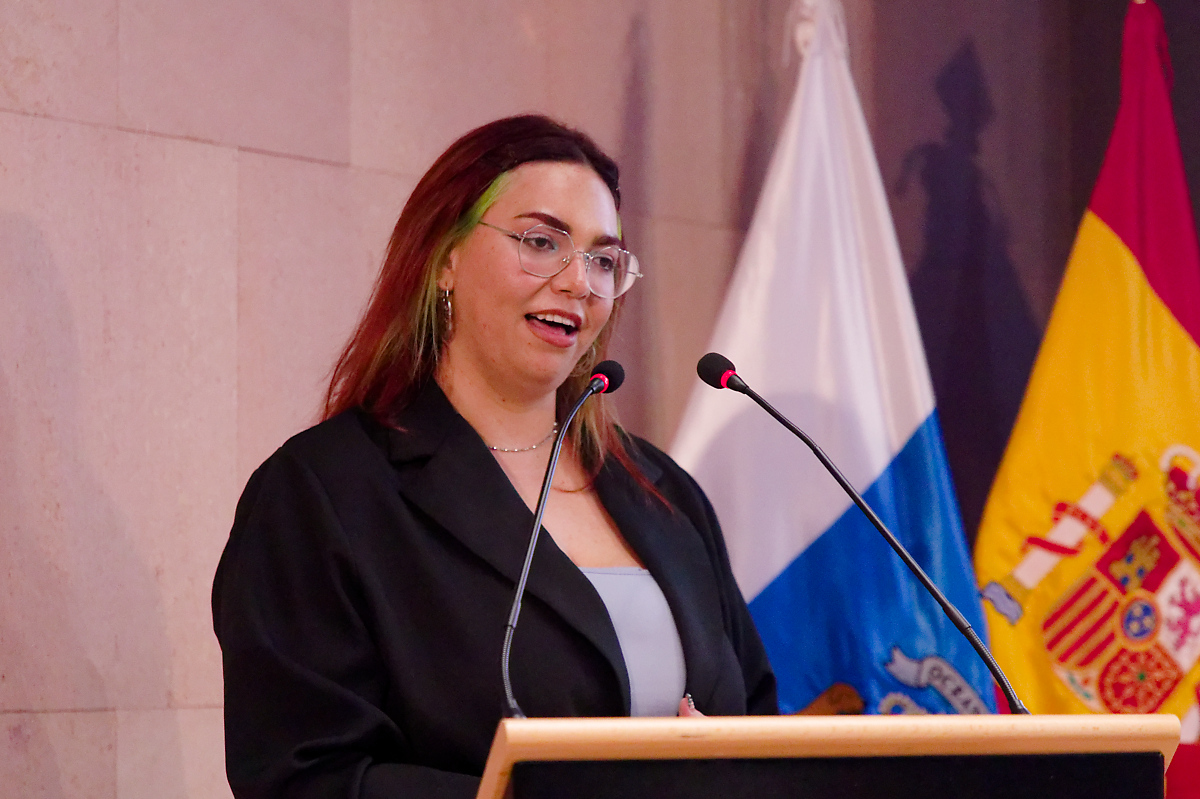
What do the goats that live on the islands today have in common with those that accompanied the ancient inhabitants fifteen centuries ago? According to research by Clara Díaz Pérez, The answer is everything. This work, presented as a doctoral thesis at the University of La Laguna, reveals through the analysis of ancient DNA that the current goats of the archipelago are genetically identical to those brought by the first settlers from North Africa.
This internationally acclaimed thesis has revealed an important finding for the biological history of the archipelago and for international genetics. Under the title «Paleogenomic analysis of domesticates of the Indigenous people of the Canary Islands», It demonstrates that the pre-Hispanic Canarian goat has maintained an amazing genetic continuity from Roman times and the aboriginal period to the present day.
The study, a pioneer in the application of paleogenomics and bioinformatics techniques, confirms that this animal is the only member of the original "Neolithic package," composed of pigs, goats and sheep, that has survived virtually unchanged through the profound historical and demographic changes of the islands.
To reach these conclusions, the thesis, which was supervised by Rosa Fregel Lorenzo y Mariano Hernández, Both from the Department of Biochemistry, Microbiology, Cell Biology and Genetics at the University of La Laguna, analyzed a total of 344 samples—including teeth, bones, and horns—from 33 archaeological sites across the archipelago. A key technical milestone was the analysis of remains from the Roman site on Isla de Lobos, which allowed them to establish a timeline from the beginning of the Common Era.
 The Enigma of the Goats
Unlike the human population, whose genetic makeup underwent a drastic transformation after the Castilian conquest in the 15th century due to interbreeding with European settlers and African populations, the Canary Island goat remained stable. The research concludes that the local goat breeds achieved a perfect adaptation to the island's harsh environment and unique flora, endowing them with a resilience far superior to that of the European breeds introduced after the conquest.
Although there was a European genetic contribution after the 15th century, this component gradually diminished over the centuries. Natural selection favored the aboriginal traits, better suited for survival in the Canary Islands' terrain, resulting in a biological "purity" based on adaptive efficiency. "The goats that are with us now in the ravines and corrals are genetically the same as those brought by the ancients," notes Dr. Díaz Pérez, emphasizing that these animals are veritable biological time capsules.
One of the most significant scientific achievements of this thesis is the positioning of the Canary Islands as a unique "laboratory" for global paleogenomics. Due to the lack of preserved biological remains and the scarcity of published data from the African continent, the animal genomes recovered in the islands constitute, to date, the first and only real approximation of Iron Age DNA from North Africa.
However, the story of their companions, the sheep, offers a fascinating contrast and serves to illustrate the limits of biological adaptation. The Canary Island aborigines possessed hair sheep, perfectly adapted to the semi-arid climate. After the conquest, European settlers introduced wool sheep for economic reasons related to textiles. The attempt to crossbreed the two breeds resulted in a failure of adaptation: «the wool sheep did not thrive in the island environment, which led to the virtual disappearance of the original hair sheep from the archipelago.».
The historical curiosity lies in the fact that the hair sheep seen today in the Canary Islands fields are not direct descendants of those that survived the 15th century, but rather come from specimens brought from Venezuela in the 1950s. These American animals were, paradoxically, descendants of the Canary Island sheep that were exported to the New World centuries ago during the transatlantic routes, thus completing a surprising cycle of genetic return.
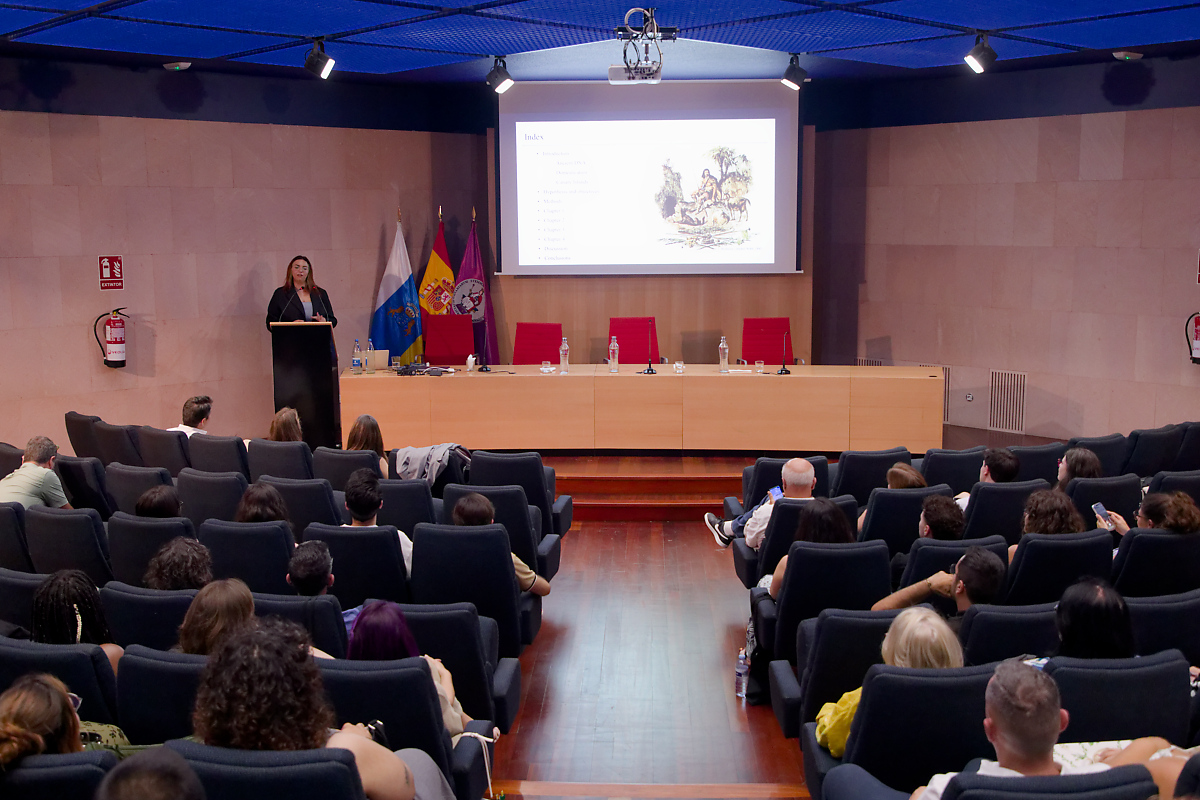
The doctoral thesis, which earned the highest distinction, had the following researchers as members of the examining committee: Fabian Lorenzo (ULL), Laura Botigué (Center for Research in Agricultural Genomics, Spain) and Laura Parolín (National Council for Scientific and Technical Research, Argentina).

 Spanish
 English
 French