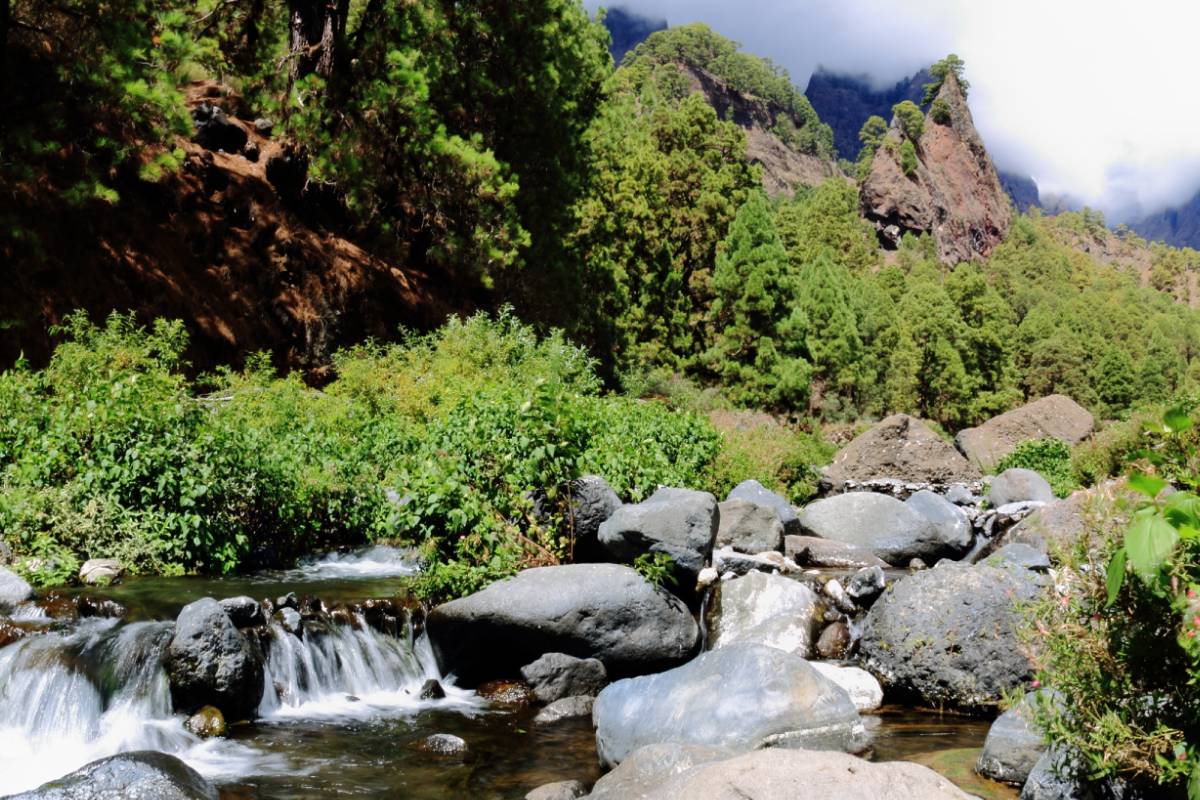
A study carried out by a group of researchers from the Department of Sociology and Anthropology of the University of La Laguna, and led by the senior professor José Antonio Batista Medina, This study presents and analyzes an alternative for improving sustainable water management in La Palma through the application of hydraulic systems inspired by natural processes. The research, published in the scientific journal Water Internationall, It examines the current state of groundwater on the island and analyzes the potential of so-called hydraulic closures installed in water galleries.
La Palma depends almost entirely on underground water resources. Between 931 and 951, the water used came from galleries, wells, and springs, due to the absence of large, permanent surface watercourses. For decades, the drilling of galleries significantly increased the availability of water resources, boosting agricultural development and, especially, the expansion of banana cultivation, one of the island's main economic activities.
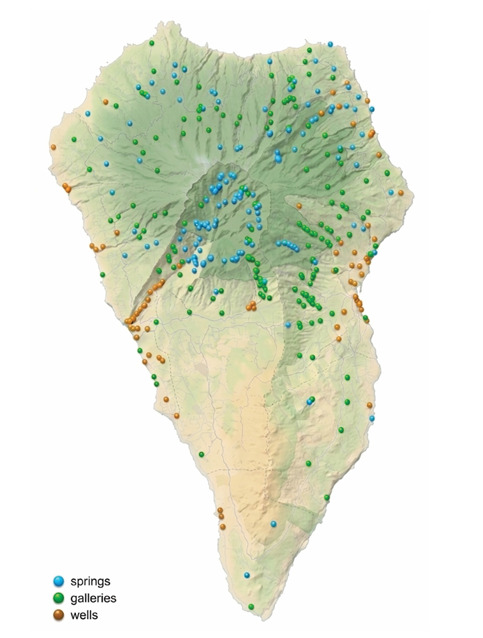
Origin of groundwater on the island. Source: CIALP (2018a).
However, the research indicates that this intensive use has also generated significant environmental effects. Among these, the progressive reduction of springs stands out. According to data collected in the study, at the end of the 19th century there were around 200 active springs on the island, while today only about 53 remain.
Furthermore, many of them have experienced a considerable decrease in their flow. Clear examples are the Marcos and Cordero springs or those associated with the Caldera de Taburiente National Park, where 30 years ago there were 120 springs and in recent years their number has dwindled to around 70. The reduction in water not only affects sensitive ecosystems and biodiversity, but also has economic and social repercussions for agricultural areas that have historically depended on these resources, such as Argual and Tazacorte, in the west of the island, and San Andrés y Sauces, in the northeast.
Given this scenario, researchers are proposing the installation of hydraulic seals in certain galleries. These devices allow for the regulation of water outflow and its temporary storage within the aquifer itself, transforming the galleries into natural underground reservoirs.
On the other hand, the goal is to avoid unnecessary losses when demand is low and to have larger reserves during periods of greater need, such as
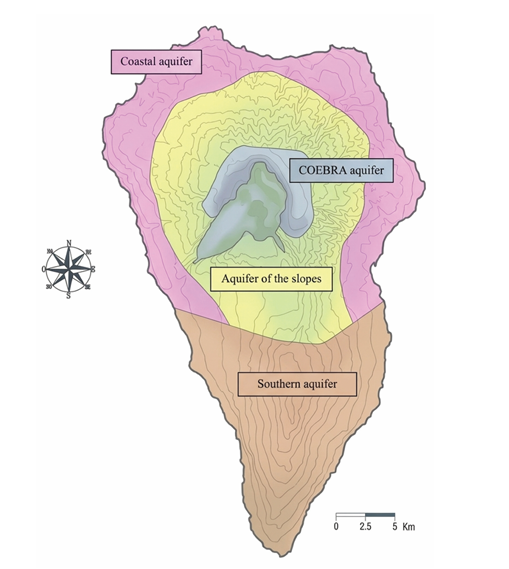
Aquifers of the island. Source: DGA (1992).
agricultural campaigns or drought episodes. In addition, this measure could promote the recovery of springs, improve the water balance of aquifers, and reduce dependence on other extraction systems.
The study also points out that these solutions could become an important tool in combating the effects of climate change. Several scientific studies indicate that the Canary Islands could face changes in rainfall patterns and reduced natural aquifer recharge in the coming decades, factors that would increase pressure on already limited resources.
However, in order for the level of implementation of this technical solution to improve and, consequently, its overall results, it is essential to address a series of limiting factors of various kinds, analyzed in the work, which underline the need to address environmental issues from a holistic and multidisciplinary perspective, and to involve local populations.

 Spanish
 English
 French