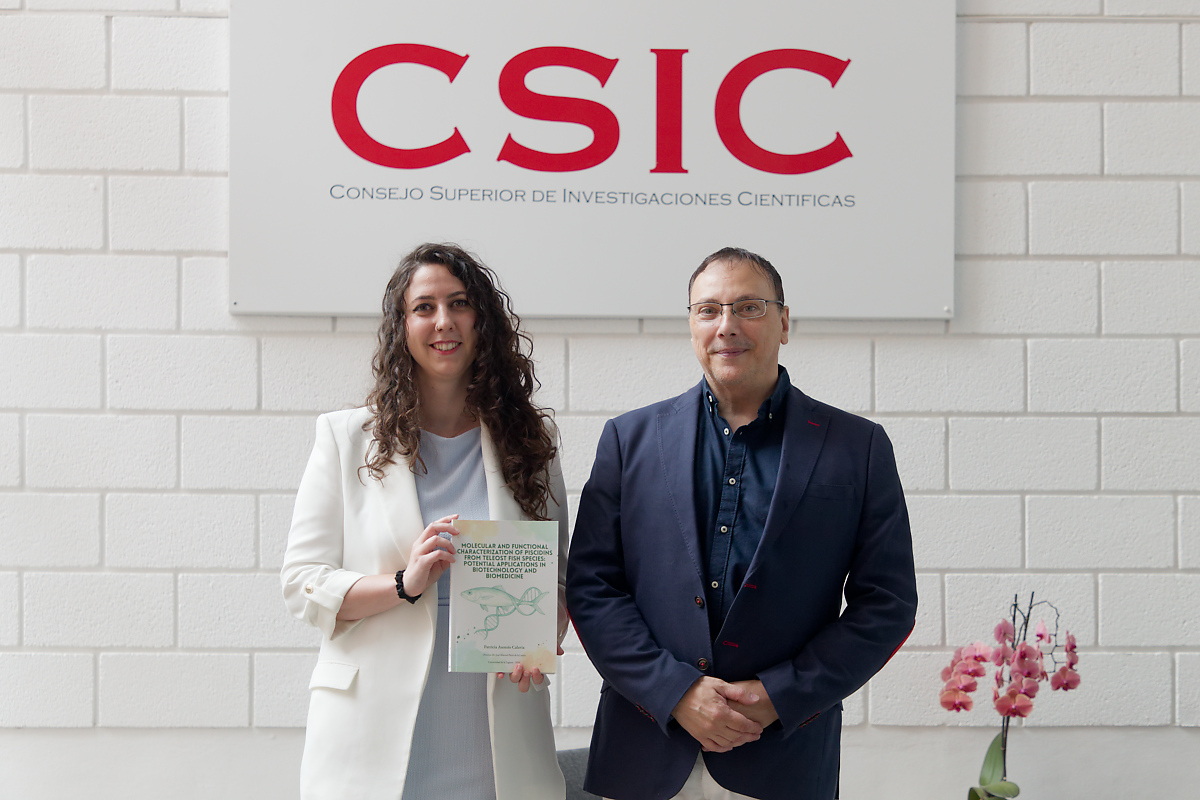
In a global context where antibiotic resistance and cancer incidence pose critical health challenges, research from the University of La Laguna has found a potential solution in the marine biodiversity of the Canary Islands. The doctoral thesis, defended at the Institute of Natural Products and Agrobiology (IPNA/CSIC) by Patricia Asensio Calavia, It focuses on piscidins—antimicrobial peptides unique to fish—which have an extraordinary ability to combat human pathogens and tumor cell lines with reduced toxicity and a low probability of generating resistance.
One of the most innovative aspects of the study has been the analysis of the horse mackerel (Trachurus trachurus), a species deeply rooted in Tenerife. For the first time, its genetic code has been explored to identify molecules that are part of its innate immune system, usually located in the skin, gills and mucous membranes of the animal.
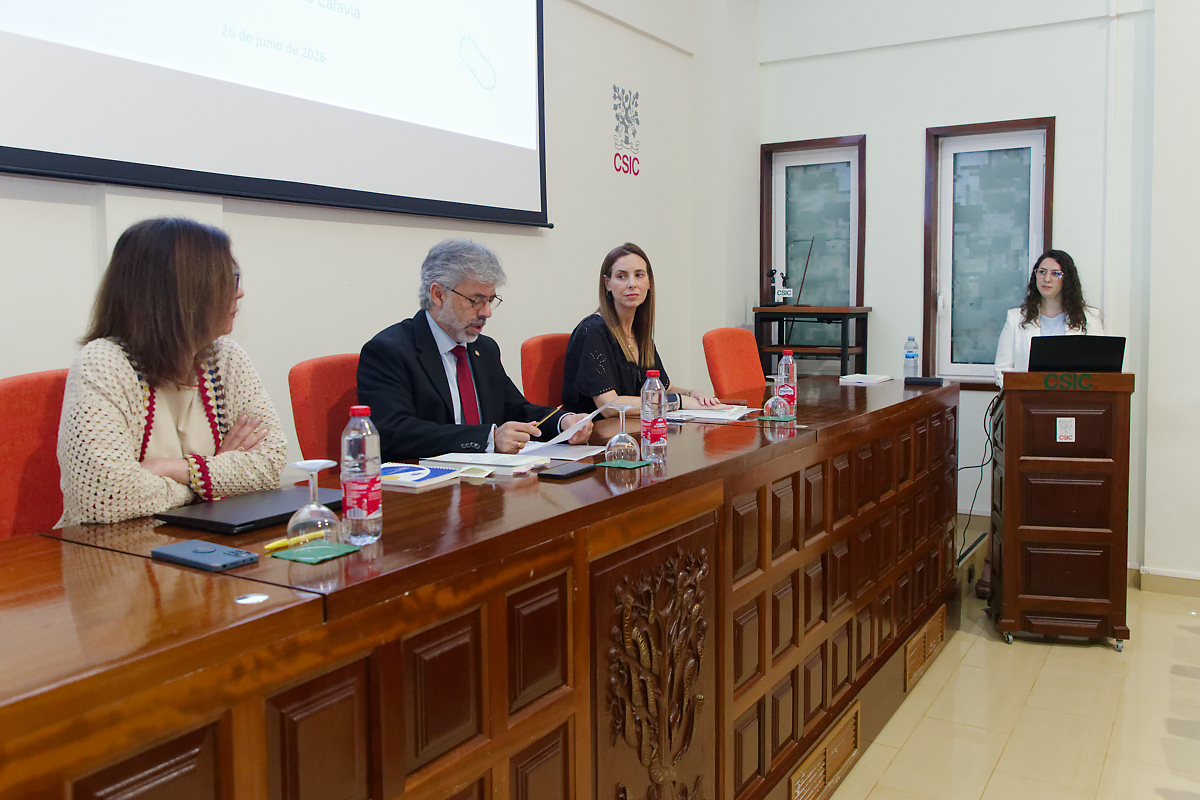
A moment from the defense of the scientific work before the court.
The research successfully identified two specific piscidins in the horse mackerel genome. "We were able to see in the DNA whether these proteins were present and analyze their patterns in different tissues," explains the thesis author, noting that one of these molecules showed exceptionally potent activity, although with a level of toxicity that suggests its application for topical use or through encapsulation techniques in the future. In addition to horse mackerel, the study included families of species of local interest such as grouper, croaker, southern bluefin tuna, and European seabass, with the latter two exhibiting the most balanced therapeutic profiles in terms of efficacy and safety.
The methodology used in the study was also novel. Instead of performing direct extractions, the researcher used data mining and specific search tools in genomic databases such as that of the National Center for Biotechnology Information (NCBI). This approach made it possible to predict the structure and activity of peptides before their chemical synthesis.
Using these tools, researchers determined that these molecules have a positive charge and a fairly common structure known as an alpha-helix. This configuration allows them to be attracted to the membranes of bacteria and cancer cells, which have negative charges, facilitating a selective attack that does not affect healthy human cells in the same way.
The great advantage of piscidins over traditional antibiotics lies in their speed and multifaceted nature. According to trials conducted with eight different peptides, these molecules not only break down the outer membrane of pathogens but can also penetrate their interior to inhibit protein or DNA synthesis and disrupt mitochondria. "Having several mechanisms of action simultaneously makes it much more difficult for bacteria to develop resistance," the researcher points out. The results showed broad-spectrum efficacy against both bacteria and fungi.
In the field of oncology, the results have been equally promising. The peptides were tested against four of the most prevalent tumor cell lines: lung, pancreatic, breast, and prostate. The doctoral thesis demonstrated that these molecules are active at very low concentrations. Unlike conventional chemotherapies, piscidins do not act solely through physical means. The research confirmed that these molecules induce programmed cell death by interacting with the mitochondria of tumor cells, which could lead to much less aggressive treatments for the patient.
Although this is basic research, this work establishes a framework for future preclinical phases and trials. in vivo. Currently, as Patricia Asensio pointed out, there is only one piscidin in clinical phase worldwide (TP4), which puts this research at the forefront of this field.
The thesis, funded by the Government of the Canary Islands through a predoctoral contract and directed by the researcher José Manuel Pérez de la Lastra, had in court Paula Gomes from the University of Porto, Ana Raquel Díaz from the University of La Laguna and José Luis Martín Barrasa from the University of Las Palmas de Gran Canaria. "This research opens the door for these molecules to become real and affordable drugs in the future to combat diseases that today seem invincible," concludes the author, who now holds a doctorate from the University of La Laguna.

 Spanish
 English
 French