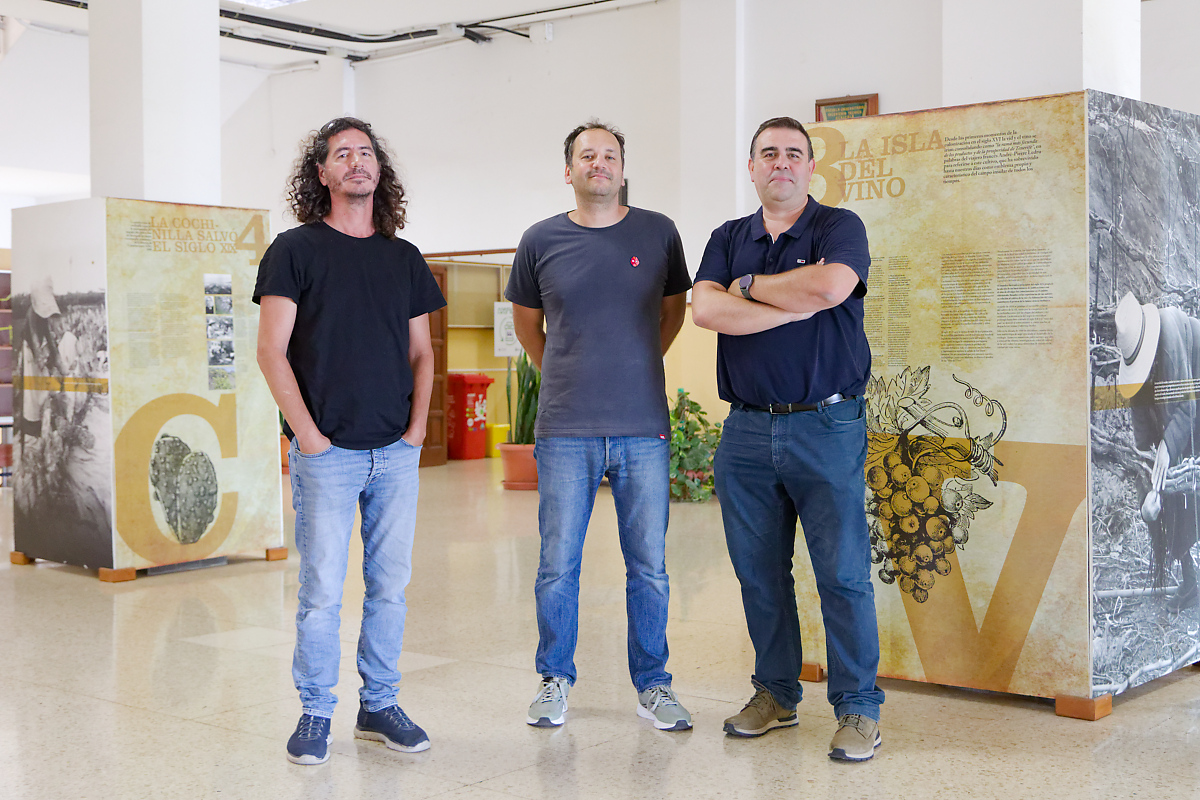
Last June, the University of La Laguna approved the creation of three new technology-based companies born within the academic institution. spin-offs They constitute one of the university's fundamental instruments for research transfer, as noted by the Vice-Rector for Research and Transfer, Antonio Aparicio. He also emphasizes the unprecedented nature of the joint presentation of three new initiatives: TENET LightKey, promoted by the Professor of Physics Jorge Méndez; Robotserv, promoted by the professor of Computer and Systems Engineering Jonay Tomás Toledo; and ZONE 1, sponsored by the permanent professor of Physical Chemistry Gonzalo García.
These three new spin-offs demonstrate that the research conducted at the University of La Laguna has the potential to generate economic and social value. “Our goal is for the knowledge created by our research groups to reach society and contribute to solving real problems. In some cases, as with these initiatives, this process also culminates in the creation of companies capable of transforming knowledge into innovation, employment, and development.».
 Aparicio also highlights the importance of the Knowledge Transfer Office (OTC) as the coordinating unit responsible for advising the institution's research staff on these bureaucratic procedures and establishing connections between consulting firms, funders, and public bodies to ensure the success of these types of initiatives. The director of the OTC, Rebeca Baz, emphasizes that the approval of these three companies represents a significant milestone for the University of La Laguna. “Behind each of them are years of research, months of work to identify transfer opportunities, and a considerable effort to make their implementation viable.».
The Organic Law of the University System (LOSU) defines knowledge-based enterprises (KBE) or spin-offs such as those entities created or participated in by universities whose development is based on patents or research results achieved in the university environment and financed totally or partially with public funds.
Following this framework, the Regulations for Creation and Participation in spin-offs y startups The University of La Laguna distinguishes between different types of business initiatives linked to the institution. Among them are knowledge-based companies or spin-offs, whose objective is to commercially exploit research results, technology and knowledge developed at the University of La Laguna thanks to projects financed totally or partially with public funds.
In this way, the spin-offs They are one of the main tools for transferring knowledge from the university to society. Through these companies, the scientific and technological advances generated in research groups can be transformed into products, services, or solutions with practical applications and potential economic and social impact.
The regulations distinguish the spin-offs of the startups university-based. While the former are established to transfer research results developed at the University of La Laguna to the market, the startups They promote innovative initiatives arising from the university environment without directly exploiting knowledge or technology owned by the institution. Among the latter, the regulations also include the startups universities in which the university holds a shareholding.
Physics against counterfeiting
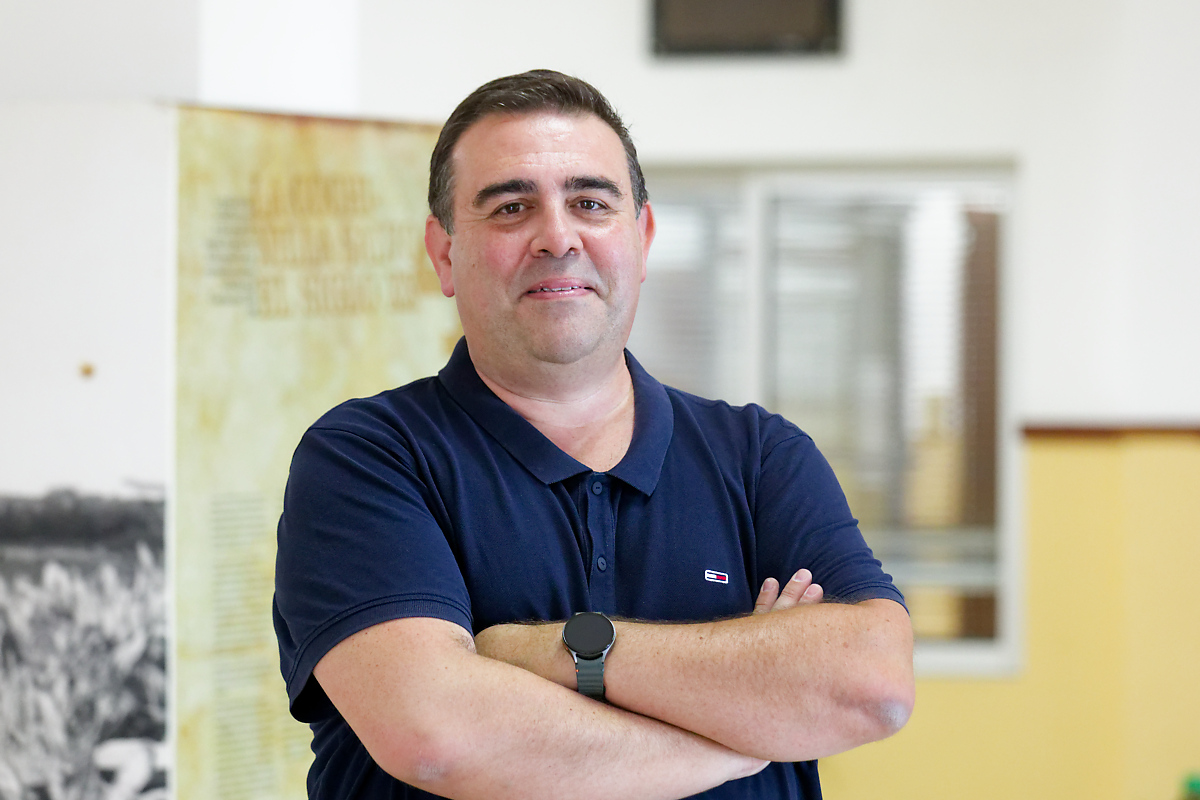
Jorge Méndez
Counterfeiting generates enormous economic losses in sectors as diverse as textiles and poses significant security risks in areas such as pharmaceuticals, electronic components, and chips that control transactions and critical infrastructure. To address this problem, TENET LightKey has emerged, a technology capable of authenticating products using an invisible light signature. This innovation, developed at the University of La Laguna, is protected by patent ES3042333A1, published by the Spanish Patent and Trademark Office (OEPM) on November 19, 2025, whose prior art report confirms the novelty and inventiveness of the proposal. The following individuals participated in the creation of this patent: Jorge Méndez, the promoter of the initiative, Pablo Acosta y Francisco Miguel Medina. The breakthrough has now made the leap from the laboratory to the market with the creation of a spin-off which seeks to commercialize this technology.
“It is a light switch, a technology based on luminescent materials that can be applied to a wide variety of surfaces, from prints offset ”Even glass, ceramics, plastics, or resins,“ explains Jorge Méndez, professor in the Department of Physics at the University of La Laguna. ”It is completely invisible to the naked eye and does not alter the appearance of the material being protected from counterfeiting, whether it be security documents, textiles, or luxury goods,” he adds.
Under the illumination of a small, low-cost infrared device, the material emits a coded light signal that can be detected by specialized reading equipment and functions as a true optical barcode. This signature can be custom-designed for each product or material, making it a unique and very difficult-to-reproduce signal.
Beneath the visible color lies a signal more powerful than what the human eye perceives. This spectrum doesn't appear as a broad band that's easy to imitate, but rather as a series of defined peaks, similar to a barcode. "So, you can design that signal so that it can't be faked," the researcher explains.
In the field of security dyes, solutions based on light emissions already exist, such as UV inks and holograms. However, according to Méndez, the difference with this technology lies in the level of coding it achieves. “This light isn't just any light; it increases the level of coding that already exists in other dyes. It offers greater security because the coding is more robust,” he points out.
To illustrate, he uses an analogy: “A credit card normally has four PINs; there are security tags on the market that only have two, but this technology has ten PINs. This makes it much harder to counterfeit.”.
 In addition to its safety features, the physicist highlights its versatility and low production cost. “You can design it for any material, it’s low cost, and it can be integrated into commercial products.” In this regard, he also emphasizes the importance of the step taken toward technology transfer: “That’s why we’re very happy, not only about the patent, but also about the creation of a spin-off to try to market this product.”.
The technology is the result of 25 years of research in photonics and nanotechnology developed at the University of La Laguna. The team behind this technology has worked for decades on luminescent materials based on rare earth elements, initially focused on renewable energy applications and, in recent years, on advanced security and authentication systems.
This line of research has led to several international scientific publications and collaborations with various institutions. Since 2021, the team has been collaborating with the Bank of Spain to study potential applications of these materials in banknote security systems. Researchers from the University of La Laguna are participating in the project, along with collaborators from the IMDEA Nanoscience Institute and the Institute of Micro and Nanotechnology of the Spanish National Research Council (CSIC).
With the creation of the spin-off TENET LightKey researchers are seeking to bring this technology to market and explore its application in diverse fields such as security printing, luxury goods, microelectronics, and the aerospace industry through authentication systems based on unique and difficult-to-forge light signatures.
Robotics at the service of the primary sector
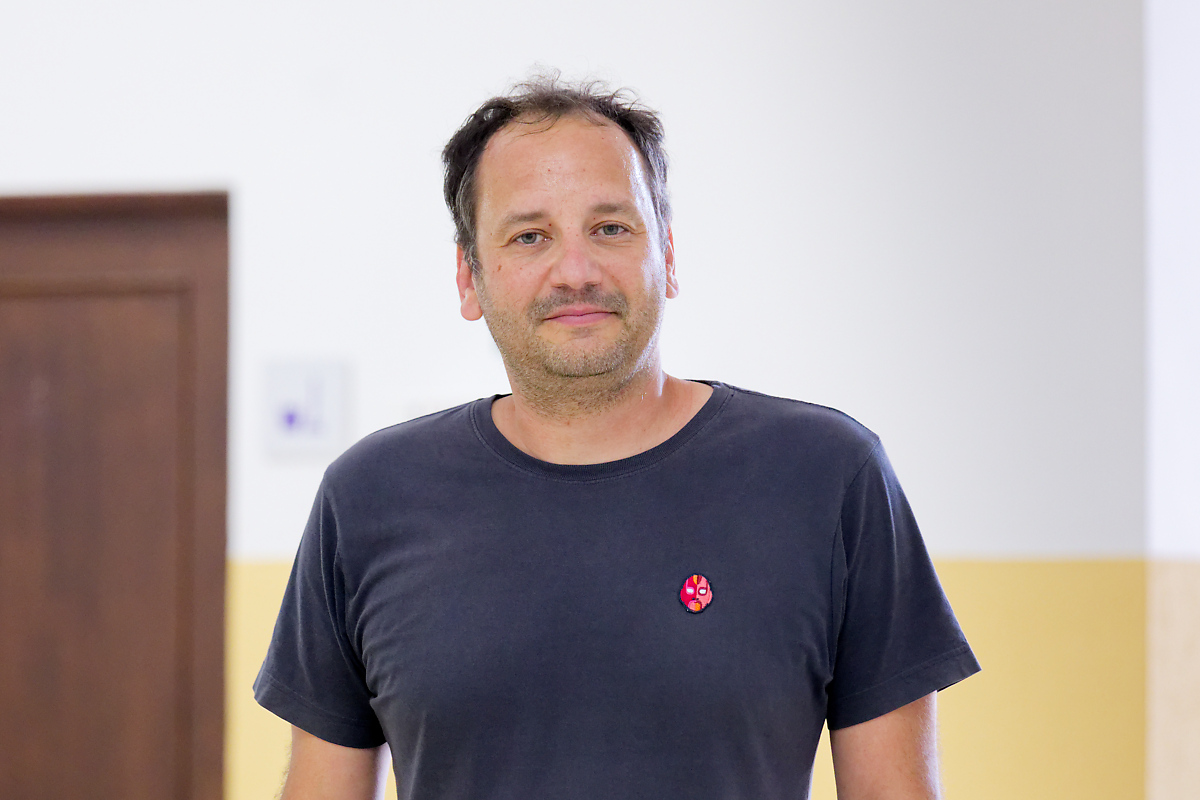
Jonay Tomás Toledo
The primary sector can also benefit from advances in applied research. In this context arises the spin-off Robotserv, an initiative launched to address the needs of the Canary Islands' agricultural sector, which demands automation solutions tailored to the specific characteristics of the archipelago's growing environments. Led by a professor of Engineering Jonay Tomás Toledo, The technology company focuses on developing autonomous mobile robots designed to assist in agricultural tasks. Its goal is to facilitate production in various crops using technologies that, until now, have no similar alternative available on the market for the specific conditions of the Canary Islands.
The initiative aims to commercialize a system capable of automating repetitive tasks, such as weed removal using mechanical or laser methods, as well as preventative spraying. These applications could help reduce the use of pesticides in certain traditional crops on the islands and decrease risks to workers. According to the researcher, there are currently no autonomous robots of this type designed for agricultural operations like those in the Canary Islands. While some GPS-guided tractors have been marketed for large-scale farming, these solutions are not suitable for the working conditions and layout of the most common farms in the archipelago.
Toledo explains that the initiative aims to transfer to the agricultural sector the experience accumulated over years in developing autonomous mobile robots for various applications. The idea took shape through direct contact with several companies in the sector, who expressed a need for technological solutions tailored to their production processes.
Currently, the project is in the development phase of a functional prototype, focused primarily on banana plantations. The goal is to validate the technology with potential clients, evaluating its performance and usefulness under real-world working conditions on farms. Although initial demand is concentrated on banana cultivation, the business initiative is already considering adapting this technology to other strategic crops in the archipelago, such as vineyards and avocado orchards.
The researcher explains that the team is currently working on a demonstrator prototype of the autonomous robot. The system is based on a rubber-tracked vehicle with a surface area of approximately one square meter and a payload capacity of around 120 kilograms. It also incorporates an accessory that allows a person to ride on it to directly evaluate its behavior, stability, and navigation capabilities under real-world conditions.
Toledo points out that the reduction in the cost of sensors and actuators, coupled with the development of artificial intelligence algorithms based on neural networks, is facilitating the incorporation of advanced capabilities into these types of platforms. Thanks to this, robots can adapt to changing work environments, identify fruit, detect potential crop diseases, and autonomously perform agricultural treatment and processing tasks.
New anti-corrosion strategies
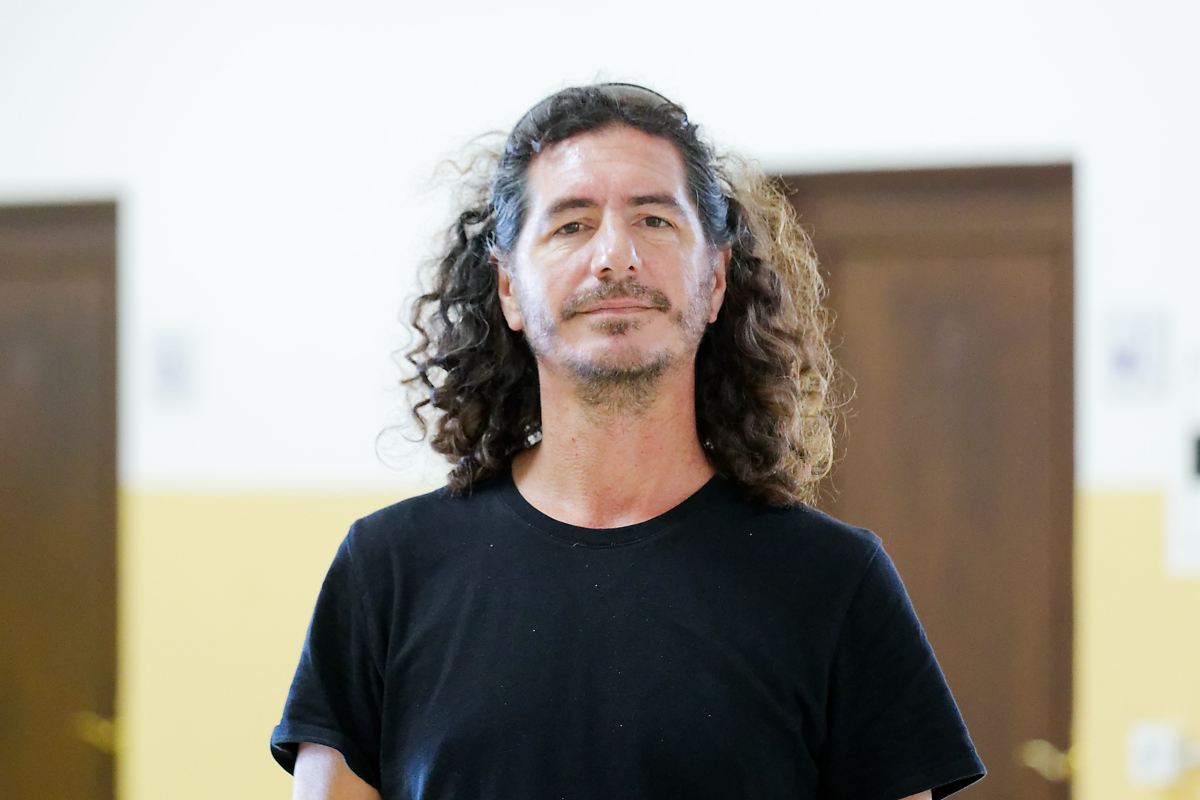
Gonzalo García
The third business initiative recently approved at the University of La Laguna is the spin-off ZONE 1. Coordinated by the researcher in the Physical Chemistry area Gonzalo García, This company develops a metallic coating technology capable of acting as an invisible oxygen barrier, designed to inhibit corrosion by controlling the cathodic reaction. Unlike other anti-corrosion methods that employ physical barriers or sacrificial materials, this solution prevents oxygen from interacting with the metal surface and therefore inhibits metal oxidation.
García explains that the coating's structure has been optimized at the nanoscale to maintain the physicochemical integrity of the surface and the metallic substrate, without altering its mechanical properties or functionality. This characteristic allows its application to structural metals exposed to extreme conditions without compromising their operational performance. This technology represents the scientific foundation upon which the spin-off, focusing on transferring this knowledge to the industrial sector.
Furthermore, the researcher highlights that this solution, which already has a registered patent (WO2024/115805) in Europe, the United States, China, Argentina and India, aligns with the principles of industrial sustainability, by significantly reducing the need for maintenance, the use of toxic inhibitors or polluting coatings, and by increasing the lifespan of the protected materials.
In this initial phase, ZONA 1's primary objective is to solidify its business structure and begin developing projects with external partners. Simultaneously, the company will work on validating various lines of business and identifying those with the greatest potential for application and impact. The researcher identifies companies, public administrations, and other entities requiring specialized technological support in areas related to materials maintenance, corrosion, electrochemistry, and environmental monitoring as its main potential clients. He also adds that they are considering collaboration with other technology centers and organizations that carry out complementary activities combining research and innovation.
In this way, the technology-based company seeks to transform research results into technological solutions capable not only of improving the durability of materials, but also of optimizing processes and facilitating decision-making through advanced monitoring. García adds that the creation of spin-offs This represents an opportunity for research staff to establish a more direct channel to facilitate knowledge transfer initiatives and explore new forms of collaboration between the university and the productive sector.
Thus, TENET LightKey, Robotserv and Zone 1 are joined by the five business initiatives already established in the institution: Wooptix, specializing in light-based innovations, especially in the field of semiconductor metrology; Formaché, focused on the development of moldable pastes made from microparticle waste; Kaizten Analytics, a consultancy that applies data science to improve business decision-making; EnergyRIS, dedicated to innovation in renewable energy installations, energy communities and companies; and BIOGAS, specializing in methane production through the digestion of organic waste. Furthermore, the University of La Laguna has promoted other innovative initiatives such as CARDIOBEAT, a startup that combines medicine, innovation and digital development to improve the teaching of cardiac auscultation and facilitate the identification of abnormal heart sounds using advanced digital tools.
Scientific Culture and Innovation Unit of the University of La Laguna (Cienci@ULL)

 Spanish
 English
 French