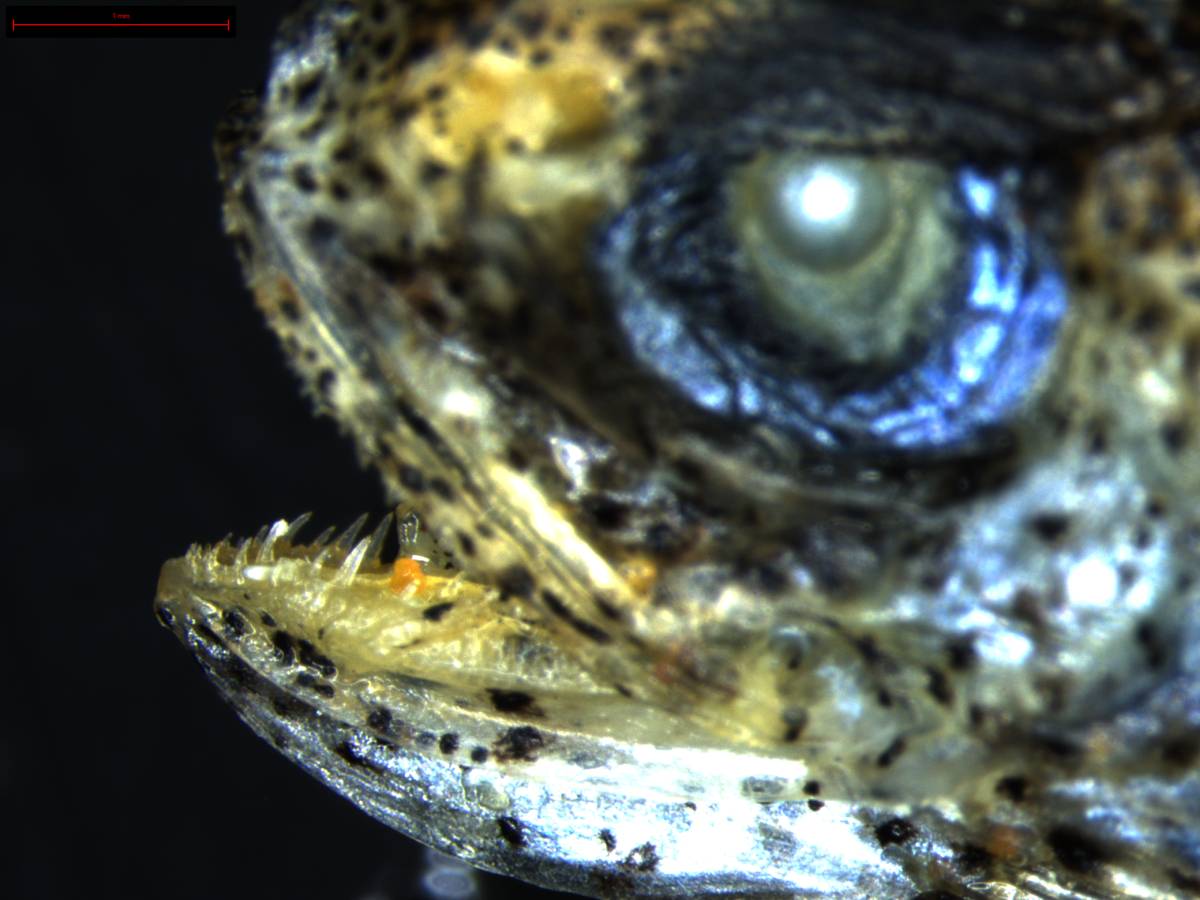
Research staff from the Spanish Institute of Oceanography (IEO, CSIC), in collaboration with the universities of Vigo and La Laguna, have confirmed for the first time the presence of the mesopelagic fish Bregmaceros atlanticus in Spanish waters. This study, Published in the journal Marine Biodiversity, it contributes to the knowledge of the geographical distribution of the species.
“Although it had traditionally been considered that Bregmaceros atlanticus "It had a circumtropical distribution, with a presence in the Atlantic, Indian and Pacific oceans, but the results obtained support the hypothesis that its actual distribution could be limited to the Atlantic," says Rafael Bañón, researcher at the Vigo Oceanographic Center of the IEO and first author of the study.
The research was conducted using three specimens collected in the Canary Islands. Two of them were captured during the CETOBAPH oceanographic campaign, carried out in 2012 aboard the oceanographic vessel Cornide de Saavedra off the island of El Hierro, and the third specimen appeared stranded on a beach in southern Tenerife in 2024, constituting, moreover, the first documented case of stranding of this species.
To confirm the identification, the team conducted a detailed study of the morphological characteristics and obtained a genetic sequence of the COI gene, the standard marker used in international molecular species identification systems. The analysis allowed them to confidently assign the canary specimen to a specific genetic group (BIN AAV0298), associated with Bregmaceros atlanticus.
The results combine classical morphological study with molecular genetics tools to verify the species' identity. “Traditionally, fish identification has been based on external morphological characteristics. However, integrative taxonomy approaches, which combine morphological and molecular information to resolve complex taxonomic questions in poorly understood fish groups, are becoming increasingly common,” Bañón points out.
Bregmaceros atlanticus, Commonly known as the antennae squid due to the distinctive elongated dorsal ray on its head, it is a small pelagic species that inhabits oceanic and mesopelagic waters, generally from the surface to several hundred meters deep. Because of its size, lifestyle, and similarity to other species in the same genus, its identification has historically been challenging.
Analysis of genetic sequences available in international databases revealed the existence of several clearly differentiated genetic groups that likely correspond to distinct species still awaiting taxonomic revision. According to the authors, this situation highlights the need for further study of the genus. Bregmaceros, which exhibits high diversity and a complex taxonomic history.
“This discovery further highlights the value of the Canary Islands' waters as a strategic area for studying deep-sea biodiversity. The stranding of the specimen in Tenerife could be related to oceanographic processes characteristic of the archipelago, such as the interaction between ocean eddies, upwelling, and local currents that occasionally displace mesopelagic organisms towards coastal areas,” Bañón points out.
The co-author of the study from the University of La Laguna is Alejandro Escánez Pérez, from the Department of Animal Biology, Soil Science and Geology. In addition to Rafael Bañón, the other signatories are Alejandro de Carlos and Ángel Sebastián Comensaña (University of Vigo) and Jesús M. Falcón (Canary Islands Oceanographic Center of the IEO).

 Spanish
 English
 French