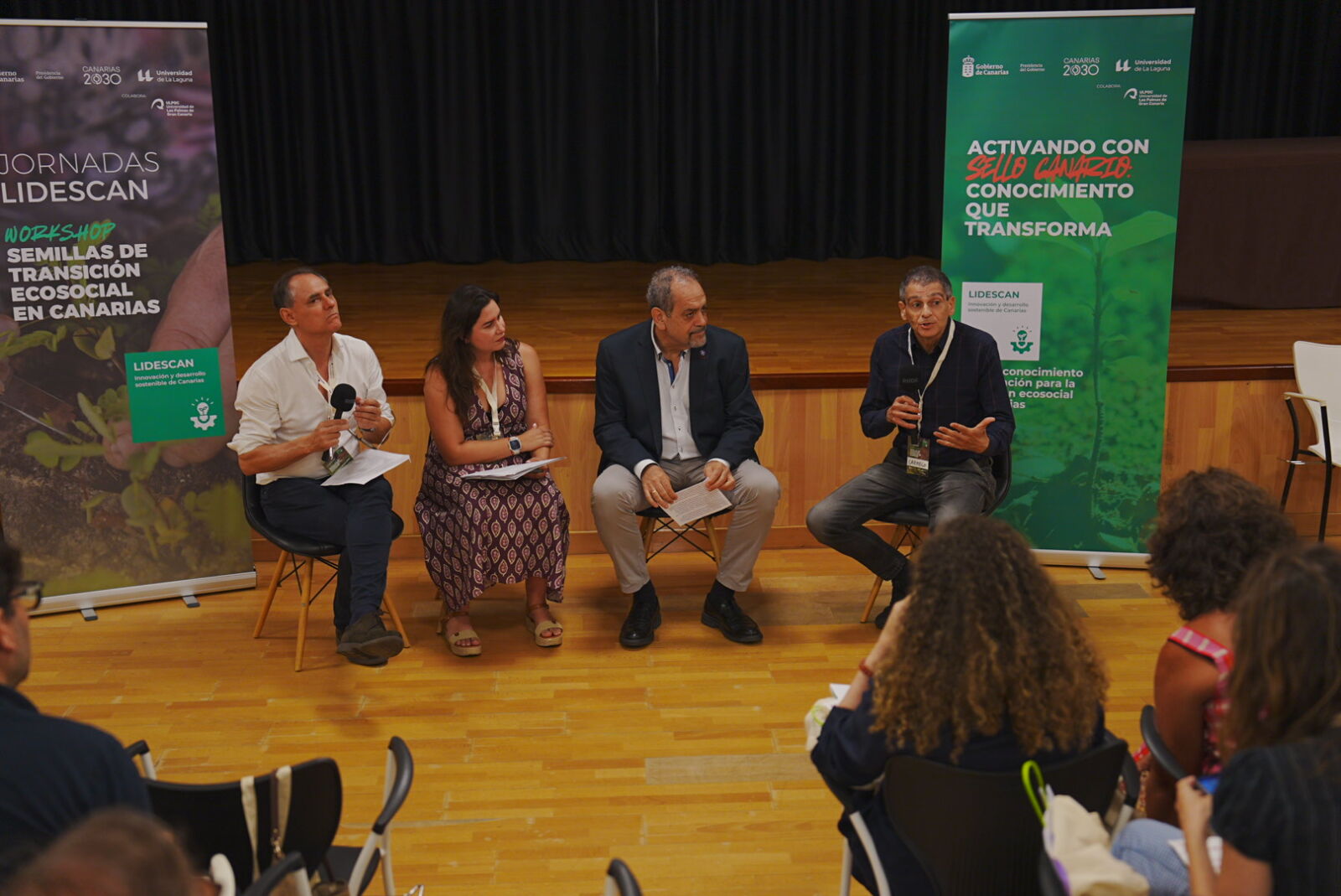
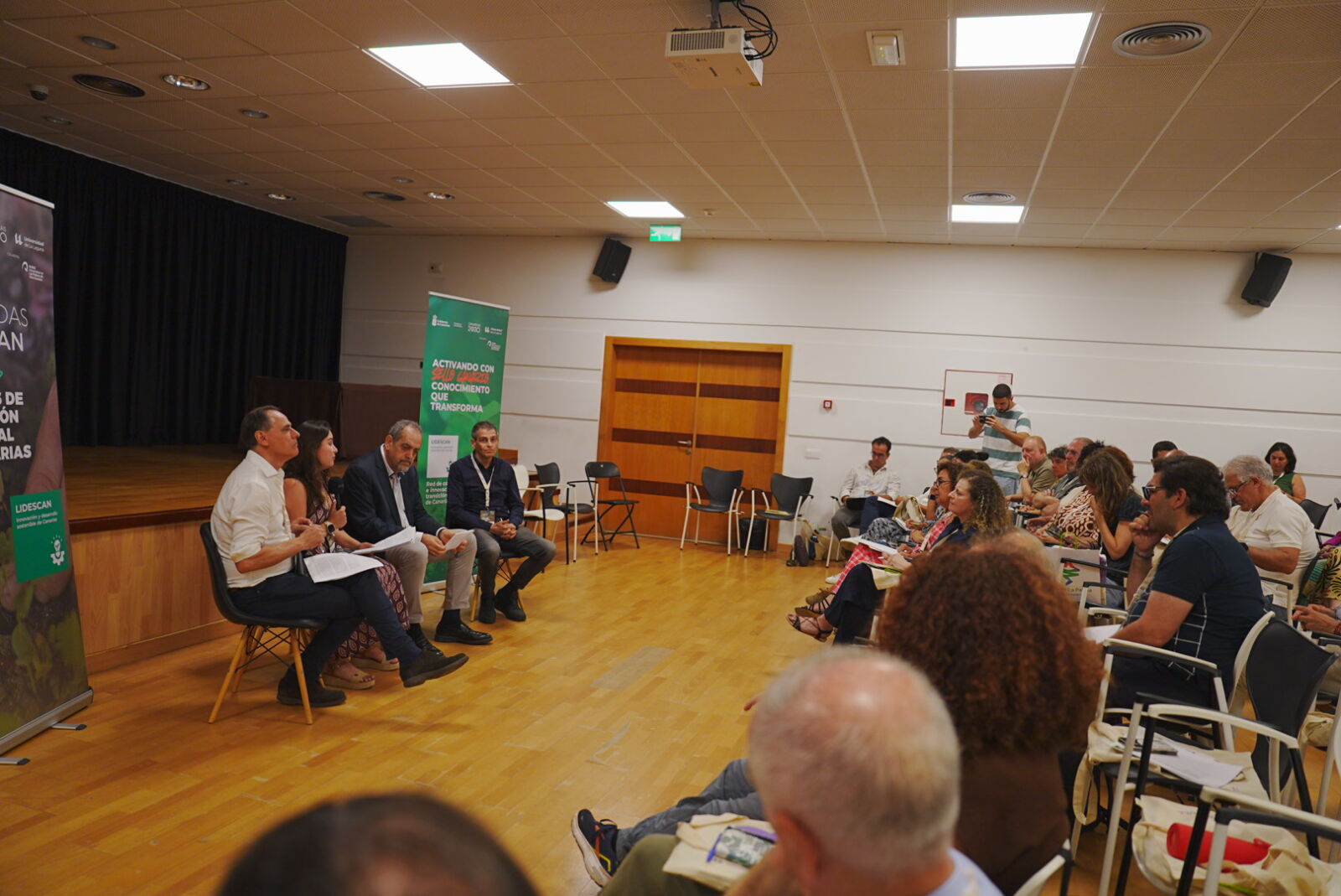
The University of La Laguna inaugurated the workshop 'Seeds for the Ecosocial Transition in the Canary Islands' today, July 27th, in La Palma. The workshop brings together representatives from academia, public administration, and the private sector to develop proposals for a more sustainable development model in the Canary archipelago. This meeting is part of the commitment to the Canary Islands 2030 Agenda and is being carried out through the LIDESCAN project, in collaboration with the University of Las Palmas de Gran Canaria.
For two days, participants will work on three main themes: ecological transition, agroecology and production systems, and economic diversification through tourism. These areas of focus will allow them to address some of the archipelago's main challenges from a multidisciplinary perspective, incorporating different viewpoints and knowledge from various professional backgrounds.
These contents will be analyzed from three common perspectives: territory, landscape and identity; governance and participation; and values, ethics and social capital, elements considered, which will serve as a framework to reflect on the relationship between the communities, natural resources and the forms of development that are proposed for the future of the archipelago.
 The opening of the conference was led by José Manuel García Fraga, Vice-Rector of Teaching at the University of La Laguna; Carlos Fernández, principal investigator of this initiative; and Mónica Gómez, councilor for the area of Natural Environment, Ecological Transition and the Fight against Climate Change of the Cabildo of La Palma; and Carmelo León, director of the Unesco Chair of Tourism and Sustainable Economic Development at the University of Las Palmas de Gran Canaria.
Fraga pointed out that the mission of universities is not only to transfer knowledge, but also to create it, and emphasized that this workshop represents “a space for learning and transformation.” Fernández explained that the objective of the meeting is to connect the agents leading the ecosocial transition and reminded everyone that “it is a process that needs time to grow and consolidate.”.
For his part, Gómez affirmed that the eco-social transition is an urgent matter, emphasizing that, like seeds, it “requires patience, the right conditions, care, and skilled hands.” León highlighted the importance of reflection in order to move forward, “to make a difference,” stressing that this is not an isolated project, but rather an initiative integrated into other programs of the Government of the Canary Islands.
The event employs a participatory methodology that combines presentations focused on issues such as the energy transition, the inherited agricultural landscape, and contemporary ethics, with workshops, collaborative activities, and field exercises. This approach aims to foster dialogue among diverse perspectives and promote the creation of partnerships between institutions, social organizations, businesses, and the research community.
As a result of these workshops, the LIDESCAN project will produce a summary document that will compile the shared diagnosis, strategic priorities, and proposals that emerged during the working sessions. This document will serve as a reference tool to contribute to the design of initiatives aimed at sustainable development and improving the Canary Islands' capacity to respond to future challenges.

 Spanish
 English
 French