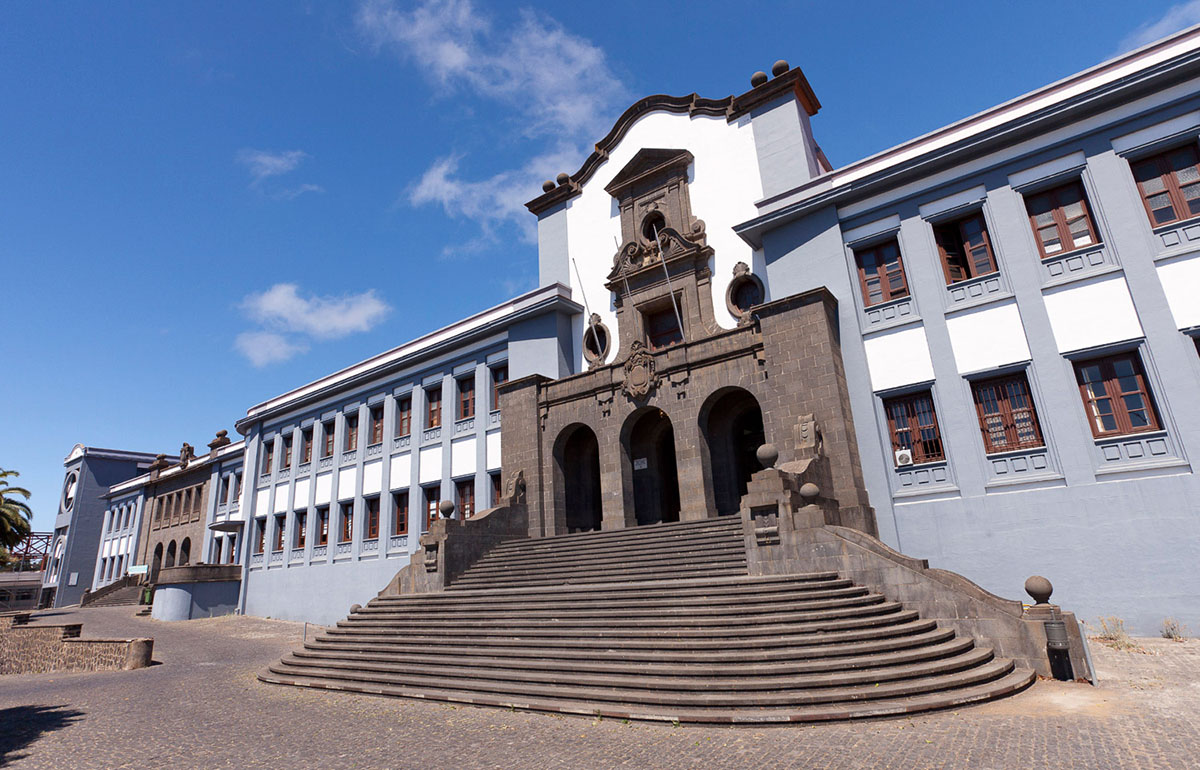
Since October 2025, the University of La Laguna's management has been developing a pioneering protocol among Canary Island institutions to measure the presence of radon in its facilities and implement the necessary measures to mitigate its impact. The university acquired 1,454 radon detectors and has already received results from 921 of them: 85% of these readings indicate that the buildings are radon-free; 7% show a moderate presence that can be mitigated with ventilation; and only 7% require evacuation and, where possible, construction work.
Although the protocol was launched last October, acquiring and installing the meters has taken some time. Additionally, for the measurements to be valid, uninterrupted data recording is required for at least three months. Therefore, the first reports were only obtained in May and sent to the laboratory for validation.
On July 29 and 30, the university administration informed deans, center heads, users of the affected spaces, and the Health and Safety Committee about these actions. Also on July 30, the administration notified the university community of the opening of a section on the institutional intranet detailing the measures adopted. This website contains all the resolutions and measures implemented, various technical instructions, and all the data on the measurements and necessary actions, developed based on the results obtained.
Each area of the university has been analyzed individually, and the measures are adopted in accordance with current regulations and with the advice of the relevant technical units. The website allows users to visualize each area using a system similar to an emergency traffic light, indicating the specific situation in green, yellow, or red.
Management has coordinated the joint work of the Occupational Risk Prevention Service, the Medical Physics and Environmental Radioactivity Laboratory (FIMERALL), the management of the General Research Support Services (SEGAI), the Technical Office and the rest of the units involved to analyze the situation, define the applicable measures and coordinate their implementation.
Radon is a naturally occurring gas that rises from the ground and can enter buildings through the soil. It is invisible and imperceptible, so measurements are necessary to detect its presence. It disperses outdoors, but can accumulate in some enclosed spaces. In the Canary Islands, due to the volcanic nature of the terrain, there are areas with a higher potential for radon concentrations. The reference value is an annual concentration of 300 becquerels per cubic meter (Bq/m³).3), established by the Nuclear Safety Council

 Spanish
 English
 French