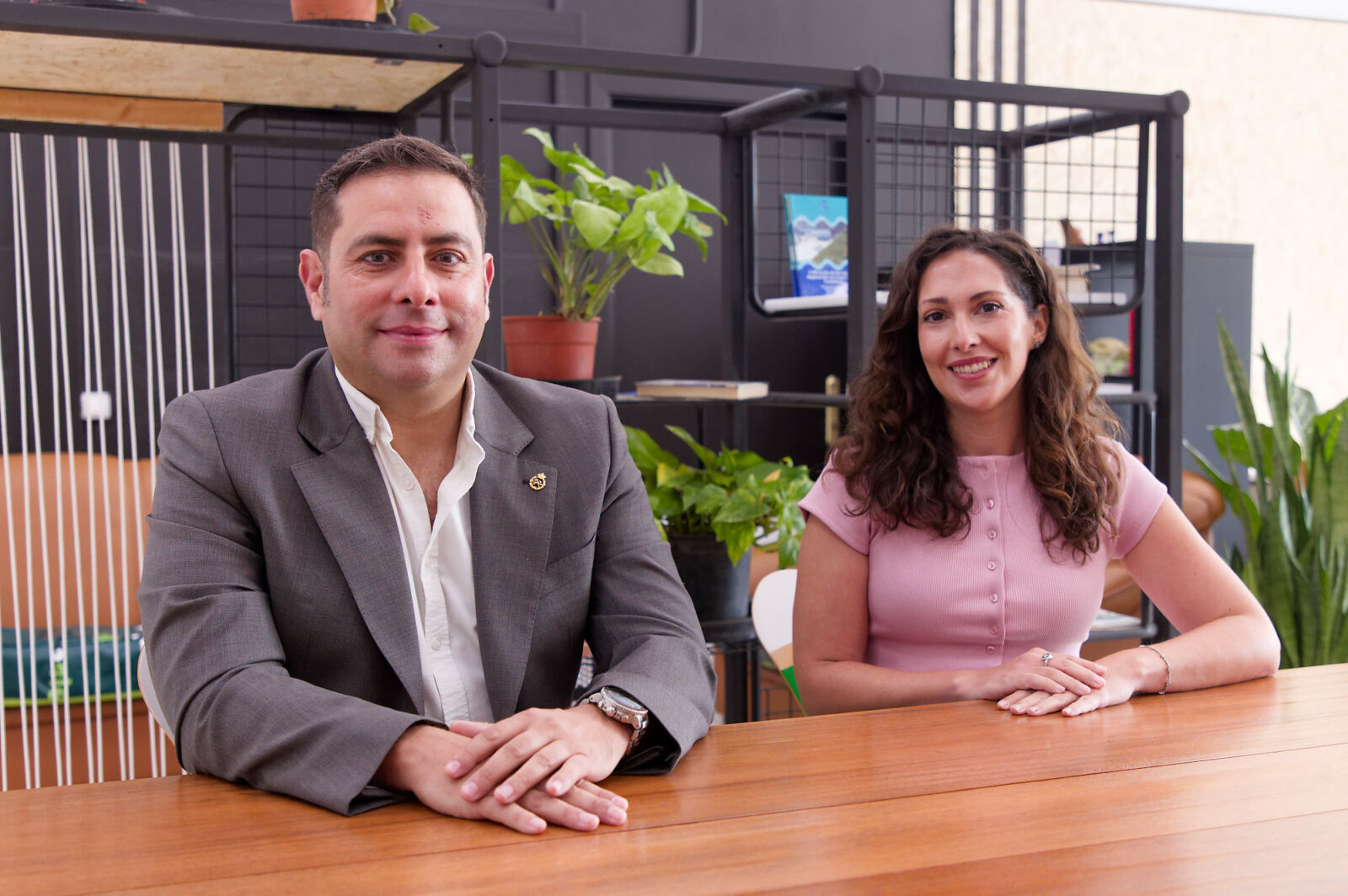
The Canary Islands face the challenge of adapting their agriculture to a scenario marked by rising temperatures, water scarcity, and increasing pressure on land use. In response to this reality, a team of researchers from the University of La Laguna, led by Juan Carlos Santamarta Cerezal, Professor of Agricultural and Environmental Engineering, and Noelia Cruz Perez, assistant professor PhD from the same department, have developed a participatory process based on the methodology of living laboratories (Living Labs), whose results highlight the potential of collaborative innovation to design sustainable solutions adapted to the particularities of the archipelago.
The research, carried out within the framework of the European project ARSINOE and published in the magazine Environmental Development, The project brought together representatives from the agricultural sector, water management, public administration, the scientific community, and civil society in three workshops to analyze the main challenges facing the Canary Islands' agri-food system and co-create proposals for adapting to climate change. It is also worth noting that the platform was launched as a result of this project. SICMA, awarded the prestigious international Chris Binnie Award.
The process allowed for the joint design of a vision for what the Canary Islands' agricultural landscape should look like in 2050. Participants envisioned a model based on more sustainable production, efficient water use, the recovery of abandoned agricultural land, the strengthening of food sovereignty, and greater integration between scientific knowledge, technological innovation, and agricultural experience, especially with the use of high-quality data.
The research group behind this study also emphasizes that technical solutions alone are insufficient to address climate challenges. They stress that the success of the transition will also depend on social, cultural, and governance factors, such as cooperation among stakeholders, ongoing training, and citizen participation in decision-making.
One of the most significant findings of the analysis is the close relationship between rising temperatures and water availability. The increase in heat necessitates greater reuse of reclaimed water, improvements in the digitalization of irrigation systems, and facilitating the transfer of scientific knowledge to farms through training and support programs.
The research also highlights the Canary Islands' heavy reliance on tropical monocultures, particularly bananas and avocados, whose vulnerability to rising temperatures could jeopardize future agricultural production. As an alternative, the study proposes moving towards more diversified farming systems capable of improving biodiversity, reducing the water footprint, and increasing resilience to climate change. However, the researchers identified significant obstacles, such as certain economic incentives and regulations that currently hinder production diversification.
One of the main results achieved with the implementation of the living laboratory was confirming that human factors are just as important as technological ones. Participants agreed that collaboration among farmers, researchers, government agencies, and the public is one of the most influential drivers for promoting a sustainable transformation of the sector. They also identified the need to improve training in sustainable agriculture from the earliest stages of education, facilitate generational renewal, highlight the role of rural women, and promote new professional opportunities linked to the primary sector.
The research team behind this study concludes that the systemic innovation approach applied through living laboratories allows for a better understanding of the complexity of the Canary Islands' agri-food sector and the design of strategies tailored to the territory's real needs. In addition to generating scientific knowledge, they note that this process has helped create a community of practice among participants, fostering new collaborations and strengthening their collective capacity to address the challenges posed by climate change.

 Spanish
 English
 French