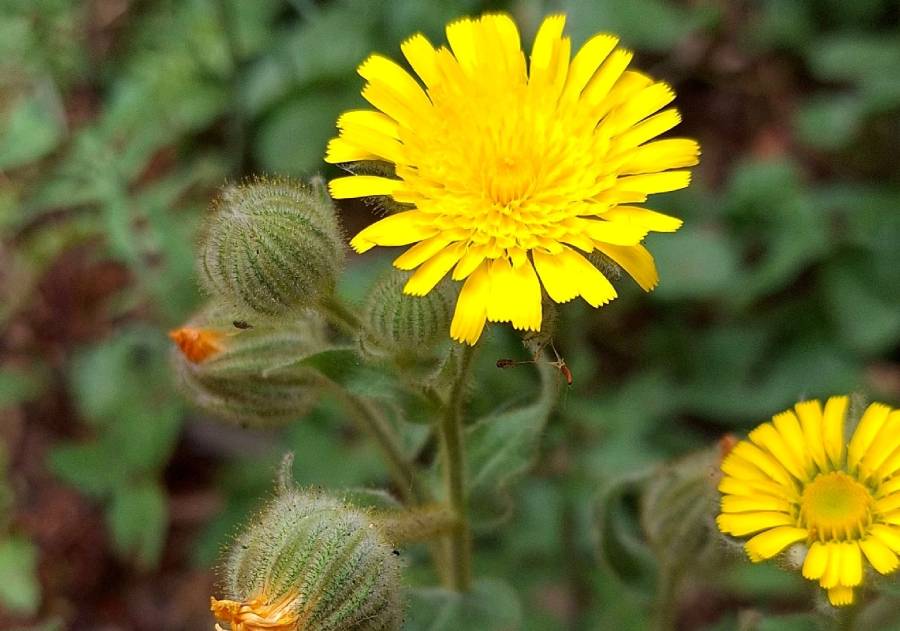
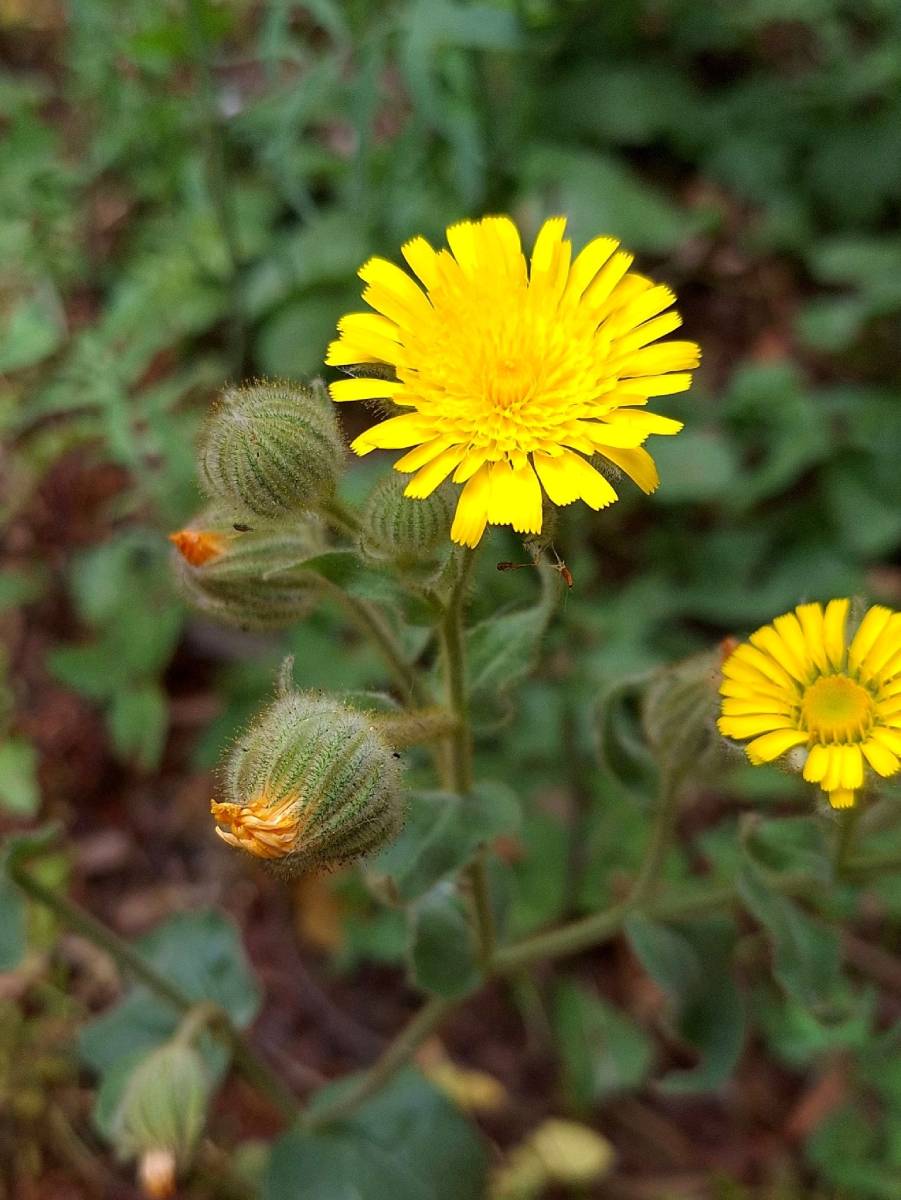
Andryala laxiflora. Photo: J. Tuero Septién (IPNA-CSIC)
Oceanic islands are veritable natural laboratories of evolution, but they are also among the most vulnerable ecosystems to biological invasions. Understanding why some introduced species manage to establish themselves and expand while others fail is one of the great challenges of ecology.
An international study co-led by the University of La Laguna and the Institute of Natural Products and Agrobiology (IPNA-CSIC) provides a new answer to this question. The work, published in Ultrasound, It demonstrates that many plants introduced to the Canary Islands are able to establish themselves in climatic conditions different from those they occupy in their natural distribution areas, a result that calls into question some of the models used so far to predict the risk of invasion.
Since the time of Charles Darwin, the scientific community has proposed different hypotheses to explain why some introduced species manage to establish themselves successfully while others do not. One of these, known as Darwin's preadaptation hypothesis, posits that introduced species related to native flora are more likely to thrive because they share similar ecological adaptations. Another, the climate analogy hypothesis, maintains that a species will only be able to establish itself if it finds a climate similar to that of its area of origin.
The aim of the study was to test the extent to which these hypotheses explain the success of introduced plants in an oceanic archipelago like the Canary Islands. As it points out Louis S. Jay-García, researcher at IPNA-CSIC and the University of La Laguna and co-author of the study, “for decades it was thought that it was enough to know the evolutionary relationship of a species or the climate of its place of origin to predict its ability to invade new territories, but these results show that the reality is much more complex: many plants are able to expand the range of climatic conditions they occupy once they arrive on the islands.
More than 180 species
To test these hypotheses, the team analyzed more than 180 introduced plant species belonging to 82 genera present in the Canary Islands. The researchers compared each species with native species of the same genus, integrating phylogenetic relationships, millions of distribution records, and high-resolution climate models to reconstruct the climatic niche of each species.
One of the examples analyzed corresponds to the genre Andryala, represented in the Canary Islands by endemic species such as Andryala pinnatifida and by the introduced species Andryala laxiflora. Although both belong to the same genre, the study shows that A. laxiflora It has managed to establish itself in the archipelago, occupying climatic conditions different from those present in its natural distribution, an example of the expansion of the climatic niche observed in numerous introduced species.
The results show that Darwin's preadaptation hypothesis alone does not explain the success of introduced plants in the Canary Islands. The evolutionary relationship between native and introduced species contributes little to explaining the similarity between their climatic niches. In other words, belonging to the same genus as a Canary Island plant does not necessarily imply that both occupy the same environmental conditions.
On the other hand, although many species from Mediterranean and Neotropical regions do find climates in the Canary Islands similar to those of their places of origin, a significant number manage to establish themselves in completely different climatic conditions.
Specifically, more than a third of the species studied exclusively occupy climatic conditions that they do not use in their natural distribution, and nearly two-thirds show a very marked expansion of their climatic niche.
Researchers propose several possible explanations for this phenomenon, including ecological release (when competitors or natural enemies present in the area of origin disappear), evolutionary adaptation to new environmental conditions, or the existence of local microclimates that facilitate the establishment of species outside the climatic conditions they usually occupy.
New tools to anticipate future invasions
As Jairo Patiño, a scientist at IPNA-CSIC and one of the study's authors, emphasizes, "biological invasions are one of the main threats to island biodiversity," and this work shows that neither relatedness to native flora nor the climate of origin completely limits the ability of introduced species to establish themselves. Therefore, "incorporating this greater ecological flexibility into risk assessment models will allow for improved prevention and conservation strategies.".
The islands harbor a high proportion of endemic species and, at the same time, are highly vulnerable to biological invasions. In the Canary Islands, introduced plants represent approximately one-third of the known flora. Therefore, understanding the factors that favor their establishment is essential for improving prevention and management tools for future invasions.
The authors conclude that current risk assessment models should incorporate the capacity of species to expand their climatic niche once introduced. Relying solely on climatic similarity between the place of origin and the receiving territory could lead to underestimating the invasive potential of certain species in a context of climate change and increasing global mobility of organisms.
In addition to Louis S. Jay-García and Jairo Patiño, the research has involved the participation of Yurena Arjona (ULL and IPNA-CSIC), Flavien Collart and Alain Vanderpoorten (University of Liège, Belgium), Olivier Broennimann and Antoine Guisan (University of Lausanne, Switzerland) and José María Fernández-Palacios (ULL).

 Spanish
 English
 French