The transfer of scientific knowledge doesn't always have to occur through academic articles, technical reports, or publications aimed at specialized audiences. It can also reach the general public through more accessible and relatable languages such as film, comics, or educational materials. In a context marked by information overload, misinformation, and a loss of trust in scientific knowledge, this approach allows us to connect with society not only through reason, but also through empathy, emotions, and experience.
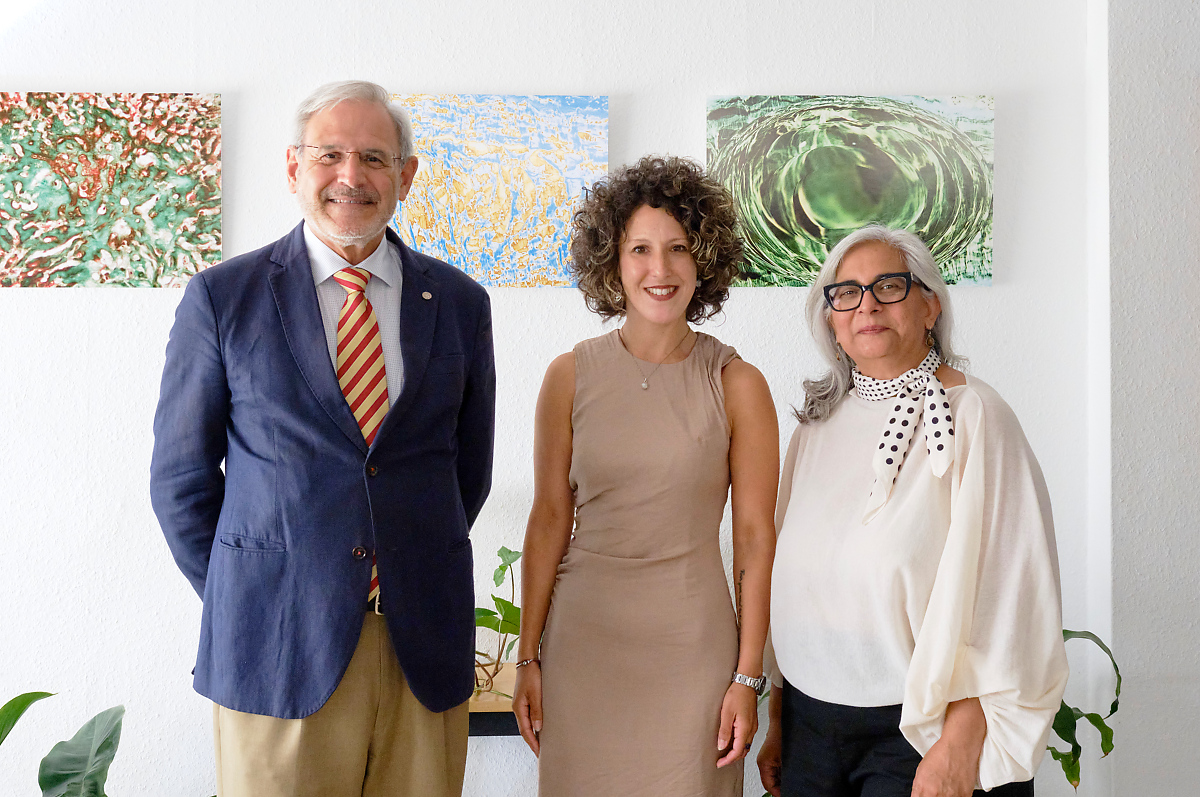
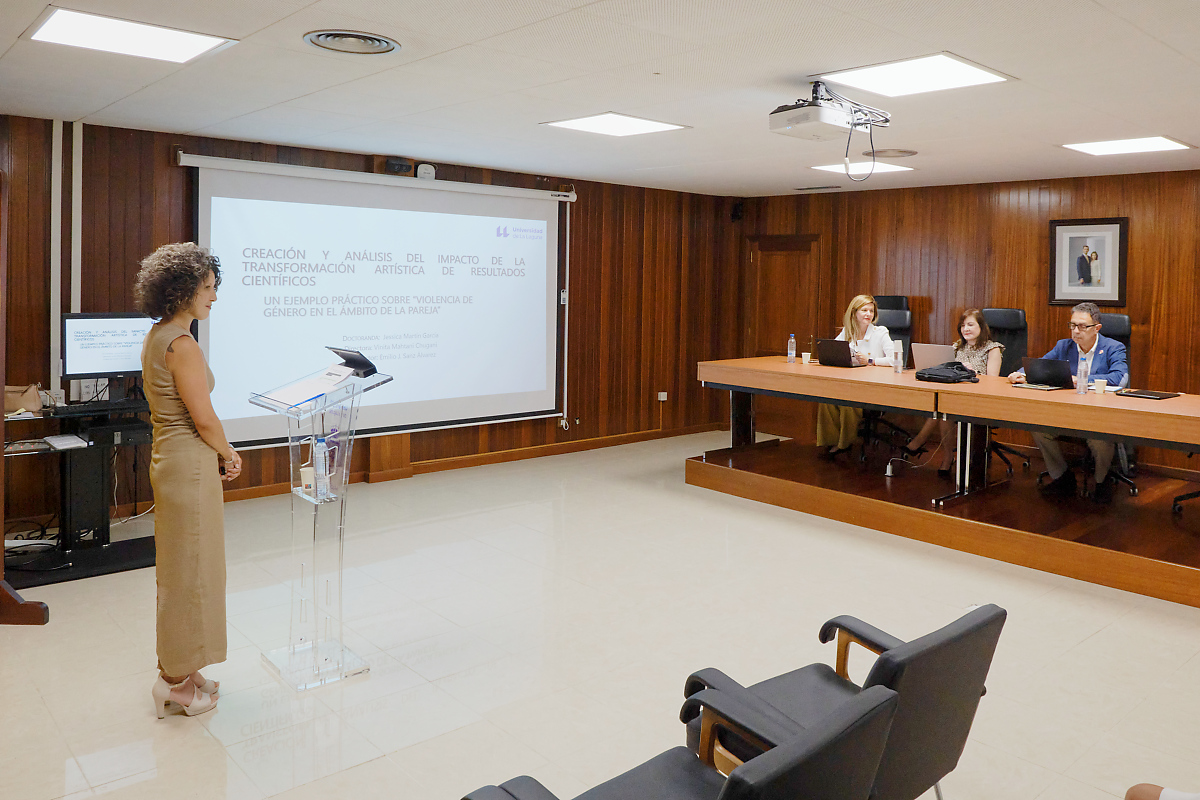
This was one of the main lines of inquiry addressed by Jessica Martín García in her doctoral thesis, entitled “Creation and Analysis of the Impact of the Artistic Transformation of Scientific Results. A Practical Example on “Gender Violence in the Context of Couple Relationships”, recently defended in the Medicine Section of the Faculty of Health Sciences of the University of La Laguna.
The work, framed within the pDoctoral Program in Health Sciences, was directed by Vinita Mahtani Chugani and co-directed by Emilio J. Sanz Álvarez. He was evaluated by a panel chaired by Miguel Lorente Acosta, from the University of Granada, with Carina Soledad González González, from the University of La Laguna, as secretary and Anna Berenguera Ossó as a member. The doctoral candidate obtained an outstanding grade and an honorable mention. cum laude.
Their contribution falls within the field of art-based knowledge transfer, known by its English acronym ABKT (Arts-based knowledge translationThis tool complements traditional methods of scientific dissemination by transforming academic results into artistic products. This model aims to broaden the reach of knowledge, make it more accessible, and foster awareness and social reflection.
 In this case, Martín applied this methodology to the qualitative results of the DIPEX Spain project “Gender Violence in Intimate Partner Relationships.” This process resulted in the animated short film. The spider web, a comic book and complementary educational materials, designed primarily for the educational field and to facilitate the detection of early signs of gender violence in couples.
One of the main contributions was to systematically document and evaluate the process of transforming scientific data into narrative and visual resources, from message selection to adaptation into audiovisual scripts, characters, symbolism, and classroom materials. During her defense, the doctoral candidate emphasized the need to preserve the rigor of the original study and avoid sensationalist or stereotypical approaches to this particularly sensitive topic.
The choice of the ABKT (Absence of Gender-Based Violence) was due to the complexity of the phenomenon being addressed. Gender-based violence is a multidimensional reality, permeated by emotional, social, and relational experiences. Therefore, the study did not simply measure reactions, but sought to understand how people interpret, experience, and give meaning to these types of messages.
The results showed a positive reception and confirmed the usefulness of the short film, the comic and the educational materials to work on issues such as healthy relationships, emotional education, the detection of toxic bonds, the role of the victim's environment and the building of relationships based on respect, affection and individual freedom.
The evaluation also highlighted the emotional component of these resources. Among the responses collected were feelings such as pity, vulnerability, helplessness, fear, anger, empathy, compassion, sadness, and also joy at the main character's development. This affective dimension, according to the findings, reinforces art's potential to generate reflection and awareness when integrated into an appropriate educational framework.
Addressing gender-based violence in the classroom also requires careful ethical planning. Therefore, the team incorporated support resources such as the 016 helpline and contact information for the ANAR Foundation, and suggested the importance of working with these materials under the guidance of professional therapists, psychologists, educators, or counselors.
The project falls within the line of DIPEX Spain y MUSA Experience, Initiatives that use art to transfer scientific knowledge about social and health issues. It also received funding from Ministry of Equality and its products have been disseminated in scientific, socio-health and educational spaces.
During her defense, Martín also emphasized the collective nature of the process, which required dialogue among scientific, artistic, educational, and communication professionals. The doctoral candidate expressed her gratitude for the support of her supervisors, as well as the dedication of the team that made it possible to transform the scientific results into materials capable of reaching new audiences.
The research concludes that artistic languages open new possibilities for bringing science closer to the public in a way that is not only effective but also emotionally engaging. In a particularly sensitive area such as gender violence, this proposal defends the value of art as a tool for understanding, evoking emotion, and generating reflection without sacrificing scientific rigor.

 Spanish
 English
 French