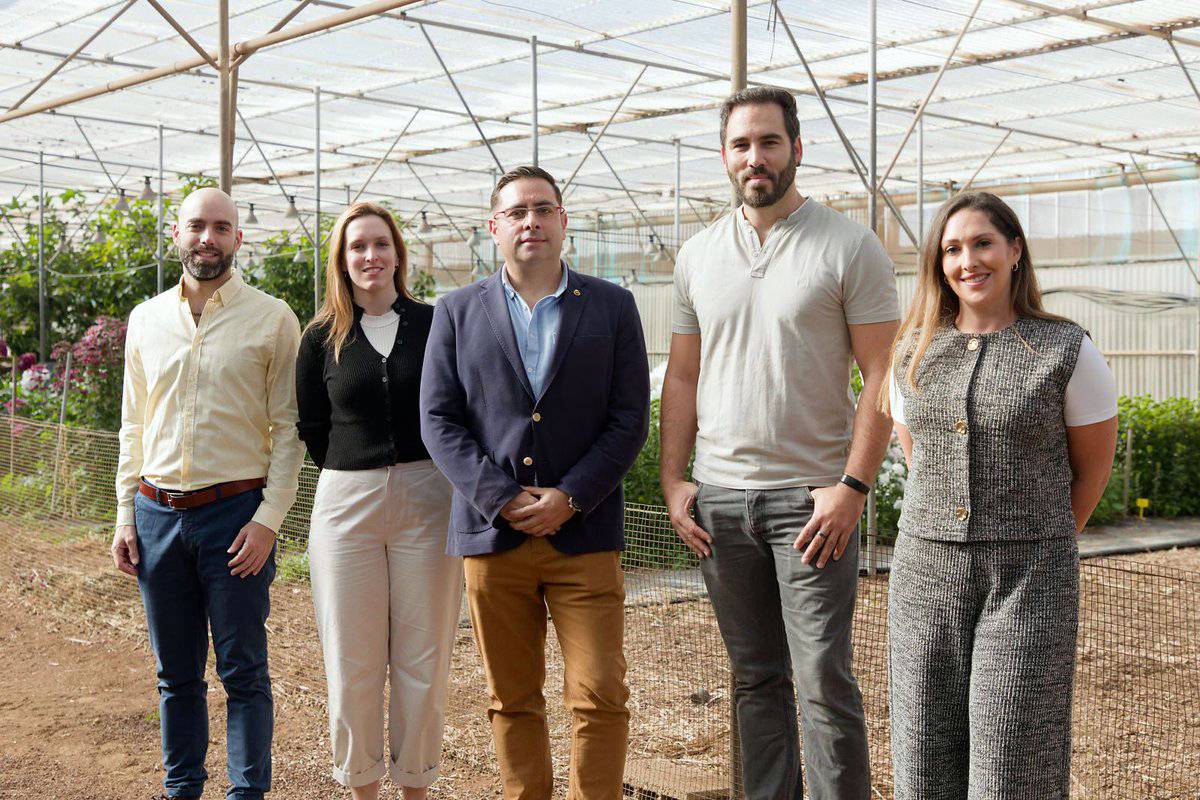
The high-resolution climate information platform for island territories SICMA Canarias, coordinated by the professor Juan Carlos Santamarta Cerezal and the teacher Noelia Cruz Pérez, both from the Department of Agricultural and Natural Environment Engineering at the University of La Laguna, has reached the final phase of the VII Magallanes-Elcano Social Innovation Awards.
These awards, promoted by the LABME Foundation, recognize initiatives, organizations and institutions that are generating a positive and transformative impact in their territories and highlight innovative solutions capable of improving people's lives and strengthening more sustainable, inclusive and resilient communities.
This seventh edition has seen the highest participation in its history, with 234 applications from 15 Ibero-American countries, of which only 36 projects have advanced to the final phase in the various categories. A technical committee and a jury made up of professionals from universities, companies, public administrations, and organizations in Spain and Portugal will now evaluate the finalists.
The awards ceremony will be held on September 16th in Seville, where the winning projects in each category will be announced. SICMA Canarias will compete in the "Cities, Smart Cities and Territories" category, dedicated to initiatives focused on the transformation, sustainability, and resilience of these spaces.
A high-resolution climate platform up to 2100
SICMA Canarias is a project that allows users to consult and analyze how the archipelago's climate will evolve throughout the 21st century, with projections at a spatial resolution of up to 100 by 100 meters. This level of detail is crucial in the Canary Islands, where the topography and microclimatic diversity vary from island to island and even within the same island.
The system, developed by the University of La Laguna together with the Climate Research Foundation (FICLIMA) and the company Meteogrid, It originated as one of ARSINOE's main innovation outcomes. It incorporates data on maximum and minimum temperature, precipitation, potential and actual evapotranspiration, water balance, SPEI index, aridity, and heat waves, with projections to the end of the century under different climatic and socioeconomic scenarios. It was developed by combining ten CMIP6 climate models with four SSP socioeconomic scenarios.
The platform translates complex scientific information into a tool to support hydrological planning, water resource management, agriculture, land-use planning, the conservation of natural areas, and climate change adaptation policies. The University of La Laguna has already highlighted its usefulness for island water councils, environmental managers, the agricultural sector, and government agencies to incorporate future climate scenarios into their planning processes.
Santamarta and Cruz Pérez, coordinators of SICMA Canarias, believe that being selected as a finalist in these awards represents recognition of a form of climate research that seeks, in addition to generating scientific knowledge, to convert it into information applicable to real problems in the territory.
SICMA Canarias emerged as a result of the European program ARSINOE (Climate-resilient regions through systemic solutions and innovationsThis project, funded by the Horizon 2020 framework, brought together more than forty partners and developed various case studies to strengthen the resilience of European regions to climate change. The University of La Laguna led the Canary Islands case study for three years, which has generated more than 25 studies, presentations at national and international conferences, and publications in high-impact journals, including pioneering work on the archipelago's water and environment.
In addition to the University of La Laguna, FICLIMA and Meteogrid have participated in the development of SICMA, combining university research, climate modeling, and technological development. The project translates scientific knowledge into public and territorial management, an aspect that is especially relevant for island regions vulnerable to the effects of climate change.

 Spanish
 English
 French