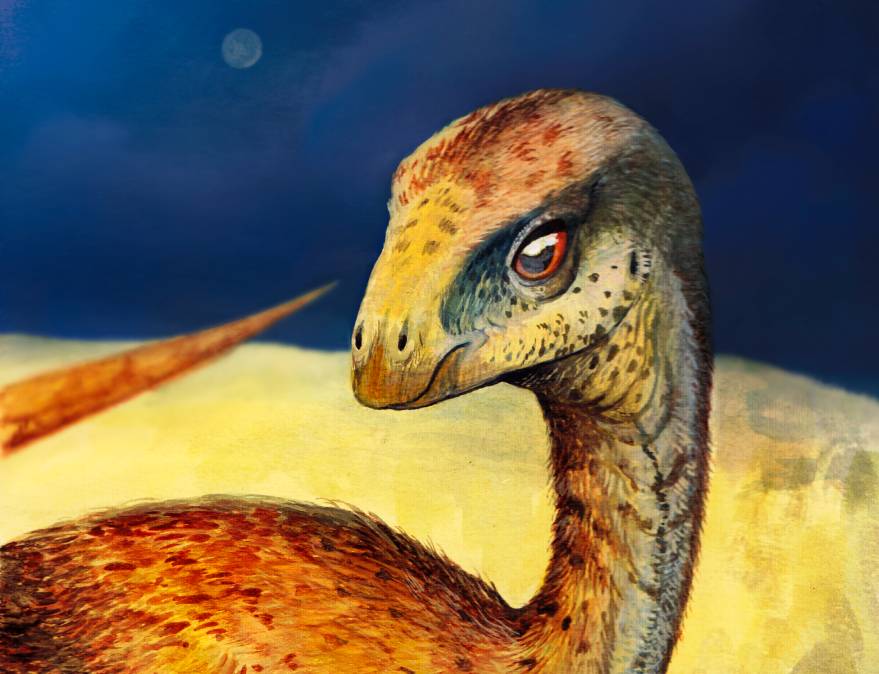
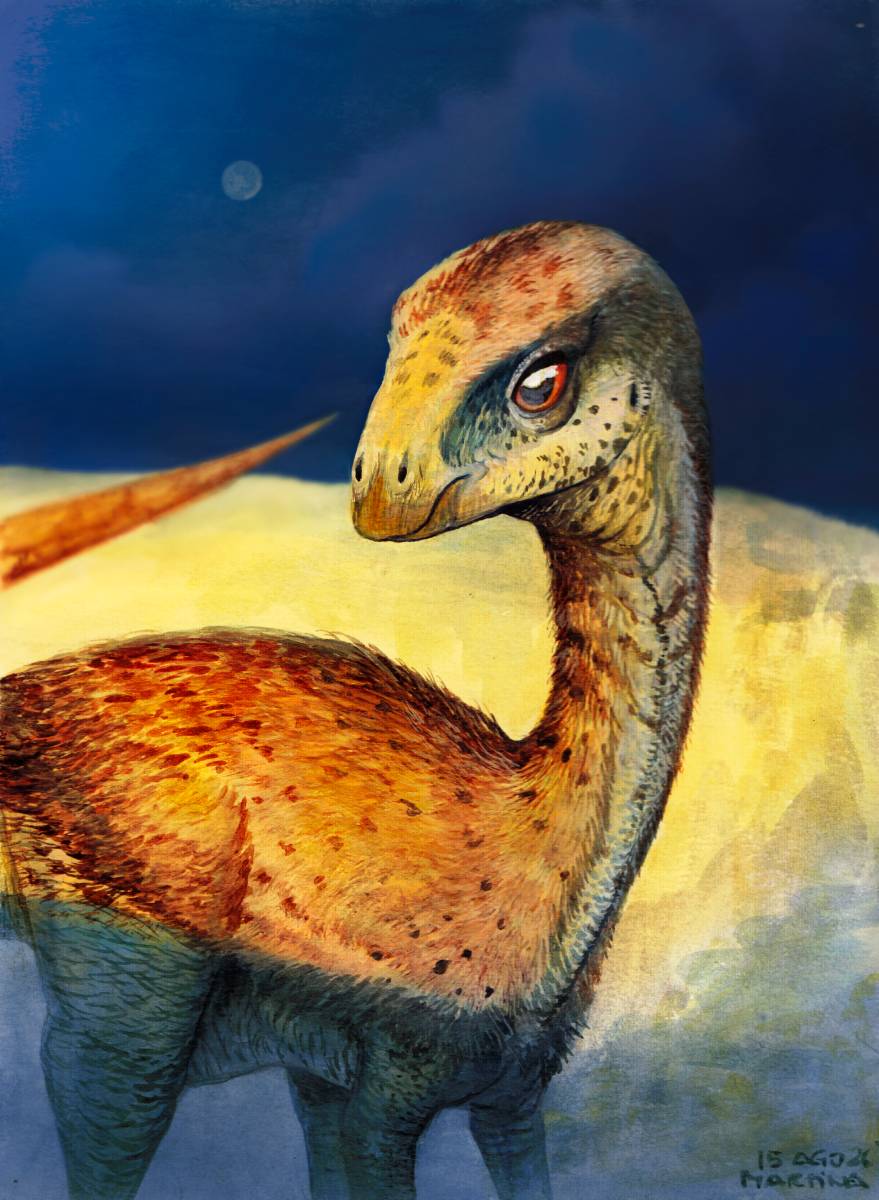
Artistic reconstruction of the Gasparinisaura cincosaltensis by the paleoartist Martina Charnelli.
An international research team, with the participation of leading Argentine and Spanish research centers, has managed to decipher the true identity of Gasparinisaura cincosaltensis, a small herbivorous dinosaur that inhabited Argentine Patagonia during the end of the Cretaceous period.
The participating centers are, specifically, the Institute of Research in Paleobiology and Geology, CONICET-UNRN, General Roca; the Institute of Research in Biodiversity and Environment, CONICET-UNCOMA, Bariloche, the Bariloche Paleontological Museum, the University of La Laguna and the Aragosaurus-IUCA team (University of Zaragoza).
The article has been published in the journal Cretaceous Research and focuses on this small ornithopod dinosaur from the Anacleto Formation (Campanian, 83 to -72 Ma., Río Negro, Argentina). The work reviews in depth the reference fossil (holotype, MUCPv 208), which houses the only almost complete skull of a non-hadrosauriform ornithopod documented in the entire southern hemisphere.
A 3D model of his skull was obtained without damaging it using medical micro-computed tomography (µCT), allowing for the analysis of the deformation it suffered during the period he was buried. The data obtained has confirmed that G. cincosaltensis It belongs to the lineage "Elasmaria", which in turn also belongs to the Dryosauridae family.
The skull of G. cincosaltensis It is the third best-preserved skull of this group worldwide. Furthermore, the newly published work fills a gap in the understanding of the evolution of the dryosaurid skull over almost 72 million years. This has allowed the definition of a new subfamily of Gondwanan dinosaurs called “Dysalotosaurinae”, which links this Argentinian species to other dinosaurs found in the Late Jurassic of Tanzania (Dysalotosaurus lettowvorbecki) and the Middle Cretaceous of Australia (Leaellynasaura amicagraphica).
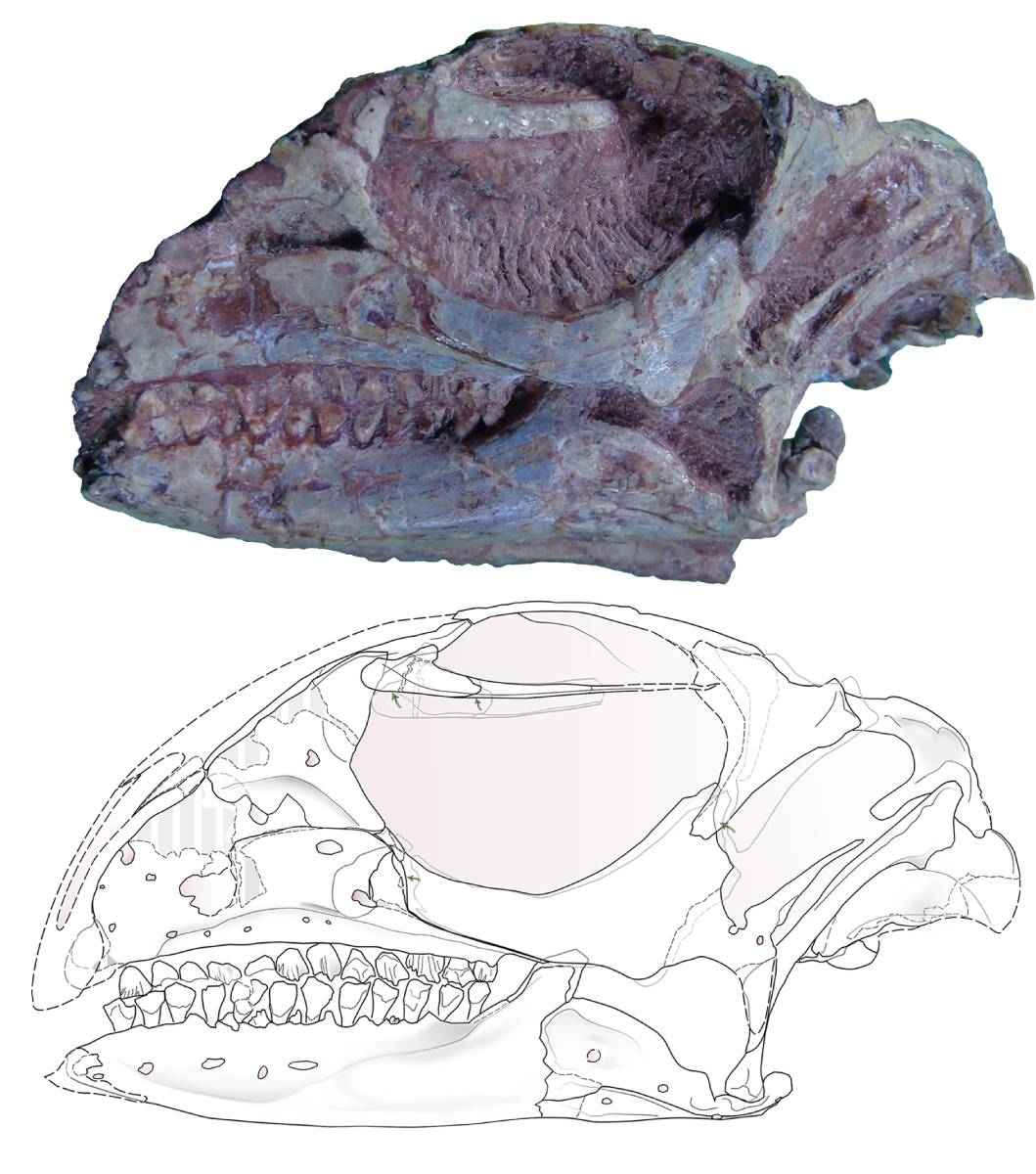
Skull of the Gasparinisaura cincosaltensis.
Thanks to a detailed first-hand description based on medical scanner data, the authors of the study were able to distinguish the effects of deformation and crushing suffered by the specimen from other traits and characteristics naturally present in the species. Gasparinisaura cincosaltensis. They described a number of new skull features, such as a separation between one of the internal walls of the head and the roof of the skull.
It was also confirmed that the enormous eyes of Gasparinisaura These features were not due to the specimen being a juvenile, but rather to a fully developed adult anatomical characteristic adapted to its environment. The larger size of the eye sockets would have altered the shape of the skull bones even before their full development, shifting them backward. Simultaneously, the bones forming the snout rose to accommodate these large eyes.
This discovery supports previous studies that revealed a highly developed visual area of the brain in L. amicagraphica. This adaptation would explain the success of the disalotosaurus, a group of herbivorous dinosaurs adapted to living in high latitudes, with long periods of darkness, towards the end of the age of dinosaurs.
The authors of this work express their gratitude and posthumous tribute to paleontologist Jorge Calvo, former director of the Lago Barreales Paleontological Center (Neuquén, Argentina) who died in 2023, for his invaluable help, generosity and continuous support throughout the development of this project.

 Spanish
 English
 French