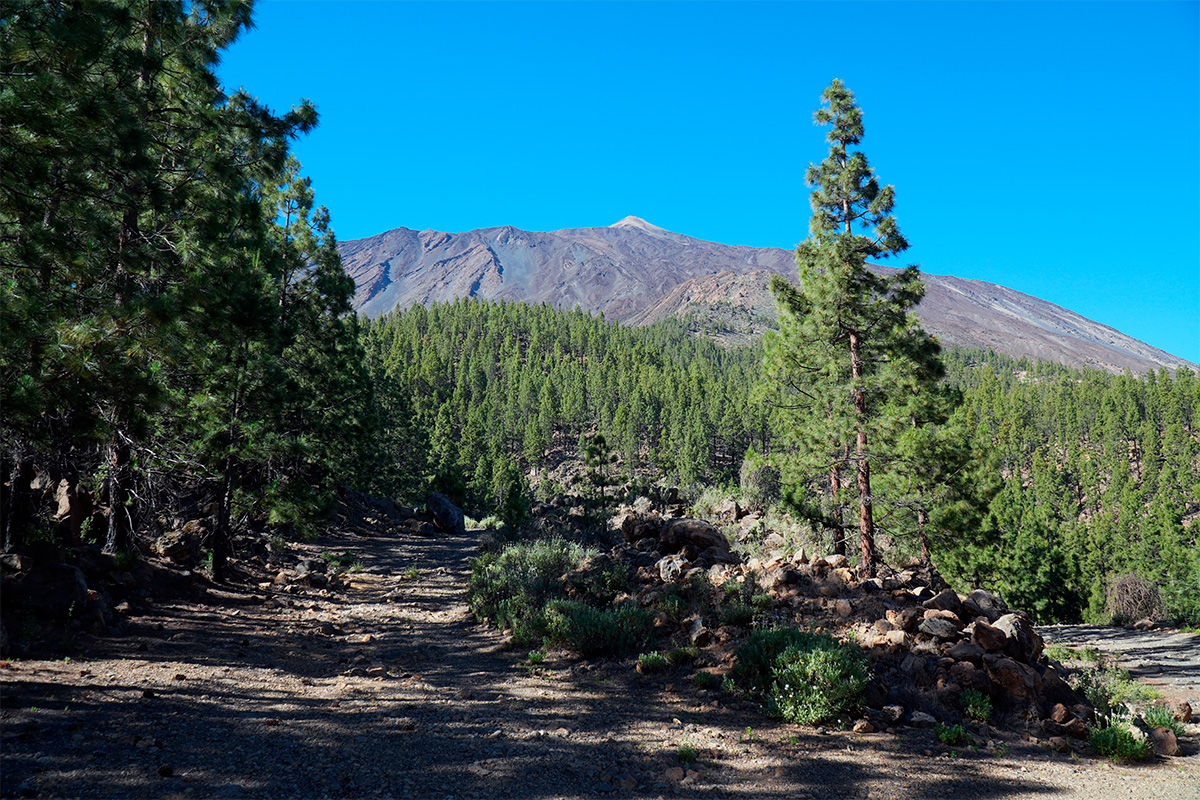
On the north face of Teide, the landscape compels you to pause and admire it. Beneath the still appearance of the high mountain, amidst dark lava flows, obsidian blocks, and ancient paths carved into the terrain, lie the traces of human activity spanning centuries. Sometimes they appear as small fragments of carved stone, as barely perceptible concentrations of material, or as passageways that only make sense when viewed together. But there they are: signs that this territory was not only a volcanic landscape, but also a space inhabited, traversed, and worked by the Guanche people.
At Tabonal de los Guanches, one of Tenerife's main obsidian mining sites, a research team from the University of La Laguna is working to reconstruct the relationship between the island's indigenous communities and the volcanic landscape where they lived. The project is led by Christ Manuel Hernandez Gomez, Professor of Prehistory at the academic institution, within the framework of the 2022 Call for Knowledge Generation Projects, driven by the Ministry of Science and Innovation and the State Research Agency.
The project is entitled Volcanism and Island Societies: Eruptions, Environment and Human Settlement in Tenerife during the last 2,000 years, although its acronym, Archaeology, This aptly summarizes its purpose: to bring archaeology and volcanoes into dialogue. The initial question is as direct as it is complex: how did the indigenous population of Tenerife manage the volcanic activity with which they had to coexist during the time their culture developed on the island?.
The question allows us to look at the Guanche past from a perspective less common in Canarian archaeology: not only through their settlements, their materials or their productive practices, but also from the abrupt changes that an active volcanic territory could impose.
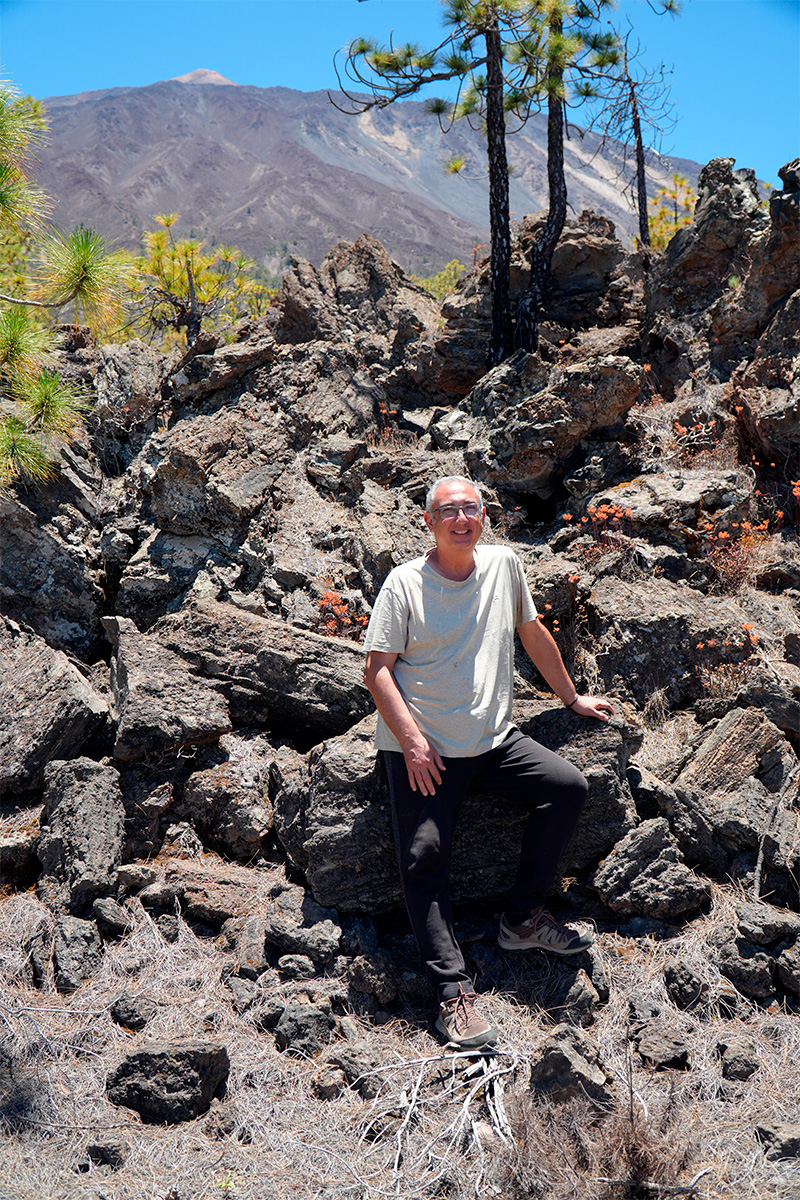
Cristo Manuel Hernández, director of the ArqueoVOL project and professor of Prehistory at the ULL.
A mountain that also changed
One of the most intriguing findings of the research is that Mount Teide did not always have the appearance that is now part of Tenerife's collective imagination. According to Hernández Gómez, the cone that crowns the large stratovolcano was formed during Teide's last eruption, when the island was already inhabited. That eruption generated lava flows around the volcanic edifice and also affected areas linked to obsidian mining.
“Teide, as we know it today, with its distinctive features that transport us all to the island of Tenerife, is not the Teide that the aboriginal inhabitants knew when they arrived on the island,” he states. The statement shifts our perspective. It suggests that those communities did not inhabit a static landscape, but rather a living territory, subject to transformations capable of altering paths, resources, and ways of life.
An eruption can bury territories, disrupt communication routes, or create uninhabitable spaces until time allows for recovery. In such a scenario, human societies must respond with strategies of adaptation and reorganization. The team is still in the data collection phase, but has already gathered evidence pointing to the need to consider the volcanic factor when interpreting changes in the population of the Tenerife summit.
This perspective allows us to continue revising the traditional interpretation of Las Cañadas del Teide, long understood primarily as a seasonal grazing area. The work carried out in recent decades by the team of Matilde Arnay de la Rosa, The research, conducted by a retired professor from the University of La Laguna, has revealed a more complex landscape, structured by diverse productive activities, roads, resource collection areas, settlements, and burial sites. “Today we are reformulating that explanation, that paradigm, and Las Cañadas must have been a much more organic and complex space in the world of the Guanches, in which volcanism also played a fundamental role,” says the project director.
The reformulation of Las Cañadas as a more diverse and interconnected space does not start from scratch. In 2024, Hernández Gómez, Marrero Salas, and Arnay de la Rosa published Archaeological Heritage of the Canary Islands. Tenerife, ArqueoVOL is a work that brings together a synthesis of the available knowledge about the earliest inhabitants of Tenerife through the material traces that have survived to the present day. It traces part of this history and focuses on a specific question: how did volcanism, lithic resources, and the occupation of high mountain areas intersect in the lives of the island's indigenous communities?.
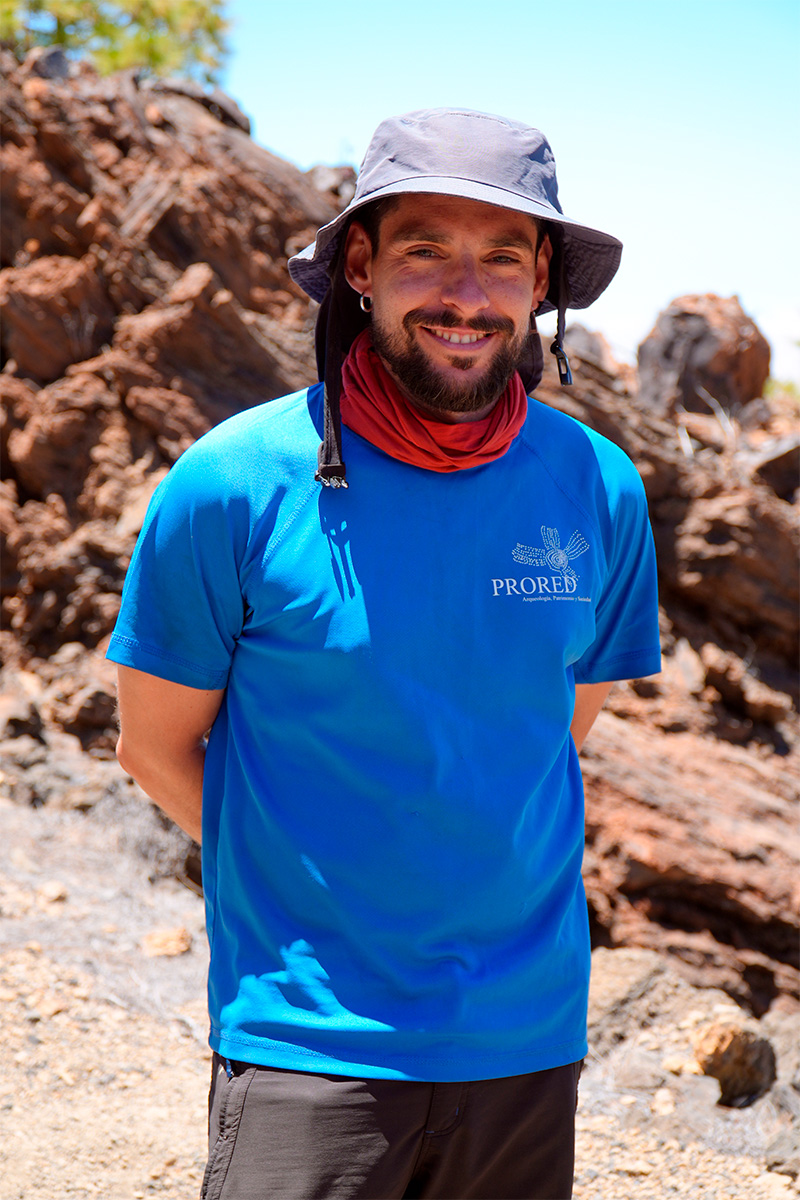
Efraín Marrero Salas, co-director of the prospecting work and of PRORED.
Obsidian, resource and trace
Obsidian plays a central role in this story. This volcanic glass, abundant in the mountainous region of Tenerife, was an essential raw material for making cutting tools. Its importance is best understood by considering the context of the first populations to arrive in the Canary Islands from North Africa: groups of people who knew how to use metals, but who had to adapt to an island territory where those resources were not readily available.
In that context, volcanic rocks became essential materials for daily life. Obsidian acquired special value due to its properties: it is easily carved and produces very sharp edges. "It has a cutting ability like a knife, like a razor blade," summarizes Hernández Gómez.
The Tabonal de los Guanches served as one of Tenerife's main supply centers. The professor from the University of La Laguna describes it, using a modern image, as the Guanche people's "main obsidian supermarket." From there, this raw material reached various points on the island, as the team's geochemical analyses have revealed.
This reading of the territory is one of the tasks it develops Efraín Marrero Salas, He is the co-director of the surveys at Las Cañadas and of PRORED, a company dedicated to the study and management of heritage that regularly collaborates with the University of La Laguna. The team carries out this activity of identifying archaeological remains on the surface, without excavation or soundings, to locate knapping workshops, supply areas, ceramic fragments, hammerstones, or signs of transit. It's not just about knowing where obsidian appears, but about reconstructing how it was mined: which blocks were selected, which areas of the flow were most suitable, how the workshops were organized, and how the material was subsequently transported.
“We are analyzing the organization of specialized labor within the workings themselves,” says Marrero. The possible routes between workshops and internal transit areas help to interpret obsidian mining not as a dispersed activity, but as a system with a spatial and social logic.
For the co-director of the fieldwork, learning to read this landscape involves understanding how the Guanche population confronted the island's terrain in order to inhabit it. Their settlements, resource collection areas, and paths did not appear randomly. The preservation of this record makes Las Cañadas a particularly valuable space, especially in the face of the more intense transformations that the coast and midlands have undergone since the conquest.
“I would like it to be understood that Las Cañadas del Teide is a human-modified landscape, a landscape that has always been inhabited by people,” Marrero argues. Recognizing this history also means caring for the vestiges that remain in the area: it is not only a landscape of enormous natural value, but also a space that preserves fundamental information for understanding how the Guanche communities lived.
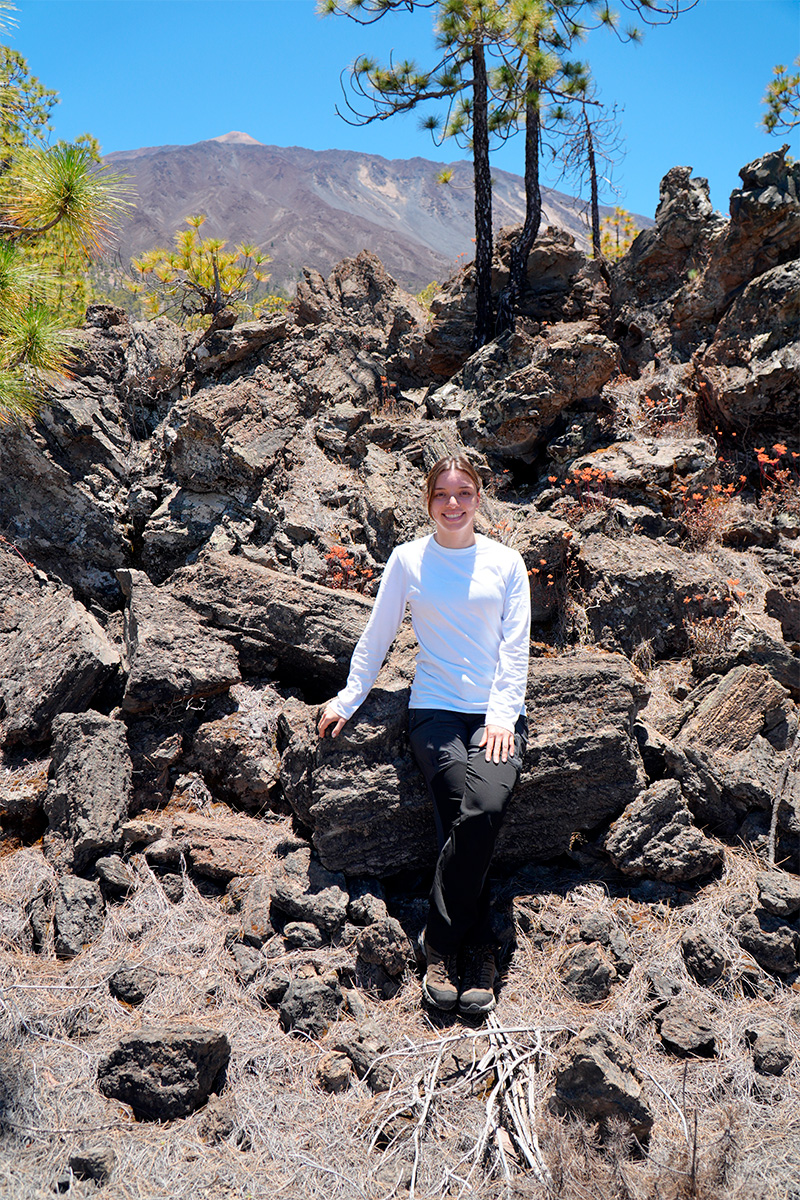
Idaira Brito Abrante, researcher at the University of Las Palmas de Gran Canaria.
What is not visible to the naked eye
The interpretation of the landscape is complemented by laboratory work and a scientific approach that intersects different disciplines. The study brings together specialists in archaeology, volcanology, geography, geoarchaeology, paleomagnetism, paleoecology, and materials analysis, among other fields related to the archaeological, volcanic, and paleoenvironmental knowledge of Las Cañadas del Teide.
The laboratory work involves Idaira Brito Abrante, A researcher at the University of Las Palmas de Gran Canaria, she recently joined the team studying the technology and function of obsidian. Her work allows for a better understanding of how the indigenous population of Tenerife produced, used, and gave meaning to these materials. Surface observation allows for the identification of workshops or extraction areas, but the laboratory provides information that the naked eye cannot always discern.
Traceology studies the microscopic marks left by tool use and helps us understand activities that haven't always left other preserved remains. In a high mountain environment, arid and subject to strong temperature contrasts, a piece of obsidian can thus become a way to reconstruct vanished everyday practices.
For Brito, the eruptions may have posed a threat, but they also generated materials that became resources. This tension between risk and opportunity runs through much of the research. “I would like people to see that the stones were a very important resource for the indigenous population, but they are also important for us to understand how these people interacted in an isolated, metal-free island environment,” he says.
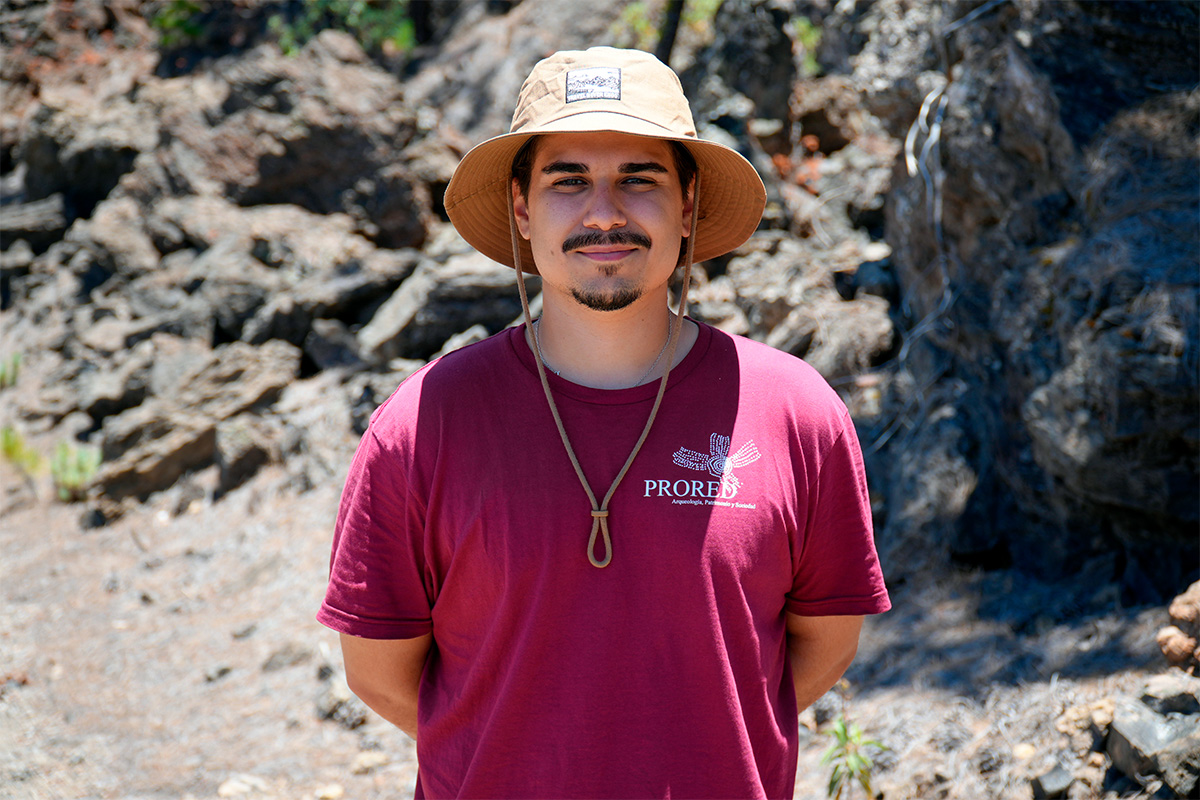
Andrés Pérez Barroso, a student of the History Degree at ULL.
Learning archaeology on Mount Teide
The campaign also has an educational dimension. Andrés Pérez Barroso, a third-year History student at the University of La Laguna, is participating, joining the fieldwork to learn firsthand how archaeological research is conducted in the high mountains. His work mainly consists of surveying the areas selected by the team and examining the surface to locate obsidian workshops, supply zones, ceramic remains, hammerstones, and other signs of activity.
The experience has allowed him to see the difference between studying materials in the classroom or laboratory and recognizing them within their own context. “A flake in the lab is nothing like seeing it in situ, identifying it, and knowing that it’s a worked flake and not a natural one,” the student explains. He has also been surprised by the scale of the Tabonal de los Guanches and the number of workshops it preserves. His participation in the campaign has also changed his perspective on Mount Teide: instead of the usual image of the mountain as a natural symbol, he now perceives Las Cañadas as a network of spaces connected by activities, resources, and human activity.
A culture of the volcanic territory
The research aims to expand knowledge about Tenerife's indigenous past, but also to generate reflection on the present. For Hernández Gómez, science cannot be limited to looking to the past: in a volcanic archipelago, understanding how human societies related to the land can help develop a culture more aware of the place we inhabit. The recent eruption of Tajogaite, on La Palma, reminded Canarian society that volcanism is part of its reality, and in this context, the professor from the University of La Laguna defends the importance of “knowing how the land we call home works, understanding the behavior of nature, and how we can protect and care for it.”.
From this perspective, studying the Guanche population does not mean isolating them in a remote past, but rather understanding them as a society that had to work, migrate, organize itself, and adapt to a living, breathing territory. In contrast to idealized or heroic views, Hernández Gómez proposes a more human approach, focused on the real conditions of life, collective effort, and survival strategies.
“It can help us humanize this population, to see them not from the idealism of the mythical hero of the past, but from a much more human perspective,” he concludes. And he adds a phrase that sums up much of the meaning of this work: “to look the Guanche people in the face and not see a hero, but a human being.”.
Therein lies the value of this research. Mount Teide is not merely a landscape, geological, or symbolic landmark. Its lava flows, paths, and obsidian still preserve part of the history of those who lived in Tenerife before the conquest. Reading these traces allows us to approach a memory that remains etched into the very landscape.
Communications Office

 Spanish
 English
 French