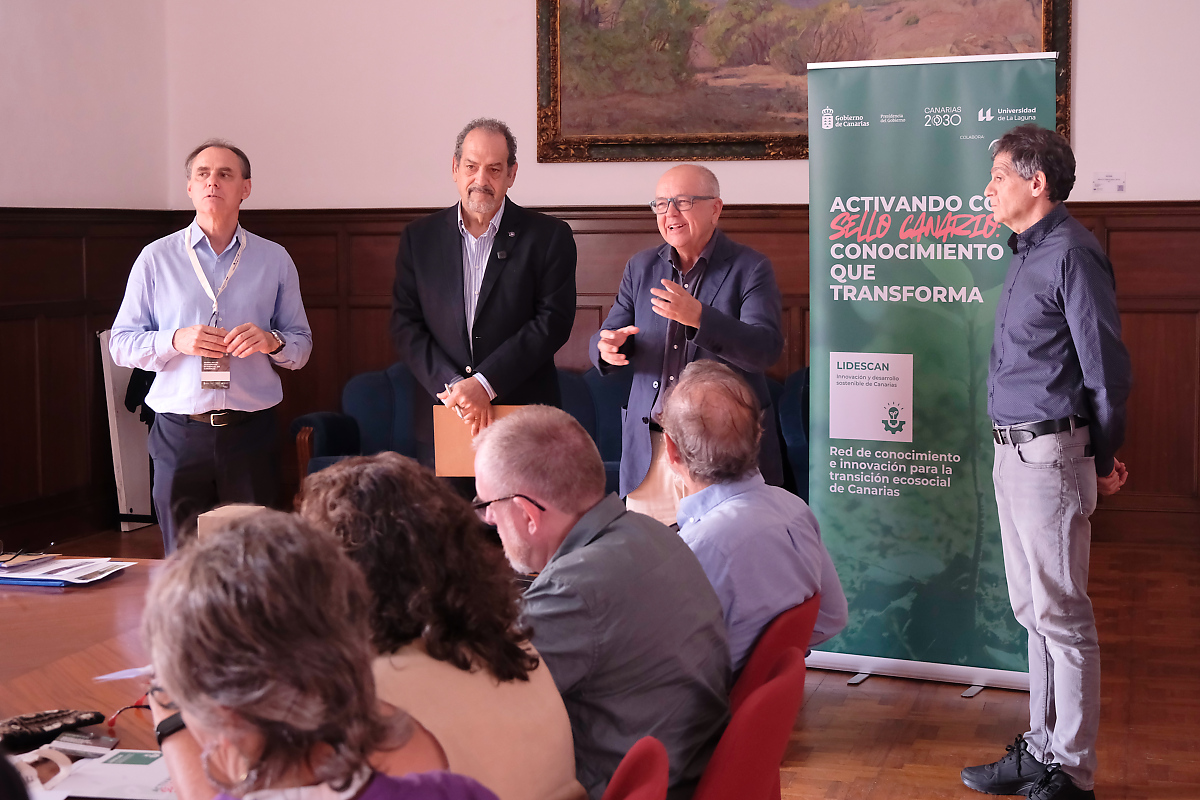
The University of La Laguna held its second workshop, "Seeds for the Ecosocial Transition in the Canary Islands," today, Monday, September 21, as part of LIDESCAN. This meeting follows up on the workshop held last July in La Palma and aims to validate its results and generate concrete action proposals to advance towards a more sustainable development model in the Canary archipelago. This initiative is part of the University's commitment to the Canary Islands 2030 Agenda, in collaboration with the University of Las Palmas de Gran Canaria.
The two days of the event brought together 22 representatives from academia, public administration, social organizations, and the private sector, representing 14 entities from Gran Canaria, La Palma, Fuerteventura, La Gomera, Tenerife, and Lanzarote. The objective was to share knowledge, reflect on the results obtained, and identify potential scenarios and courses of action for 2027-2030 and 2040-2050.
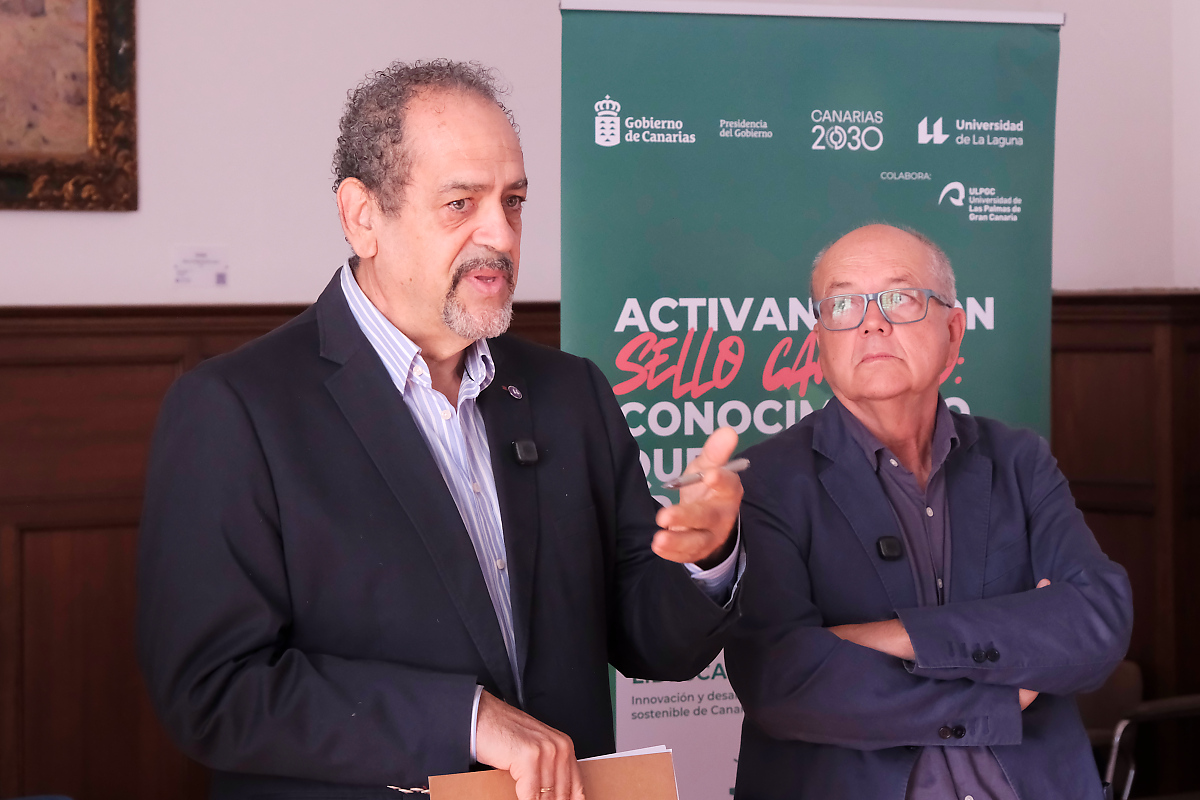 The opening of this meeting was led by José Manuel García Fraga, Vice-Rector of Teaching at the University of La Laguna; Julio Brito, manager of FGULL; Carlos Fernández, principal researcher at LIDESCAN; and Carmelo León, director of the UNESCO Chair in Tourism and Sustainable Economic Development at the University of Las Palmas de Gran Canaria.
Fraga emphasized that “the university must not only generate knowledge, but also transfer it, and to achieve this, co-creation is necessary not only among academic institutions in the Canary Islands, but also with other entities,” citing these conferences as an example. Brito, for his part, stressed that this type of partnership is increasingly necessary, “we live in an increasingly complex world, full of challenges and uncertainties, which requires solutions built collaboratively.”.
Fernández noted that this meeting allows for a synthesis of the work carried out in La Palma and its continuation in order to move towards concrete proposals. Finally, León reiterated that “we are continuing to develop the ideas we built in the first phase to jointly address the challenges ahead.”.
The day began with the presentation 'Towards Comprehensive Governance for a Just Ecosocial Transition', given by Pedro Gil, Professor Emeritus of Anthropology of Education at the University of Deusto and an expert in rural tourism. Following this, Matías Manuel González, Professor in the Department of Applied Economic Analysis at the University of Las Palmas de Gran Canaria, addressed the challenges facing the archipelago in his talk 'The Canary Islands Facing the Ecosocial Transition: A Long-Term Vision for a Change of Era'.
From analysis to action
Following the presentations, participants reviewed the main content and conclusions of the first workshop through a group reflection activity. The work focused on three areas: agroecology, energy, and tourism within the context of the ecosocial transition in the Canary Islands, and allowed for the validation and refinement of proposals put forward in relation to these different timeframes.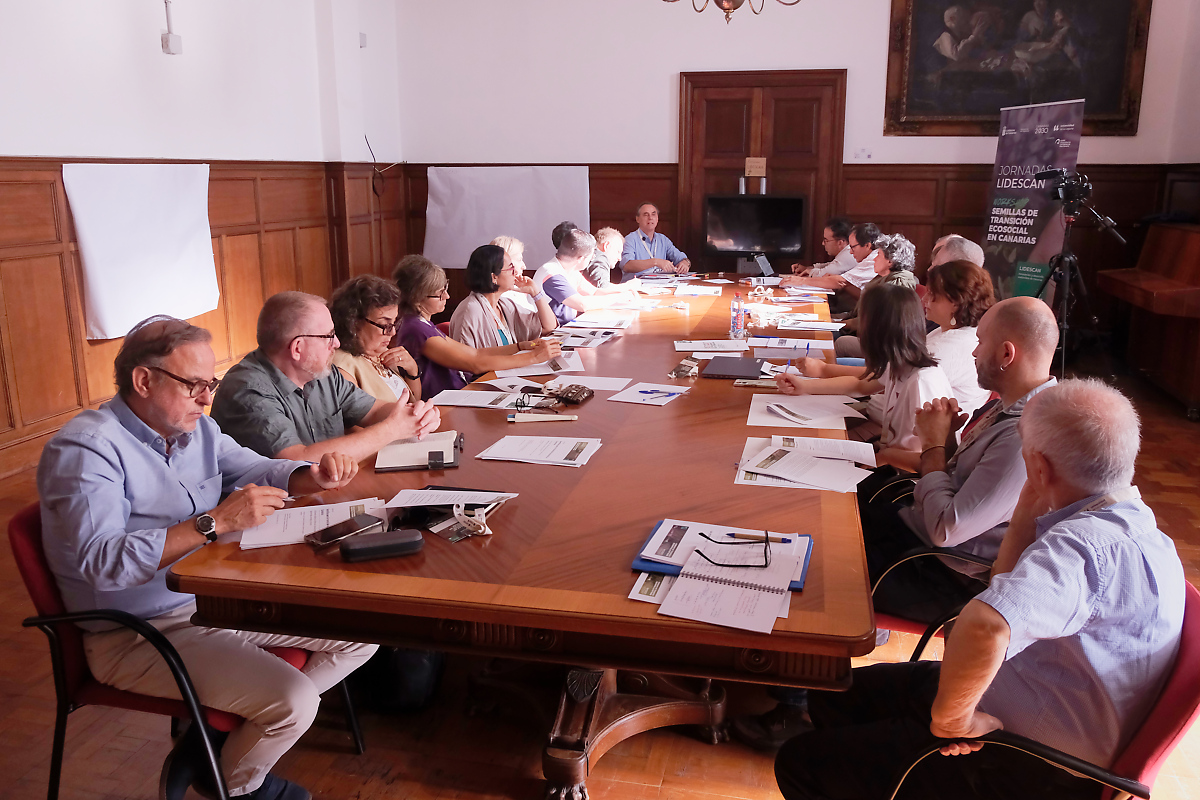 temporary.
Based on this activity, the workshop explored different future scenarios depending on the resources and commitments available to promote the identified actions. In addition to a scenario based on the possibility of securing funding and developing a joint project, another scenario was considered in which there were neither sufficient economic resources nor structures to support a proposal. The aim was to identify what actions could be taken from a personal or professional perspective and how to move towards intermediate scenarios.
The workshop concluded with a sharing of the proposals presented and a collective prioritization of the actions considered most relevant in each scenario. This work will allow progress to be made in the development of a synthesis document validated by the University of La Laguna, the University of Las Palmas de Gran Canaria, and the participating entities, which will subsequently be submitted to the Government of the Canary Islands with the aim of contributing to the design of future public policies related to the ecosocial transition in the archipelago.

 Spanish
 English
 French