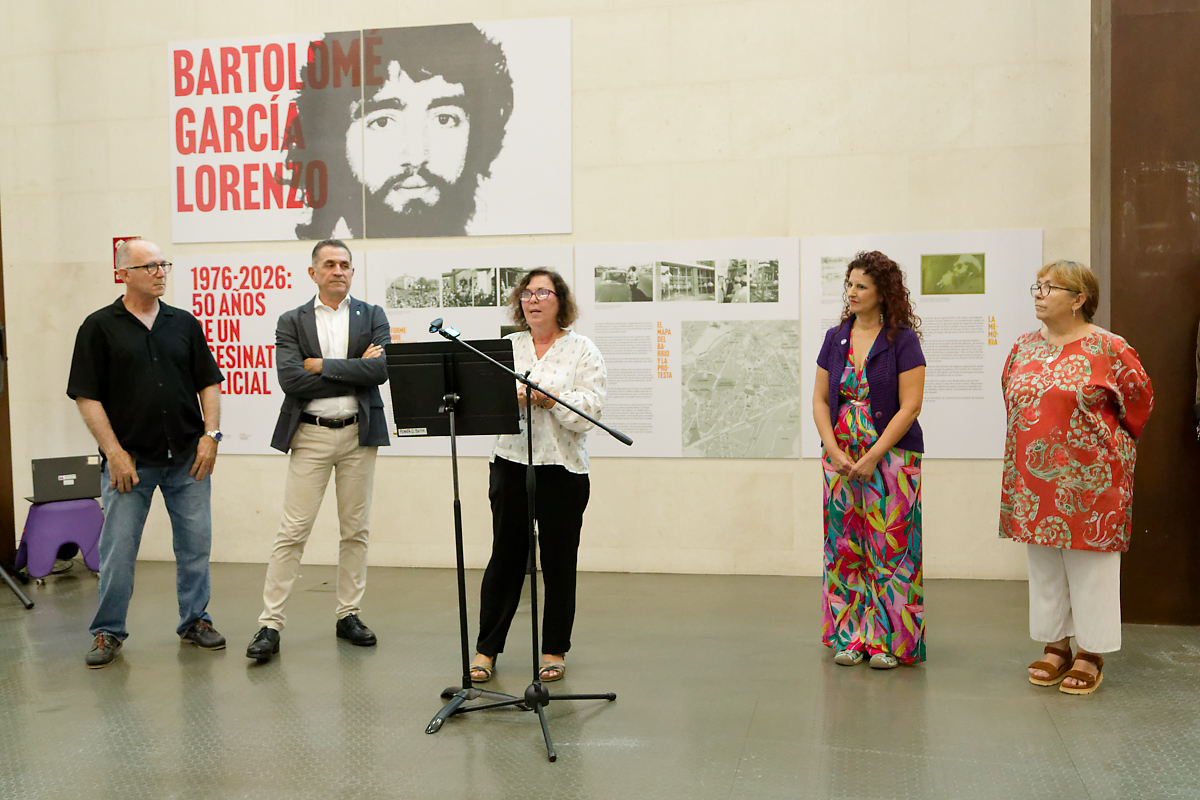
The General and Humanities Library of the University of La Laguna inaugurated today, Tuesday, September 22nd, a documentary exhibition I remember that, on this day fifty years ago, Bartolomé García Lorenzo, a 21-year-old student teacher, was murdered. His death shocked the entire Canary Islands society and led to massive protests, clashes with law enforcement, and strikes. The verdict in the subsequent trial acknowledged the brutality of the police action, but the officers received very light sentences that did not prevent them from continuing their careers.
He Archive of the Democratic Transition in the Canary Islands The (ATDC) Library of the University of La Laguna has organized this exhibition entitled “Bartolomé García Lorenzo. 1976-2026: 50 years since a police murder”, which until October 30th includes books about this and other murders resulting from police repression during the Transition, as well as newspapers and documents that help to understand and contextualize this event and its consequences.
The academic curator of the exhibition is Domingo Garí-Montllor Hayek, Professor [Name], from the Department of Geography and History and principal investigator at the ATDC, explained during the opening that the purpose of the exhibition was to address this fiftieth anniversary of the assassination not only as an act of remembrance, but also as an exercise in historical research. “The panels reconstruct the events, attempting to answer very simple yet fundamental questions: what happened, where it happened, who was involved, how it was explained at the time, and what the consequences were.”.
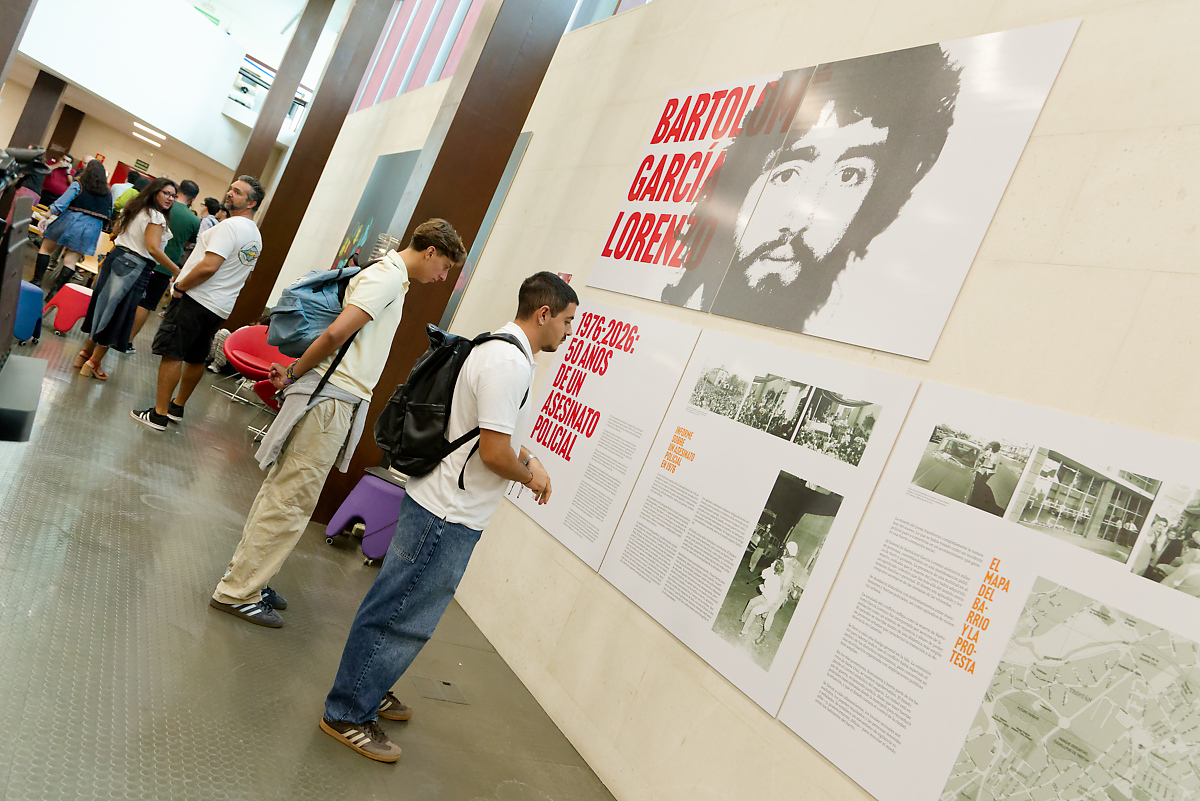 He recalled that this violent death occurred during a time of enormous political and social tension, when, after Franco's death, much of the dictatorship's institutional and police structures continued to operate. Half a century later, the exhibition seeks to bring the figure of Bartolomé García Lorenzo back into the present and thus combat the danger of oblivion.
“For a long time, the Transition has been told from above: from the perspective of governments, parties, political reforms, and institutions. But there is also a history from below: from the neighborhoods, the mobilizations, the social conflicts, and the people who suffered violence. This exhibition proposes to look at that period from Somosierra, Santa Cruz de Tenerife, in September 1976.”.
This exhibition has been supported by the General Directorate of Culture and Cultural Heritage of the Canary Islands Government, whose head, Miguel Ángel Clavijo, was also present at the event. He praised the work being done by the Archive of the Transition of the Canary Islands, which, with a large investment from the Ministry of Universities, Science and Innovation and Culture, is allowing us to learn in detail everything that happened in those difficult years.
“This project has been six years in the making and has involved an investment of over half a million euros to preserve our democratic memory and make it accessible to the public and future generations. Today’s exhibition deals with one of the most serious incidents that occurred in that context: the cold-blooded murder of an absolutely innocent young man from the Canary Islands.».
For her part, Paqui Rivero Cabeza, head of the Map and Media Library at the University Library Service, detailed the structure of the exhibition, which is divided into six sections displayed across eight showcases: “The Transition. Victims,” which highlights the fact that it was a supposedly peaceful period but was nonetheless tremendously violent; “Sociopolitical Context of 1976. Life of Bartolomé,” which recalls the figure of a restless young man, an athlete, and a lover of music and mountaineering; “Death of Bartolomé. Report on a Police Murder in 1976,” with objects as poignant as the black crepe that adorned the city after his death; “The Map of the Neighborhood and the Protest”; “The Trial”; and “Memory.”.
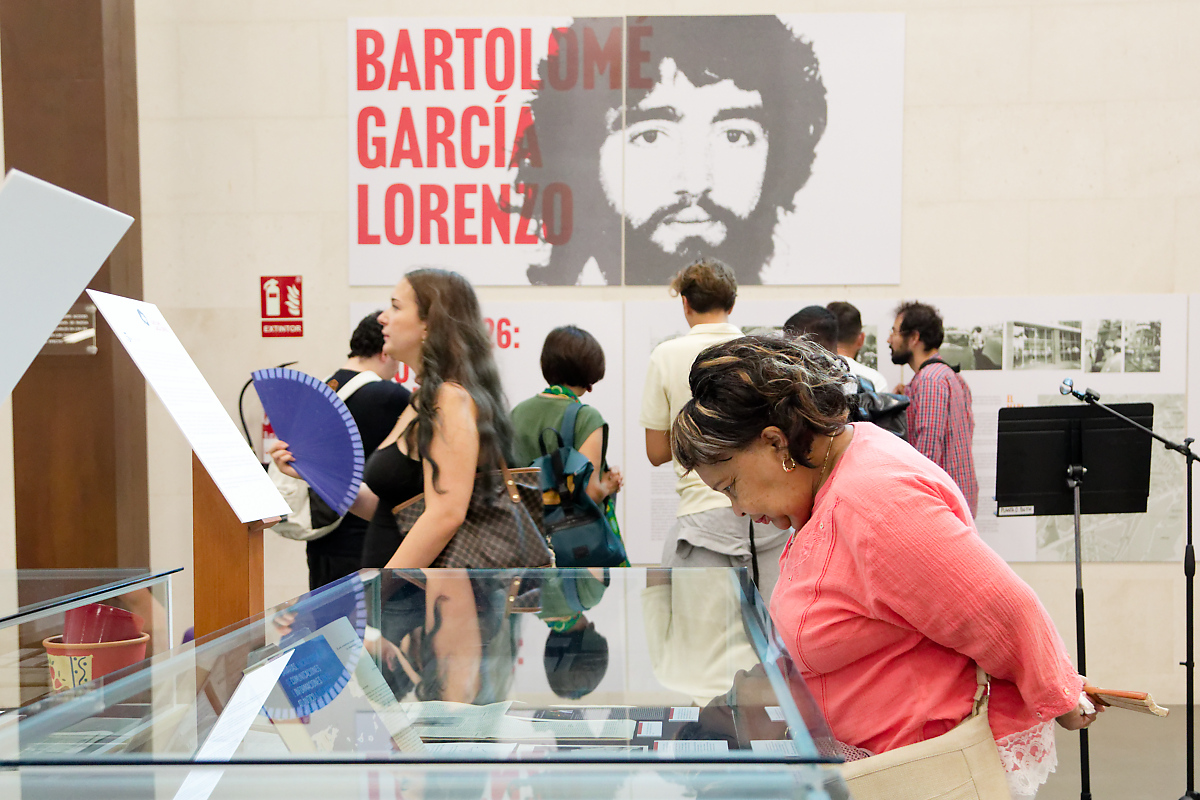 Rivero pointed out that in the 21st century, Bartolomé's memory has remained present through neighborhood tributes, short monographic documentaries, musical themes, interviews, radio programs, and even through references in theatrical works such as "Immortality" by Antonio Tabares (2023), one of whose characters is Bartolomé himself; or in the literary work "The White Widow" (2025) by Mª del Mar Rodríguez, in which these events are also portrayed.
The inauguration also included speeches by the Vice-Rector for Culture and University Extension, Isabel León, and the Library Director, Soledad Jacobe. Following the official opening, the event continued with a round table discussion featuring Domingo Garí-Montllor Hayek; Jenny del Pino García Sánchez, Professor of Journalism at the University of La Laguna; Diego Barco Hernández, a neighbor of the family in Somosierra; and Dulce García Lorenzo, a retired teacher and sister of Bartolomé.

 Spanish
 English
 French