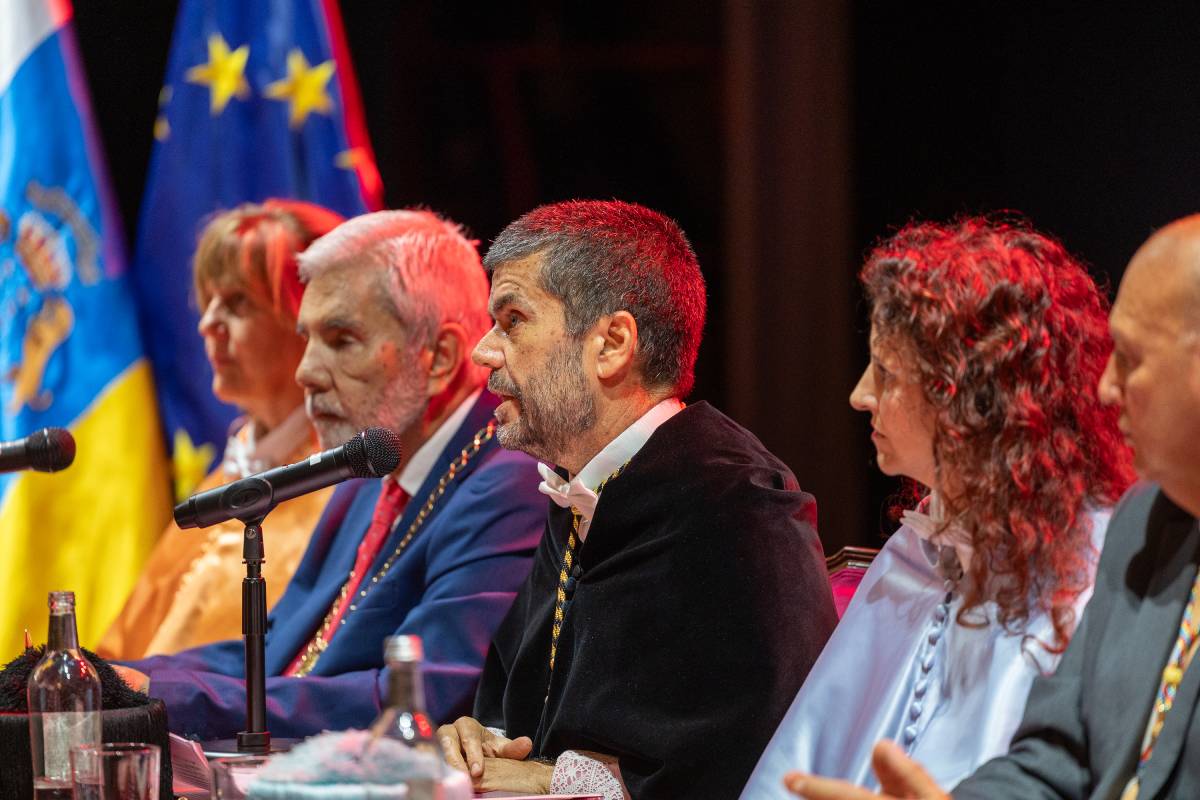
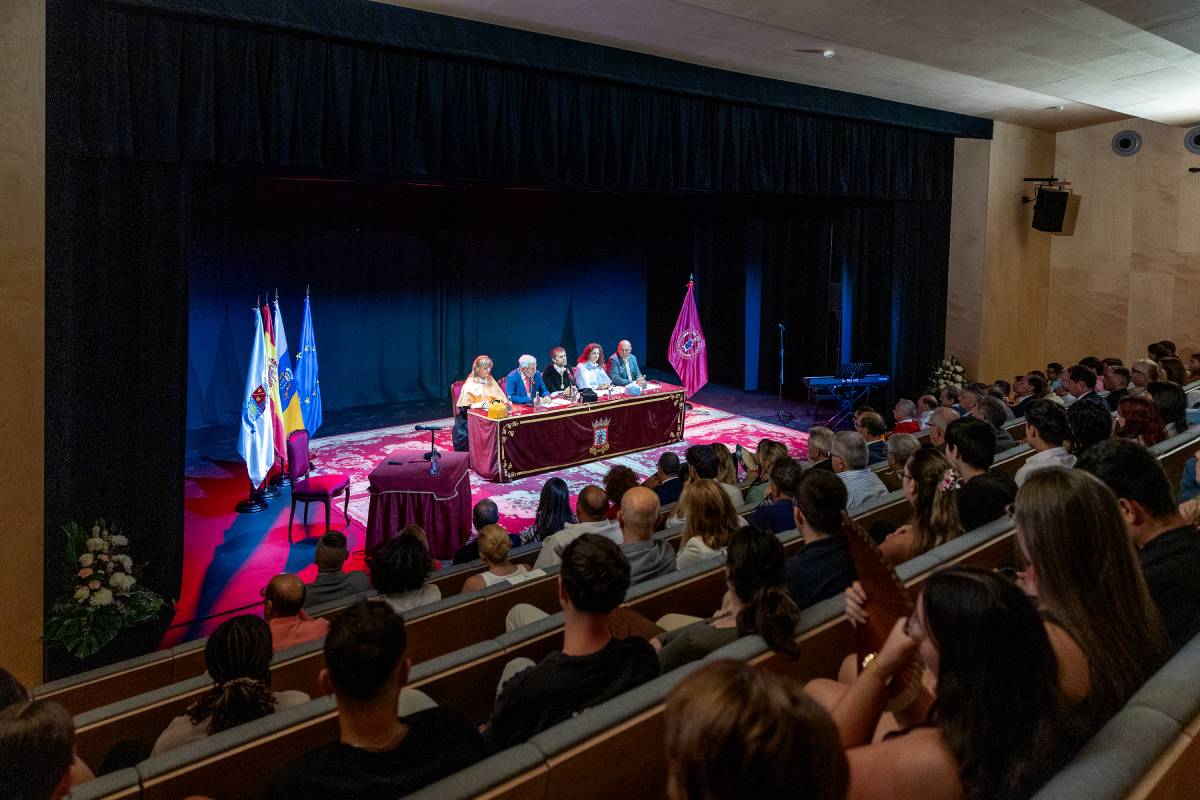
The South Campus of the University of La Laguna, located in the municipality of Adeje, inaugurated its 2026-27 academic year today, Wednesday, September 23, in a ceremony held in the town's auditorium. Attendees included the university rector, Francisco J. García Rodríguez; the mayor, José Miguel Rodríguez Fraga; and a large number of representatives from both the host municipality and the university administration. The inaugural speaker was Professor Raquel Huete Nieves from the University of Alicante, who delivered a presentation entitled "Why is the sustainability of tourism a social issue?".
In his address, the rector revisited part of the argument developed in the opening ceremony on September 11th in the university's main auditorium, reaffirming the role of public universities as bastions of truth supported by science in an era where post-truth has advanced so far that it has already given way to post-lie, and "opinion-mongering" occupies spaces in the public debate that were once filled by rigorous assertions. It is, therefore, a time to invest in academia because, to paraphrase Derek Bok, former president of Harvard University: "If you think education is expensive, try ignorance.".
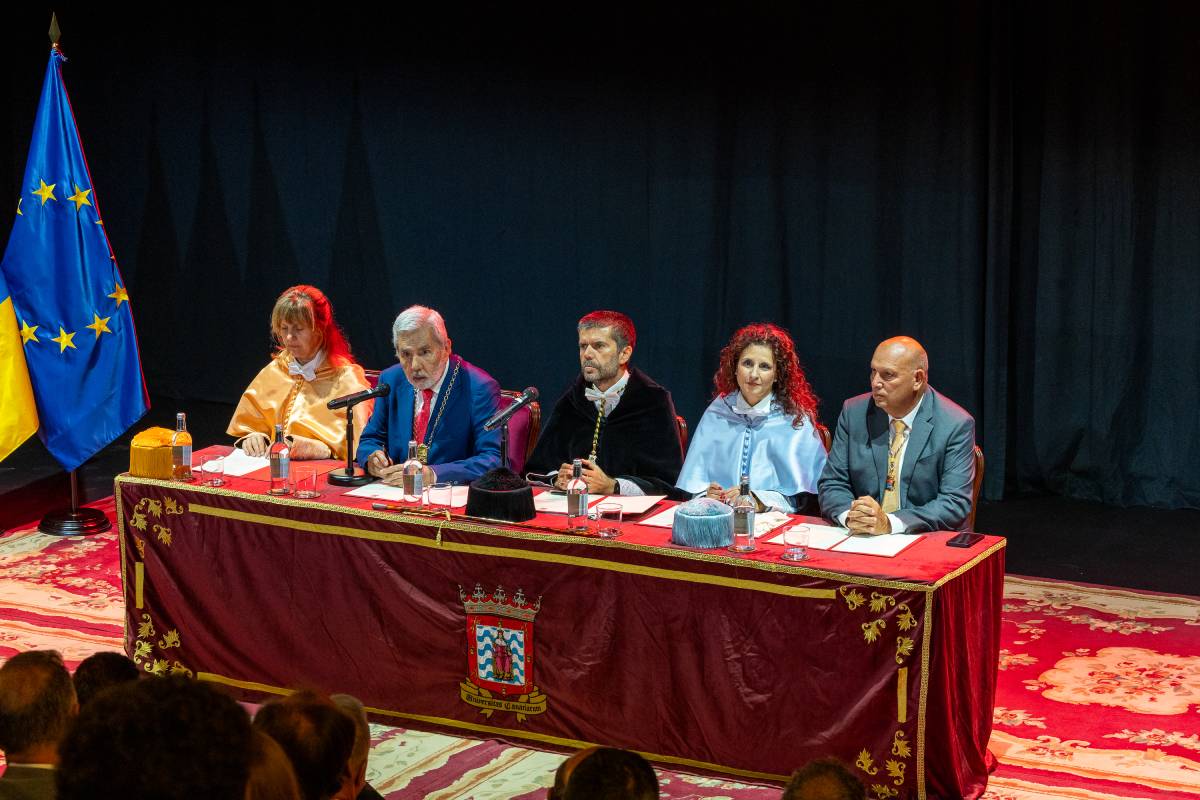 García also highlighted the excellent relationship maintained for over thirty years with the Adeje City Council, which began with summer courses and led to the establishment of a campus in the town, which has already trained 150 graduates in Tourism. He reaffirmed the commitment to strengthen and revitalize this project; proof of this is the celebration this month in the municipality of the XX International Colloquium on the Geography of Tourism, with the participation of 187 specialists from more than 30 national and international institutions; and an upcoming edition of ULL Opina focusing on the last 25 years of the tourism phenomenon in the Canary Islands will take place.
For his part, the mayor of Adeje emphasized that knowledge is one of tourism's most competitive assets. Tourism is the region's main economic activity, generating wealth that is then distributed through housing, education, healthcare, and good salaries. He therefore advocated for nurturing knowledge and addressing its challenges with human intelligence, critical, serious, and rigorous thinking, and not just with slogans. "The tourism sector is much more than an economic activity; it is also a social activity that undoubtedly needs the added value that knowledge, reflection, research, and training provide.".
Rodríguez Fraga noted that this year a long-held aspiration of Adeje has been fulfilled: a fully in-person campus. He also mentioned that the municipal corporation is improving the facilities to adapt them to this growth and give them a "second boost" after the initial effort that started from scratch. "This is very important," he said, "because education involves reading, but it also includes living together and what happens outside the classroom. The future leaders of the sector are here today.".
Tourism, a total social phenomenon
Raquel Huete pointed out that tourism must operate in a world full of challenges, and therefore planning must be capable of generating thriving businesses that benefit all of society. “Tourism already defines our world. Sociologists say that tourism is a total social phenomenon because it influences and is both cause and effect of everything we think about: our culture, our politics, housing, landscape, territory, and social interaction.” She acknowledged that there are difficulties in areas such as social interaction and access to resources, and that is why it is necessary to consider tourism from a social perspective. “Creating better tourism will mean creating a better society.”.
Regarding the discontent in overcrowded destinations, he pointed out that there is an unequal distribution of benefits; pressure on infrastructure, the environment and water; and, in general, pressure on
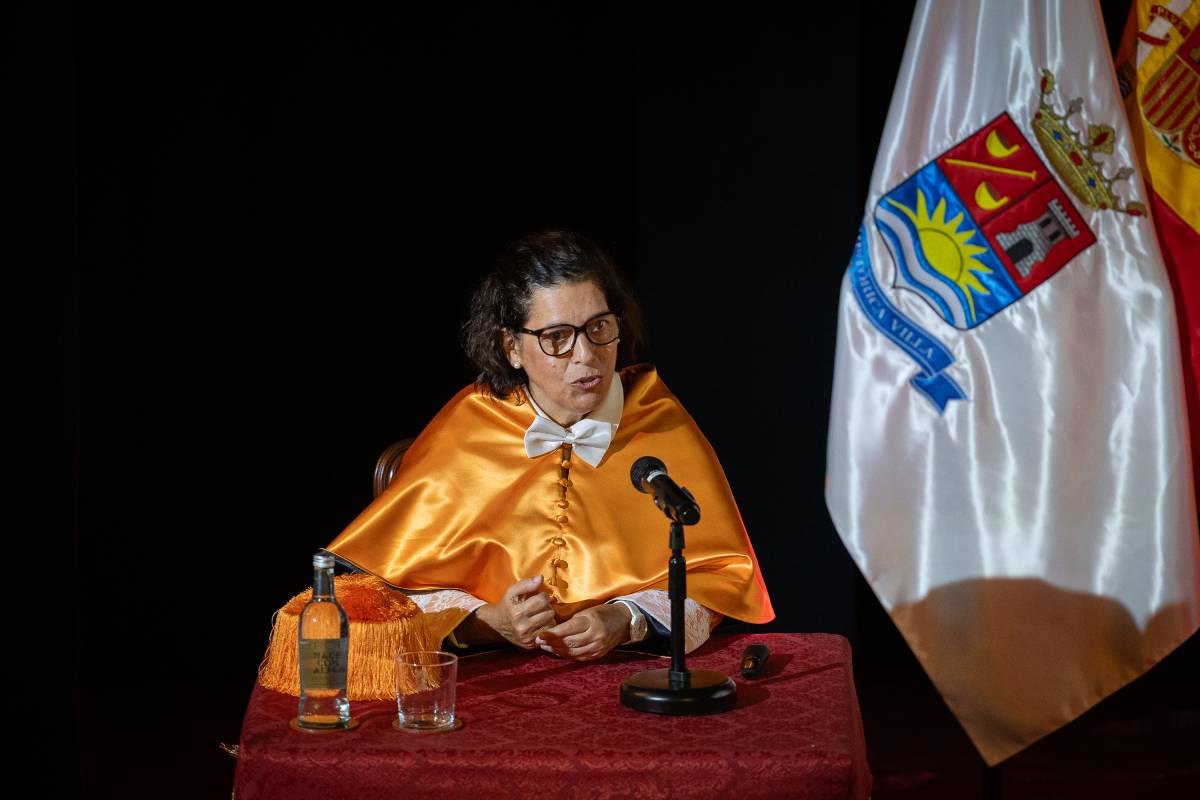
Raquel Huete, the opening speaker.
The scarcity of natural resources has led to an unprecedented global crisis of legitimacy. “This is a major challenge we must face.”.
He explained that the diversification of markets that was initially expected has not been achieved "due to the very logic of the market," which has led to a sun and beach model heavily influenced by urban development interests, not only in the Canary Islands, but also throughout the Mediterranean and across Spain. This model is heavily subject to real estate interests, a lack of planning, and legislation that is strained between the common good and significant real estate interests.
A similar process of "touristification" is taking place in city centers, with phenomena such as municipal markets being practically transformed into shopping malls. "Now we have practically the same shops, the same businesses; what we assume tourists want is spreading like wildfire, causing homogenization and the loss of the essence of the places.".
The typology of tourists has also become more complex, as they are no longer just those who stay for one or two weeks, but can visit a place for a single day without staying overnight, or be digital nomads, the self-proclaimed expatriates — who are immigrants from rich countries — and temporary immigrants who come for work, but then return.
He criticized the expression "quality tourists" as opposed to so-called binge-drinking or mass tourism. "The problem isn't the tourists," he pointed out. "Do we create a police state where we persecute tourists for their bad habits?" The answer, in his opinion, lies in developing tourism policies and planning that put the resident population at the center. "And there are many of us residents," he emphasized. "Residents are everyone, including digital nomads who live here temporarily, temporary immigrants, and neighbors. Not just those who vote, but those who live here, those who participate in the social fabric.".
To that end, he advocated for collaborative governance that includes this resident population in long-term decision-making, but with permanent mechanisms for them to participate, not just by voting every four years or invoking the right to protest. “There needs to be genuine spaces for citizen participation, where emergency committees or citizen committees can be formed to determine what we should do.”.
Therefore, fairer and more sustainable tourism cannot be achieved simply by readjusting traveler flows and establishing where to concentrate them. “The most important thing is that we all work together to decide what kind of society we want, because if we want it to be fairer, more equal, and more inclusive, where everyone fits in and is welcome, we will have to work towards a tourism model that reflects this.”.

 Spanish
 English
 French