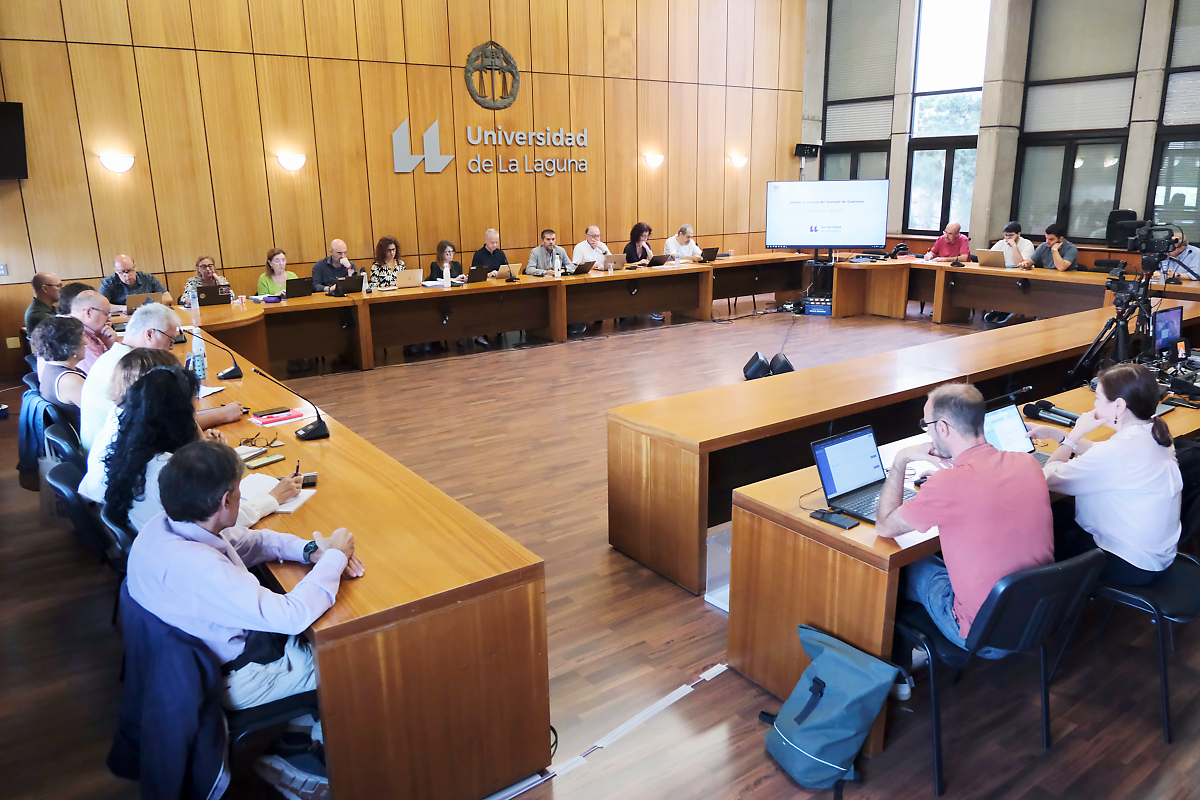
The Governing Council of the University of La Laguna has agreed today, October 6, to appoint the geologist Jesus Martinez Frias already the educator and technologist Marina Umaschi Bers as Doctors Honoris Causa by the academic center, a proposal that was approved and that must be endorsed by the Social Council.
Martínez Frías, an expert in meteorites, planetary geology and astrobiology, is a researcher at the CSIC, co-founder of the Center for Astrobiology in Madrid and a precursor of several scientific missions of both NASA and ESA, all of them aimed at the exploration of the planet Mars.
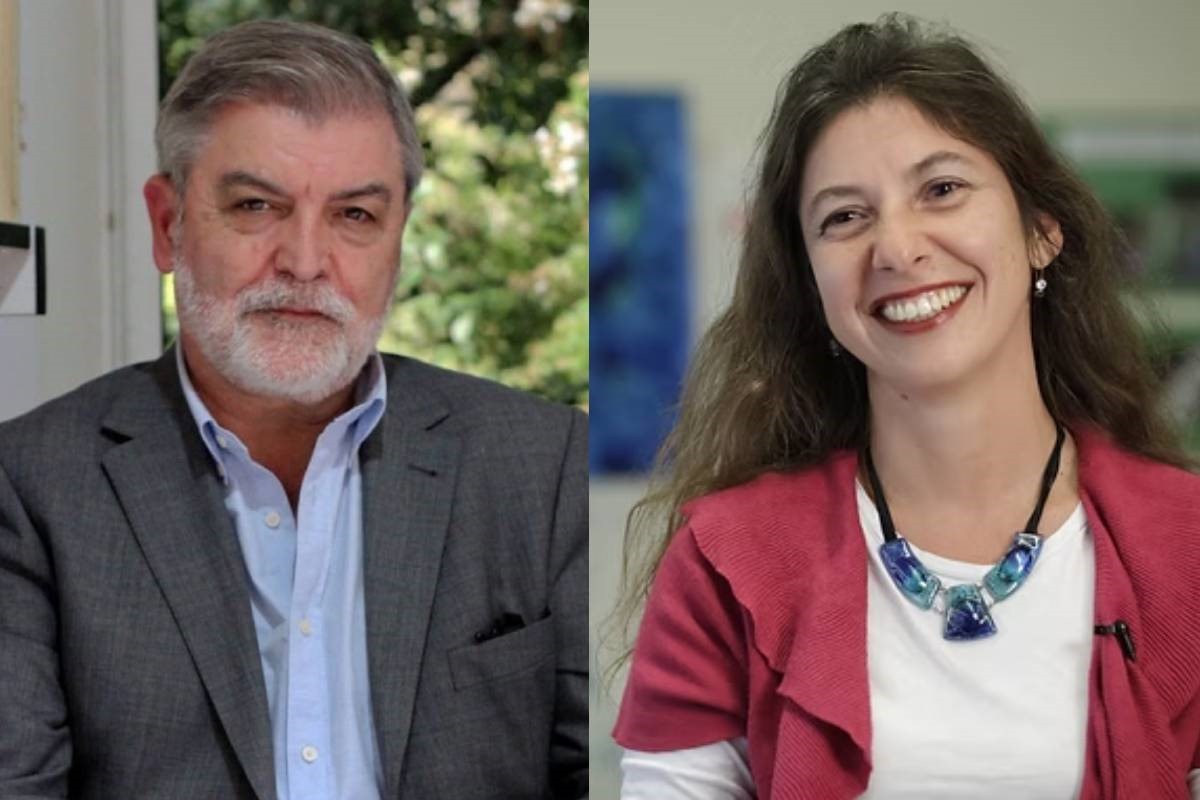
Jesús Martínez Fías and Marina Umaschi Bers.
A member of the Royal Academy of Exact, Physical and Natural Sciences of Spain, this researcher has not only produced scientific knowledge but has also connected it with education and science communication. Another outstanding aspect of Martínez Frías is his ethical dimension; he is, in fact, president of the International Geoethics Association.
Eff-Darwich noted that Martínez Frías has been a leading advocate for using Teide and Timanfaya as planetary analogues of Mars, and in fact, several scientific instruments of this nature have been tested in the Canary Islands. The proponent added that this professor's connection to the archipelago remains active through various initiatives. At the University of La Laguna (ULL), he has collaborated with researchers on planetary analogues and the development of meteorite collections from the Canary Islands, in addition to serving as a member of the examination board for numerous doctoral theses and educational projects.
With an exceptional scientific career, Martínez Frías represents a way of understanding science as strengthening the connection between research, the land, and society, Eff-Darwich stated. He is the author and editor of 14 books and nearly 400 publications, in addition to more than 170 articles in scientific journals, along with several covers in leading publications.
Carina González, for her part, presented the proposal for Marina Umashi to receive an honorary doctorate from the University of La Laguna. This professor specializes in computer science, education, and child development, and holds a chair at Boston University in this field, in addition to leading an interdisciplinary research group in early childhood computer education.
Thus, Umaschi Bers combines computer science, pedagogy, and technological development in an unusual way. Educated at MIT and elected to the National Academy of Education of the United States, she belongs to one of the great intellectual traditions of educational technology, making her own contributions that have transformed this field.
The expert explores early childhood computer education not only as the acquisition of specific skills, but also as part of personal development, defining it as a new form of literacy in the 21st century. Author of several seminal works in this field, she has received numerous international awards. Marina Umashi has achieved a prominent international scientific position. She also maintains close ties with researchers at this academic center, focusing on educational technology.
2027 Budget
The 2027 budgeting process begins today with the presentation of the criteria that will govern the document outlining expenditures and revenues for the next fiscal year, which already has the
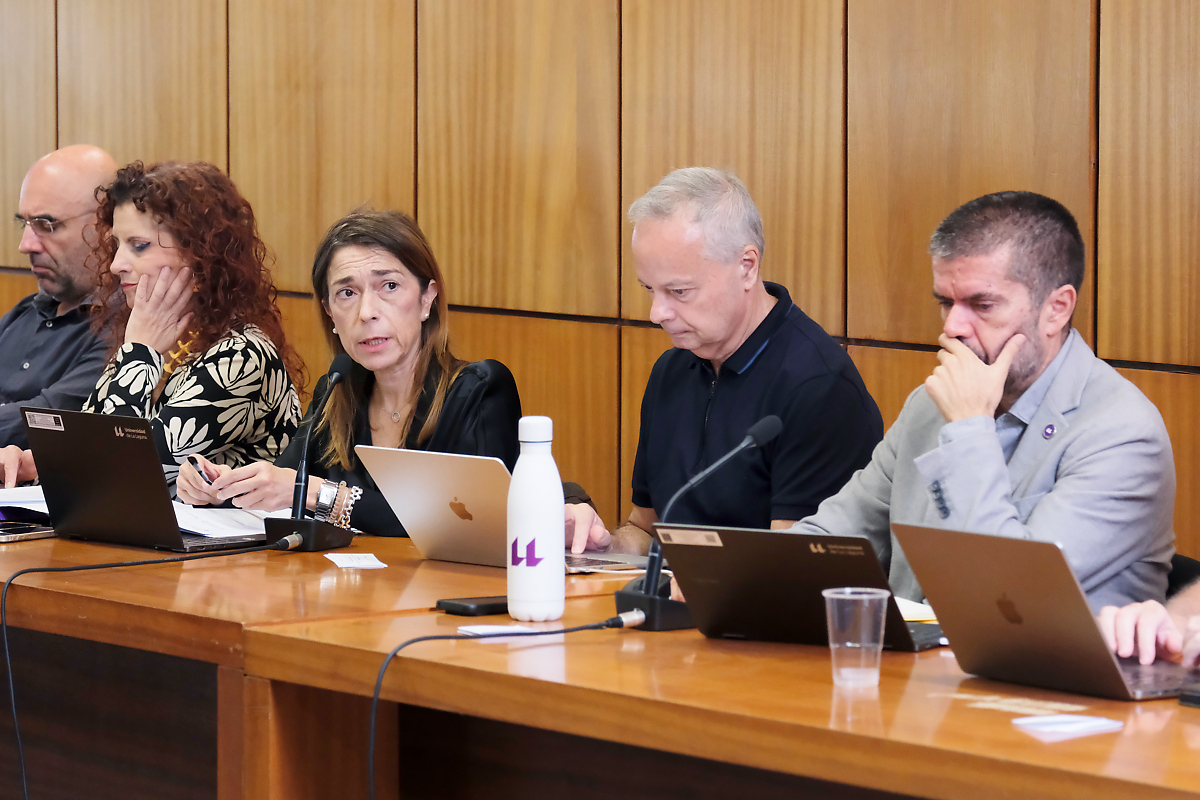
The manager, Lidia Pereira, explains the budgeting criteria for 2027.
The Social Council's approval was granted. The academic center's manager, Lidia Pereira, explained that we are in a context of uncertainty, both because the discussion process regarding the new multi-year financial model with the regional government has not yet concluded, and because the central government has not yet approved the budget stability or public debt targets.
Should the multi-year funding instrument be formalized, the necessary adjustments will be incorporated into the budget for the next fiscal year. Based on these criteria and after receiving the centers' proposals by October 23, the preliminary draft document will be prepared and submitted to the relevant governing bodies for approval.
Among the 2027 objectives highlighted by the manager are progress in updating undergraduate and master's degree programs, continued rollout of micro-credentials, a review of student assessment regulations, and improvements to student support services and the financial aid system. Regarding research, pre-doctoral and post-doctoral programs will continue, while R&D&I planning and execution will be improved. The implementation of a horizontal career path for technical and management staff, along with the corresponding funding, is also among the objectives for this year.
Pereira also mentioned the international reach of the academic center, the full range of cultural and academic programs, and the investments to further the energy transition and other sustainability initiatives. Regarding administrative management, he stated that the processes of streamlining administrative procedures and improving service quality will continue, along with the consolidation of the single data system, the implementation of analytical accounting, and the streamlining of the procurement plan and occupational risk prevention plans.
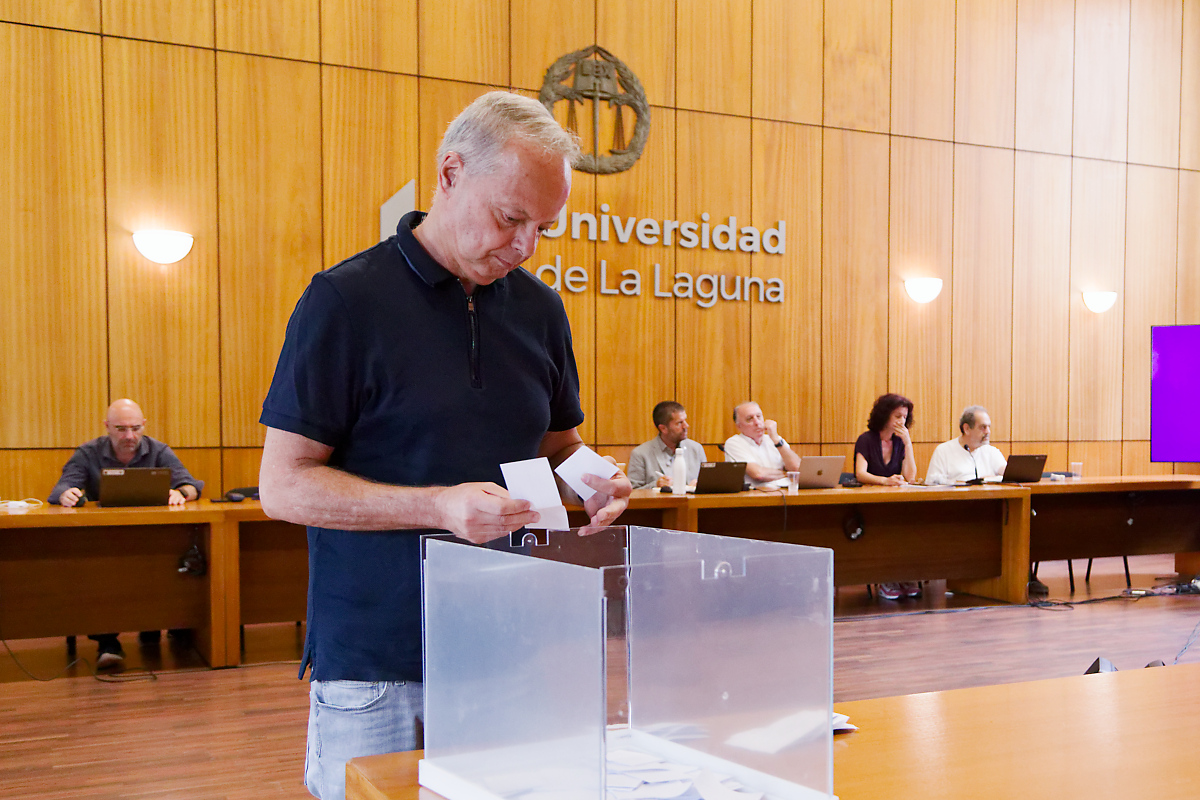
The Secretary General, Juan Antonio García, tallies the votes cast in the appointments of the Honoris Causa.
New titles
In other news, the Vice-Rector for Teaching, José Manuel García Fraga, presented a new degree program, the Microdegree in Contemporary Sculpture, offered by the Faculty of Fine Arts. The Diploma of Expertise in Educational Support for Gifted Students, with a revised curriculum, was also submitted to the Governing Council for review.
Regarding the highly sought-after Master's Degree in Religious Studies: History and Society, which involves faculty from several universities and offers a total of 70 places, the collegiate body discussed the incorporation of additional faculty from another university. Finally, the Regulations for the Design, Verification, Modification, and Discontinuation of Degrees were also reviewed, with a minor adjustment to current regulations. García Fraga also presented the amendment to the text concerning postgraduate studies in this same field, a consequence of the aforementioned changes regarding undergraduate degrees.
More university chairs
For her part, the Vice-Rector for Culture and University Extension, Isabel León, presented two new university chairs to the Governing Council. The first is the Chair of Cultural History of Canary Island Women: History, Memory, and Heritage, established to recover the undocumented memories of those who witnessed the significant changes that took place in the 20th century among the female population of the islands.
The second initiative is the Chair of Democratic Memory, also focused on the Canary Islands, with the aim of recognizing and promoting the civic culture of the population and linking it to the archives on this subject housed in the Library of the University of La Laguna. The goal is to make all this documentation available for public consultation. The Vice-Rector added that the Ministry of Democratic Memory will fund these projects.

 Spanish
 English
 French