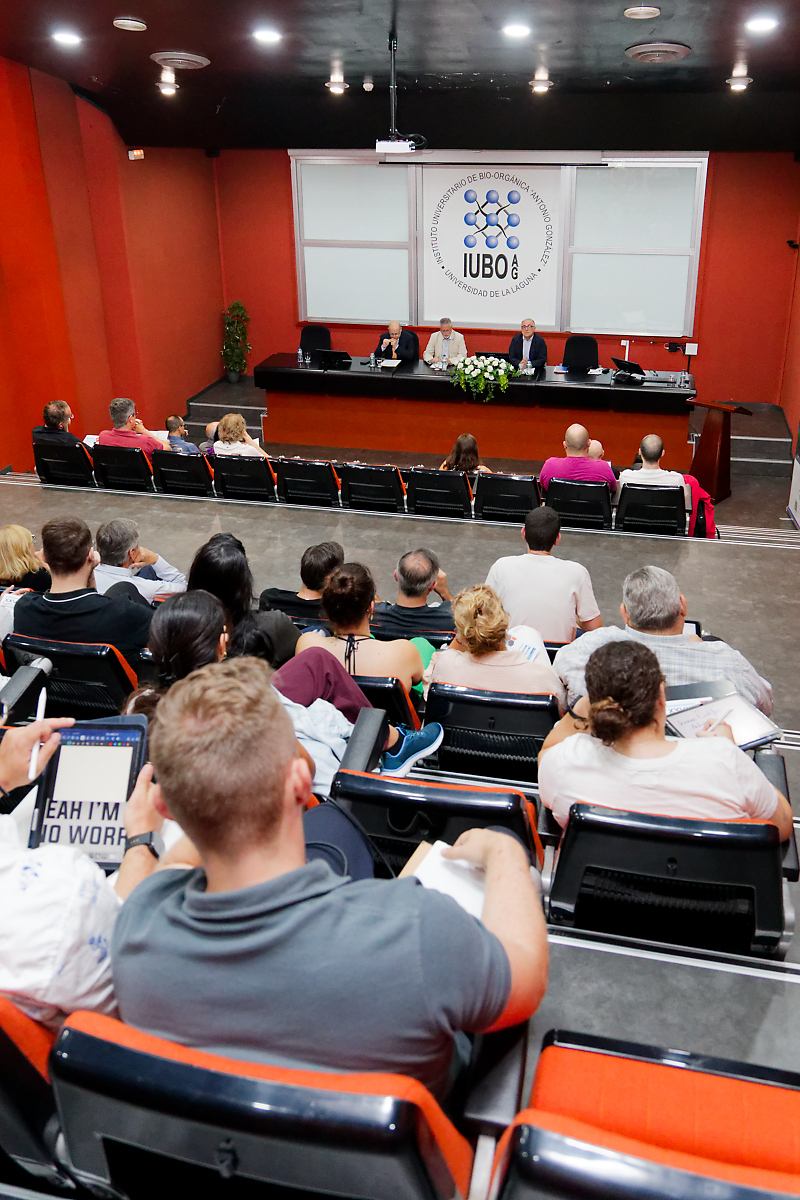
The auditorium of Antonio González University Institute of Bio-Organic Science This morning, Tuesday, October 6, the inauguration of the XXVIII edition of the Antonio González Scientific Week, Organized by the Department of Organic Chemistry at the University of La Laguna, the conference began with four days of plenary lectures, oral presentations, and poster sessions focused on the latest trends in Organic Chemistry, Bio-Organic Chemistry, Medicine, and Technology.
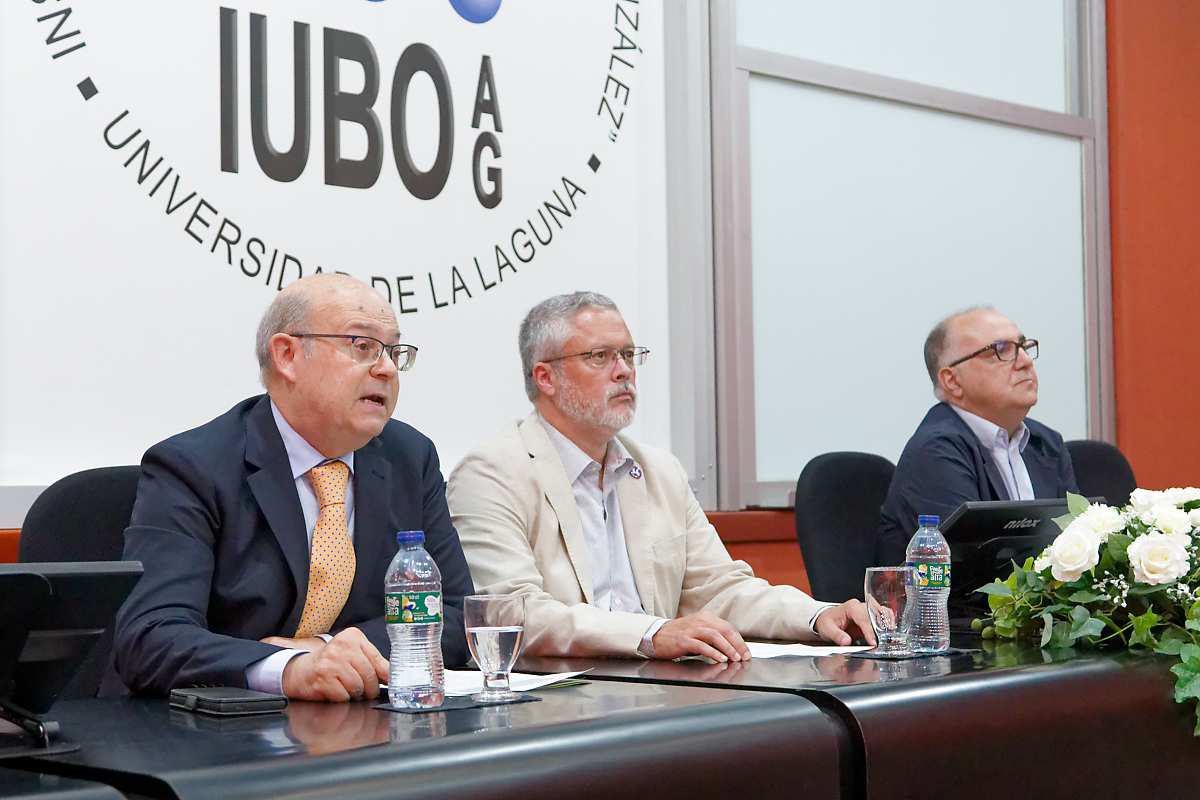
 The opening ceremony was attended by the director of the Department of Organic Chemistry, José María Palazón; The director of IUBO, José M. Padrón; Professor of Chemistry and president of the organizing committee José Javier Fernández. The latter pointed out that the science week is an opportunity to connect with researchers from other countries and learn about the cutting edge of this discipline.
“This event was an initiative of Don Antonio González to try to attract visits from leading figures in the national and international chemical field. This opened us up to new trends in chemistry, allowed us to learn about innovative developments, and, most importantly, enabled us to make personal contact and forge new collaborations,” explains Fernández.
With over a quarter of a century of history, the initiative aims to foster cooperation among research groups, promote the exchange of experiences, bring students closer to the forefront of these disciplines, and inspire new scientific vocations. The conference is organized in collaboration with the Royal Spanish Society of Chemistry, Biosigma, and the Royal Canarian Academy of Sciences.
Program
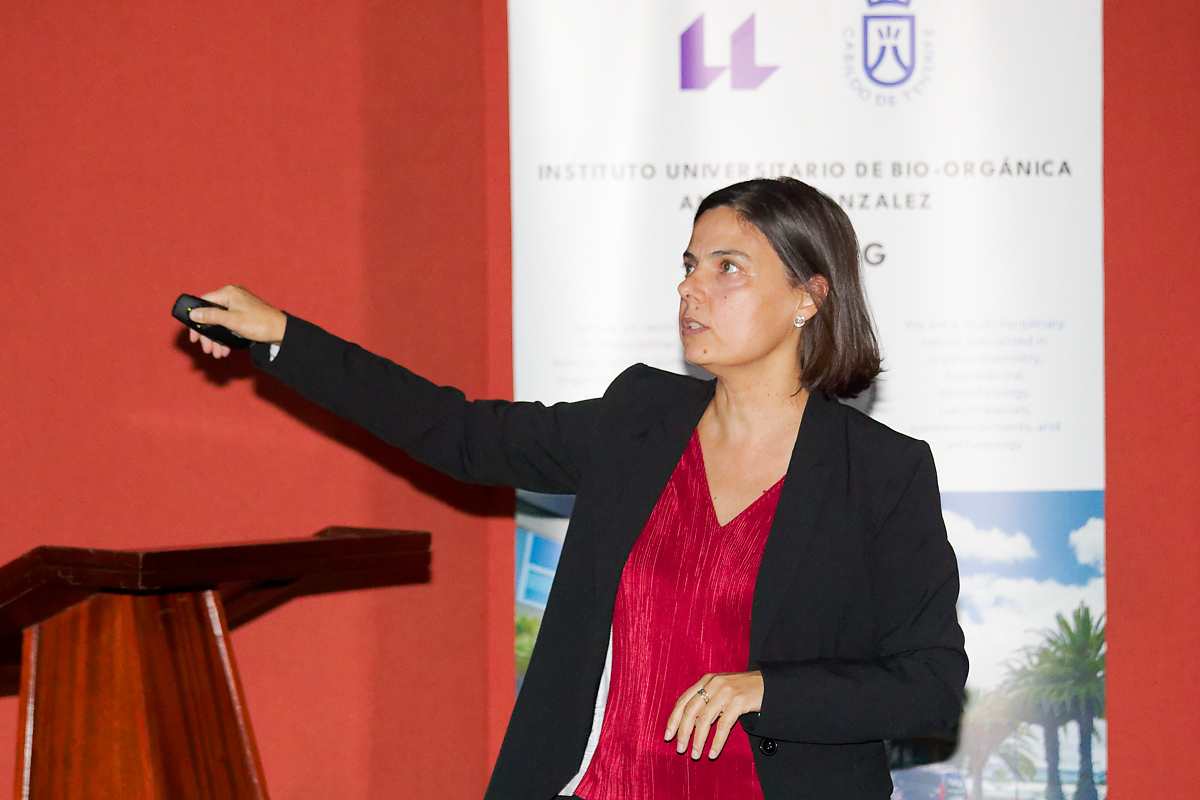
Anna Laromaine (CSIC).
The scientific program kicked off on Tuesday with a lecture by Reidar Lund of the University of Oslo, focusing on antimicrobial peptides against resistant bacteria. Following this, Anna Laromaine of the Spanish National Research Council (CSIC) in Barcelona will present on advances in bacterial nanocellulose and its applications, from a multifunctional scaffold for tissue engineering to its use as a dietary fiber.
Tomorrow, the program will continue with a presentation on synthetic chemistry in living systems by María Tomás Gamasa of the University of Santiago, and a presentation on the use of accessible artificial intelligence for catalyst design by Juan Vicente Alegre Requena of the CSIC in Zaragoza. Following this, an In Memoriam session will be held in memory of the recently deceased researcher Jesús Manuel González Díaz, presented by David Díaz Díaz, a researcher at the University of La Laguna.
The presentations will continue on Thursday, focusing on drug discovery, with Raquel G. Soengas, from the University of Oviedo; and on the covalent functionalization of surfaces and materials in two dimensions, by Miriam Candelaria Rodríguez González, a researcher from the Canary Islands academic institution.
Finally, the closing day, scheduled for Friday, October 9, will delve into the new horizons between nanocatalysis and photocatalysis as tools to accelerate reactions to make them more efficient, cleaner and faster with Francisco Alonso Valdés, from the University of Alicante, and into the strategies of medicinal chemistry to combat emerging viral diseases transmitted by mosquitoes, a presentation that will be given by María Jesús Pérez Pérez, from the CSIC in Madrid.

 Spanish
 English
 French