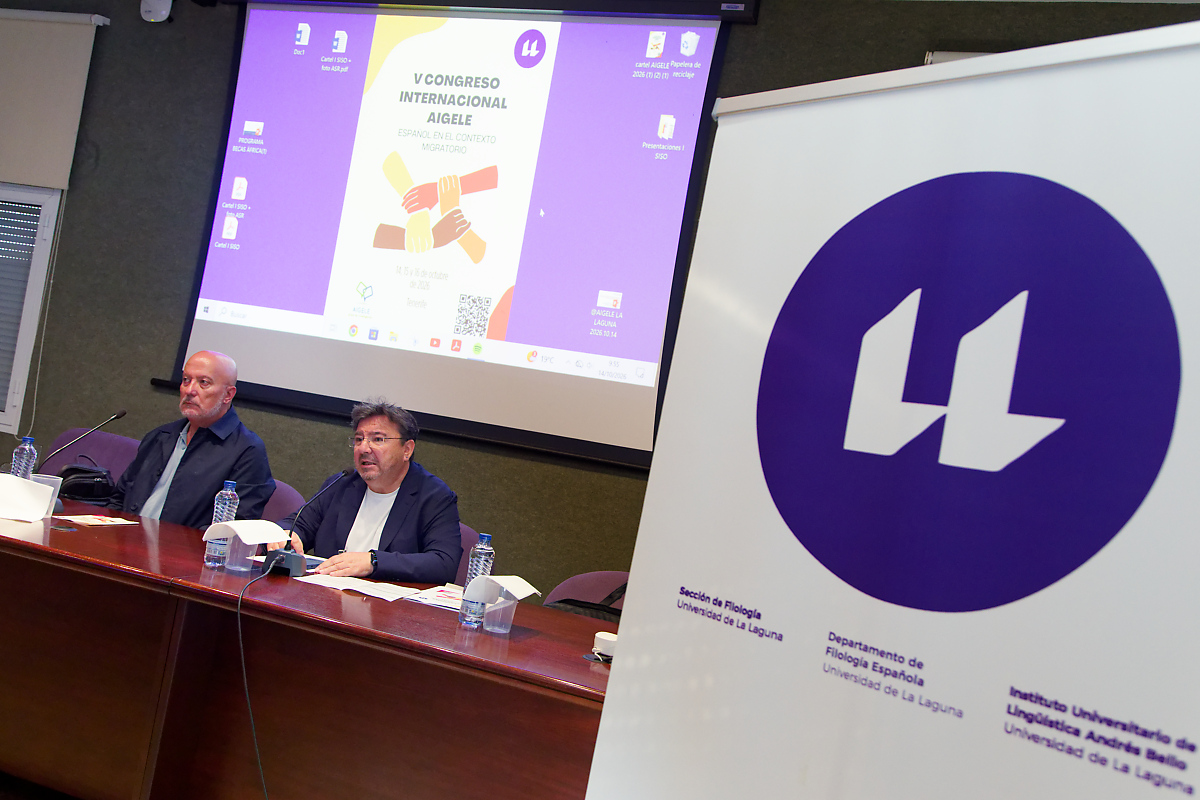
Teaching Spanish to migrants goes beyond simply learning a new language; it is a tool for fostering communication, coexistence, and participation in the host society. This is one of the key aspects of the program. 5th AIGELE International Congress. Spanish in the Migration Context, The conference, which opened this Wednesday, October 14, at the University of La Laguna, brings together researchers, teachers, and professionals over three days to address the linguistic, educational, and social challenges associated with human mobility.
The celebration of this congress is especially relevant in the Canary Islands, whose geographical location and status as a transit and destination territory in the international migration context make the archipelago a place of interest for studying the processes of acquiring and learning Spanish. In this scenario, language barriers constitute one of the challenges that newcomers may face, so knowledge of the language can play an important role in their integration into different aspects of daily life.
The opening session was presided over by the dean of the Faculty of Humanities, Javier Medina López, who emphasized the importance of holding a meeting of this kind in a region where migration is a part of daily life. In this regard, she noted that coexistence, integration, and knowledge of the Spanish language are particularly relevant issues that will be the subject of discussion throughout the congress.
Medina also highlighted the participation of specialists from national and international universities and the opportunities for collaboration that could arise from this academic exchange. She also championed the richness of the different varieties of Spanish and emphasized that linguistic diversity, far from impoverishing communication, enriches it.
For his part, the head of the research group Analysis of Grammar Instruction for Spanish as a Foreign Language (AIGELE) and member of the organizing committee, Antonio Cano Ginés, He explained that the choice of this topic reflects both the migratory reality of the Canary Islands and the University of La Laguna's long-standing commitment to international cooperation. In his opinion, the archipelago is a particularly suitable place to research and contribute new perspectives on teaching Spanish to migrants.
Cano Ginés emphasized that learning a new language involves much more than acquiring linguistic knowledge; it allows one to understand their surroundings, connect with a different culture, and function more independently in the host society. She also stressed the importance of establishing collaborative networks among researchers, educators, and professionals to translate academic knowledge into real-world intervention contexts.
Among the existing challenges, she mentioned literacy processes, which in certain cases must be addressed in parallel with the teaching of Spanish, as well as the cultural and linguistic differences between the languages of origin and the target languages. In this regard, she emphasized the need to share experiences and best practices that contribute to meeting the diverse learning needs.
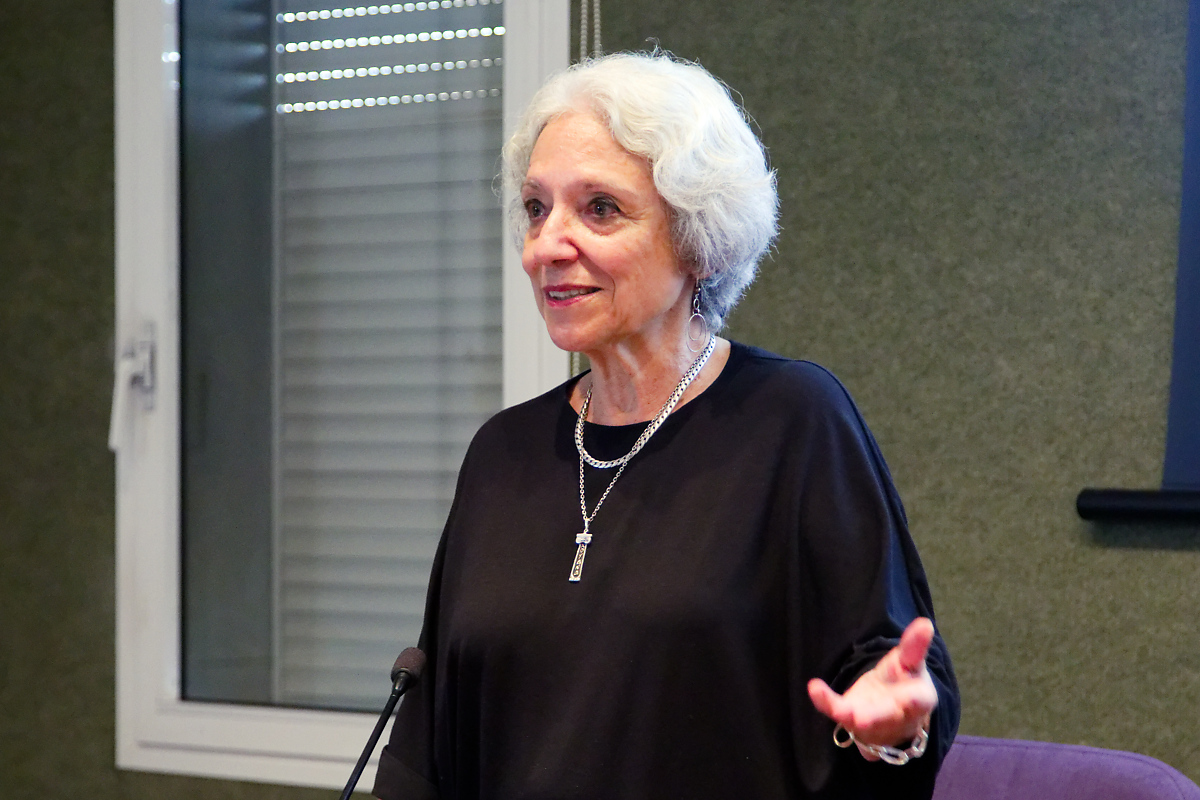
Juana Muñoz Liceras.
Linguistic diversity as an opportunity
The opening lecture was given by the researcher Juana Muñoz-Liceras, who gave the presentation Acquisition and learning at the multilingual crossroads: the dialogue between the language or languages of immigrants and the majority languages. During her speech, she delved into the relationships established between the languages that migrants bring with them and those they acquire in host countries.
Muñoz-Liceras explained that language learning processes are influenced by factors such as age, educational level, prior experience, and the cultural and linguistic distance between the languages. She also emphasized the importance of the response from host societies, especially regarding the recognition and preservation of the languages and cultures of origin.
To illustrate this point, he used the Canadian multicultural model as a reference, based on the idea of a cultural and linguistic mosaic in which different communities preserve their identity and contribute to enriching society as a whole. This approach differs from assimilation models, which prioritize the adoption of the majority language and culture, by promoting coexistence and the recognition of diversity.
In this context, the researcher explained that the Canadian model is based on the view of cultural diversity as an advantage that can strengthen communities and foster innovation. From this perspective, migrants can develop skills to navigate different cultural environments without having to abandon their original linguistic identity.
Her presentation also addressed research on the Spanish spoken by immigrants and heritage speakers—that is, those who acquire a language within their family environment while growing up in a society where another language predominates. These studies allow us to analyze how languages evolve in situations of contact and what influence they exert on one another across generations.
A meeting place between research and educational practice
The 5th AIGELE International Congress, held until Friday, October 16th at the Guajara Campus, brings together conferences and presentations focused on the acquisition and teaching of Spanish in migrant contexts. Its main lines of work include inclusion and linguistic mediation, the relationship between language and identity, and the possibilities offered by new technologies and educational resources to facilitate learning.
He program It also includes the exchange of experiences related to literacy and the teaching of Spanish to migrants. Among the scheduled presentations are those by Margarita Planelles Almeida and Abderrahmane Belaaichi, while the closing lecture, given by Isabel Cristina Alfonzo de Tovar, will delve into the relationship between language, migration, and identity in multilingual contexts.
With this fifth edition, the meeting seeks to strengthen the dialogue between academic research and educational practice, as well as to promote new avenues of collaboration that contribute to responding to the linguistic and social challenges posed by human mobility.

 Spanish
 English
 French