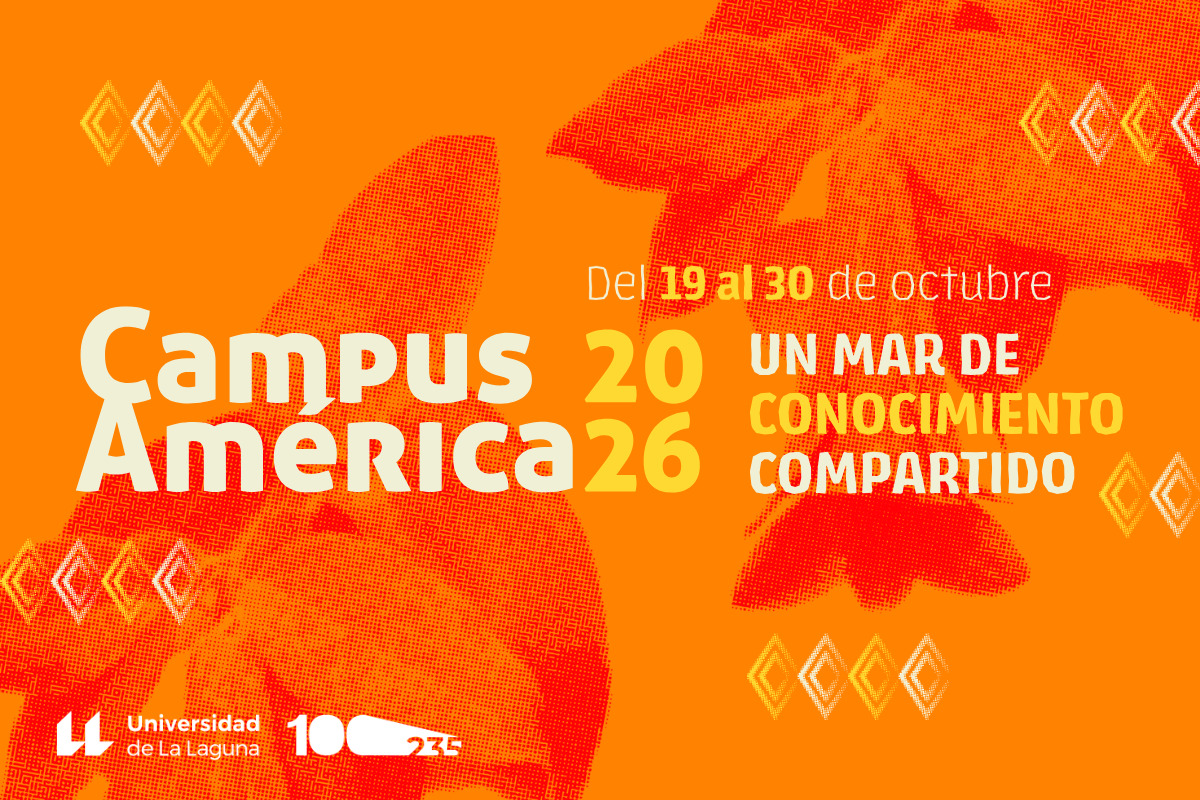
On October 29th, the University of La Laguna will host a meeting between the Canary Islands and Chile to share experiences and explore new opportunities for scientific, educational, institutional, and business cooperation. The event, part of the fifth edition of [the conference/event/etc.], will take place in the Canary Islands and Chile. Campus America, It will take place in the Rectors' Hall of the Central Building and will bring together three dialogue tables and a presentation of success stories to learn about experiences from the Canary Islands and Chile in research, education, land management, tourism and innovation.
With Chile as the guest country, Campus America will highlight the relationships that began to develop between the Laguna region's university and its Chilean counterparts in the 1960s and 70s. This collaboration now extends to fields such as astrophysics, biomedical technology, educational development, and studies of inequality and poverty. Added to this are new shared challenges related to desalination and the connection of both regions to the oceans and astronomy.
The program will begin at 10 a.m. with the panel discussion. «"Chile-Canary Islands: Science and education from extreme territories for a sustainable future"» with the participation of representatives from the National Geographic Institute and the University of Chile. The dialogue will address the value of these territories as natural laboratories and the contribution of university education and academic cooperation to the challenge of current environmental and social issues.
Next, from 12 to 1 p.m., the table «"Centralized and Decentralized Governments: Climate and Territorial Challenges"» The debate will shift to the realm of public administration. Participants will include Mary Brito, president of the Canary Islands Federation of Municipalities and mayor of Candelaria; Pedro González Delgado, the island director of Foreign Action and Institutional Relations for the Tenerife Island Council; and Andrés Chacón, executive director of the Association of Municipalities of Chile. Jorge Marcel Fuentes Fetis, former mayor of Los Álamos and former head of the Social Organizations Division of the Chilean Ministry of the General Secretariat of Government, will moderate. This panel will analyze the effects of climate change, environmental protection, land management, and agricultural sustainability, with the aim of sharing strategies and strengthening collaboration among institutions.
The day will continue in the afternoon, starting at 4 p.m., with a meeting focused on the business world that will begin with a Presentation of successful cases of cooperation between Chile and the Canary Islands. The event will feature María Ángeles Osorio Iturmendi, executive director of the Chile-Spain Foundation, who will present initiatives that have strengthened institutional, business, and social ties between the two countries. Also participating will be Manuel Ruiz de la Rosa, co-founder and director of ECOS, and Antonio Arancibia, CEO of Movizzon, who will share their experiences in innovation, international collaboration, and project development.
Finally, the table will be developed «"Chile-Canary Islands: Alliances for a sustainable future"» In this forum, business representatives from both continents will exchange ideas on joint projects in the tourism, technology, food, and ocean conservation sectors. The dialogue will include the participation of the Canary Islands Technological Excellence Cluster, the Canary Islands Engineering and Consulting Association, the Chilean-Canary Islands Chamber of Commerce and Tourism, the Chilean Federation of Tourism Companies, the technology companies association CHILETEC, and the Chile-Spain Foundation. The panel will be moderated by Silvia Rodríguez Pérez, Deputy Director of Internationalization at Gesplan.
The meeting is part of the Campus America 2026 program, which will concentrate its main activities from October 19 to 30. Under the motto "A Sea of Shared Knowledge," the University of La Laguna has been promoting this initiative since 2017 to strengthen academic, scientific, cultural, and social ties with the Americas and foster new cooperation projects.

 Spanish
 English
 French