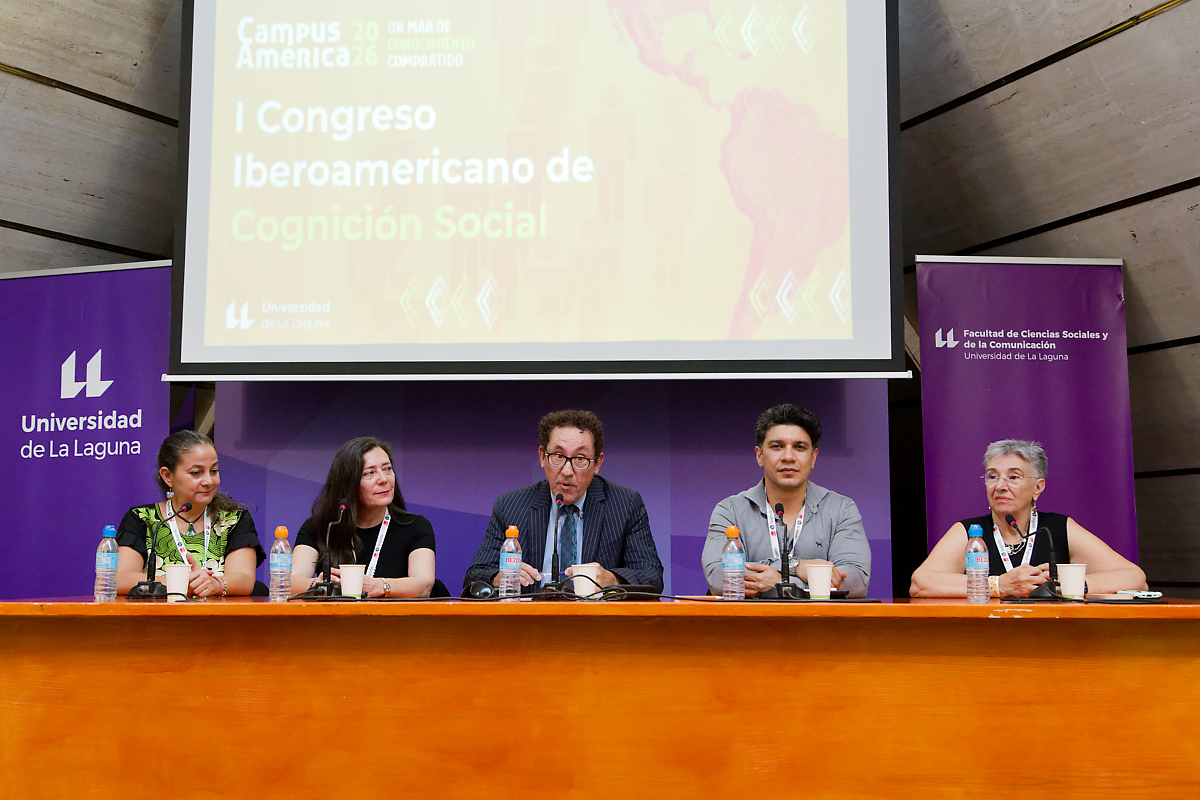
The seminar “From executive functions to social cognition: another way of understanding group behaviors”, It began today, October 20th, at the Faculty of Social Sciences and Communication of the University of La Laguna, within Campus America 2026. The meeting, which will run until tomorrow, aims to explore the neurocognitive processes involved in the interpretation of mental states, emotions, and interpersonal behaviors.
Coordinated by África Borges del Rosal, Professor of Methodology of Behavioral Sciences at the University of La Laguna (ULL), the seminar is being held in a hybrid format, both online and in person, and addresses how social cognition complements the study of executive functions. The latter allow us to understand the cognitive control processes involved in everyday activities, but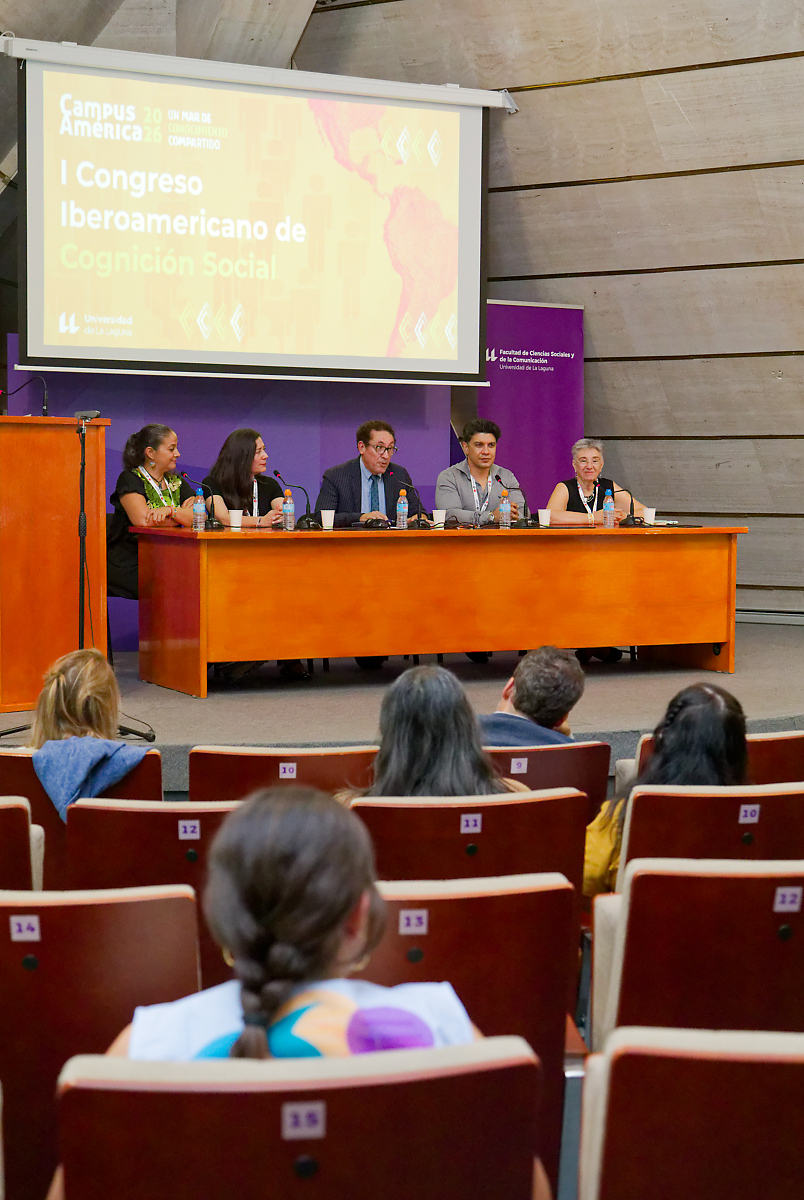 These theories alone are insufficient to explain how we navigate relationships with others. One of the objectives is to raise awareness of this area of research and its contribution to understanding the social world from a psychological perspective. The seminar will provide an opportunity to share lines of inquiry and foster the development of new projects among the participating teams.
The event is part of the fifth edition of Campus América, which takes place from October 19 to 30, with Chile as the guest country. Under the theme "A Sea of Shared Knowledge," the gathering continues to strengthen academic, scientific, and cultural ties between the Canary Islands and Latin America. The opening of the seminar highlighted the role of these ties in creating joint projects and exchanging knowledge between the two regions.
The program for the event will address processes such as empathy, perspective-taking, and theory of mind or mentalization, related to the ability to interpret the mental states of others. It includes presentations on brain synchrony and the use of functional magnetic resonance imaging (fMRI) in the study of social cognition, as well as lectures, workshops, and paper presentations. Another key focus is the relationship between social cognition and giftedness, an area in which the ULL team has over two decades of experience. Finally, a roundtable discussion will explore this connection and will serve as a link to the seventh edition of the "Overview of Intervention in Giftedness" conference, which will be held later, outside the Campus América program.
Among the invited specialists are María Leonor Conejeros Solar, professor at the Pontifical Catholic University of Valparaíso; Wilmar Fernando Pineda-Alhucema, coordinator of the Ibero-American Network for Research in Social Cognition; María José Aguilar, researcher at the National Council for Scientific and Technical Research of Argentina; and the researchers from the Autonomous University of the State of Morelos, Bernarda Téllez Alanís and Gabriela López Aymes.
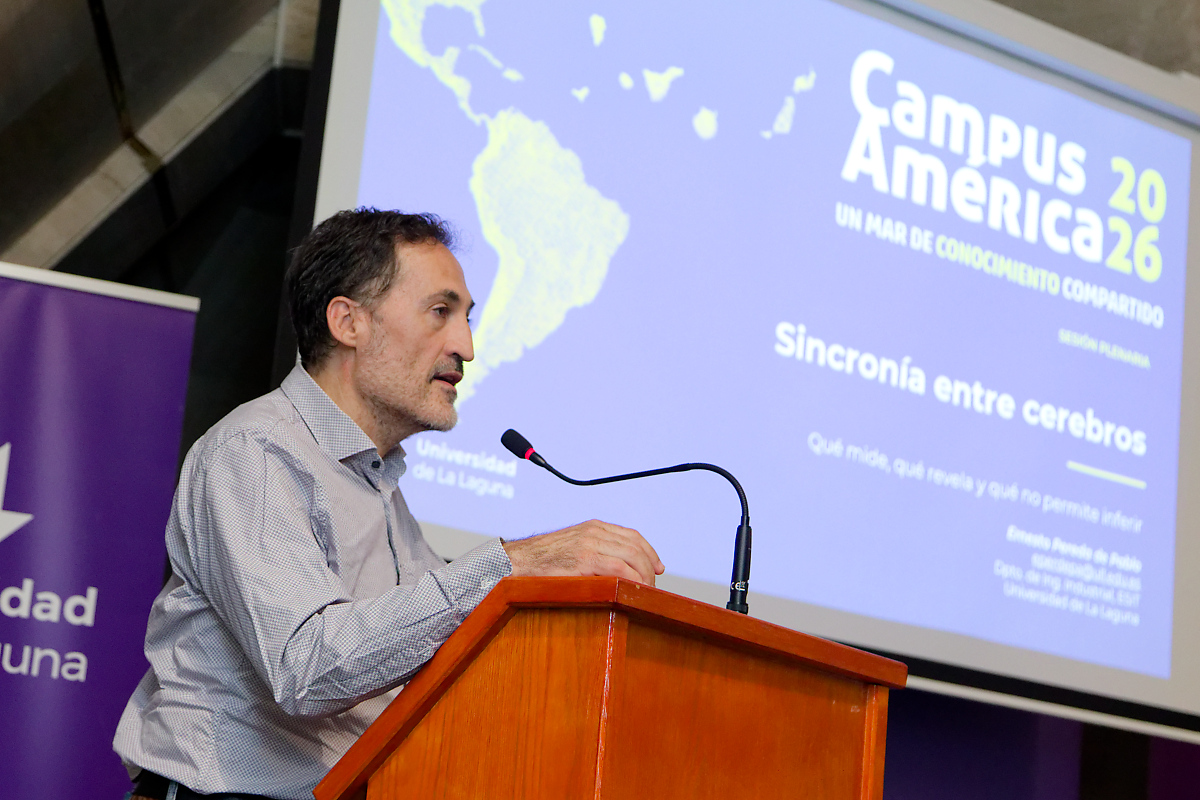
Ernesto Pereda.
In the first presentation, “Synchronicity Between Brains: What It Measures, What It Reveals, and What It Doesn't Allow Us to Infer,” given by Ernesto Pereda, Professor of Electrical Engineering at the University of La Laguna and Director of its Higher School of Engineering and Technology, the concept of synchronization was introduced using examples such as coupled metronomes or fireflies that coordinate their flashes without a leader. Based on these phenomena, the researcher explained how the interaction between individual elements can give rise to collective behavior. In the realm of the brain, he described how recording electrical activity and analyzing the correspondence between signals allows for the study of coordination between different areas of the same brain. His presentation also proposes examining the evidence of synchronization between brains during interaction and the limits of its interpretation.
In the second conference,
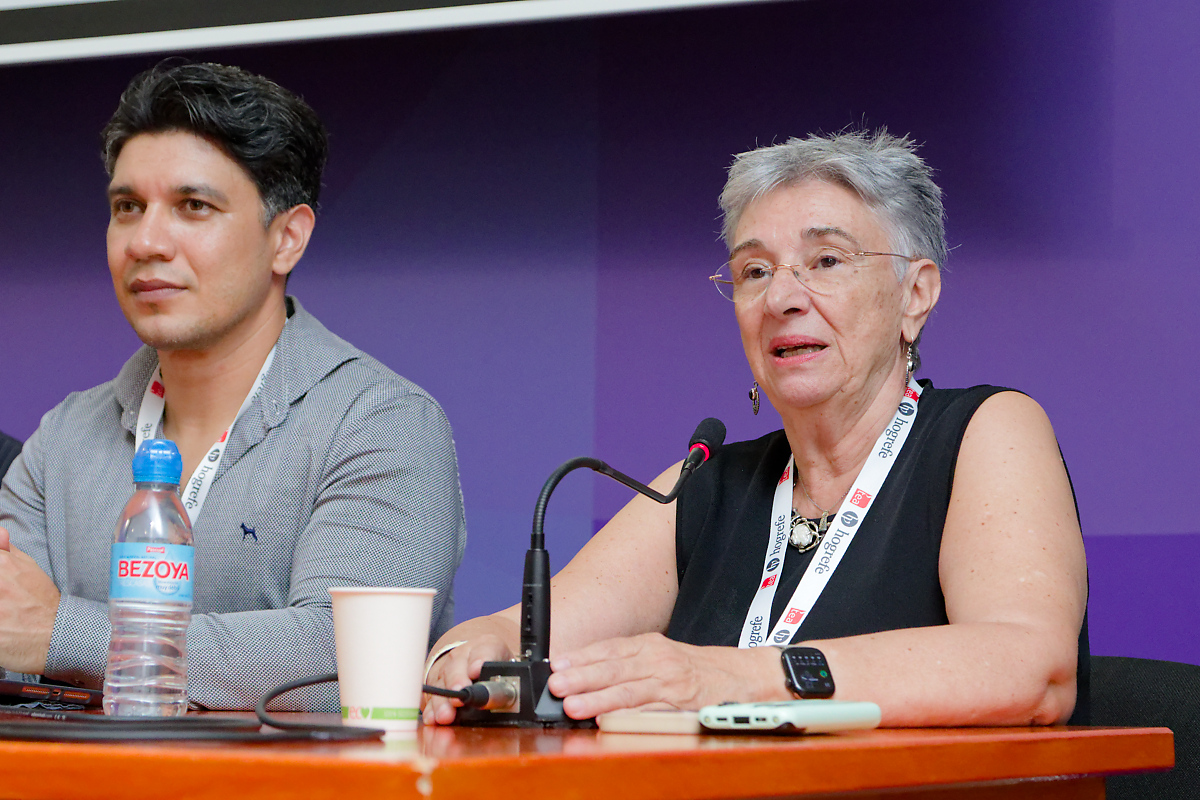
Wilmar Fernando Pineda-Alhucema and África Borges del Rosal.
, The coordinator of the Ibero-American Network for Research in Social Cognition addressed social cognition as the ability to construct mental representations and use that information to interact with others. The presentation highlighted the role of interpersonal relationships in brain development and the contribution of this field to the study of how we interpret behaviors, understand implicit situations, and adjust our behavior to the social context.
A research network driven from the ULL
The seminar is linked to the first Ibero-American Congress on Social Cognition and to the activity of the research network established last year at the University of La Laguna, which brings together around fifty researchers from ten countries, who maintain joint research, organize a monthly webinar and prepare a popular science book.
In this regard, the opening ceremony highlighted the humble origins of this scientific collaboration—a request for tools between researchers—and its evolution into a network aimed at consolidating social cognition research in the Ibero-American sphere. Coordinator África Borges emphasized that these meetings facilitate the identification of new research questions and foster continuity in collaboration between universities. She noted that the shared experiences and exchanges during the sessions strengthen relationships between teams and create mobility opportunities for students and faculty. The social dimension of this cooperation was also underscored, as it contributes to generating knowledge that can be shared and improve people's quality of life.

 Spanish
 English
 French