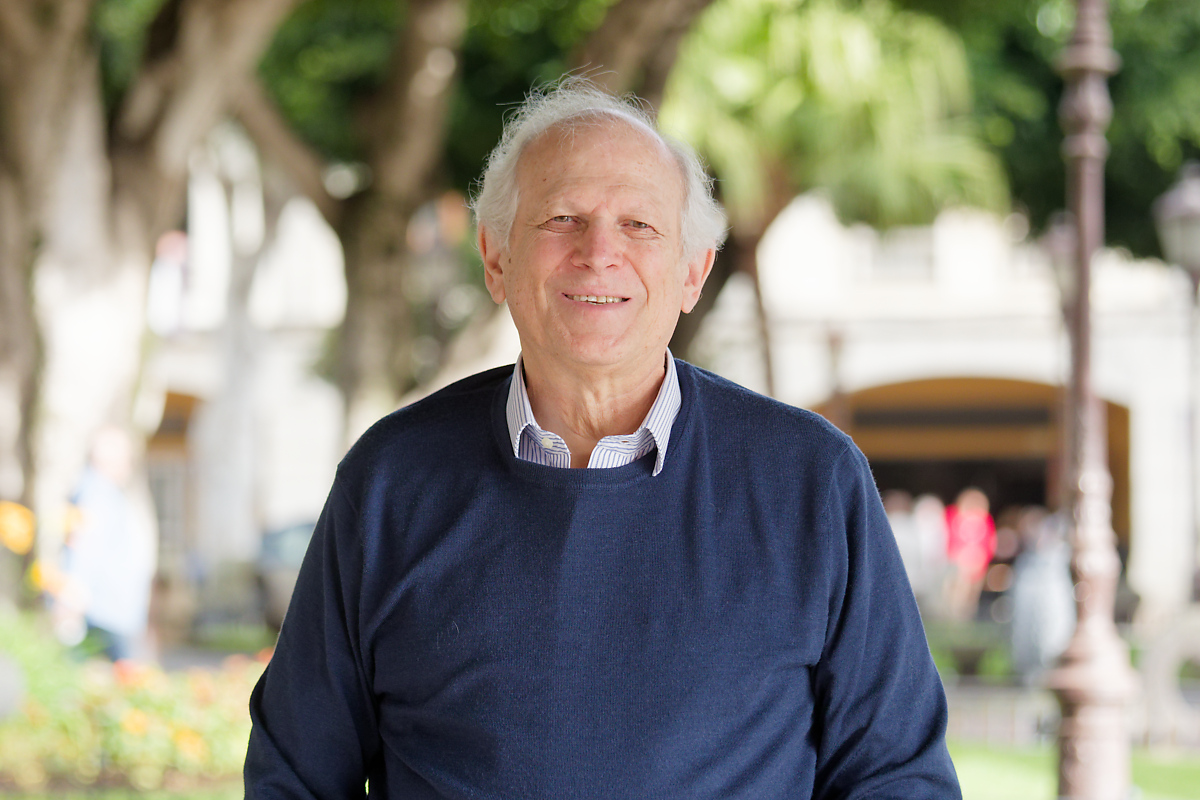
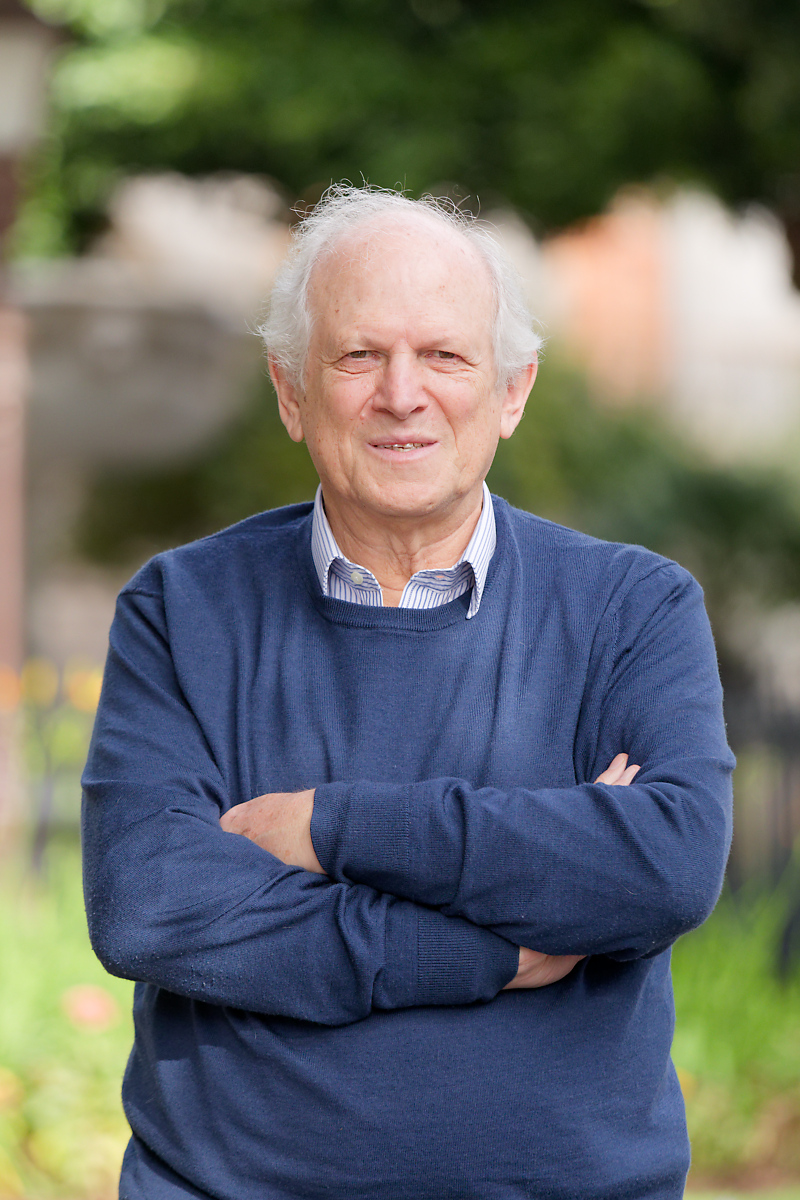
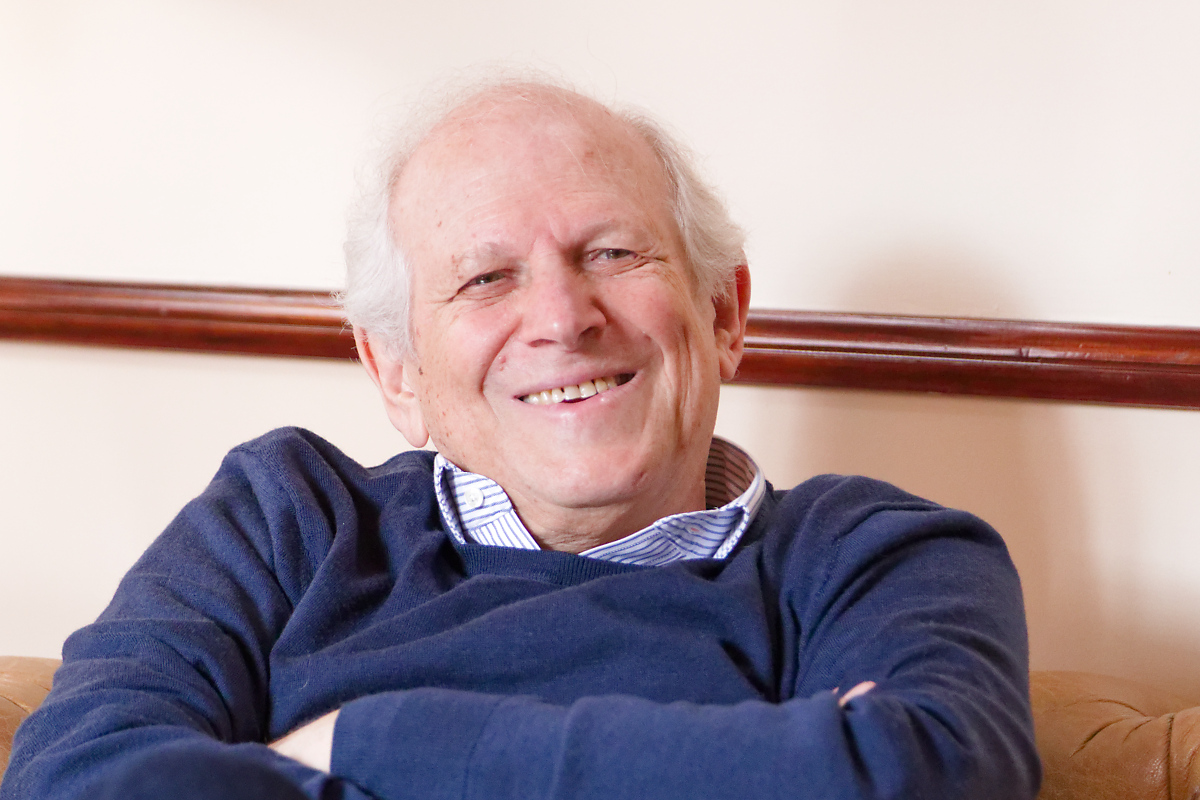
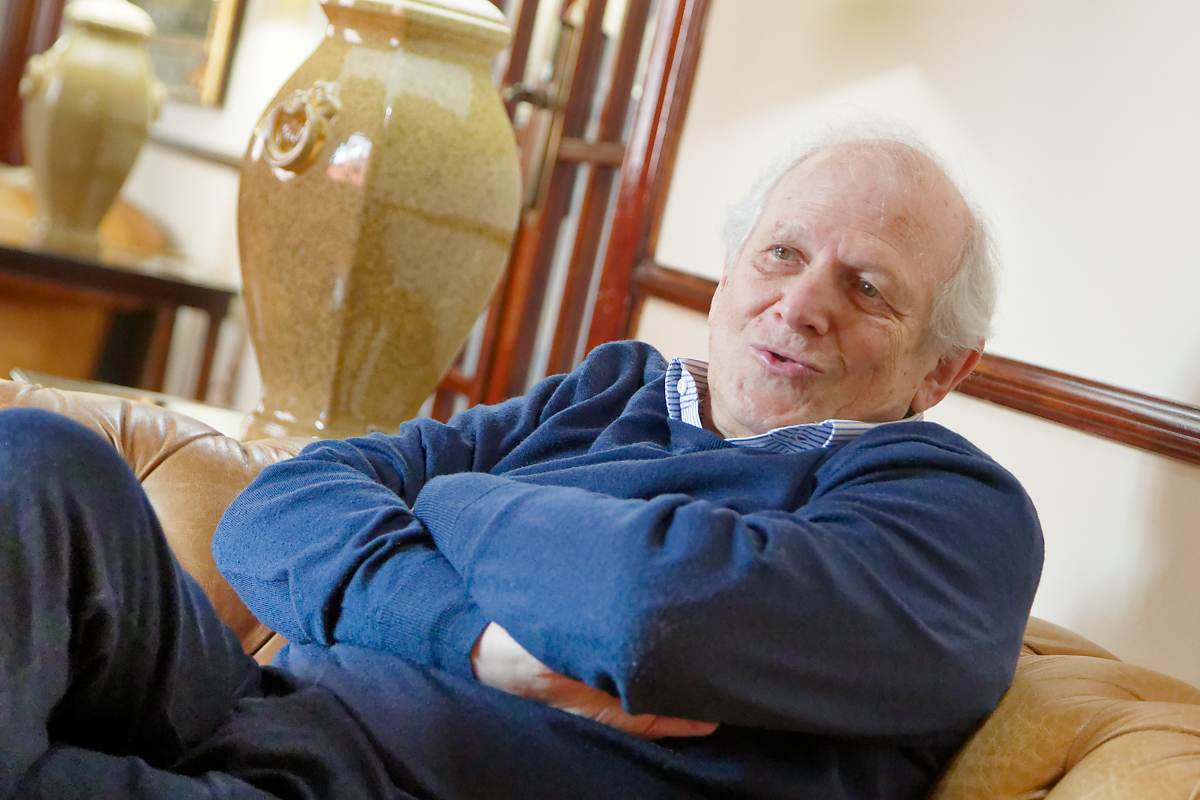
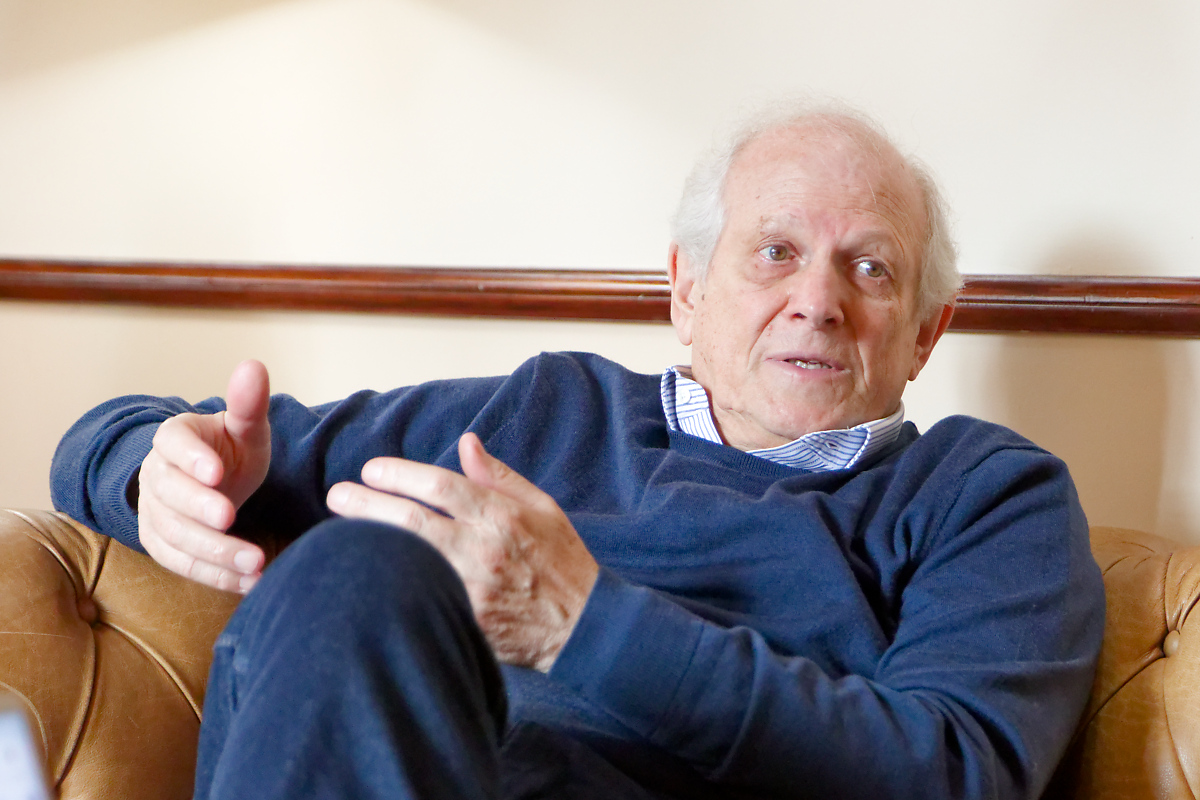
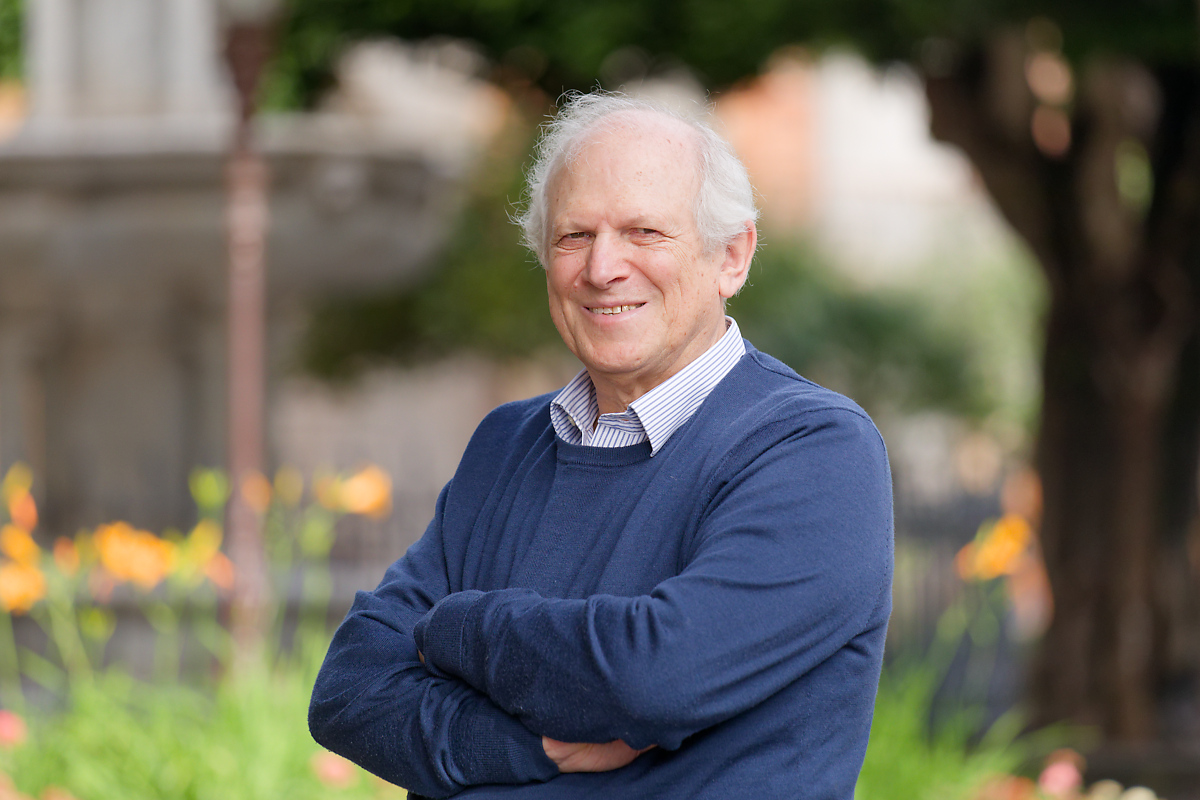
Carlos Malamud (Buenos Aires, 1951) is a senior researcher for Latin America at the Elcano Royal Institute and a professor of American History at the National University of Distance Education (UNED). He also serves on the editorial board of Pensamiento Iberoamericano, the journal of the Ibero-American General Secretariat. A leading scholar of the Americas, he opened the inaugural session of Campus América, discussing the challenges facing Latin America in an increasingly turbulent world.
His career has influenced several generations of historians specializing in Latin America. As head of the doctoral program in Contemporary Latin America at the Ortega y Gasset University Institute, he brought together leading specialists from various countries and consolidated the program as an international benchmark. His personal and professional journey has been marked by experiences such as exile, which took him from Argentina to Spain in the context of the 1976 coup d'état. He currently combines his work as a historian with that of a political analyst and expert on Latin American international relations.
 His presence at the inaugural Campus America conference will bring us an in-depth analysis of the intense geopolitical situation of the Latin American continent and, in this interview, he shows us his ability to be a wise narrator of the climate of an era and talks to us about his departure from Argentina, the wounds of the dictatorships and the pressing challenges of global democracies.
She has lived in Madrid for many years now. How does she see the situation in the capital with everything that's happening?
It's complicated. The political situation that led to the election, the tension, and the polarization are growing, and that means any event, however small, has a much greater impact than it would under other circumstances. Obviously, an issue like the eviction of this woman, Mari Carmen, at a time when the housing crisis primarily affects young people, but not only young people, has great significance. However, I believe that right now the situation is being used by both sides for their political purposes.
Let's talk a little about its origins. Fifty years have passed since the coup and forty-two since the end of the dictatorship. How do you assess the process of repairing the collective trauma in Argentina? What wounds remain open, and to what extent do they limit the country's ability to move forward?
The return from dictatorship in Argentina under Raúl Alfonsín was quite positive and left a very favorable legacy for the consolidation of democracy in the country. We have had better and worse governments in Argentina, but what is undeniable is that the central path of democracy is the one we continue to follow; at no point has any election been challenged by the loser.
All presidential transitions have proceeded without incident, except perhaps for the moment when Mauricio Macri succeeded Cristina Kirchner and she did not attend the handover ceremony. However, this did not prevent her from accepting the election results, and the transfer of power continued smoothly. Parliament has continued to function ever since, with its ups and downs, but it has continued to function, and even today, under Javier Milei's government, it still plays a significant role. Javier Milei himself, who came to power thinking, "We're going to destroy the state, we're going to shrink the state as much as possible," has discovered that there are institutional and political limitations that cannot be transgressed, and that, regardless of his high office, these limits must be respected.
 How was it to make the decision to leave Argentina?
A traumatic decision, somehow triggered by a chance event. I was studying History in Buenos Aires, and one day I ran into a classmate who was a leader in the Communist Federation at the university level. He told me I was on a list at the faculty. This implied a significant level of exposure, a considerable danger, especially at a time when the coup had already taken place. The disappeared weren't officially listed as such, but it was known that things were happening, that many people were being kidnapped, many murdered. Faced with the possibility that my life was in danger, I decided to leave, like so many others.
In his book, 'Military Coup and Dictatorship in Argentina (1976–1983)', published this year, he returns as a historian to a period he also lived through personally. How does one reconcile academic work with that personal experience?
Yes, the book is largely based on my life, since I experienced many events firsthand, from the coup until my departure. When I was asked to write this book, I tried to maintain as much distance as possible. It has autobiographical elements, but it's not an autobiography, and that's what I tried to keep in mind while writing it, striving to be true to my craft: to maintain as much distance as possible, taking into account all the voices, all the testimonies, all the perspectives that exist or could exist to address the issue.
I tried to answer many questions that still linger about military history in Argentina; it's not original research, it doesn't focus on any specific topic, it's more of a synthesis and, if you will, a work of popularization for the general public about what the Argentine military dictatorship was, what the coup represented, how it came about, and some of the problems that remain unresolved and that Argentine society still hasn't addressed. The main challenge was precisely how to reconcile my own life, my own existence, my own experience with these issues with a book that had to be a work of history.
You are also a Spanish citizen. What parallels do you find between the two countries in their relationship with the past? How do you assess the Spanish reconciliation process and the Historical Memory Law?
There are some issues on which a certain comparison can be drawn between Argentina and Spain. One of them is that the past of the Civil War and the dictatorship in Spain is still very much alive, and in Argentina as well; that is to say, neither country has been able to comfortably turn the page. Although I must say that the Historical Memory Law passed in Spain is much broader and much more inclusive in its treatment of victims than in Argentina. Obviously, many of the victims belong to one side or the other, but the Historical Memory Law makes a conscious effort to recognize all victims.
 And in that sense, we also have the example of Chile; if one goes to the Museum of Memory in Santiago, Chile, one finds that everything that happened with state terrorism during the dictatorship is present and is the common thread of the entire museum and is what is predominantly seen, but the actions of terrorism by armed organizations such as the Manuel Rodríguez Patriotic Front are not forgotten.
Conversely, if one walks through the memorial park across from the Aeroparque Jorge Newbery airport in Buenos Aires, what one finds is that the victims are only the victims of state terrorism, the victims of the so-called popular movement. But nothing more. There is a very interesting case in the history of Spain, that of two friends, well-known intellectuals from Granada. One of them is Federico García Lorca, who died at the beginning of the Civil War, and the other friend is a conservative Catholic intellectual who, nine days after Lorca's death, was thrown into a ravine in Ronda by the Republicans.
This somehow encapsulates the importance of acknowledging all victims, establishing this dialogue, this parallel between Lorca and his conservative friend. It's something that would allow us to take an important step toward normalizing the past in both Spain and Argentina, a step that the current political polarization in other countries complicates and hinders.
In the Canary Islands, there's a perception that the Civil War was largely ignored and that there was little repression, something historical accounts contradict. In Santa Cruz de Tenerife, the controversy continues over the removal of the Monument to Victory, commonly known as the Franco monument. After years of litigation, the State ordered its removal from public space this year. The Canary Islands rejected declaring it an Asset of Cultural Interest, but the City Council decided to appeal. What do these controversies tell us about our relationship with the dictatorship?
Starting with its very name, the Victory Monument highlights the distinction between winners and losers. If we continue down this path, we are doomed to misunderstand one another. But it is also true that a monument of this nature constantly reminds us of the past and the need to come to terms with it. One can change its location or store it away, but that does not erase what the Civil War meant for the Canary Islands.
 I don't have a magic solution for these kinds of problems. Perhaps the problem lies in differentiating between memory and history. We tend to talk about memory as if there were only one, when in fact there are multiple memories, and they don't always coincide. If we want memory to serve as a tool for questioning our past, I don't know if eliminating symbols like this one will achieve that goal. Obviously, even its very name, the Monument to Victory, implies that distinction between winners and losers, and if we continue with this dynamic, we are condemned to misunderstand each other for centuries to come.
But it's also true that a monument of this kind constantly reminds us of the past and the need to come to terms with it. There's a relatively recent trend, though it has numerous precedents throughout history, of demolishing monuments, as if erasing them—to use a contemporary term—would somehow normalize the past or, at least, allow us to reinterpret it according to our current understanding. When I was formulating this question, the first thing that came to mind was the Auschwitz concentration camp, because it was once the ultimate symbol of horror, and because it wasn't destroyed, it still stands and allows us to keep the memory alive.
In other words, perhaps the problem lies in differentiating memory from history. History allows for many interpretations; historians construct it through the questions they themselves formulate in relation to their own present. But memory is, on the one hand, much more flexible, and on the other hand, we tend to speak of memory as if there were only one, when, in reality, there are multiple memories. But if we want memory to serve as a means of questioning our past, I don't know if eliminating symbols like this one will ultimately achieve that goal.
We like the term "temporal density." Sometimes it seems that situations and the feeling of alarm are repeating themselves. Are we really in danger? What does history offer us to recognize real threats, and when might looking to the past mislead us?
I believe that looking to the past is never misleading. Looking to the past is always useful and reminds us precisely where we are. Cicero's phrase that history is the teacher of life should be taken with a grain of salt. Obviously, as human beings, we have characteristics that have persisted since our appearance on the face of the earth, and if, for example, we look at Roman civilization, we find that many of the elements that accompanied their daily life are still present. Many of the institutions remain in force; Roman law, where law means something, which is not common these days, still has a presence… But the idea that history repeats itself should be taken with a grain of salt. That is to say, one can find many similarities, for example, between the 1930s and the present day, but the situation is completely different, and this is for multiple reasons, beginning with the technological changes that surround us.
If you don't incorporate all these technological changes into your analysis, starting with AI, the impact of social media, the internet, and so on, you'll get lost. Of course, we have to consider what happened in the 1930s, the rise of fascism and authoritarianism in general, including Stalinism, but we're in a different era now. In the 1930s, for example, it's true that fascist regimes were clearly xenophobic, and they still are, but from the 1920s to the 1930s, Europe was massively exporting its population—millions of Europeans, starting with Spaniards, Italians, and Portuguese, but also inhabitants of the Ottoman Turkish Empire who emigrated to the Americas. Back then, xenophobia was concentrated on specific groups: Jews, Roma, and other minorities.
But today, that xenophobia is directed primarily at immigrants, and especially at immigrants from North Africa and immigrants who practice Islam. That already marks a radical difference from the past. So, are there threats? Many. Are we in a moment of great uncertainty? Absolutely. Will this lead to new dictatorships? It may, but it may not. We don't know where we're headed. Obviously, and we're seeing it, starting with the United States, democracy is in retreat worldwide, but this could be reversed at any moment.
 We sense a lot of fear and pessimism around us. How can we better cope with the current situation we are experiencing?
No, neither fear nor pessimism helps in a situation like this. Clearly, we must be attentive and vigilant; we must be able to discern what is true and what is false among all that is said and circulating on social media, which is considerable, and where the interests of certain global actors are constantly at play.
In the 1930s, the main threats to European democracies arose from within European societies themselves. Today, many of the threats to European democracies, and to democracies in general, come from outside. For example, Russia has a very specific interest in destroying the European Union and European democracies. But the United States, for instance, is also interfering in some Latin American elections.
Lula recently filed a complaint alleging that META was malfunctioning and restricting the reach of his messages on social media. If this allegation, which still needs to be proven, is confirmed, it would be extremely serious.
There's talk of a decline in the educational level of young people. How do you interpret that?
The PISA results speak for themselves. But we're also facing an increasingly overcrowded education system, and this is impacting its quality. While education used to be a tool for social advancement, today it's much more difficult. For any given job, a large number of young people apply, many with multiple master's degrees, fluency in several foreign languages, and experience, and yet it's still hard to find a quality job. It's understandable that discouragement is spreading. It's no surprise that there's talk of a decline in education, especially since the very future of public education in Europe is being called into question. A significant portion of the budget cuts starts with the easiest areas, and that's usually the education system.
We are seeing youth mobilizations in Europe. In Spain, following the Mari Carmen case and the housing protests, encampments have returned to the squares, reminiscent of the 15M movement. In France, some protests have escalated into violence. How do you interpret this situation?
The situation in Europe is extremely complicated. We were talking about democracy in decline, but the welfare state is also under threat. Added to this is a new development: the need to increase the defense budget, which stems from a dual dynamic. On the one hand, there are the demands of the United States government, something that is not new, not a Trump invention, but rather something that has been brewing for some time. This idea is that Europe should take responsibility for its own defense. Since the end of World War II, and especially since the Cold War, Europe has benefited from the NATO umbrella, which has allowed it to allocate a significant portion of its defense spending to finance public and social programs, relying on the fact that Europe's defense was ultimately in the hands of the United States. Today, the US demand that Europe pay more for its own defense, voiced by Trump, has meant a demand to reach 5.1% of GDP in defense spending.
 The second factor driving this spending is the Russian threat, which is a real threat, not only to neighboring countries. The Baltic states, Poland, and other countries bordering Russia live with great anxiety due to threats of Russian invasion, Putin's bluster, and the precedent of Russia's invasion of Ukraine. Added to this are the threats associated with hybrid warfare.
A deeply unsettling incident recently occurred in France, highlighting the potential impact and far-reaching consequences of this issue. France is thousands of kilometers from the Russian border. Yet, just a few days ago, several French supermarkets were affected by a hack of the software controlling their refrigeration units. Tons of products had to be discarded, at a cost of millions. This happened in supermarkets, but it could happen in transportation, communications, or banking. This explains why European states feel the need to strengthen their defense systems, which, given the high levels of debt in many governments—the French government, for example—means that austerity measures will have to be implemented. These measures affect public sector workers and public services such as education and healthcare, as well as other essential services like housing. All of this is leading to widespread discontent that is now spilling into the streets.
How do you assess the early general elections in Spain and the political moment in which they have taken place?
The snap election in Spain is a consequence of the overall political situation. In some ways, there are parallels with the situation Felipe González's government faced in 1993. Everything indicates that we will witness a change of government, although this is not necessarily the case. Currently, the polls show the PP and VOX as the favorites, and if there is indeed a change of government, we will see, on the one hand, the adjustments the PP and Vox will have to make to fit into a coalition government, which will not be easy. And, at the same time, there will also be adjustments within the PSOE to adapt to the new situation. There will be voices within the PSOE, as there were with Rajoy, in favor of supporting the PP on certain issues to stop VOX, and there will be other voices within the PSOE opposed to any agreement with the right. Therefore, how these two issues are resolved will largely determine the future of the country in the coming years.
What similarities and differences do you find between Spain, Argentina, and the United States? Do you trust the guarantees of the Spanish electoral system?
First, I would highlight a major difference: both the United States and Argentina have presidential systems, where the executive branch wields more power than in Spain, which has a parliamentary system. Polarization exists, as do threats from within the democratic system itself. We find cases of corruption on both sides of the Atlantic, cutting across the entire political spectrum, but the differences remain significant. From the Transition to the present day, the Spanish Constitution and institutional system have demonstrated great resilience and effectiveness, and I am confident that this will continue.
What explains Chile's shift from Gabriel Boric's transformative project to José Antonio Kast's? What do you think was the social motivation behind this change?
Without the events of 2018, Boric's rise to power in Chile would be inexplicable. But it's also important to remember that even back then, and even before, not only in Chile but in Latin America in general, there was a strong presence of what could be called the protest vote, the vote of anger, the anti-establishment vote. Thus, faced with broken promises from governments, society chose to opt for new solutions and voted for opposition figures. This happened with Boric and it has happened again with Kast.
 I believe that Boric's government committed a rather serious original sin. When Boric came to power, the constitutional reform process was already underway. Boric, who could have acted as president in accordance with his presidential office, decided to support a very forward-thinking constitutional reform project that was overwhelmingly rejected by Chilean society, and it was an issue from which he could not recover.
At the same time, Boric's government was unable to resolve some essential issues in Chilean society, the most important being insecurity. Despite what is said, the Chilean macroeconomy was doing reasonably well, but the issue of security, as in the rest of Latin America, became a fundamental problem for Chilean society, and this is what allowed Kast, supported by a hardline program focused on strengthening security, to come to power. But, like Boric, he finds himself facing significant legal and institutional limitations. This makes the situation complicated; many of his promises have yet to be fulfilled, and his approval ratings have declined. We will see if he is able to reverse this situation in the future.
After what happened in Venezuela, how do you see the United States' relationship with Latin America?
In late 2025, the White House presented its national security strategy, of which Trump's corollary on the Monroe Doctrine was an essential part, emphasizing the security of the Western Hemisphere and suggesting that it was vital to U.S. security itself. This was both good and bad news for Latin America. Good news because, after 2001 and the September 11 attacks, the United States was once again paying close attention to the region. But it was bad news because the Trump administration intends to impose a highly interventionist, hegemonic vision, one that simultaneously seeks to limit, at the very least, China's presence in the region and, if possible, expel China from the world.
The problem is that this is a difficult objective to achieve because in the last 25 years China has become a major economic player in Latin America, especially in South America. China is the main trading partner of most South American countries, perhaps excluding Colombia and now Venezuela, given its special relationship with the United States. It also has a very high level of investment; the United States remains the largest investor, Europe is ahead of China, but even so, in recent years, Chinese investment in some key sectors has grown significantly.
 For now, it is impossible to expel China from the region, primarily because the US market is unable to replace the Chinese market as the destination for Latin America's main exports, especially non-industrial goods, and because US companies, driven by a clear profitability criterion, naturally do not invest where the risk is lower, where the expected return on investment is lower. This is not a problem for Chinese companies, since one of the main criteria for deciding where to invest is related to the directives of the Chinese Communist Party and the interests of the Chinese state.
This has led many Latin American governments to adopt what could be called a dual strategy. On the one hand, politically, especially regarding security and defense, they are leaning more towards the United States, and on the other hand, economically, particularly in trade and investment, they are looking more towards China to the extent possible.
They're going to keep insisting on this; in fact, for example, with strong US allies like Chile and Ecuador, we recently saw the Ecuadorian president on an official visit to China, and the same with the Chilean foreign minister, Francisco Pérez Mackenna, who said something like, "We are not anti-American or anti-China, we are pro-Chile." In line with the latest election results in the region, what could be called a shift to the right is taking place. We'll see what happens in the second round in Brazil, to be held next Sunday, October 25th, and it will probably be a very, very close race. On paper, Flavio Bolsonaro has the best chance, but I wouldn't count Lula out.
Communications Office

 Spanish
 English
 French