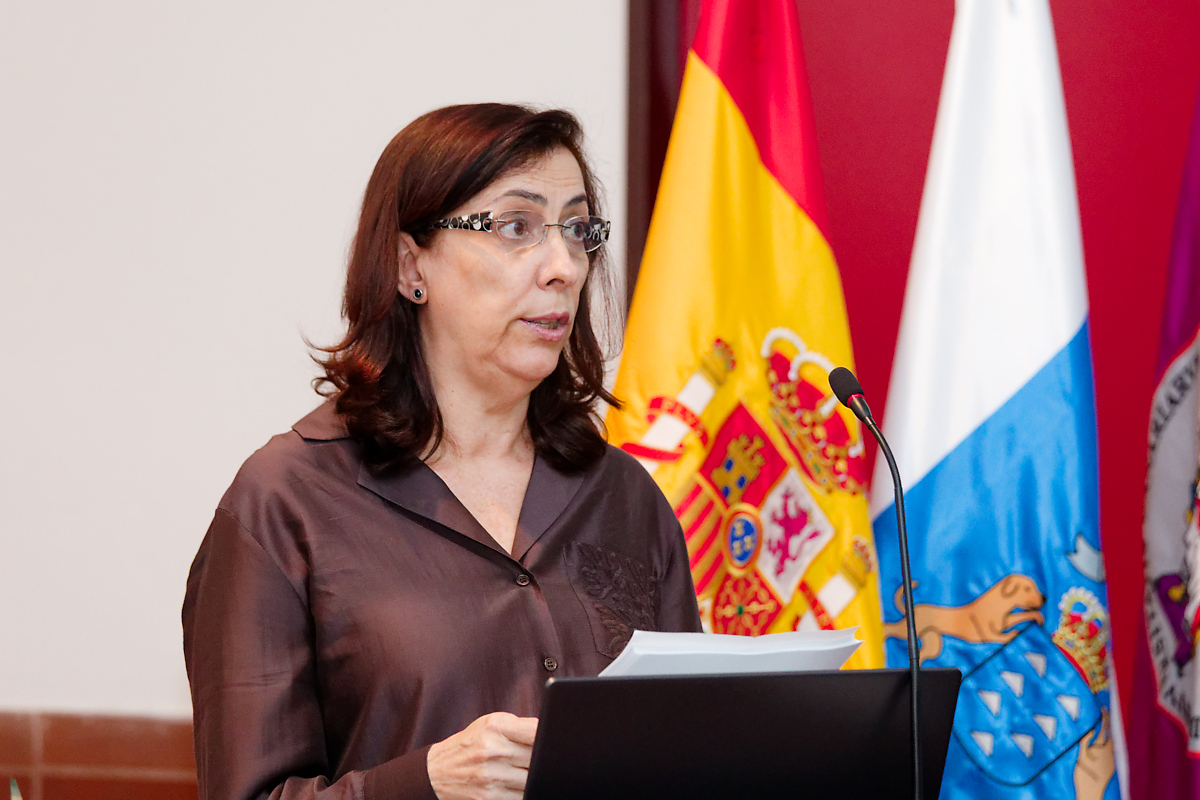
The Professor of Physical Chemistry at the University of La Laguna Elena Pastor Tejera She read her inaugural address as a full member of the academician's office. Royal Canarian Academy of Sciences Last Friday, October 16, in a ceremony held in the Chemistry Room of the academic institution, the academic Andrea Brito Alayón was in charge of responding. Her presentation was titled “Electrocatalysts in the era of green hydrogen”With this investiture, Pastor occupies the ninth position of full academics, out of a total of ten possible, in the Chemistry Section of the institution.
The Royal Canarian Academy of Sciences stipulates in its statutes that it will have a maximum of fifty full members, an equal number of corresponding members, and up to six emeritus members. Furthermore, it divides its organization into five sections: Chemistry, Mathematics, Physics, Biology, and Earth and Space Sciences, although it allows for the creation of more sections should scientific developments warrant it.
For Pastor, this appointment represents recognition from outside the university, which she considers an added value. “Furthermore, it is recognition not of a specific piece of work, but of an entire career dedicated to science and teaching, to effort and perseverance, and it must be said, to sacrifice (especially in balancing all of this with family life). Regarding membership, my primary commitment will be to the role and representation of women in the Academy, which, until now, has been practically symbolic.”.
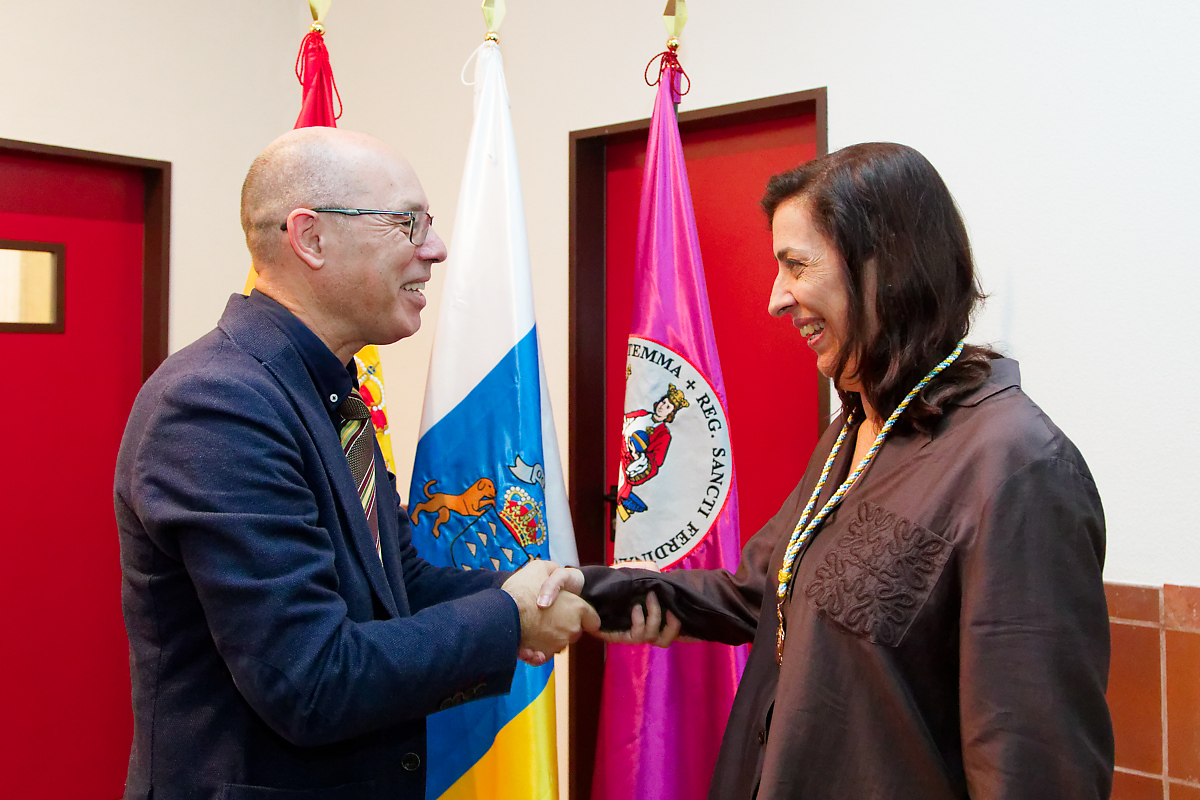
Daniel Alonso congratulates Elena Pastor on the presentation of the commemorative medal.
The president of the Academy, the professor of Applied Physics at the University of La Laguna Daniel Alonso Ramírez, The university has praised the addition of such a prestigious researcher: “Her contributions to electrochemistry and electrocatalysis, particularly in the development of materials for electrolyzers, fuel cells, and batteries, place her at the forefront of hydrogen and energy storage technologies, crucial areas for the energy transition and, especially, for an island territory like the Canary Islands. Her appointment recognizes not only her scientific career but also her extraordinary contribution to the training of research personnel, her role in creating collaborative networks with Europe and Latin America, and her commitment to consolidating world-class research in the Canary Islands.”
Investment
In his inaugural address, available in its entirety On the website of the Royal Canarian Academy of Sciences, Pastor began by referring to the responsibility that this appointment entails, given the importance of "bringing science closer to society and making it a participant in the research and scientific advances that, with great effort and often in a little-visible way, try to provide answers to both the great global challenges and those that affect our environment more closely.".
She also addressed the folly of giving more prominence to women in the world of research. “Giving visibility to women working in science, recognizing their contributions, and providing role models for new generations is a task in which institutions like this Academy can play an important role. I hope to contribute.”
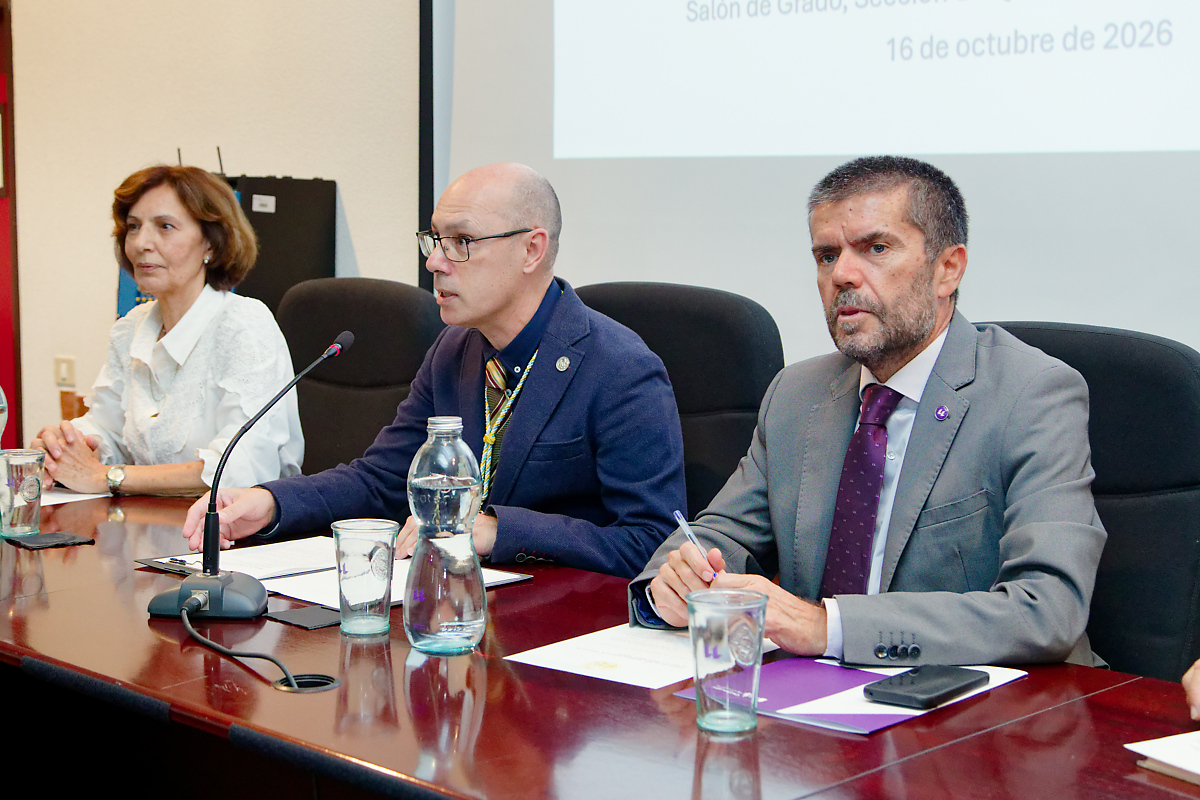
The Dean of Sciences, the President of the Royal Academy and the Rector of the ULL, during the ceremony.
also, since joining this institution, to this objective.”.
He explained that the choice of the topic of his speech is due to three reasons: “To address a global problem such as the need to move towards an energy transition that in the era of green hydrogen responds to the environmental problems derived from the current energy model; secondly, the special relevance that this process can have for the Canary Islands; and, finally, its close relationship with the scientific activity developed in recent years in my research group.”.
The dissertation, in fact, provided a comprehensive overview of the main aspects of this form of energy generation and addressed issues such as its role in the energy transition, its different types or colors (green or renewable; gray, from natural gas; blue, incorporating carbon; black or brown, associated with the gasification of coal or lignite); and pink, through nuclear electricity); its production and costs; the national and European policies that affect it; its repercussions and opportunities for the Canary Islands; and fuel cells and electrocatalysts.
For her part, in her welcoming remarks to Pastor, Andrea Brito noted that, although she did not have the opportunity to teach him or develop projects with him, she was very grateful for the opportunity to teach him or to develop projects with him. 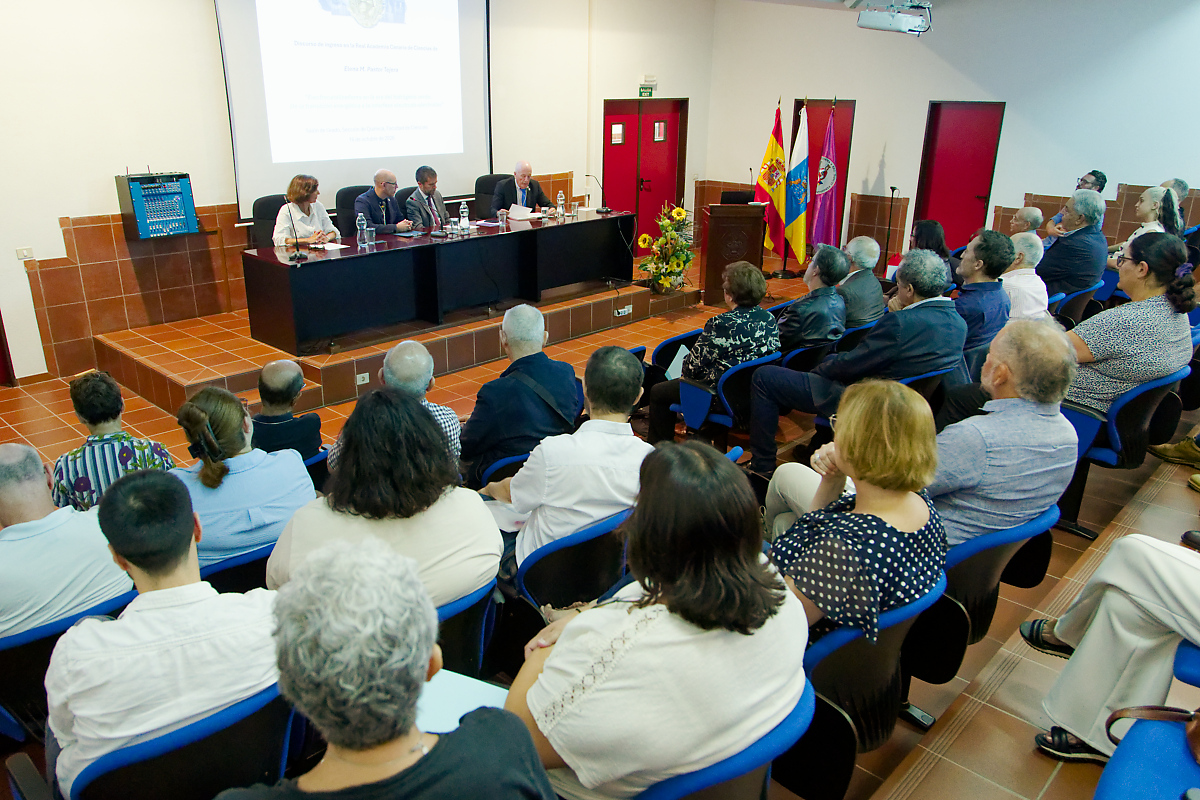 of joint research, but they fought together “many of the small battles” of the university. “There are trajectories that are known, observed, and recognized over time. That is, to a large extent, what has happened to me with Dr. Pastor. I have seen her travel the path from those years when she was a young Chemistry student to becoming one of the leading researchers at our University in the field of electrochemistry, electrocatalysis, and energy technologies.”.
She highlighted her qualities such as her intelligence in tackling complex scientific problems, identifying opportunities, and formulating new questions; her perseverance; her international outlook; her talent for maintaining sustained research funding for decades; the development of a consolidated research group; and her ability to train others. “I am convinced that your experience, your knowledge, your work ethic, and your commitment to science will be an extraordinarily valuable contribution to this institution.”.

 Spanish
 English
 French