
The Campus America panel discussion, “Centralized or Decentralized Governments: Climate and Territorial Challenges,” addressed the state of local government in the Canary Islands and Chile at a time when local administrations are facing new challenges such as climate change, the digital transition, and the fight against organized crime, requiring more resources and new ways of working. During the presentations, strengths were identified that enable municipalities to offer better services to citizens. These include promoting collaboration to facilitate joint actions, maintaining financial autonomy, and operating with legal certainty that clearly defines the responsibilities of different administrative levels.
Moderated by Jorge Marcel Fuentes Fetis, former head of the Social Organizations Division (DOS) of the Ministry General Secretariat of Government, and former mayor of the Los Álamos commune in Chile, the panel included the participation of the president of the Canary Federation of Municipalities (FECAM) and mayor of Candelaria, Mary Brito; the executive director of the Association of Municipalities of Chile (AMUCH), Andrés Chacón; and the councilor of the La Laguna City Council Juan Antonio Molina Cruz.

Mary Brito.
Mary Brito highlighted the strength of local government in its collaborative approach, citing FECAM as an example. FECAM is an association comprised of the 88 municipalities of the Canary Islands and acts as an interlocutor with the Canary Islands Government at every stage of negotiation and dialogue regarding local public policies, ensuring its presence at any forum where local public affairs are discussed. She explained that its advocacy for local issues transcends political affiliations, and therefore, although there may be understandable disagreements in the organization's internal debates, its collective decisions are adopted unanimously.
The president of FECAM highlighted the unique characteristics of the Canary Islands, with 88 municipalities, 58 of which have fewer than 20,000 inhabitants, while only five have more than 50,000, all of them located on the two capital islands. She also noted that the so-called "green islands" (La Palma, La Gomera, and El Hierro) have specific legislation that establishes obligations regarding climate action.
Juan Antonio Molina declared himself a staunch advocate of decentralization, but at the same time, he argued that sometimes it is necessary to relinquish it to face major challenges by collaborating with other entities. In his opinion, the flaw of many politicians who assume office is that they try to accumulate more powers to have greater capacity for action, and paradoxically, this can lead their administration to a state of ineffectiveness if it lacks the necessary resources to handle those new responsibilities.
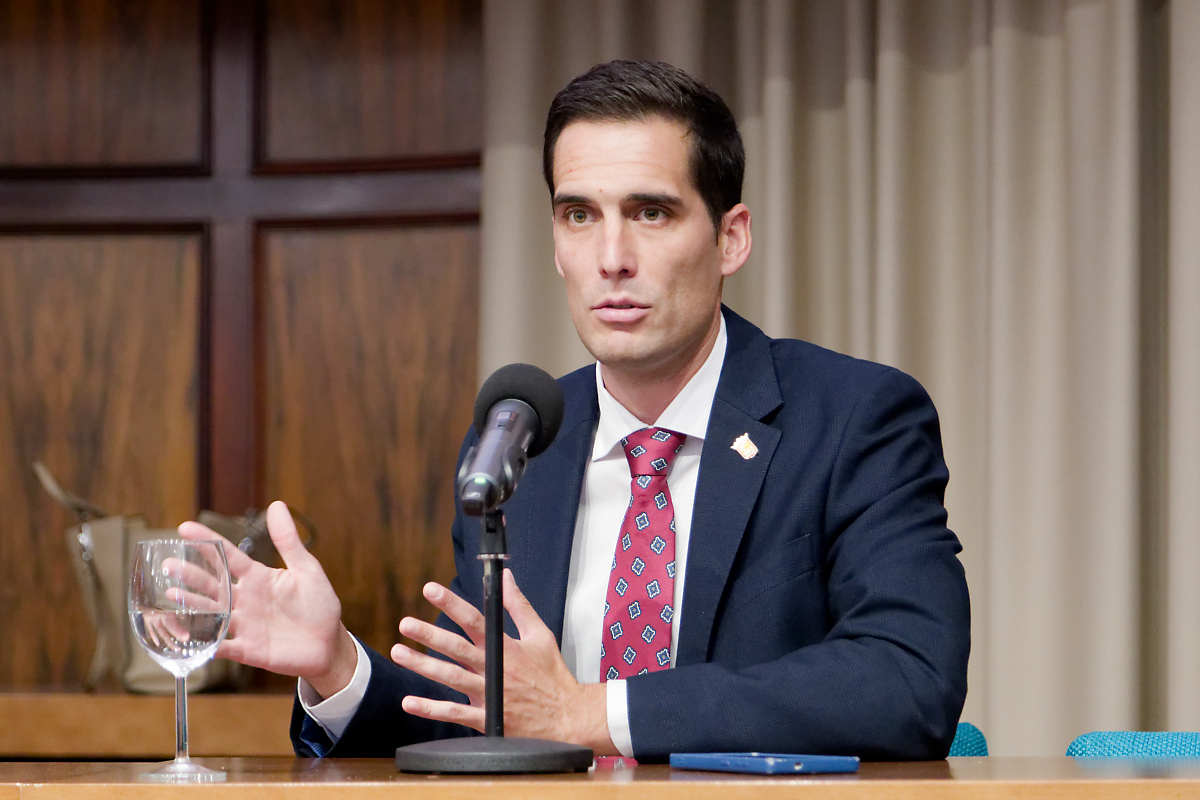
Juan Antonio Molina.
He cited as an example the challenge of maintaining water distribution networks, which in some municipalities experience losses of up to 101% of the flow, while in others, losses reach up to 501%. He pointed out that this maintenance is not visible and, therefore, “doesn't win votes,” despite its importance in a region facing a water crisis like the Canary Islands. There are small municipalities that cannot afford this maintenance, and for this reason, pooling services is one of those cases where it is the best solution. Another example is the management of abandoned dogs and cats, which previously depended on each municipality with varying results, but has now improved thanks to centralization by region.
Andrés Chacón offered a vision of municipalism from the perspective of his country, starting from a very specific institutional context: Chile is among the ten most centralized countries in the world and has a system that operates “at two speeds”: on the one hand, with a central government that has remained permanent over time and from which many regulations emanate, and a regional government that since 2021 has democratic legitimacy by having elected governors; and on the other hand, a municipal system that has not experienced any progress since the end of the 1980s.

Andrés Chacón.
From the municipal level, there is “no in-depth dialogue” with higher authorities, and therefore, the institutional relationship will depend heavily on something as volatile as personal affinities. Chacón criticized the fact that, from this centralized position, legislators often seem to create regulations designed for a theoretical, urban municipality, without considering that in Chile, 70% of municipalities are rural. Therefore, in his view, the underlying problem is not related to resources, capabilities, or innovation, but rather to professional and statutory issues. He argued that a modern state requires decentralization, without prejudice to the possibility of seeking joint solutions for broader issues such as disaster risk, climate change, and waste management.
Legal certainty was another issue raised, and Mary Brito praised Spain for having clear regulations that define the responsibilities of each level of public administration and for having bodies to resolve potential jurisdictional disputes when they arise. She noted that residents perceive the town hall as the closest level of government and, therefore, turn to it with their requests. For this reason, it is essential to be able to explain to these residents what is and is not within the scope of local authority, as well as to act as an intermediary with other levels of government.
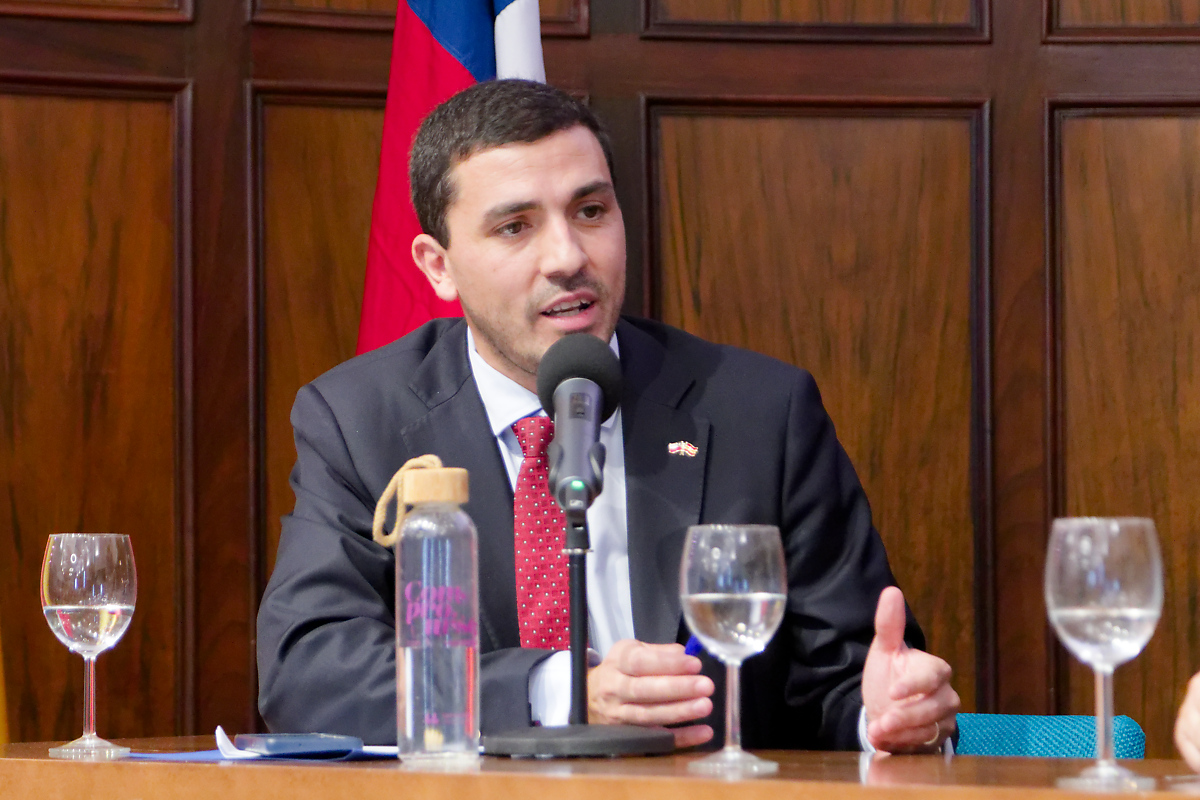
Jorge Marcel.
On this matter, Juan Antonio Molina advocated for a more balanced distribution of powers, arguing that municipalities currently have some obligations that are practically impossible for them to fulfill. He believes that local councils should only have the powers they are capable of assuming, and to achieve this, a collective educational process is needed, one that is not aimed at trying to please different parties, but rather at being efficient and effective.
For his part, Chacón noted that in his country, municipalities now have to deal with situations that were not initially planned for, often with the same budget and human and technical resources as before. Municipalities acquire powers but are perceived as “slow, weak, and bureaucratic.” Therefore, he advocated for regulatory, functional, and legal recognition of municipal responsibilities and powers.

 Spanish
 English
 French