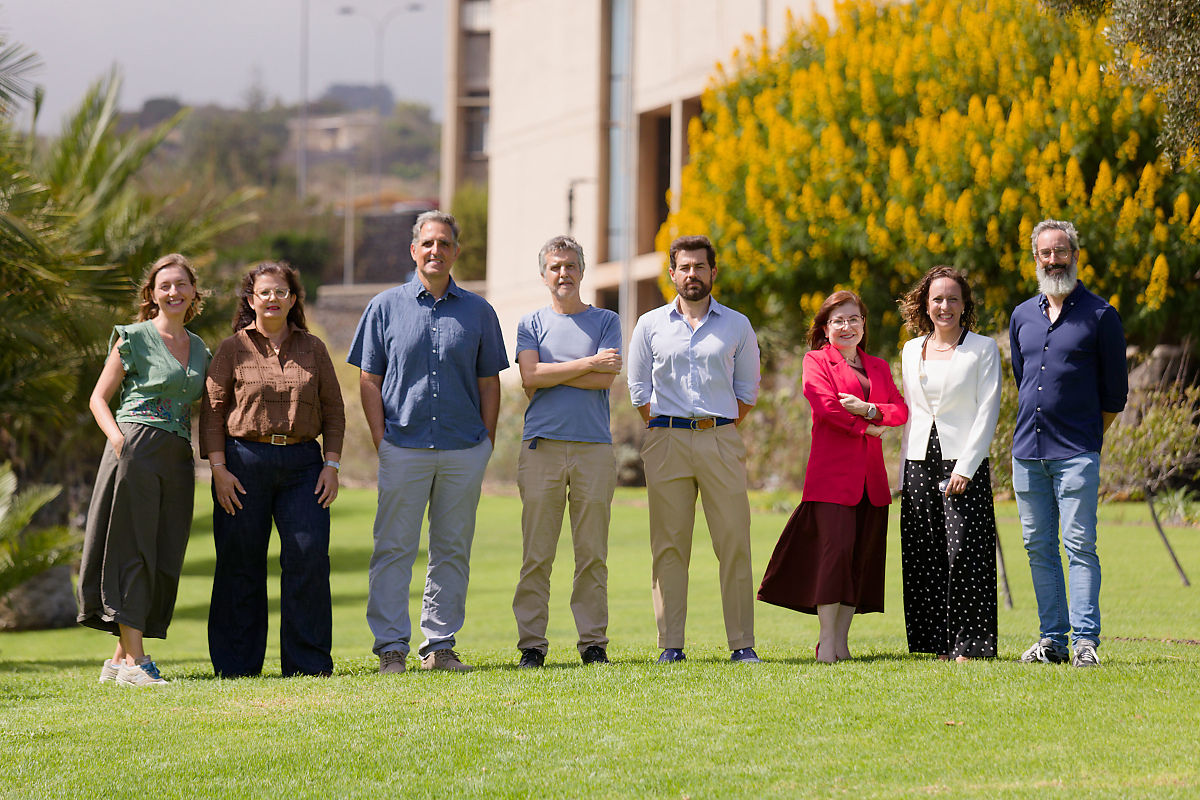
The University of La Laguna has secured over €3.1 million in funding from the Ministry of Science, Innovation and Universities' 2025 call for proposals for Knowledge Generation Projects, making it the Canary Islands scientific institution to receive the most funding in this round, managed by the State Research Agency. This funding will support 19 projects in diverse fields such as Biotechnology, Neuroscience, Economics, Law, and Mathematical Analysis, with durations ranging from three to four years.
A particularly significant portion of the funding is earmarked for bringing new scientific talent into research teams, strengthening project capabilities and contributing to the training of a new generation of researchers. Nine of these initiatives include a predoctoral contract linked to their research areas. To this end, the University of La Laguna has secured €1,211,535, support that will contribute to the training of new scientific talent and the development of the funded research projects.
In this way, the call integrates into a single procedure both the resources allocated to projects and the contracts for the training of predoctoral research staff, which were previously granted independently through FPI grants.
Chatbot language and psychological well-being
The project “The AI chatbot language for enhancing human capabilities and well-being (CHATWELL)”, led by Jano Jiménez Barreto, Professor [Name], a senior lecturer in the Marketing and Market Research department at the University of La Laguna, studies how the use of language by AI-based chatbots can enhance users' capabilities and psychological well-being, both in the public and private sectors.
The research will analyze the influence that certain linguistic structures used by chatbots can have on people's perceptions, behaviors, and psychological well-being. Specifically, it will study expressions aimed at generating efficiency gains, related to problem-solving, time savings, or speed of response, as well as those focused on producing experience gains through the emotional or sensory activation of users. The analysis will cover various sectors, including healthcare, public administration, commerce, and tourism, and will also compare interactions carried out via text and voice.
The importance of this issue has increased in recent years due to the expansion of conversational assistants and generative artificial intelligence such as ChatGPT, as well as the growing investment of public and private organizations in these technologies. “However, communication problems, such as emotional manipulation or excessive linguistic anthropomorphism by chatbots, can generate frustration and negative psychological effects in users, as well as damage the reputation of the organizations that use them,” the researcher points out.
CHATWELL will contribute an integrative theoretical framework based on assembly theory and interpersonal communication, as well as an analytical model that evaluates two pathways of user perceptual expansion: the efficiency pathway, associated with gains in competence and control, and the experience pathway, linked to emotional and sensory value when necessary. In addition, he will analyze key moderators, such as the application sector and multimodality.
The project will be developed through a combination of scientific literature review, qualitative and field studies, chatbot design, and experimental studies, as well as the dissemination of results and knowledge transfer. A key outcome is the creation of an open-access guide on chatbot language configuration, aimed at businesses and public administrations. The goal is to contribute to the design of systems that improve interaction with people in areas such as healthcare, citizen services, commerce, and tourism.
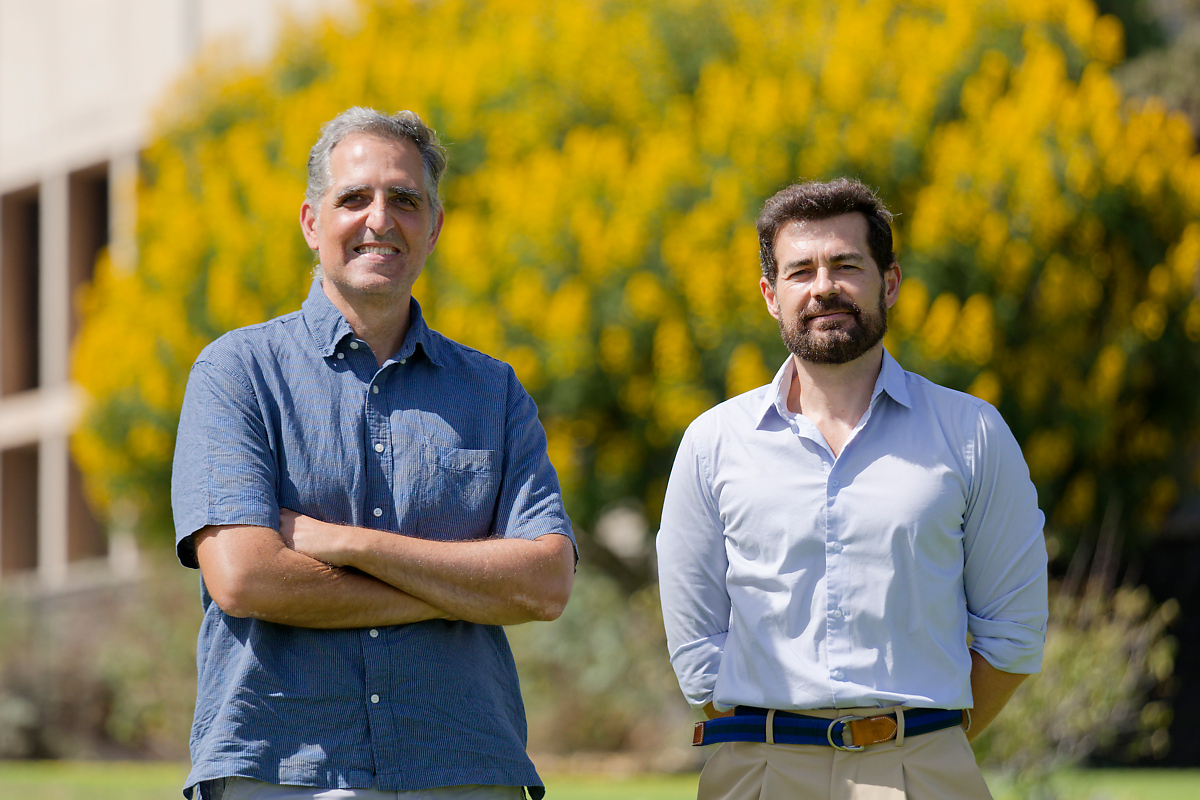
Gustavo Marrero and Carlos Bethencourt.
Beyond income differences
What are the structural factors that determine people's economic and social opportunities, how do they interact with each other, and what policies can effectively reduce inequalities? This is the question that the project "Inequality and Public Policies: The Role of Education, Health, and Climate" seeks to answer. It is part of INEQPOL, an initiative coordinated by the University of La Laguna, with the participation of the Autonomous University of Barcelona, the University of Vigo, the University of Girona, and the Complutense University of Madrid.
“The starting point is that inequality cannot be understood solely based on income differences: wealth accumulation, education, and skills development, among other things, also play a role,” say the lead researchers of this project., Carlos Gabriel Bethencourt Marrero y Gustavo Alberto Marrero Díaz. Inequality is undergoing significant transformations. “It’s no longer just about studying income differences, but about understanding phenomena such as biases associated with artificial intelligence or the different exposure of social groups to the effects of climate change,” they explain.
The research group's main contribution is to combine economic modeling, causal inference, and big data analysis. To achieve this, they will work with administrative, fiscal, educational, demographic, and climate data, aiming to identify not only existing inequalities but also their causes.
This project is structured so that each objective generally goes through three stages: development of the conceptual framework, data collection and harmonization, and finally, econometric or computational analysis. The main lines of research include wealth inequality and regional differences in Spain; equality of opportunity in a context shaped by artificial intelligence; and the role of family, gender, and education in generating inequalities.
The project's results will generate new evidence on the causes of inequality and the effectiveness of various public policies to combat it. "The ultimate goal is to provide a more robust empirical basis for designing more effective and targeted social, educational, fiscal, and environmental policies, contributing to reducing the intergenerational transmission of inequality and increasing resilience to economic, technological, and climate risks," they state.
Analysis of the causes of working poverty
The University of La Laguna will also develop a project aimed at studying working poverty in Spain in order to minimize and/or eliminate it. This initiative, entitled “Working Poverty and Wages in Spain: A Comprehensive Legal-Economic Study Based on Two Variables, Working Conditions and the Business Management Model,” poses the following research question: Why do people who work full-time not receive a salary that allows them to cover ordinary living expenses?
To try to answer this question, the team, led by Dulce Cairós Barreto, Cairós, a professor in the Department of Labor Law and Social Security at the University of La Laguna, will analyze the wage-setting system in Spain from a legal and economic perspective. The study will address aspects such as collective bargaining, wage supplements, pay inequalities based on gender, activity, and professional group, as well as profit sharing. It will also examine absenteeism, its real impact on work organization and businesses, and issues related to access to housing. “We seek to understand why wages are so low in Spain and find ways to increase them in line with the characteristics of the Spanish labor market,” Cairós explains.
One of the project's distinguishing features is its comprehensive nature, as it combines economic and legal approaches to systematically analyze the factors influencing working poverty. Through various phases of research, analysis, and knowledge transfer, the project will study both the structural causes of this phenomenon and the effectiveness of current wage-setting instruments, including the national minimum wage and collective bargaining agreements.
Among the expected results are the development of recommendations and reform proposals aimed at improving wage determination and contributing to ensuring decent living conditions for workers. Securing funding in the 2025 Knowledge Generation call also represents recognition of the research trajectory of the Labor Law and Social Security group at the University of La Laguna and will allow them to continue a well-established line of research with a clear focus on social impact.

José Díaz Cuyás.
The value of “authenticity” in the culture and tourism of Spain during the developmentalist period
The tenured professor of Fine Arts and coordinator of the research group “The tourist experience: image, body and death in the culture of leisure (TURICOM)” José Díaz Cuyás She leads the project “Authentic Spain: Ideology and Tourism Rhetoric in the Art and Visual Culture of the Development Era,” which falls under the category of this call for proposals that refers to non-oriented research. Its aim is to contribute to a better understanding of the function, uses, and contradictions of the concept of “authentic Spain,” coined during the development era.
The fundamental question of this research is how the value of authenticity (ideological, commercial, cultural, identity-related) is articulated in Spanish art and visual culture during the developmental period, starting from two opposing positions: on the one hand, the concept of “authentic Spain” from the ideological discourse of national Catholicism established since the Civil War and, on the other hand, tourism as a global phenomenon that is adopted with political openness and that is characterized by the production of cultural stereotypes through the commodification and exploitation of the value of authenticity.
According to Díaz Cuyás, “the project aims to contribute, from a new and original perspective, to the cultural interpretation of a fundamental period in Spanish history.” Since the subject of study is not tourism itself, but rather the parallels between consumer culture and leisure travel with contemporary art and popular culture, the methodological approach of this research will be decidedly interdisciplinary, drawing on disciplines such as art history, contemporary architecture, cultural studies, and the anthropology of tourism.
The project will involve 21 researchers grouped into four lines of research that will address specific case studies and scenarios. Díaz Cuyás emphasizes that “the proposal aims to advance knowledge about the history of tourism itself, as well as about contemporary art, visual studies, and cultural anthropology during the 20th century in Spain.” In this way, the interdisciplinary approach will allow for a deeper understanding of how art, visual culture, and identity discourses were approached during the period of Francoist developmentalism (1959–1975).
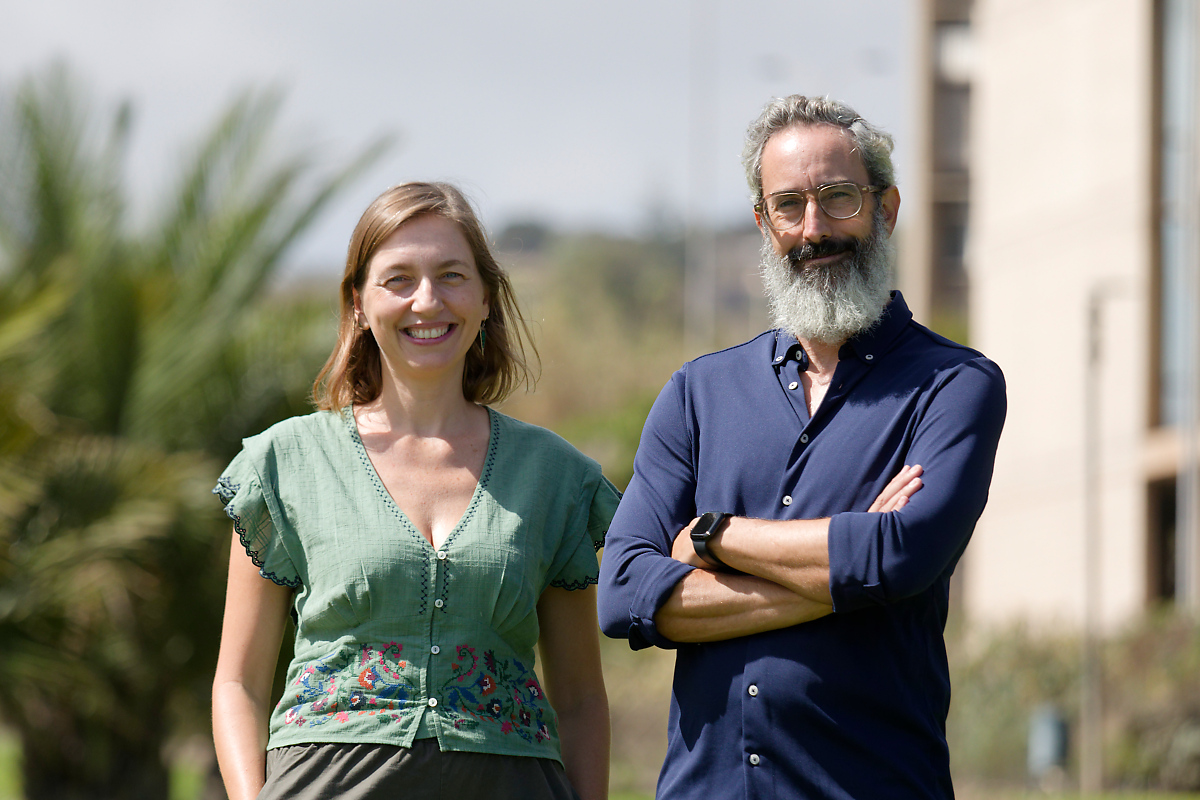
Adriana de Lorenzo and Jairo Méndez.
The Mysteries of the Milky Way
One of the projects that will receive a predoctoral contract is “Time-Resolved Analysis of Milky Way-Analog Galaxies” (TRAMWAYS). This initiative, part of the Cosmic Evolution of Milky Way-Analog Galaxies (CEMWAY) research group, aims to study the formation and cosmic evolution of galaxies that are similar to our own. In this way, the project seeks to answer the question: how are galaxies born, and what phenomena occur during their lifespan that lead them to become like our Milky Way?
To achieve this, the project combines two approaches. “On the one hand, the meticulous analysis of galaxies analogous to the Milky Way that inhabit the Local Universe and which, therefore, we can observe in great detail, allowing us to obtain information about their current properties,” explain the researchers responsible for TRAMWAYS., Adriana de Lorenzo-Cáceres Rodríguez y Jairo Méndez Abreu. The other approach involves analyzing galaxies located at greater distances: “Because light takes time to travel from stars to our telescopes on Earth, observing distant galaxies also means witnessing their past,” they explain. In this way, TRAMWAYS will analyze the cosmic evolution of the progenitor galaxies of systems similar to the Milky Way. in situ. Both observational approaches will be complemented by the analysis of numerical simulations, which will provide the necessary theoretical context to interpret the results.
The project will also rely on the results obtained by BEARD, an international project led by the same research team focused on nearby galaxies analogous to the Milky Way, and on observations made with some of the most advanced instruments of today, such as the James Webb Space Telescope (JWST) and Euclid.
TRAMWAYS will focus on spiral galaxies without a bulge or with very small bulges. The reason for this selection is that the Milky Way is a galaxy without a massive bulge; if it has one, it is very small. “Studying galaxies analogous to the Milky Way will allow us to understand our past, what processes have been important in our development, and what our most likely future is,” they explain.
When did its star bar form? Does it have a small bulge, or does it lack this structure entirely? The project will also address some of these remaining mysteries surrounding the Milky Way. Furthermore, it will analyze the extent to which our galaxy fits the predictions of the current cosmological model, based on cold dark matter, since some evidence suggests that it exhibits properties difficult to explain within this theoretical framework.
“For the first time, we have the telescopes, instruments, and techniques needed to analyze these complex galaxies,” the research team states. The results from TRAMWAYS will thus contribute to a better understanding of the Milky Way's history and to validating or refuting some of the models that describe the evolution of galaxies in the Universe.
Mathematics for understanding complex systems
“Deterministic and Stochastic EDPS in Biology and Fluid Mechanics” is the title of the project led by Diego Alonso Orán, From the University of La Laguna, and Martina Magliocca, from the University of Seville. This initiative seeks to study partial differential equations that describe phenomena in Biology and Fluid Mechanics, such as tumor growth, membrane dynamics, and wave motion. “Many are free boundary problems, where the surface that delimits the system also changes over time,” they explain. And they add: “We want to understand when these equations have a well-defined solution, how the solutions evolve, and what role random fluctuations play.”.
The research team points out that, although these models have been studied for decades, many questions remain unanswered when considering more general geometries or incorporating uncertainty. This project, which combines mathematical and stochastic analysis techniques to address these difficulties, will have three main lines of research. One will address free boundary problems in fluids, such as evaporation. Another will study biological models of tumor growth and osmosis, and the third will focus on equations that incorporate random effects in fluid dynamics.
This work, a collaborative effort involving researchers from the Universities of La Laguna and Seville, as well as other international institutions, aims to demonstrate new findings on the existence, uniqueness, and stability of solutions, and to obtain simplified models that preserve the essential mechanisms of the original systems. This will allow for a better understanding of the scope and limitations of the models used in biology and fluid mechanics. As this is basic research, its practical contribution is long-term, with a more direct impact on the training of researchers and the dissemination of knowledge.
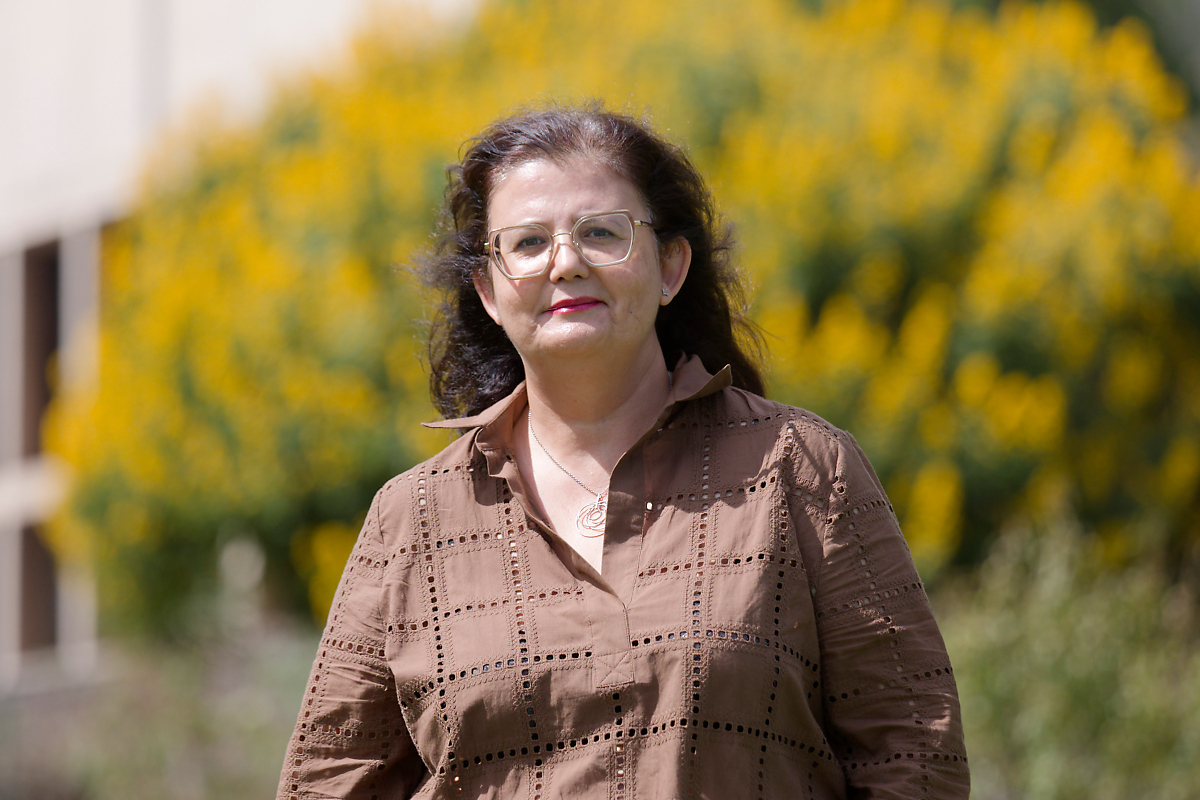
María Candelaria Hernández.
AI and quantum computing to strengthen cybersecurity
Led by researchers María Candelaria Hernández y Cándido Caballero-Gil, The “Quantum Algorithms and Artificial Intelligence Resources for Cybersecurity (AURI)” project aims to generate new scientific and technical knowledge at the intersection of cryptanalysis, quantum cryptography, artificial intelligence, and cybersecurity. The research addresses challenges such as modeling future threats, both quantum and those derived from artificial intelligence, and analyzing their impact on cybersecurity. The project also includes the design, optimization, and evaluation of hybrid cryptographic protection and analysis techniques aimed at detecting emerging vulnerabilities. As a third objective, the researchers propose developing a suite of cryptographic tools that facilitates the use of artificial intelligence and emerging quantum technologies while ensuring privacy protection.
According to those in charge of the AURI project, “the constant advances in the development of quantum processors have increased the need to protect information and move towards a secure migration to new cryptographic standards.” This process requires prior confirmation of the resilience of these systems against quantum computing capable of compromising traditional encryption. Adding to this situation is the rapid development of artificial intelligence, which facilitates the automation of pattern recognition and allows for accelerated security audits.
To address these challenges, the project proposes an integrative, multidisciplinary and practical approach, based on three lines of action: the evaluation of vulnerabilities using artificial intelligence combined with quantum algorithms; the bidirectional protection of AI models using advanced cryptography techniques; and the development of software prototypes that will be validated in real-world Internet of Things (IoT) and Intelligent Transportation Systems (ITS) environments.
Among the main areas of work is quantum cryptanalysis, which involves the optimization of algorithms using simulators, with the aim of evaluating the security of symmetric algorithms and post-quantum cryptography standards. Another line of research will be advanced quantum cryptography, focused on the evaluation of protocols such as quantum key distribution (QKD) and quantum digital signatures in hybrid schemes.
The project will also address secure artificial intelligence by applying machine learning models to detect attacks and using cryptographic techniques to protect the privacy of AI systems. Finally, a prototyping and practical validation pipeline will be developed, integrating these technologies into a software framework tested in critical infrastructures with low-latency requirements.
Hormone receptors: isolated switches or a communication network?
The project “Beyond homodimers: NR3C receptor heterocomplexes as multi-hormonal signaling integrators (INTEGROMER)” is led by the professor and director of the Institute of Biomedical Technologies Diego Álvarez de la Rosa. The funding obtained in this call represents the group's eighth consecutive project in this modality and also includes a predoctoral FPI contract, which will allow the group to add a new trainee to its research team. This line of research aims to understand the formation and function of heteromers, mixed complexes that form when cell receptors associate in the presence of various hormones.
Hormones such as aldosterone, cortisol, progesterone, and testosterone regulate essential bodily functions by binding to a specific receptor on cells—a protein that acts as a genetic switch. For decades, it was assumed that each receptor worked independently, as if each hormone had its own isolated communication channel. However, recent research by this research group has shown that these receptors can associate with each other, forming mixed complexes. Therefore, INTEGROMER aims to understand how these heteromers form and what consequences they have for cellular function. Álvarez de la Rosa points out that the fundamental question is: are these receptors isolated switches, or are they part of a much more complex and interconnected communication network than we previously thought?
Thus, the aim is also to understand the impact of these complexes on health and disease. This new perspective could help explain why some treatments targeting these receptors, used, for example, against hypertension or heart failure, work differently depending on the patient, paving the way for more precise treatments. Furthermore, the project could provide new insights into the differences between men and women in cardiovascular diseases and certain cancers. To this end, the team will study the molecular mechanisms of these interactions using advanced techniques, with the ultimate goal of understanding the molecular mechanism and the physiological and pathological relevance of these heteromers.
This project is structured around three lines of research: studying how aldosterone and cortisol receptors interact in the regulation of sodium transport, a key process for blood pressure control; analyzing their relationship with sex hormones and their potential role in the differences between men and women in cardiovascular disease and glioblastoma; and understanding how these complexes form at the molecular level and how this association alters their function. To achieve this, cutting-edge techniques will be combined, such as super-resolution microscopy, single-molecule tracking, functional genomics, and computational models for predicting protein structures.
Álvarez de la Rosa explains that the ultimate goal is to establish a new paradigm regarding how cells integrate multiple simultaneous hormonal signals, something that could change the way the biology of these receptors is currently understood and that in the medium term could help predict which patients will benefit most from certain treatments, laying the foundation for the design of new drugs that act more selectively on specific combinations of receptors.
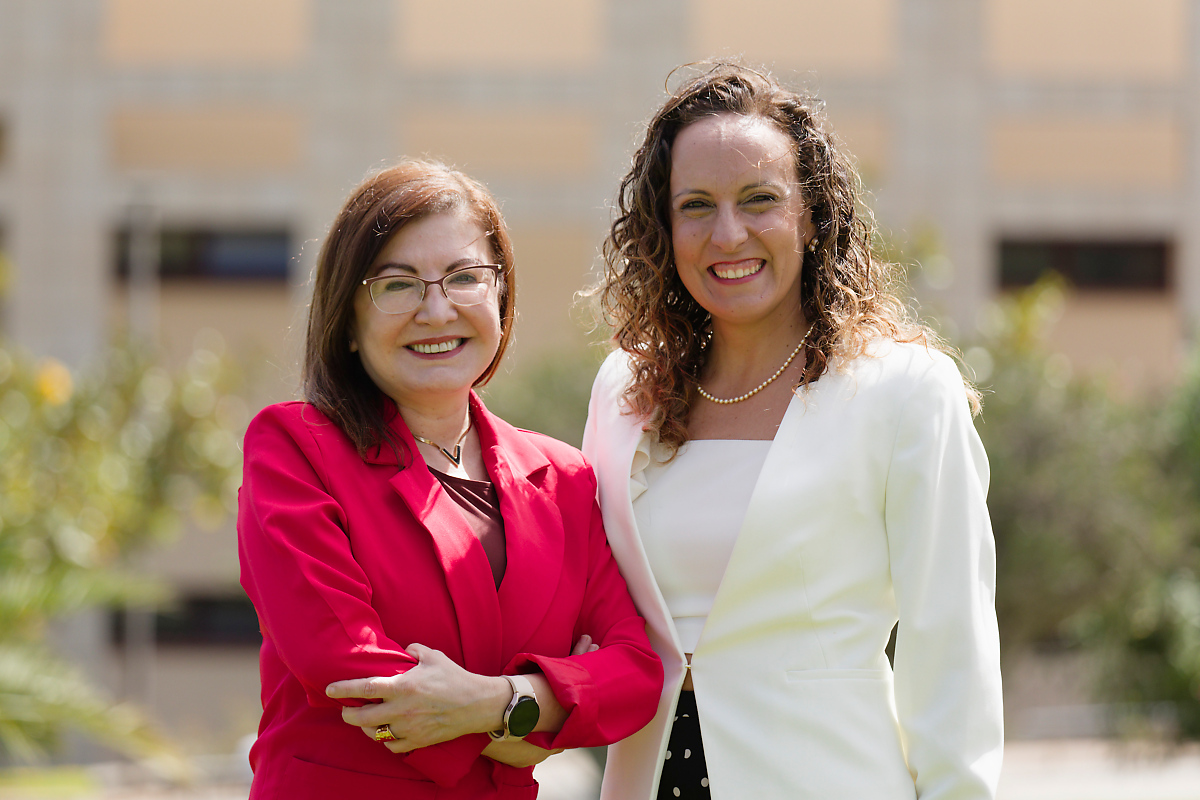
Carina González and Jezabel Molina.
Social robots and AI as tools for inclusive and safe interaction
The project “Generative social agents and robots: Playful experiences in hybrid and multi-agent contexts Ethical and inclusive AI for vulnerable populations (GENESIS)”, coordinated by Professor Carina González González and the tenured professor Jezabel Molina Gil, This research explores whether it's possible to create artificial intelligence agents and social robots capable of maintaining truly meaningful, adaptive, and safe interactions with people, especially for developing programs for vulnerable groups. The research aims to study how to integrate the capabilities of these technologies, such as memory, context interpretation, and interaction through voice, gestures, and emotions, into social robots and virtual agents that coexist in hybrid environments.
The researcher emphasizes play as a fundamental component of the research approach, “understood not only as entertainment, but as a powerful tool for generating communication, participation, and social connection.” The aim is for these agents to facilitate shared play experiences with hospitalized children, the elderly, and other groups who may find themselves in situations of isolation or exclusion. “The goal is never to replace human interaction, but rather to use technology as a mediator to facilitate it,” González points out.
The researcher adds that while generative AI allows these agents to have much more flexible conversations tailored to the user's interests, it is also necessary to assess risks such as the storage of interaction data, the possibility of bias or inappropriate responses, or even emotional dependency. Therefore, the GENESIS project has advocated from its inception that ethics, inclusion, accessibility, gender perspective, transparency, and security be integrated into the systems' architecture from the outset, rather than being evaluated only after the technology is complete.
The work will be structured around four complementary lines of research. The University of La Laguna will coordinate and lead the line on ethical and inclusive AI, focusing on the needs of specific groups. Meanwhile, the Universities of Zaragoza, the Balearic Islands, and Granada will address aspects such as affective interaction, the explainability of models and bias mitigation, and the integration of AI agents into enriched social environments.
The projects submitted by the University of La Laguna fall under the Knowledge Generation Projects program, one of the most competitive calls for proposals in the Spanish R&D&I system. This funding line received a total of 7,905 applications in 2025, of which only 43.31% received financial support. Overall, the call mobilized an investment of €697.6 million aimed at promoting scientific research and the training of new researchers.
Scientific Culture and Innovation Unit (Cienci@ULL)

 Spanish
 English
 French