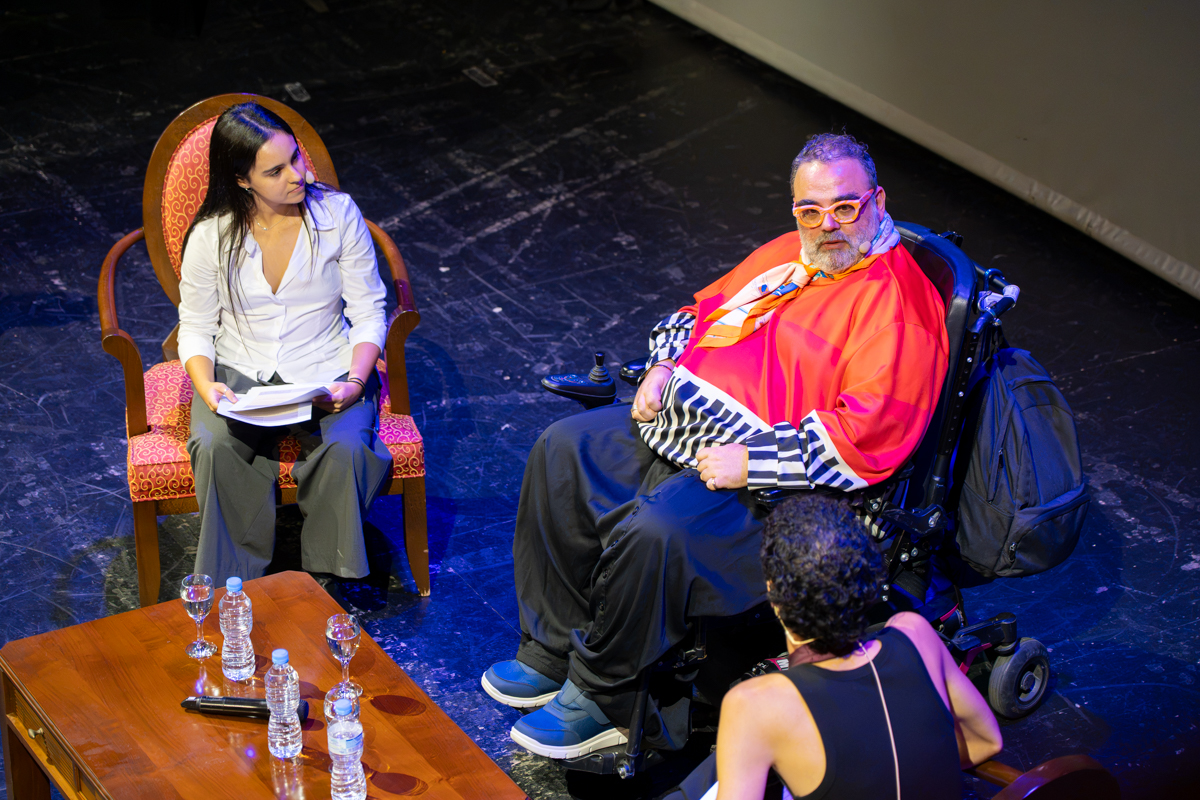
Writer and broadcaster Bob Pop was the featured speaker at yesterday's colloquium Vindication of the Pen, at the Teatro Leal in the city. Invited by the University of La Laguna, this event provided an opportunity to meet with students from the academic center, who interviewed him to learn the opinion of the screenwriter on a wide variety of current affairs.
Engaging, approachable, and very funny, Roberto Enríquez (Madrid, 1971) offered his unique perspective on the craft of writing, the current political climate in Spain with the upcoming general elections, the vulnerabilities of stigmatized individuals, the role humor plays in the public sphere today, and his own point of view on cultural diversity.
Under the stage name Bop Pop, he has enjoyed a long and successful career in literature, journalism, and television. His publications include the novel Meek (2010), the newspapers Other people's days (2017) and Symmetrical days (2023), as well as Like the fretwork (2024). Her work combines humor, irony, and personal reflection to address issues related to identity, diversity, and social conventions.
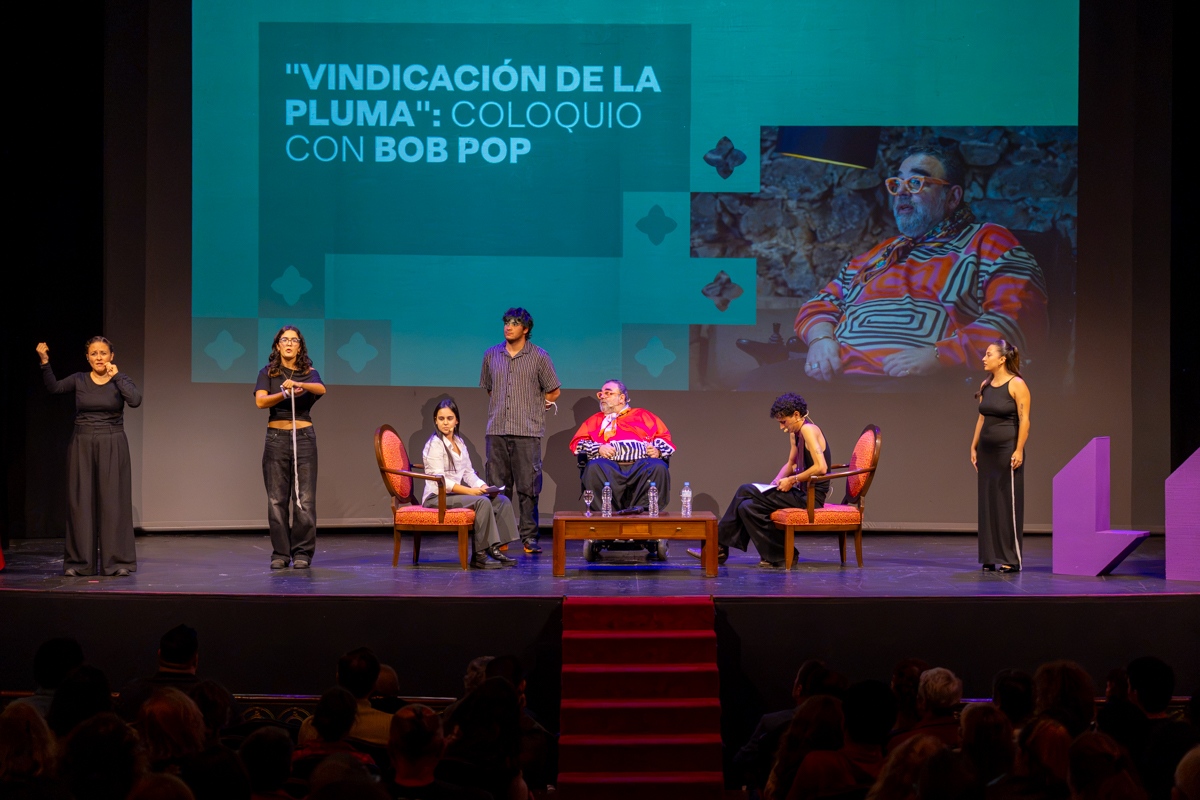
A snapshot of the session with the Philology Theatre Group.
Bop Pop and Roberto are one and the same; he identifies equally with both names and responds to both. "I always wanted to have an alter ego, because Roberto liked writing and Bop liked show business." Nevertheless, he fully identifies as a writer, later adapting to different formats and contexts.
She acknowledges that she was very fond of journaling, although she no longer does it. “It’s a creative energy that I use for other things,” she says, but she considers it a very useful tool because it breaks up the days, allowing her to reflect on each one. “Otherwise, we could say that Monday through Friday is the same day, full of things and exhaustion, and then Saturday and Sunday come, which we use to actually live.”.
Regarding the passage of time, the writer said he recognizes himself in it. ”Sometimes I’m having a conversation and I’m giving my opinion on something I haven’t thought about in a long time. I like seeing that I’m changing my mind, because it means I’m learning more,” and that’s why the newspaper offers him a snapshot of what he was like some time ago.
Interviewed by students Iker García and Adriana Guillén, with the participation of the Philology Theatre Group, Bop Pop has always developed his own unique way of thinking: “The only thing I’ve been sure of is that things didn’t have to be the way they were. Life is too serious a thing to be reproducing patterns.” In this context, culture queer He says it helped him to think about things differently.
LGBTQ+…and letters are missing
“People are so tiresome with the LGBTQ+ community… saying it’s so long, so boring, but the truth is, there are more letters. The more there are, the more we’re expanding the playing field.”.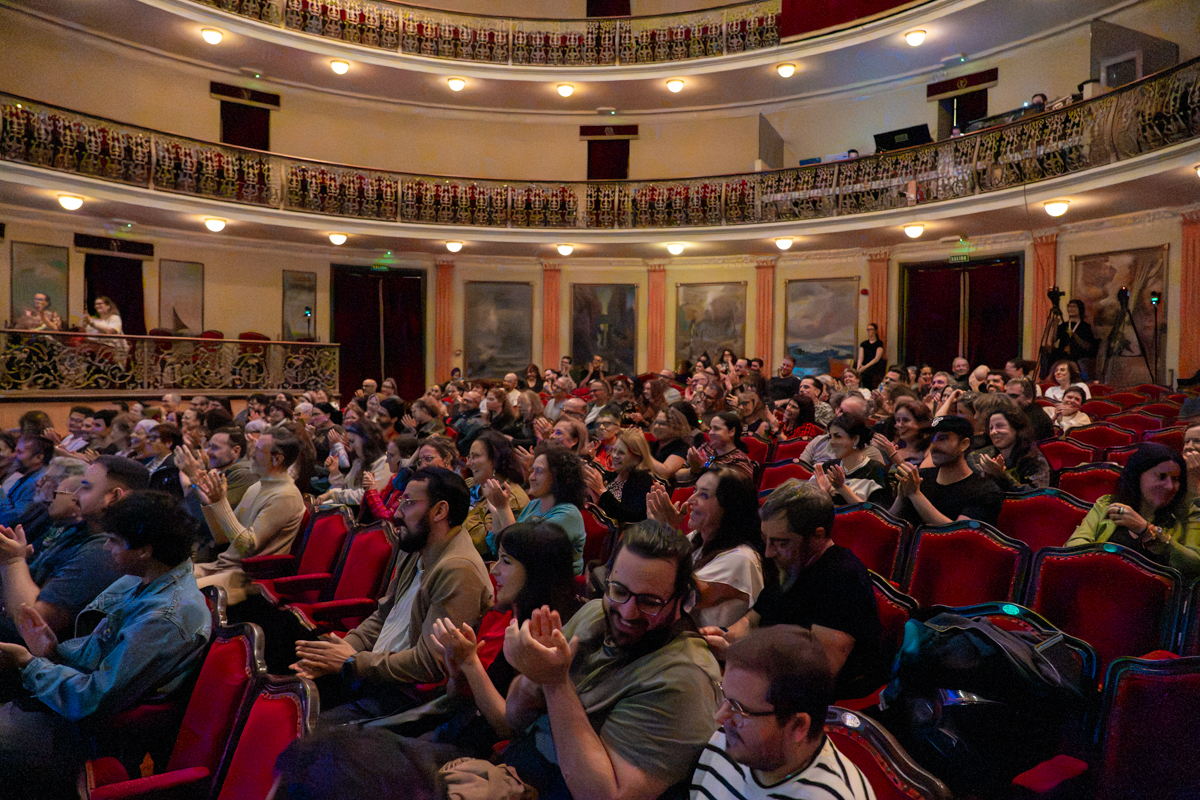
“There’s a Spain that’s really cool, the Spain of creativity, writing, the neighborhood Spain—it’s very exciting. But there’s also another Spain that hasn’t healed its wounds and thinks everything belongs to it,” the writer asserts. “There’s nothing worse than a wounded and cornered animal, but now they have to move and get to work, instead of staying home jerking off. If Vito Quiles is here (as he was yesterday), it’s because he has to earn it.” He maintained that we have to vote “as if we wanted it to happen, as if we were on the ballot, in self-defense.”.
In the session, organized by the Vice-Rectorate for Culture and University Extension in collaboration with the Cultural Center for Diversity and LGBTQ+, Bop Pop was interviewed about his illness, multiple sclerosis, which he has suffered from since 2019. Making his condition public hasn't changed how he lives with it, but he believes it has helped others to normalize it. "I've continued to enjoy life and I've continued to live," he says, although he affirms that "being disabled is extremely expensive." However, he doesn't want to be the voice representing the entire community of people with illnesses; rather, he believes in the support network among them.
Nevertheless, he maintains that he does so from a privileged position, with a supportive circle of friends and loved ones, and a relatively comfortable financial situation. “It’s not my fault I’m so sexy,” he says with a laugh, before explaining that he cultivates a “violent sympathy,” especially toward people he knows he’s not well-liked. ”I built my sympathy; I was fat, wore glasses, and was a nerd, and very effeminate. So either I was likeable or I’d get flak.” That’s why he used it to protect himself, as a price to pay, and thus, “from a defense mechanism it became a way of life.”.
Despite everything he's been through, he observes that there are many more safe spaces for young people today. "I wish I had lived through that," he added. "In my day, a gay man couldn't make mistakes, or have a boyfriend in class." Today that has changed, and there's more freedom. Even so, he says, "there's a lack of street smarts," meaning there's no diversity, and for that to change, people need to get off the internet, go out into the community, into the neighborhood. "They keep us isolated online, ultimately turning us into cannon fodder.".
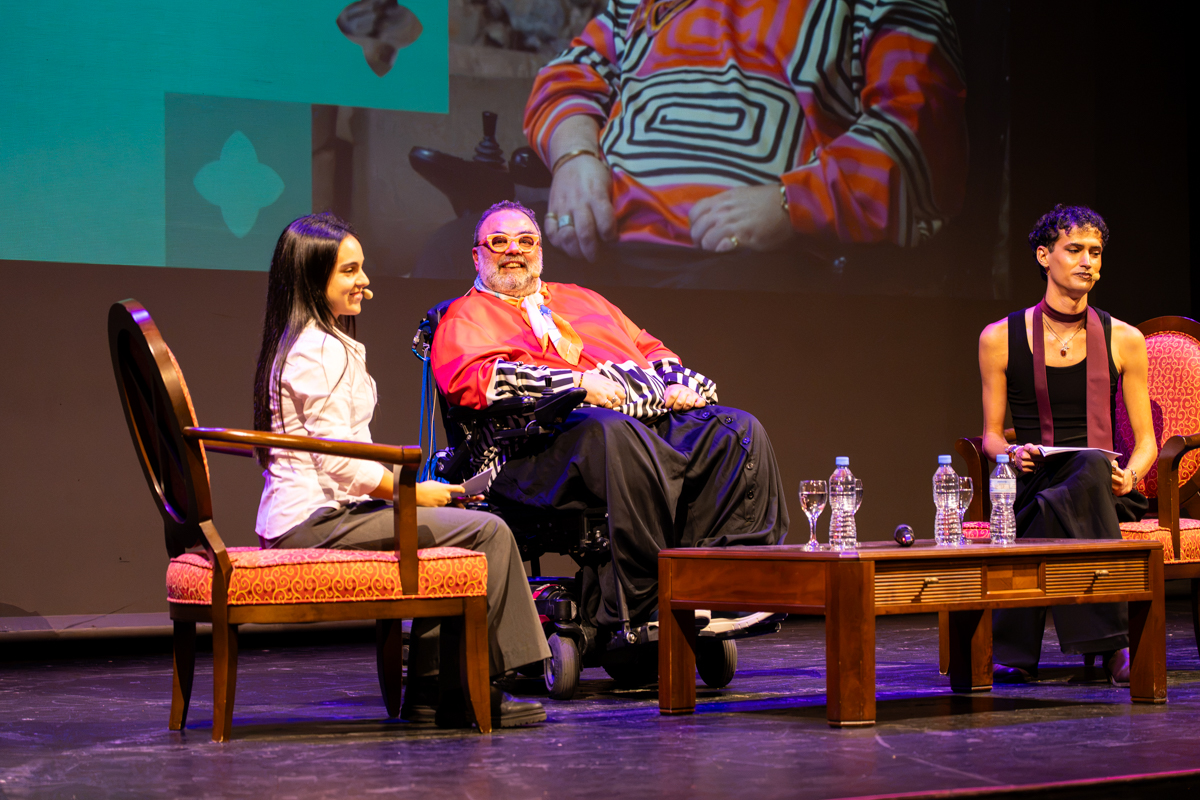 When asked explicitly about diversity and the road ahead, Pop Pop said that diversity begins with equal opportunities. Referring to the university, he pointed out that a university faculty must understand that there are different ways of life, and that a university is not a higher education center for vocational training, nor an extension of the working world; it is a place where the skills for the future are developed.
Not all forms of discrimination are the same; some weigh more heavily than others, but ultimately they're all connected, he says. "There are jobs where I've been fired for being gay, and others where I haven't been hired because I'm fat. It's a whole package, and it doesn't happen in isolation.".
“"I want death to catch me in the middle of the yard, like when your mother called you for a snack of Nocilla sandwich and you were super entertained playing, and there was neither sandwich nor anything," that's how I want it to be.

 Spanish
 English
 French