The phenomenon news finds me (NFM), or “news finds me,” is the belief that important content will somehow reach the public without them having to seek it out. It doesn't necessarily equate to deliberately avoiding it or lacking interest, and it comprises three dimensions: dependence on friends and contacts, feeling informed without following the news, and trust that algorithms select relevant information. A recent study analyzes how this belief negatively affects the dissemination of news about climate change.
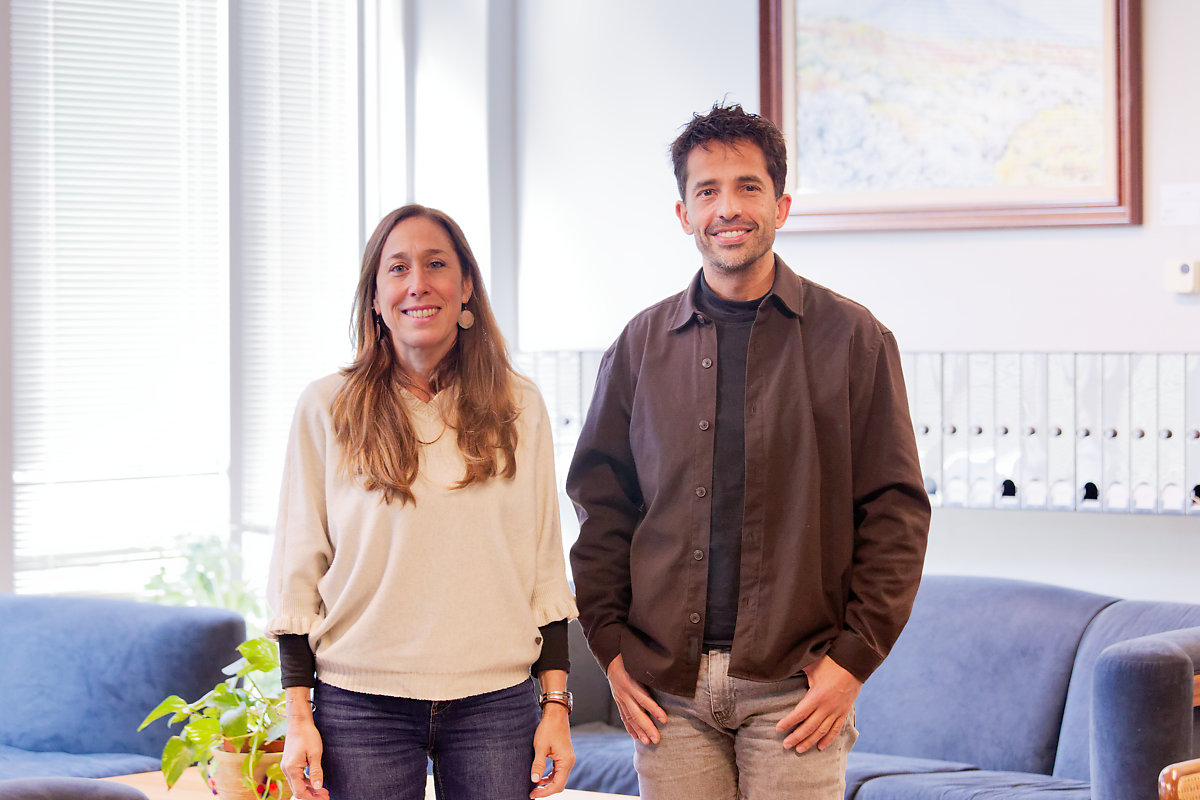
The investigation has been published in the magazine European Journal of Communication and is signed by Alberto Ardèvol-Abreu y Patricia Delponti, From the Department of Communication Sciences and Social Work at the University of La Laguna; and Trevor Diehl, from the University of Alabama (USA). Their objective is to understand why false beliefs about climate change, or even denialism, persist despite the extensive information available. A key issue is that increasing societal understanding of the climate crisis is essential to fostering climate-protective behaviors and generating support for and demand for broader policy measures.
Based on data from a 2024 survey, the article examines how the belief of being able to stay informed without actively seeking out the news relates to knowledge about climate change and environmental behaviors. The research addresses a paradox: information abundance does not guarantee understanding of complex issues. Receiving news through contacts and platforms can create the impression of being well-informed without actively following current events. The study distinguishes between two outcomes: everyday climate protection habits and environmental political activism.

Trevor Diehl, third author of the work.
The survey was conducted between April 9 and 22 with 1,299 participants residing in Spain. It measured non-faithfulness (NF) using six statements and climate knowledge with eight questions covering physical principles, causes, consequences, and actions, with one correct answer per question. The average score was 4.57 out of eight. Habits were measured with eight questions on consumption, household savings, repairs, recycling, and diet. Activism included citizen initiatives, protests, petitions, and donations related to climate change. Age, gender, education, income, climate interest, and trust in science were controlled for.
The results indicate that NFM is negatively associated with knowledge related to climate change, which in turn mediates the negative relationship between NFM and climate-protective behaviors. However, this indirect association does not extend to environmental activism, where NFM maintains a direct and positive relationship.
Further analysis of the data revealed that those who expressed greater confidence that news reports would find them tended to score lower on climate knowledge. In contrast, the NFM showed a direct positive relationship with environmental participation, but an indirect association through knowledge was not supported. The relationship between knowledge and activism was also not significant. Therefore, it cannot be concluded that knowing less increases participation.
Dependence on other people and algorithms was associated with lower knowledge. Feeling informed without actively seeking news did not show a significant association. Only interpersonal dependence showed a significant negative, indirect relationship with habits.
The study's main contribution is to show that environmental habits and activism do not necessarily have the same relationship with information orientations. For habits, knowledge appears as a statistically relevant, albeit small, link. For activism, it does not explain the observed association with NFM (Non-Frequent Mass Media). The authors therefore suggest that social cues, networks, and a sense of being informed could encourage mobilization. These are theoretical explanations, as subjective climate knowledge was not directly measured, nor was it demonstrated that the activists were misinformed.
Comparison with previous research suggests examining the characteristics of the contacts and separating the dimensions of NFM. The results do not definitively refute possible learning associated with diverse networks, as the studies employ different measures and models.
The study received funding from the Ministry of Science and Innovation through FECYT, within the framework of a Scientific Culture project reference 18717, on perceptions and awareness about climate change and various knowledge transfer activities.

 Spanish
 English
 French