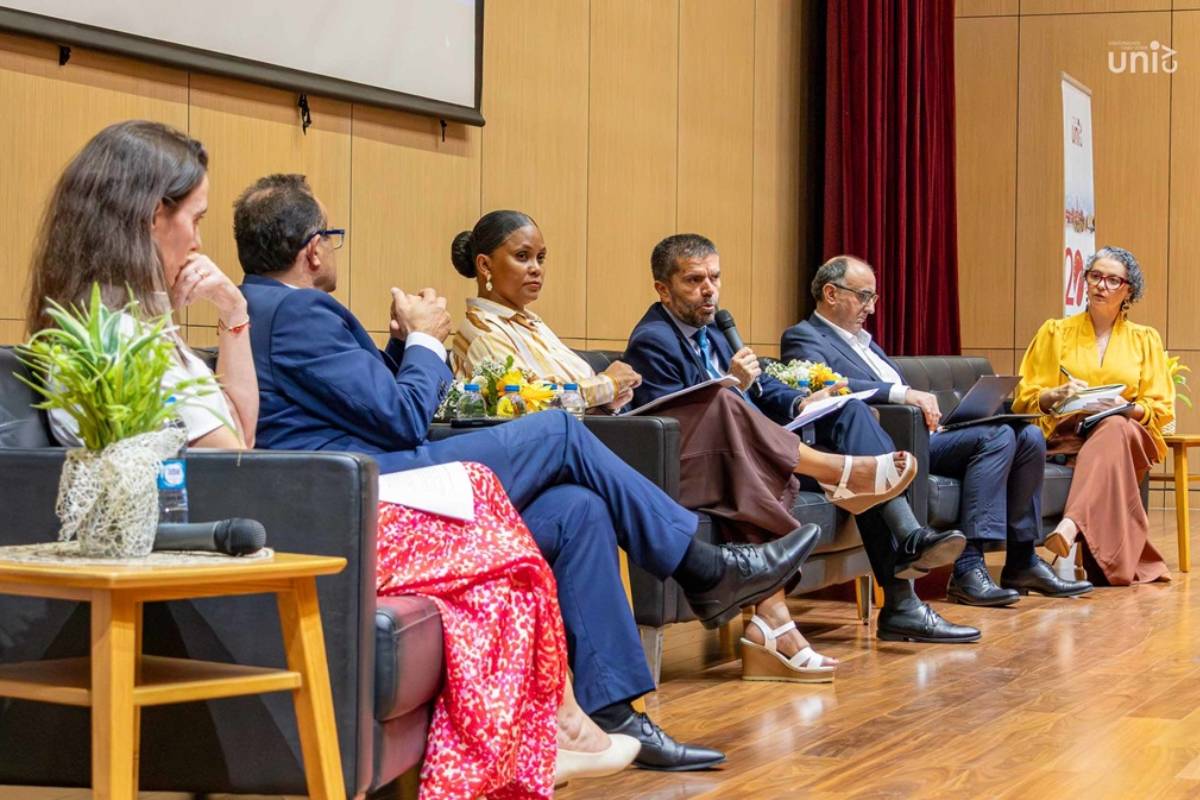
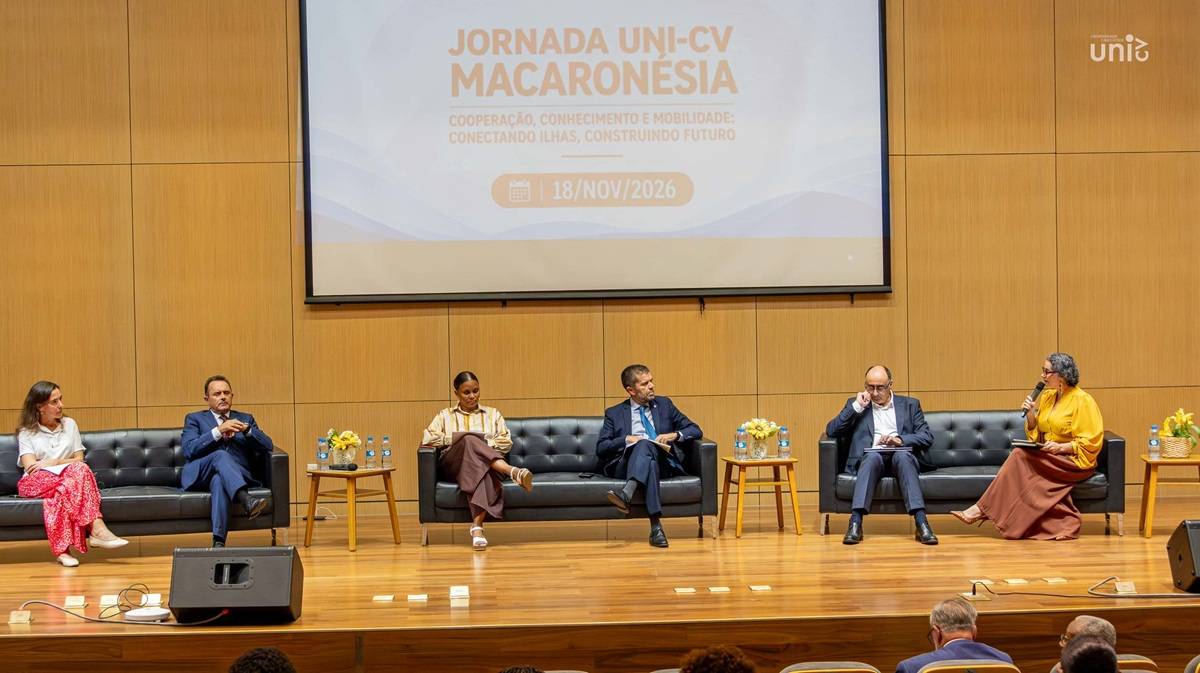
The Rector of the University of La Laguna, Francisco García Rodríguez, participated yesterday, Wednesday, November 18, in a meeting of university rectors held at the University of Cape Verde, as part of the commemorative activities for its 20th anniversary. During his address, he championed Macaronesia's potential to become a testing ground for solutions to global challenges such as climate change, sustainability, and the transformation of economic models.
The meeting, held in Praia under the title “Universities of Macaronesia: What Future Do We Want to Build Together?”, brought together representatives from various higher education institutions to address the challenges shared by the island territories and explore new opportunities for academic and scientific cooperation. Among the participants was the Rector of the University of Cape Verde, Astrigilda Silveira.
Francisco García emphasized that Macaronesia is a “top priority” area for the University of La Laguna, given that its territories share challenges stemming from insularity, geographical fragmentation, distance from the continents, and tourist pressure. However, he pointed out that these characteristics also represent an opportunity to transform the region into a living laboratory where to develop and test innovative solutions that can later be applied in other parts of the world.
 In this context, he highlighted the scientific cooperation that the University of La Laguna (ULL) maintains with institutions in the region, with its current participation in 22 Interreg program projects, 11 of which are being carried out in Cape Verde. Among these, he emphasized ALCEMAC, focused on the production of safe and sustainable food; ECOTÚNIDOS, related to the promotion of artisanal fishing; and TECNOMAC, which develops technologies to detect food risks, especially those linked to water quality.
The rector also emphasized the importance of training and academic mobility in strengthening these ties. In this regard, he noted that Campus Africa has brought together some 500 young Africans in its various editions, approximately half of whom come from Cape Verde. He also highlighted the predoctoral mobility programs, internships in Canary Islands companies, and the training of Cape Verdean researchers at the University of La Laguna.
Looking ahead, he proposed expanding mobility opportunities for faculty and technical, management, and administrative and service staff, advancing the development of joint degree programs, and promoting initiatives such as the Macaronesian Observatory on Childhood and Adolescence. He also proposed working together to consolidate the region as a living laboratory of innovation and sustainability, an initiative they intend to promote within the framework of UNESCO.
The event was part of the commemorative program for the 20th anniversary of the University of Cape Verde, which will culminate tomorrow, Friday, November 20, with a formal ceremony. During the meeting, its rector, Astrigilda Silveira, also emphasized the need to strengthen scientific cooperation among the universities of the Canary Islands, Madeira, the Azores, and Cape Verde to address common challenges such as water, energy, health, and adaptation to climate change.

 Spanish
 English
 French