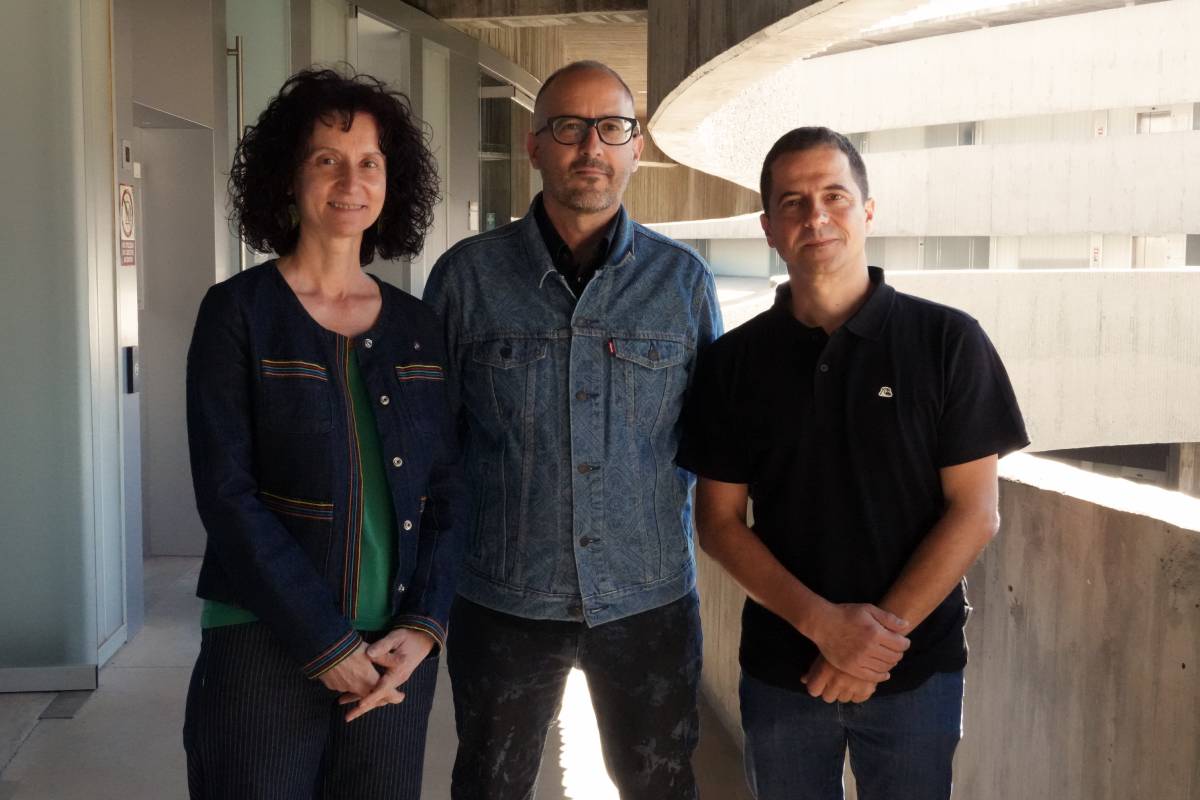
Antoni Mañach Moreno defended his thesis at the University of La Laguna doctoral thesis Ethics and design through their deontological codes: analytical, normative and pedagogical contributions, carried out within the Research and Innovation Group in Design in the form of a compilation of publications. Its directors were the professor of Fine Arts, Carlos Jiménez Martínez and the professor in the area of Logic and Philosophy of Science, Rosario Hernández Borges. He obtained the highest possible grade of outstanding. cum laude and explored the role of ethical codes as fundamental instruments for the construction, regulation and teaching of ethics in the design profession.
Among the most relevant aspects, Mañach Moreno highlighted that this is the first systematic comparative analysis of 24 codes of ethics from professional design associations linked to the International Council of Design (IcoD), produced between the 1940s and 2000s, from twenty countries and six continents. In the first article, Structures, recurring themes, and the validity of current moral norms were identified.
The results of the first section led to the creation of a pioneering participatory process for the development, in 2022, of the code of ethics of the Spanish Network of Design Associations (READ), made up of thirteen design associations from all over Spain, including the Association of Design Professionals and Companies of the Canary Islands (DI-CA). This process is described in the second article of the thesis, which demonstrates the effectiveness of co-design in professional ethical and moral identity.
Furthermore, within the framework of third article This thesis investigates the potential of the READ code of ethics as a pedagogical resource for best professional practices in higher education in design. To this end, moral dilemmas in educational settings were employed, evaluating the potential of codes of ethics as tools for developing the ethical judgment of future professionals.
The results of the joint study confirmed that these codes are a fundamental resource for identifying the ethical values and moral criteria that guide daily professional practice. Therefore, they are considered valuable for addressing discussions on professional ethics, enhancing the ethical dimension of design, and strengthening its pedagogical function.
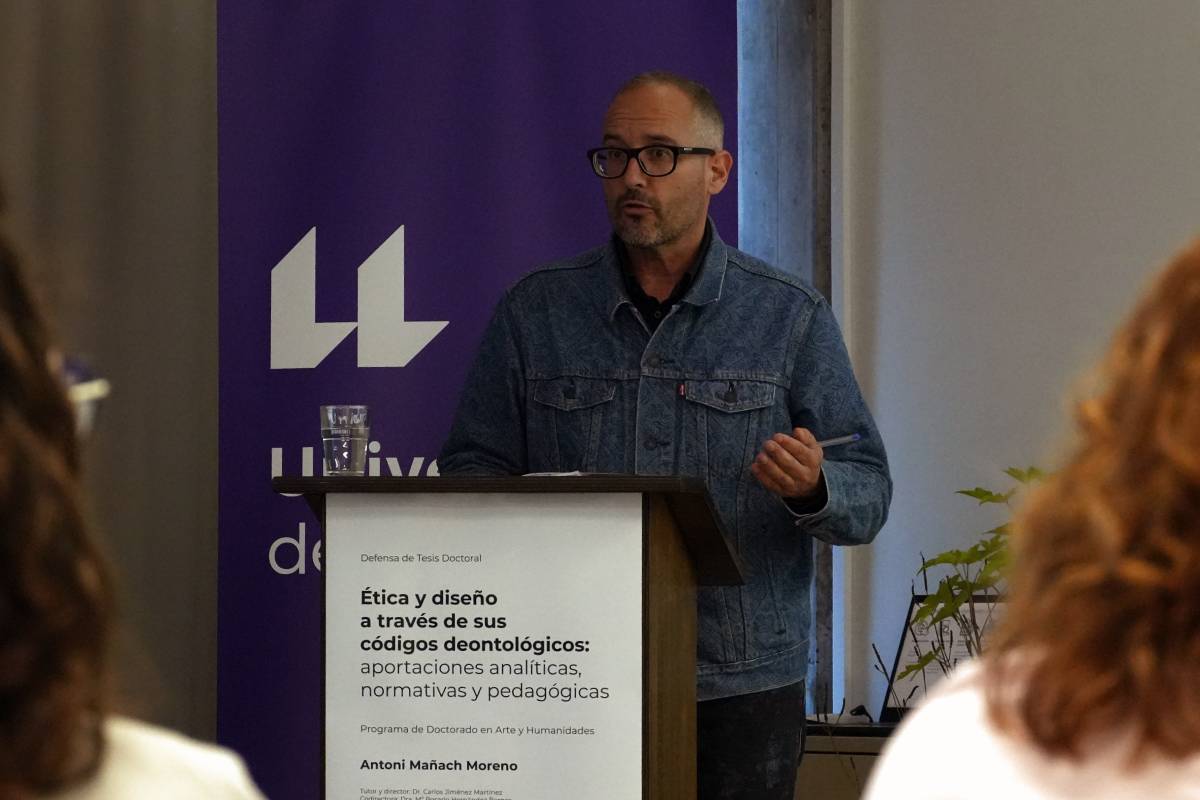
Antoni Mañach.
Finally, as an epilogue, Antoni Mañach carried out an analysis of two decades of his own teaching in ethics of the profession, history and theory of design and fundamentals of projecting, to determine the validity of ethical values as innovative design principles.
The author presented a selection of nine projects that demonstrated that it is possible to design with ethical values, if they become design principles that consciously guide the decisions of professionals.
“The training of future design professionals in higher education cannot be limited to the acquisition of technical and aesthetic skills, but requires the conscious integration of ethical values into the products, systems, or services they design,” Mañach emphasized.
Furthermore, it was demonstrated that codes of ethics are sources of professional knowledge that can generate ethical-moral learning both in the associative sphere and in higher education.
This scientific work concluded that the application of ethical values as design principles is essential for the development of a committed and replicable professional practice in other disciplines. It was thus suggested that this could be the basis for future lines of research, such as the relationship between ethics and artificial intelligence.
The panel responsible for evaluating the thesis was chaired by the Professor of Art Criticism at the University of Barcelona, Pilar Bonet Julvé; it included as a member the professor from the Department of Culture at BAU, University Center for Arts and Design of Barcelona, María Àngels Fortea Castillo; and the professor of Fine Arts from the University of La Laguna served as secretary., Noa Real García.

 Spanish
 English
 French