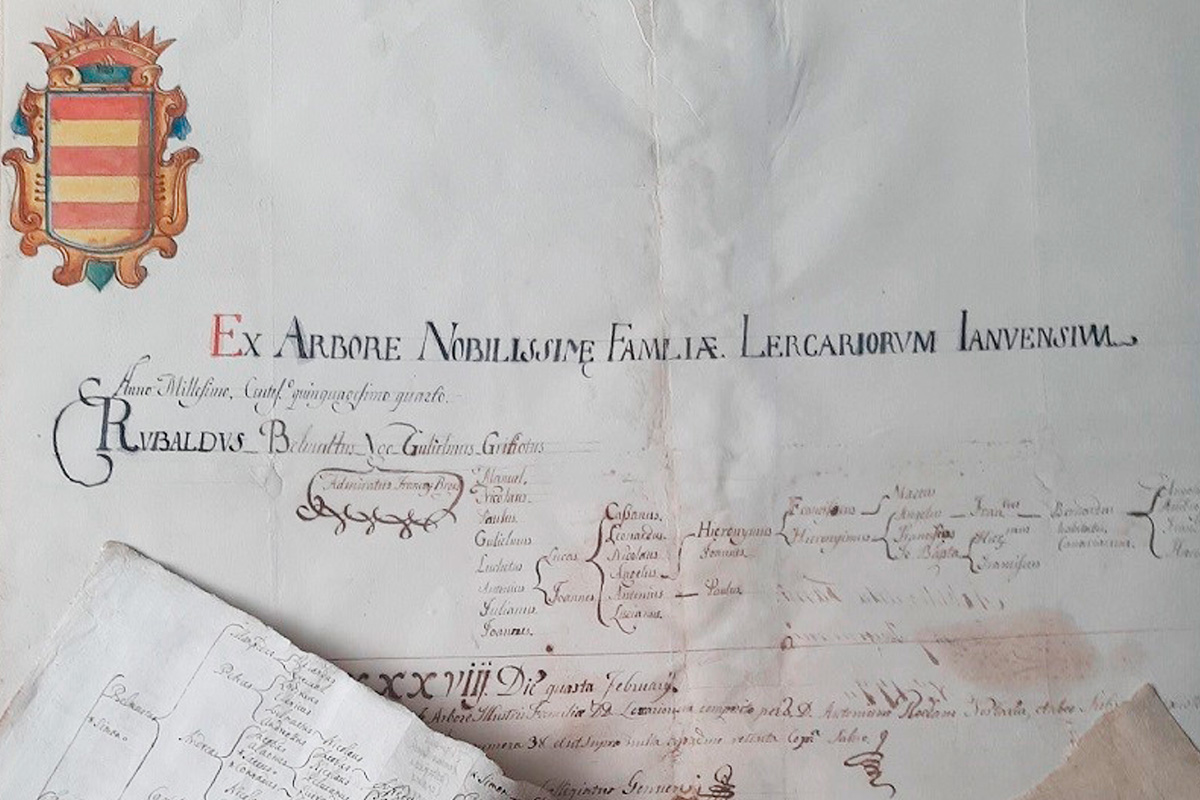
Result of the project presented in 2024 to the Participatory Budgets of the University of La Laguna, the digital platform Maresía It makes available to the university community and society in general the digitization of a selection of genealogical documentation corresponding to four personal and family archives kept in the Old Collection and the Library of the Canary Islands.
The project that was presented in the aforementioned call was entitled Creation of a bank of digitized genealogical trees and documents from the Old Collection The work carried out consisted of the selection and subsequent digitization of different types of documents related to genealogy in the Canary Islands, such as family trees, books of appointments, marriage minutes, dowry and testamentary documents, lawsuits, letters, inventories, genealogical books and notes from the archives of the Lercaro-Justiniani Family, Francisco Montes de Oca García, Dacio V. Darias Padrón and Rosendo García-Ramos y Bretillard.
Before digitization, a selection was made of the documents that might be of greatest interest due to their genealogical content among the archives that housed the area of interest. Next, the necessary preliminary tasks were undertaken to prepare and identify the collections chosen for digitization, such as creating a database that includes the document's call number, title, place, date, number of pages, etc.
The digitization and post-production work was carried out by Vinfra, with whom we had previously collaborated on other digitization projects. The digitization work took place in the facilities of the General and Humanities Library on the Guajara campus.
Genealogy is the study of a person's ancestors and descendants, but it is also the science that allows us to understand not only our ancestors, but also our family as a group of people spanning different generations. It is, therefore, a set of techniques and knowledge used to research family history, a field that is generating increasing interest in the Canary Islands.
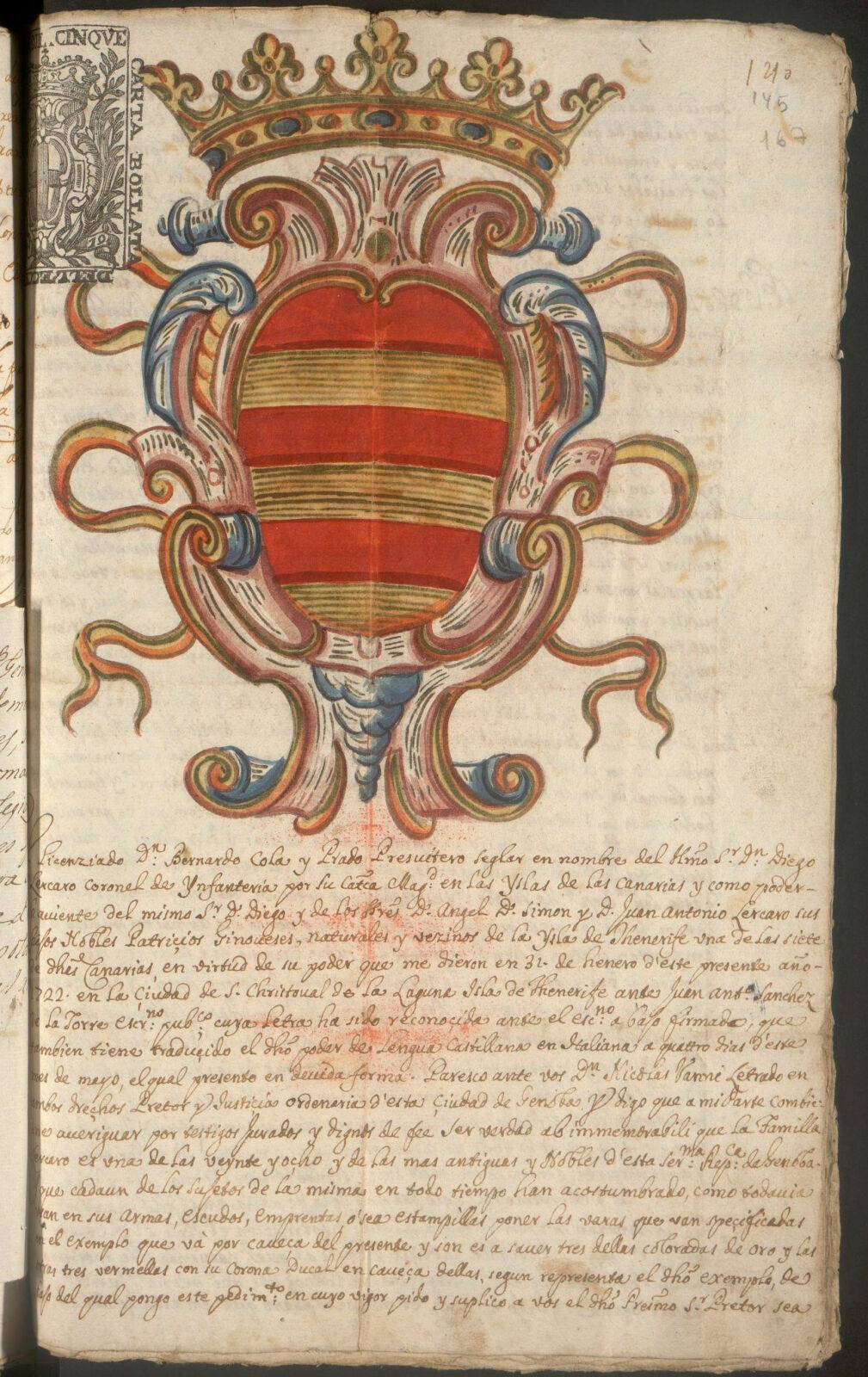
The Lercaro family represented the highest social elite of the Canary Islands in the 16th century. Registered in the Golden Book of the Republic of Genoa, they settled in La Laguna and La Orotava as a result of their Atlantic trade. Their economic and social power was strengthened by a policy of strategic marriage alliances, linking them to the leading noble houses of the islands.
The Lercaro family descends from the nobleman Rubaldo Lercaro, Doge of Genoa. The Justiniani family also comes from Genoa, where their descendants were Doges of Genoa, Princes of the Church, Doges of Venice, and so on. Both families settled in the Canary Islands from the first century after the Conquest, uniting in 1593. They amassed wealth through entailed estates and established numerous connections with many noble houses, such as the Marquesses of Adeje, Quinta Roja, Westerling, Ascanio, and others.
With the various Italian branches extinct, the Canary Islands branch retained possession of the fiefdoms and entailed estates that constituted its patrimony in Genoa, Turin, Palermo, and Vienna. They formed part of the social, political, and economic elite of the islands for several centuries.
The university's then Department of Modern and Contemporary History acquired the family archive through purchase in 1976, which was later transferred to the university's Rare Book Collection. This collection is of great importance for historical and genealogical studies of the Canary Islands, comprising notarial records, correspondence, and account books. The documents are primarily in Spanish, although some are written in Italian and others in Latin. Handwritten texts predominate, but there are also printed materials. A total of 1,222 documents have been digitized.
This archive is of great relevance and interest for historical and genealogical studies of the Canary Islands, particularly those of El Hierro and La Gomera during the 17th and 19th centuries. Darias and Padrón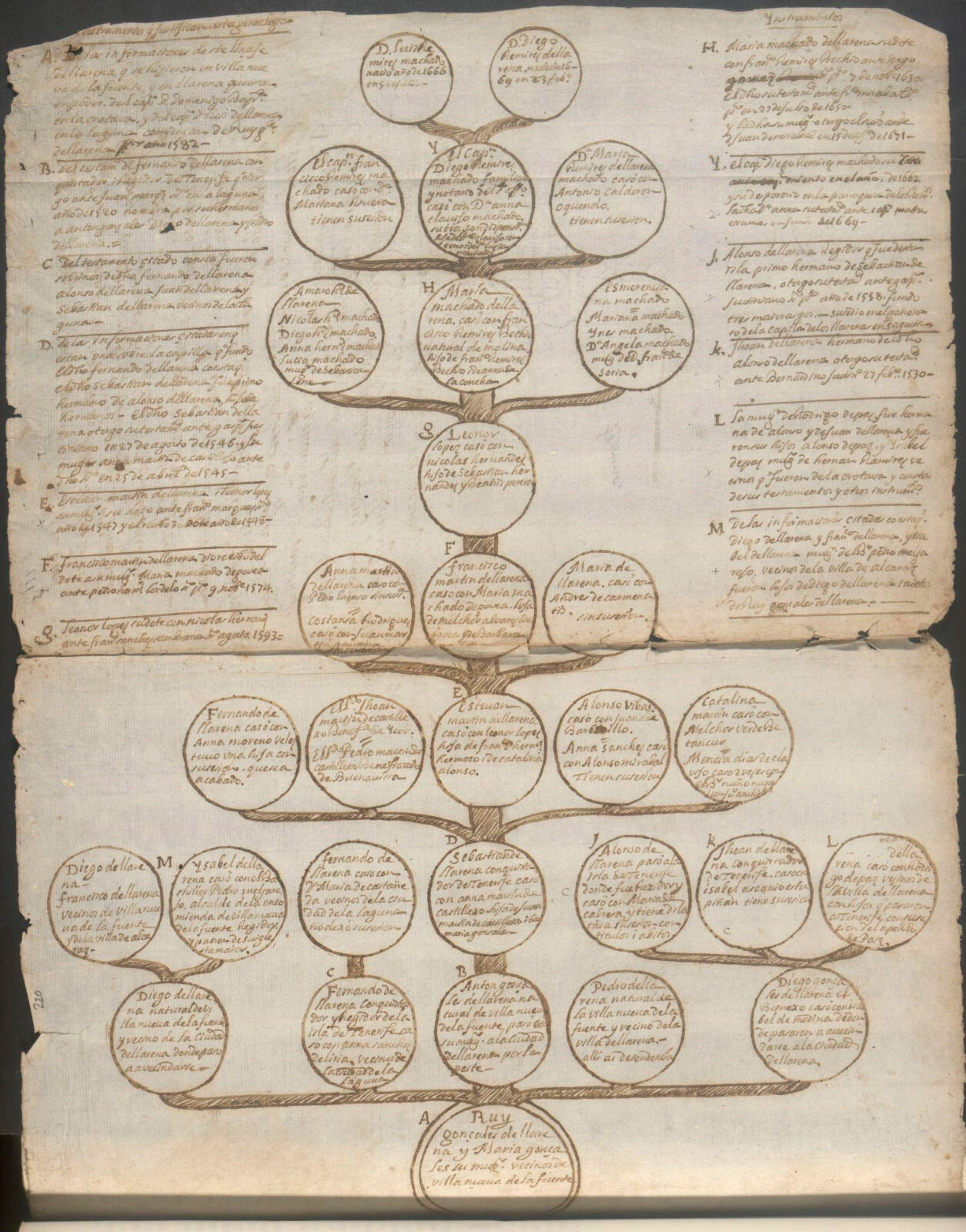 He was born in El Hierro in 1880. He studied teaching and business administration. He was an elementary and secondary school teacher, as well as a professor at the Diocesan Seminary of La Laguna and an infantry captain. He served as military commander of El Hierro between 1936 and 1939, later transferring to La Palma in the same position in 1939. The official chronicler of El Hierro and Valverde, he was the director of the newspaper Gaceta de Tenerife and the sub-delegate of education for El Hierro from 1936.
The digitized archive consists of different files that include minutes of marriages celebrated in El Hierro [1625-1865], minutes of wills and dowry letters from the old notarial archive of El Hierro [1553-1844], the first book of marriages of that island, taken from the parish books [1625-1865], the first book of wills and other documents [1554-1820] and a repertoire of historical genealogical and noble matters.
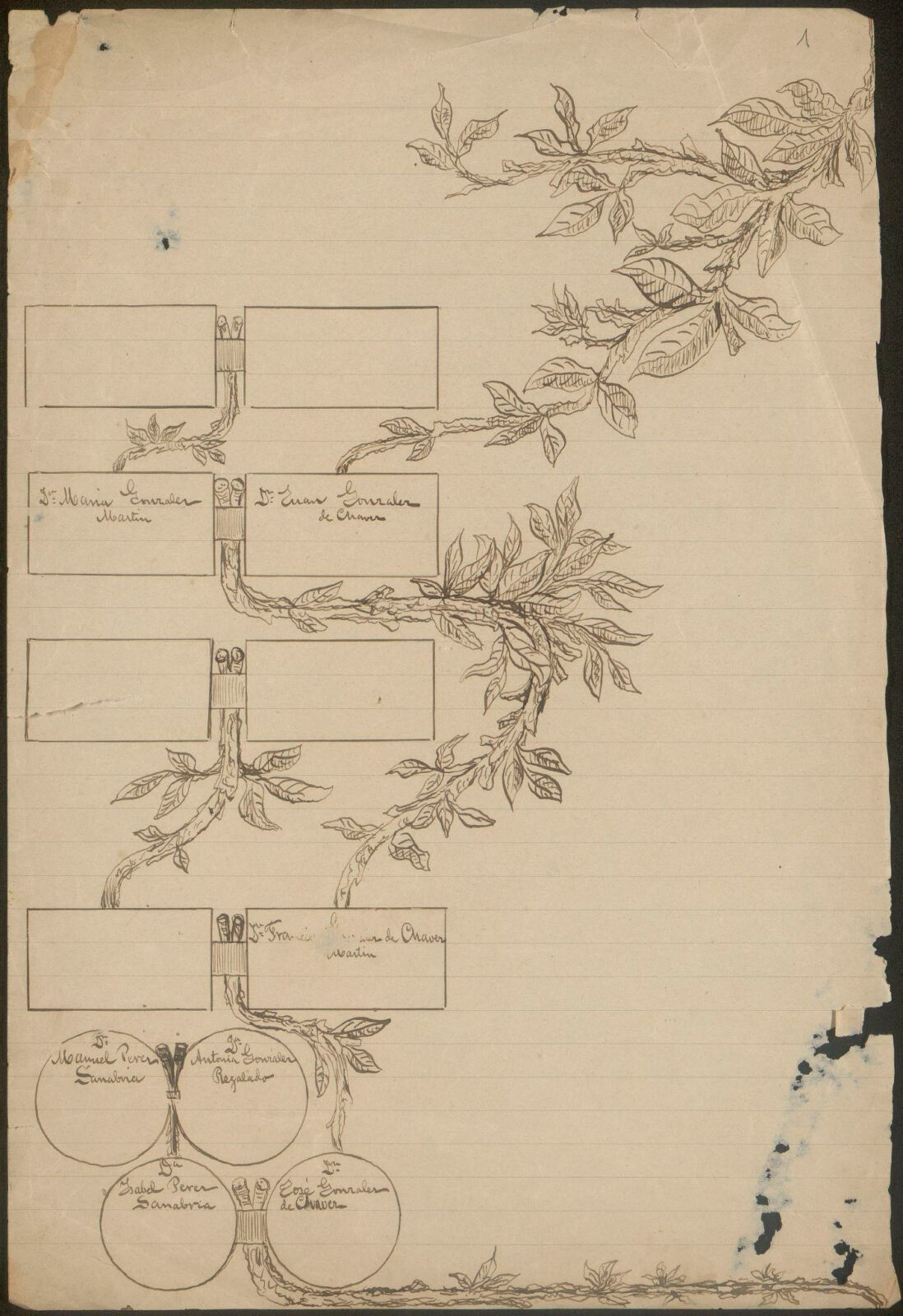
Francisco Montes de Oca García
Francisco Pedro Montes de Oca y García (1877-1964) was born in Puerto de la Cruz, was the official chronicler of that city, and municipal archivist and librarian. In fact, his archive is very relevant for the study of the history and genealogical studies of Puerto de la Cruz and the north of Tenerife.
In 1910, he undertook the task of organizing the municipal archive of Puerto de la Cruz, meticulously arranging the deteriorated documents. The collection comprises 1,149 documents dating from 1501 to 1943 (with the most represented dates being 1750-1900). A total of 257 documents have been digitized for this project.
Rosendo García-Ramos and Bretillard
Rosendo García-Ramos y Bretillard (1835-1913) was a Spanish scientist, archaeologist, and genealogist, born in Santa Cruz de Tenerife and mayor of this city between 1883 and 1884. He was a correspondent of the Museum of Natural Sciences of Madrid, a corresponding member of the Royal Academy of History, and a full member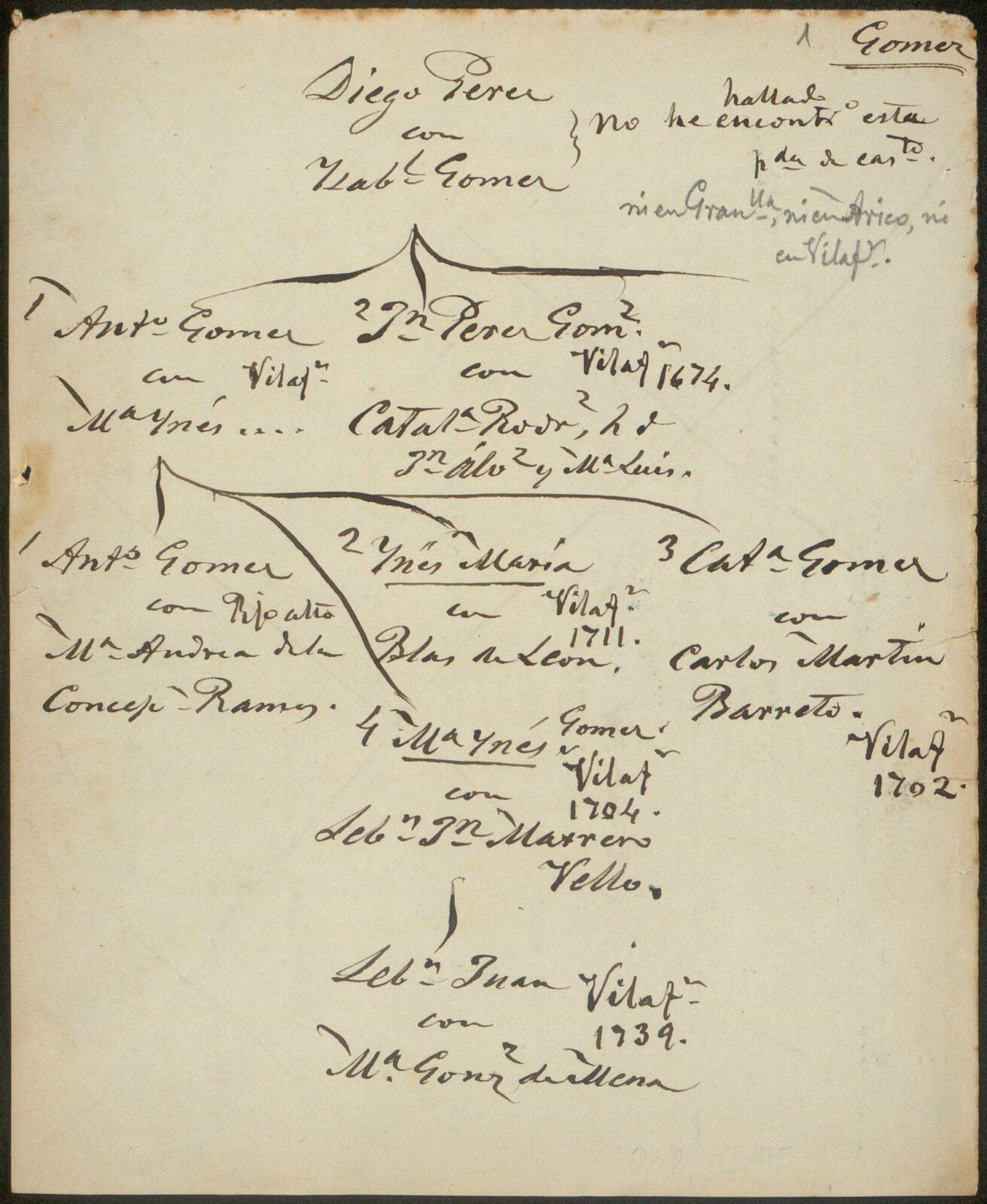 of the Scientific Cabinet of Tenerife, of which he was a prominent member and also its director in 1881.
He actively contributed to the archipelago's main newspapers and magazines, such as the Revista de Canarias (1878-1882), and later to the popular daily La Prensa de Tenerife. The digitized collection consists of manuscripts, primarily genealogical notes and correspondence from the 19th century. It is the smallest of the archives; some have been uploaded to Maresía a total of 204 digitizations.

 Spanish
 English
 French