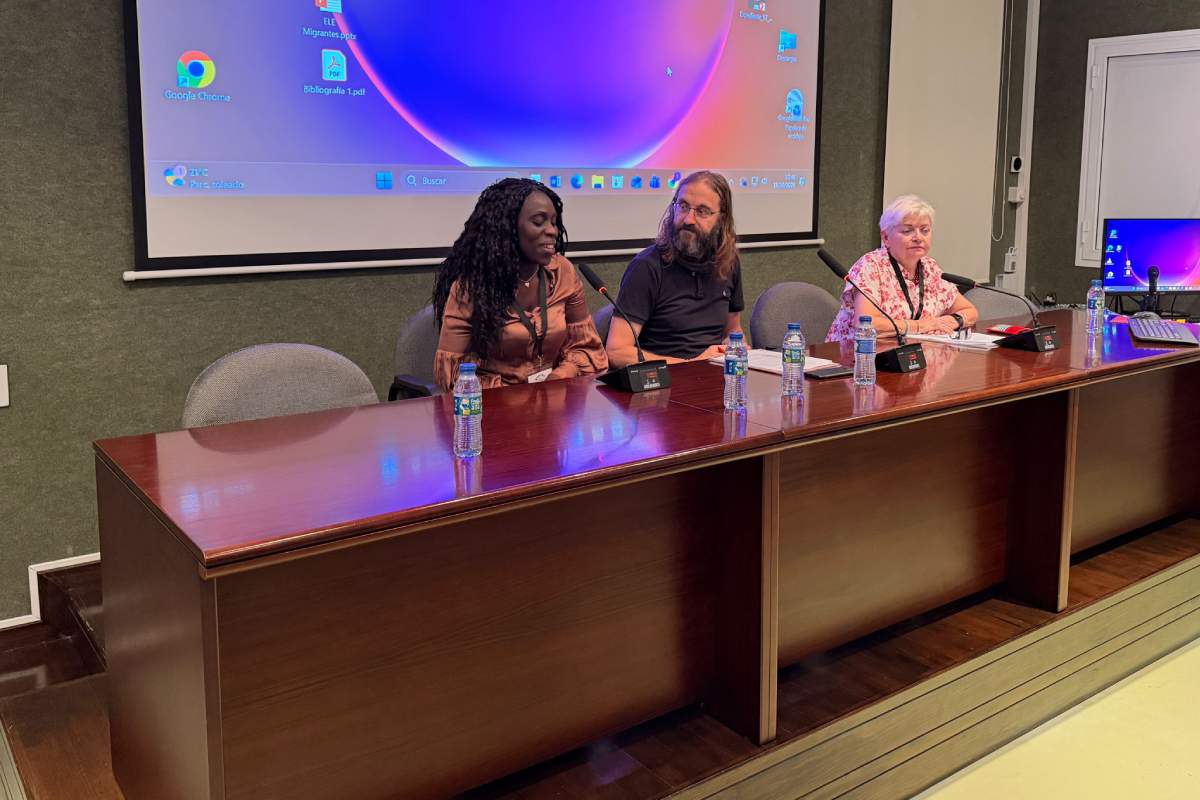
The Center for African Studies at the University of La Laguna, in collaboration with the Boole Ma – Acógeme Association, organized the «Intercultural Workshops for Teaching Spanish to African Migrants» on October 16 and 17, 2026. The event brought together approximately 90 participants and its main objective was to improve strategies for teaching Spanish to African migrants, as well as to promote the exchange of experiences, integration, and intercultural understanding.
The first day, of an academic nature, was held on Friday, October 16, in the Elías Serra Rafols Room of the Geography and History Building at the Faculty of Humanities, on the Guajara Campus. During the morning, three presentations took place: Professor Beatriz Hernández Bravo, from the Language Service of the ULL General Foundation, addressed Spanish teaching methodologies as a tool for integration; Landry Wilfrid Miampika Moundele, a professor at the University of Alcalá, reflected on the relationships between migration, African literatures, and interculturality; and Ahmadou Ba, a Senegalese student at the ULL, shared his personal experience of learning Spanish before arriving in Tenerife.
During the afternoon, participants engaged in collaborative workshops to exchange experiences and develop practical proposals to improve Spanish language teaching for migrants. The day concluded with the presentation of the working groups' findings and was closed by Víctor Onésimo Martín Martín, director of the Center for African Studies. This meeting facilitated knowledge sharing among teachers, volunteers, and students, as well as reflection on the importance of teaching adapted to diverse cultural contexts.
On Saturday, October 17th, an intercultural exchange took place with 46 African migrants, primarily from the Las Raíces Reception Center, along with members of the organizing committee and participants in the academic program. The group visited the El Portillo Visitor Center in Teide National Park and hiked the beginning of the La Fortaleza trail. Afterwards, they traveled to Las Lagunetas, where they shared a Senegalese meal and participated in community games and various social activities. This event allowed participants to connect with Tenerife's natural heritage and created a space for interaction that strengthened personal relationships, cultural exchange, and the ties between the Canary Islands and Africa.

 Spanish
 English
 French