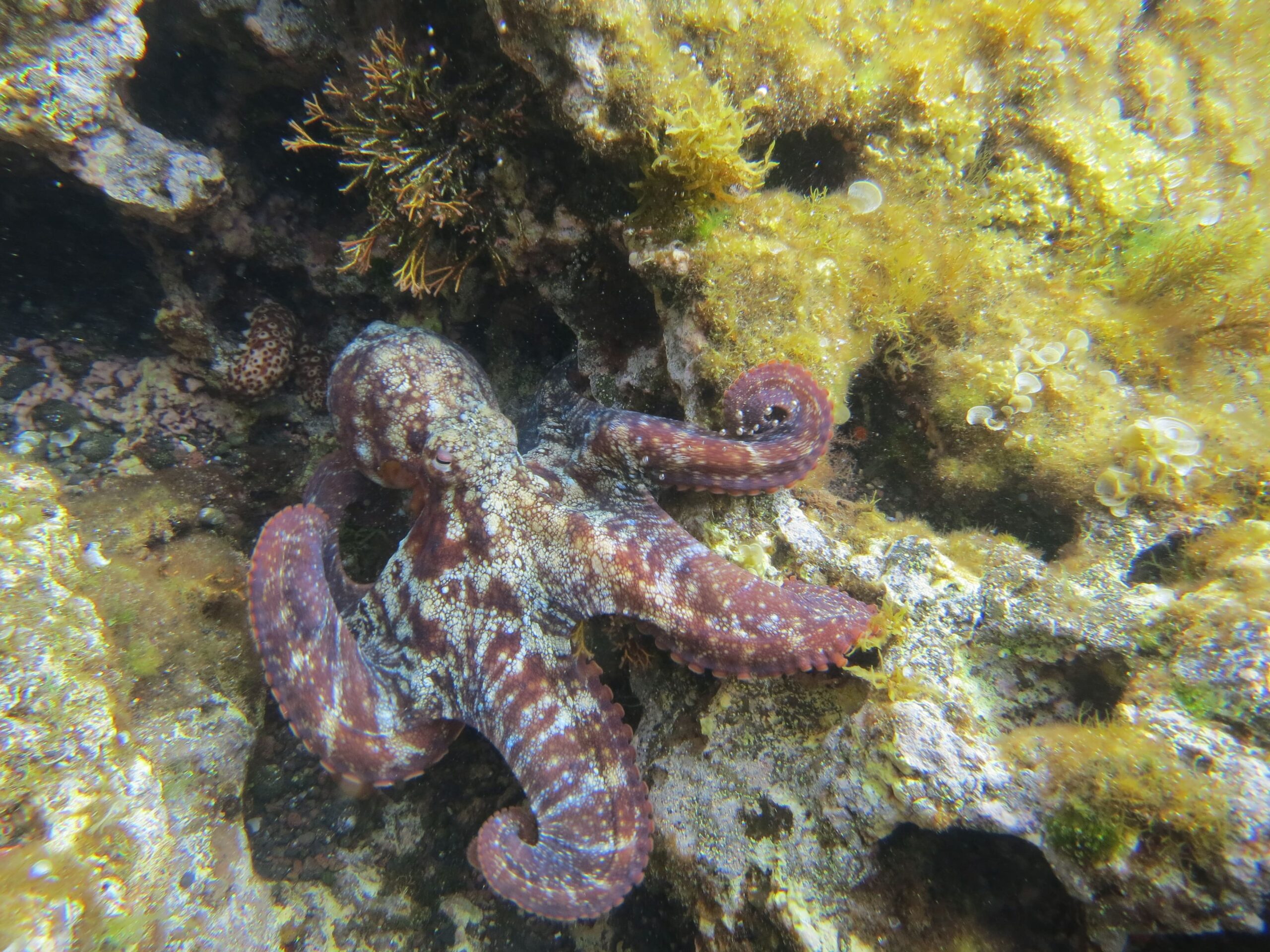
A study in which the University of La Laguna participates has analyzed the presence of cadmium, chromium, copper and zinc in the common octopus (Octopus vulgarisThe study examined the Atlantic coast of Safi, Morocco, an area characterized by intense industrial activity linked to the phosphate industry, thermal power plants, and port activities. It also assessed the potential risks to human health associated with consuming this species, one of the most economically and nutritionally important fishery resources in the region.
The research analyzed 60 specimens from the localities of Cap Beddouza, Jorf Lihoudi, and Souiria Kdima. The research team, comprised of Mohamed Techetach, Abdellali Benhamdoun, Zakaria El-Azzouzi, and Abdallah Dahbi, from Cadi Ayyad University and Chouaib Doukkali University, as well as Enrique Lozano-Bilbao, Researchers from the University of La Laguna determined the concentrations of these four metals in both the muscle and digestive gland of octopuses. The results showed considerable variation between the locations studied and between the two tissues analyzed, with the digestive gland being the main compartment for metal accumulation.
In the muscle, the portion intended for human consumption, cadmium concentrations remained within the limit established by the European Union. Likewise, all the metals analyzed were within the reference values established by the World Health Organization (WHO) and the United States Food and Drug Administration (FDA). However, chromium exceeded the more restrictive guideline set by the Food and Agriculture Organization of the United Nations (FAO) in the localities of Cap Beddouza and Jorf Lihoudi.
The study also used two indices to assess metal accumulation. The Metal Contamination Index revealed a high metal load in all areas studied, reaching its maximum value in the digestive gland of specimens from Jorf Lihoudi. Meanwhile, the Integrated Multimetallic Bioaccumulation Index identified the muscle tissue of octopuses from Cap Beddouza as having the greatest relative impact.
The health risk assessment showed a strong dependence on the consumption rate considered and was dominated by the contribution of chromium. Using the Safi regional consumption rate, the hazard index exceeded the reference value of 1 only in children from Cap Beddouza. When the consumption rate proposed by the FAO was applied, the non-carcinogenic risk extended to adults as well: the hazard index exceeded the reference value in all population groups from Cap Beddouza and in children from all three locations studied.
Regarding the overall carcinogenic risk, the estimate based on the regional consumption rate showed values exceeding the reference threshold of 10⁻⁴ in Cap Beddouza and Jorf Lihoudi for all population groups, and in Souiria Kdima only for children. When applying the FAO consumption rate, the overall carcinogenic risk exceeded this threshold in all assessed population groups and in all three locations.
The researchers point out that these results should be interpreted with caution, as the study determined the total chromium content without differentiating between its various chemical forms. The toxicity of this metal depends largely on the ratio between trivalent chromium (Cr(III),) considered much less toxic, and hexavalent chromium (Cr(VI),) associated with carcinogenic effects. Therefore, the team emphasizes the need for studies to identify the different forms of chromium present in the analyzed tissues and for ongoing monitoring of cephalopods and other seafood products.
The results identify chromium as the priority contaminant of concern and highlight that the estimated health risk can vary considerably depending on the actual consumption rate. Therefore, the team proposes the need to continue assessing the presence of metals in cephalopods and other seafood products, develop dietary recommendations tailored to local consumption patterns, and strengthen controls on industrial discharges associated with phosphate plants and thermal power stations in the Safi region.

 Spanish
 English
 French