Humans and animals have coexisted since the beginning of history. Today, this coexistence seems to have improved given the proliferation of animal farms and pets. Protected species are also becoming more accessible thanks to activities such as wildlife tourism and nature documentaries.
However, the relationship between humans and animals is not always respectful, and animal abuse continues to manifest itself in its various forms: cultural practices such as bullfighting or cockfighting and dogfighting; traditions rooted in ethnography that, at times, involve humiliation for certain species, such as pilgrimages and cattle dragging; abusive livestock activities; tourist exploitation of some species; and the continued existence of zoos that still involve the captivity of animals outside their natural environments.
Animal owners can also engage in mistreatment driven by utilitarianism, as is the case with hunters who hang or abandon greyhounds and podencos when they are no longer useful to them, or simply out of pure cruelty, like people who enjoy making their pets suffer.
In September 2024, the State Attorney General's Office published its 2023 annual report on all types of crimes, including those against the environment. Of the 2,799 investigations initiated, 246 involved animal abuse. Specifically within the domestic sphere, 1,389 crimes against pets were prosecuted, of which 1,327 resulted in indictments, but only 256 resulted in convictions.
These figures do not include unreported cases, as they are unknown to the authorities, suggesting that the magnitude of the problem is presumably greater. We should also add to these figures the high abandonment rate, which, according to a study by the Affinity Foundation, reached... 286,000 dogs and cats that ended up in animal shelters that year.
The authorities are trying to combat this problem and, without a doubt, one of the biggest milestones has been the approval of the Law 7/2023 The law, aimed at protecting animal rights and welfare, introduces a series of measures such as mandatory pet ownership training, limits on the amount of time an animal can be left alone at home, and harsher penalties for animal abusers, among others. It has not been without controversy, however, because although it represents an improvement over previous regulations, it leaves animals involved in bullfighting, those used for scientific research, farm animals, and wild animals unprotected, among other issues.
However, addressing a problem like this cannot be left solely to legislation. As with other social problems, some of the most important intervention tools are prevention through education and interventions with perpetrators of abuse, aimed at helping them abandon this practice. But it is also possible to influence public opinion to encourage a response to abuse, both to prevent and eradicate it. This is precisely the objective of a research project being carried out by a team from the University of La Laguna, funded by the Ministry of Science, Innovation and Universities, which is currently halfway through its four-year funding period.

Ana M. Martín.
Social reaction to abuse
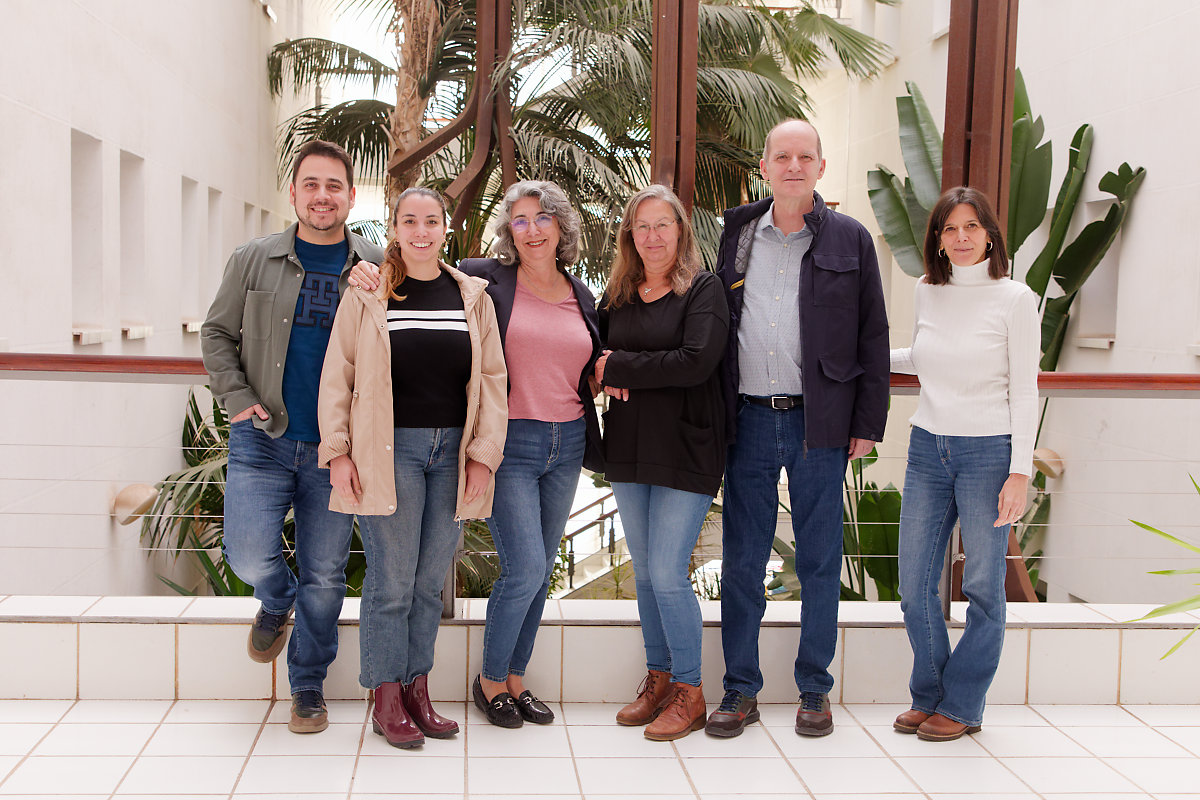
The project “Psycho-environmental variables involved in social concern and behavior towards animal abuse (ANICARE)” is coordinated by the professor of Social Psychology at the University of La Laguna Ana María Martín, and it involves research staff from different specialties of psychology, such as legal psychology, in this case and in the case of Andrea Vera, environmental psychology in the Bernardo Hernández, Christian Rosales y Cristina Ruiz, as well as the methodologies of behavioral sciences in the Stephany Hess Medler.
As the project brief explains, its objective is to study animal abuse as an environmental crime, considering, among other things, which variables can explain a significant percentage of the social reaction to it. Previous research has provided insights into the perceptual space of environmental crime in general and the factors that influence people's compliance with environmental laws, but it has not analyzed the factors that influence people to confront those who violate environmental regulations, report these violations to the authorities, and collaborate in controlling and preventing them.
“Our idea is that there is social awareness and that people react to this behavior. Those who abuse are a minority, so we prefer to work by promoting positive behaviors rather than persecuting those who carry out negative behaviors,” explains Ana María Martín.
The ultimate goal of this project, therefore, is to design intervention programs that raise public awareness. To achieve this, the first step is to thoroughly understand how people react to certain situations of animal abuse. “We believe that eradicating negative behaviors shouldn't always rely on fear, threats, and the use of law enforcement, but rather on persuasion. It would be more effective to ensure that everyone believes animals should not be harmed, and that if we see someone else doing so, we intervene to stop it.” For this reason, the project focuses less on cases of bestiality, psychopathy, or extreme cruelty, as these are rare in society, and more on behaviors that harm animals and are more or less socially accepted.
It's not a simple matter because the very concept of what is and isn't abuse is vague. “We're outraged when a cat or a dog is mistreated, but we perfectly understand slaughtering a pig and eating it. The distinction between what is and isn't abuse is cultural. Why is it considered wrong to mistreat a cow but not to hold a bullfight? That's why, rather than studying the psychopathic abuser, we prefer to focus on what people in general do.”.

Bernardo Hernández.
A type of environmental crime
This project arose from previous work by this group focused on environmental crimes. In those studies, they realized that when animals were involved, people's reactions differed. “One of the scenarios we studied was shooting a kestrel. We noticed that when we compared it to the reaction to other types of environmental crimes, the outrage was greater; people considered it more serious. Similarly, we realized that spills into the sea, which affect marine life, also provoked strong condemnation.”.
From a social psychology perspective, it's well known that people categorize animals and don't perceive a domestic animal the same way they perceive a protected animal or one raised for human consumption. Therefore, it was deemed pertinent to expand the research by also considering the psycho-environmental variables that encourage actions in favor of different types of animals. “We began by studying pro-environmental behavior and positive relationships with the environment. Then we moved on to studying environmental crime, and now, within that field, we are investigating animal abuse,” summarizes Bernardo Hernández.
Just as the team was considering focusing exclusively on animal abuse, certain legislative changes occurred that led to a readjustment of the project: in 2021, civil laws were amended, reclassifying animals from property to sentient beings; and the Penal Code expanded the definition of abuse to include not only protected species but also domestic and farm animals. Added to this was the aforementioned 2023 law, meaning that all these modifications resulted in acts that were previously not considered crimes now being so. Therefore, the research project has had to be adapted to these changes.

Cristina Ruiz and Andrea Vera.
Four studies
The project aims to evaluate the psycho-environmental dimensions that determine people's perceptions of animal abuse, considering factors such as their perception of the legitimacy of authority and laws, their attitudes toward the environment, and other personal characteristics. Once the impact of these factors is determined, the project will formulate interventions based on scientific evidence. These objectives will be addressed through four successive studies, which will gather the necessary information on each of these dimensions before developing intervention proposals.
“We have already completed the first two studies and are currently collecting data for the third, but we would also like to conduct other complementary research. Our independent observers include the College of Veterinarians of Santa Cruz de Tenerife and the environmental departments of both the Tenerife Island Council and the Government of the Canary Islands. In some way, we would like to contribute results that can be useful in social policy.”.
For her part, Cristina Ruiz adds that the aim is to understand how attitudes toward animals, the feeling of connection with nature, and whether empathy toward people is related to empathy toward nature influence the perception of animal abuse. “Ultimately, we are trying to find out what we need to address to change people's behavior. Therefore, we study different types of variables until we arrive at the most important ones. First, attitudes, and then personal and social norms and moral obligations.”.
In the first two studies, a questionnaire was developed presenting scenarios related to prototypical environmental crimes such as illegal dumping and animal abuse. These scenarios were specifically written for the questionnaire but were based on real-life information gathered from newspapers—a meticulous research task undertaken by the team that constituted one of the initial phases of the project. “We are interested in knowing what people think, and the media tends to present cases that are more familiar to the public.” Although incorporating news from social media is not currently ruled out, it was initially discarded because certain population segments, due to age or lack of interest in communication technologies, do not access these platforms.
Andrea Vera explains that, in the first study, in addition to scenarios of illegal dumping, scenarios from the three categories recognized by the legislation (domestic, farmed, and protected) were presented to determine if there were differences in perception towards them. “Indeed, there are. We can differentiate the perception of animal abuse from that of other types of environmental crimes. The differences we found were that reactions were more negative regarding the crime of animal abuse as a whole, especially towards domestic animals, which is what we had been hypothesizing. We also observed how some personality variables, such as empathy towards nature, influence this perception.”.
The second study analyzes how certain variables precede others, leading to the final reaction to abuse. First, descriptive norms, which reflect what everyone does, were analyzed. “This is very important because often we don't do what we should do, but rather what others do. Therefore, prescriptive norms are also important, as they describe how the actions of individuals and groups who are role models and important to people influence them. All of this precedes what we internalize as a personal norm and leads to the motivation for action—in this case, the moral obligation. It is this moral obligation that ultimately triggers the reaction to abuse,” explains Cristina Ruiz.
The third study will address a series of attitudinal variables that have not yet been investigated in relation to animal abuse, such as identification with nature, the perceived legitimacy of the authorities enforcing the law, and the motivation to take positive action toward the environment. So far, the studies have focused on the Canary Islands population, but with the introduction of online questionnaires, responses from people in other regions will also be included in the later stages, thus achieving more diverse participation. The first two studies have each received around 600 responses, and this number is expected to increase in the following two.
The fourth study will be based on the data obtained in the previous ones, analyzing the impact of the variables that proved explanatory in the three prior studies by testing a model. “There are many possible variables, but we need to be practical and focus on what we can intervene on and base intervention programs on to improve the relationship between animals and people. We would also like to study the role of different dietary choices, such as veganism,” adds Ana M. Martín.
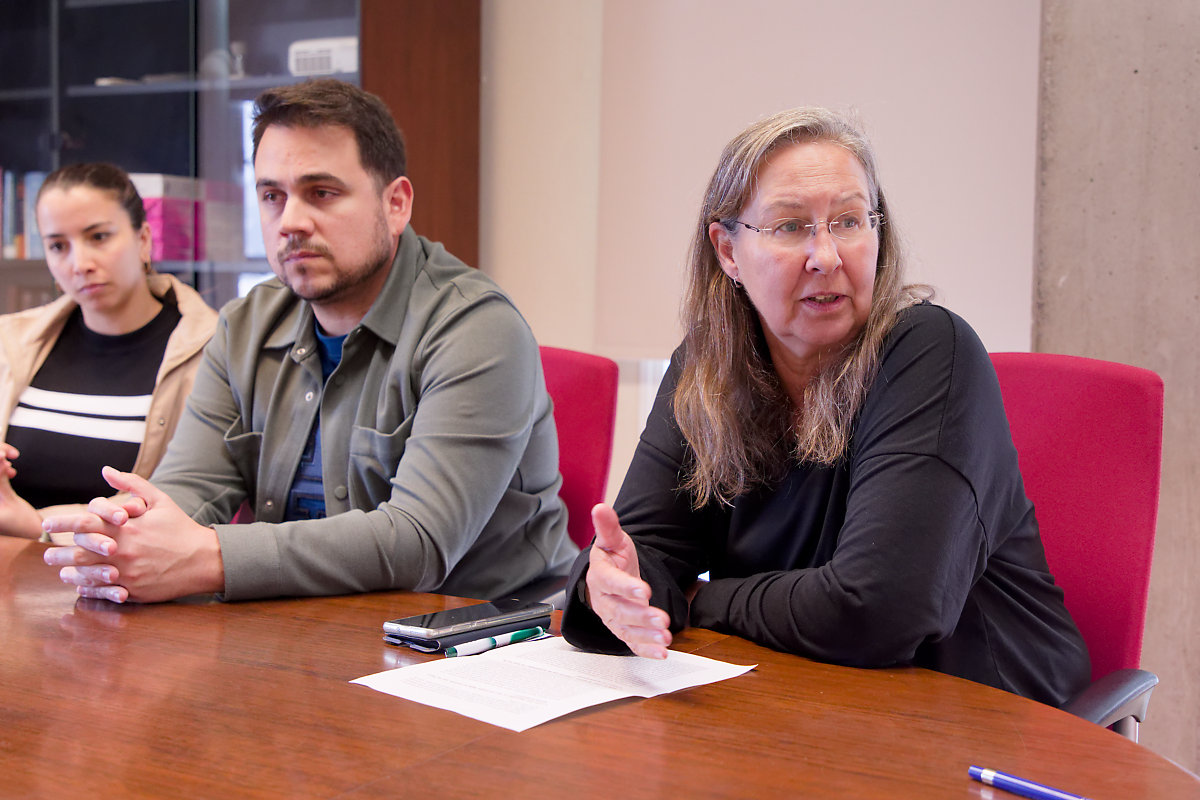
Andrea Vera, Christian Rosales and Stephany Hess.
Model for intervention
As Bernardo Hernández summarizes, the project's starting point is that the public's response to animal abuse will depend on how the three animal categories recognized by law are perceived, as well as on the psychological and psycho-environmental variables identified through research. He clarifies that “although the project is being carried out in the Canary Islands, we assume that the results and the resulting model will be valid for the general population. There may be some differences in the perception of abuse, for example, between those who live in rural or urban areas, or in places where hunting or bullfighting are deeply rooted, but even so, the model will be generalizable to the whole of Spain.”.
Ana M. Martín elaborates on this idea, explaining that the group is trying to develop a "parsimonious model"—that is, one that is as simple as possible, focusing on the essentials and including only the variables necessary for effectiveness. "We also incorporate a gender perspective because, in the field of environmental psychology, it's very clear that women have more positive attitudes toward the environment, and our environmental stances manifest themselves differently than men's. And in the field of legal psychology, there are always more male offenders than female offenders, since we are socialized to be more pro-normative. We need to understand how they differ in order to take this into account when intervening.".
As for the possibilities for intervention, there are many. For example, if the studies carried out during the course of the project ultimately confirm that one of the variables explaining the public's reaction to someone mistreating an animal is the credibility and reliability attributed to the authorities, one course of action could be to inform society that the institutions do act, that they have done so in the past, and that they are reliable.
With the data obtained on the bond with animals, activities could be carried out to encourage contact with them, such as visits to farms to learn about the environment where they live. Another possible course of action would be to try to combat speciesism, that is, the belief that human beings are the superior species and, therefore, that other species are at their service.
Evidence-based actions
In any case, the aim is to provide reliable data about the behaviors targeted for intervention in order to design effective strategies. Because, as Ana M. Martín points out, institutions should take science into account when designing social policies, using instruments and practices based on scientific evidence—something that, in her opinion, is not currently happening: “There seems to be a disconnect between public universities, what we scientists who work there know, and what public administrations are actually doing.”.
Thus, many marketing campaigns aimed at raising awareness about certain issues have failed because those responsible acted based on their "common sense" and stereotypical beliefs. As Cristina Ruiz explains, "If the campaign doesn't address the variables that have been scientifically proven to change that behavior, it's ineffective.".
In this regard, Christian Rosales points out that, for example, “climate change campaigns often rely on negative images of the environment, even though literature and scientific research say otherwise: the more positive the images, the more they motivate people to take action on this issue. We also want to emphasize that we shouldn't act based on beliefs or traditions, but rather on data, and in this sense, the model we want to test would allow us to establish how and in what direction we should intervene.”.
Communications Office

 Spanish
 English
 French