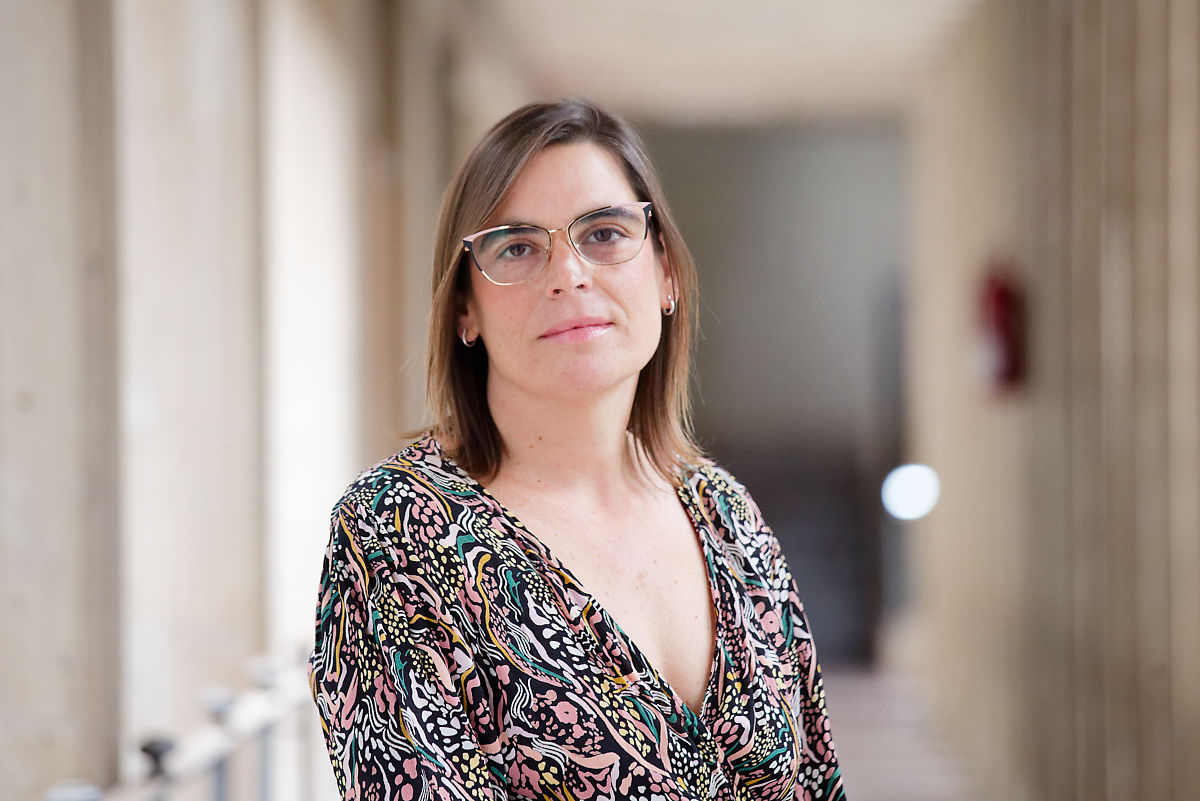
When he began his professional career at the University of La Laguna some fifteen years ago, Laura Aguilera Ávila She became one of the main pioneers of gender studies in the field of social work, also contributing her work to the cross-cutting equality policies of the academic institution.
A graduate in Psychology, she earned her doctorate in Clinical Psychology with a specialization in Women's Studies. Simultaneously, she was completing a diploma in Social Work at the University of La Laguna and working in individual and group psychological support for women victims of violence at what is now the Island Service for Women's Support (SIAM) in Santa Cruz de Tenerife. This work, which she began in 2003, before the Organic Law on Comprehensive Protection Measures against Gender Violence was passed (2004), encompassed all forms of violence, not just intimate partner violence.
In her first year of doctoral studies, which at that time were still organized through courses, she received a grant to conduct research on social support for women victims of violence, who were referred to as "battered women." She began contributing articles in this field in 2002. Currently, she is not only the first but also the only tenured professor in the area of Social Work and Social Services.
 Gender violence
Gender has permeated Aguilera Ávila's entire scientific career, especially in the areas of prevention and intervention related to gender-based violence. Currently, building on a student's thesis that focused on the social exclusion of single-parent families, she is leading a project on intervention with single-mother families formed from situations of gender violence. This initiative analyzes the specific needs of women who, after experiencing gender-based violence, form single-mother families. It is being developed over three years, starting in mid-2025, with funding from the "la Caixa" Foundation and the CajaCanarias Foundation.
The team responsible for carrying it out is made up of teachers from different fields who, from an interdisciplinary approach, contribute different resources to social work: civil law to establish a solid legal foundation, especially with regard to the family; audiovisual communication, to find a strategy to disseminate both the project, involving more women, and the results; sociology, to address the quantitative methodological aspects; and pedagogy with a specialization in gender violence.
The project studies different types of violence: violence perpetrated by the father of his children and violence by a partner who is not the father, both of which result in the woman being left alone to care for the children. It is also possible for a woman in prostitution to become pregnant, or already have children, and thus constitute this type of family, even if she has not experienced violence from a partner, but rather from another source. “It can even happen that the violence arises after the separation from the father, but that there was underlying psychological violence that manifests itself after the breakup through the children, through third parties,” the specialist explains.
The process being followed is, first, to create a needs assessment of these families, specifically those headed by single mothers, to identify their needs and, based on their perceptions, the needs of their children, since interviewing the children themselves is extremely complex,“ she explains. The goal is to develop an intervention program based on this assessment of these women's needs to determine how social work can address them. Finally, an effectiveness evaluation of the program will be conducted.
In recent years, thanks to funding support from the Canary Islands Government's Directorate General for Youth, the team has carried out several initiatives aimed at preventing gender-based violence among children and young people. These initiatives include training young lawyers after they complete their Master's degree in Law at the University of La Laguna and conducting studies on young people's perceptions of violence. “I have always been interested in symbolic gender-based violence, and from the Chair of Childhood and Adolescence "They proposed that I conduct a study in this area focused on girls and adolescents, such as these beauty routines that they call self-care, something that is totally perverted," explains the researcher about one of her latest works, published in 2025.
Previously, she collaborated on an article about obstetric violence, which is also considered institutional and symbolic gender violence, as a result of the Master's Thesis (TFM) of her department colleague, Professor Paulo Adrián Rodríguez. The scientist herself, pregnant at the time of the study, was one of the 282 participating women whose births took place between January 2008 and February 2016. The result was that 56.41% of the sample suffered this type of violence during childbirth, within which the most frequent indicators were the participation of students in practical training without the woman's consent and the change of pace in childbirth for the convenience of the health personnel.
The researcher also wrote several articles on cyberbullying as another type of gender-based violence, in addition to how women are represented online. “All multimedia, not just the media, displaces another socializing agent, and how violence is perpetuated there as a means of socialization,” she points out.
 Gender roles, health, and video games
Aguilera Ávila defended his doctoral thesis in 2007 “Gender and health: an analysis of the relevance of sex typing to the health of women and men”Their approach was highly innovative for the time, as the concept of gender within the social sciences only began to be used in the United States in the 1960s, just forty years earlier. This work focused on whether conforming to the male or female role was beneficial to health from a holistic perspective. For the classification of the sample, the Bem Sex Role Inventory (BSRI) of 1974 was used, which offered four categories: feminine women, masculine men, androgynous people (with high masculine and feminine characteristics), and undifferentiated people (with low masculine and feminine traits, the last category added in 1981).
Among the study's conclusions, it is noted that feminine women fare the worst: undifferentiated women have better health than feminine women, who, in turn, have worse health than androgynous women. Among the factors analyzed is the triple burden: work inside and outside the home, in addition to participation in community activities and activism, "at a time when elder care was not yet considered, but rather caregiving was related to work-life balance and childcare," the specialist points out. The masculine men in the sample have the best health of all the groups, establishing "masculinity as a protective factor for health," she notes.
Her doctorate provided a starting point for researching gender from various angles. Thus, she supervised a Master's thesis that led to the publication of an article in 2021 entitled “Inequalities in the world of video games from the perspective of male and female players”The student who conducted this analysis, Sara Alonso, was a player and carried out "very interesting fieldwork" because she spoke with female players through the Discord platform. Among the results, she highlights that, despite the fact that female players now make up half of the community gamer, “Many times they had to hide their identity or not reveal their sex because otherwise they received humiliating treatment, receiving comments like: 'you are actually a man but you are lying' when a woman beat them, showing themselves incapable of accepting that women also play and win,‘ the expert explains.
Despite advances in gender equality, the debate surrounding prostitution remains very much alive in academia, with two main opposing positions: regulationism, the dominant view in North America, and abolitionism, championed by Aguilera Ávila, which is more prevalent in Europe. The researcher has been waiting two years since submitting an article about the portrayal of prostitution in video games, which also originated from her Master's thesis. "It's been circulating in various European, American, and Spanish journals for two whole years... In fact, a Spanish journal even told me I couldn't make that statement about prostitution in that context because patriarchy isn't present in all societies," she explains.
 Gender equality in educational innovation
For several years since 2020, the expert was secretary of the University Institute for Women's Studies (IUEM), of which she is still a part, which serves as the theoretical and institutional framework for women's studies and gender theory at the University. Previously, she was in charge of the Equality Unit of the academic institution, first as deputy director when the tenured professor of Civil Law Aránzazu Calzadilla Medina She directed, and later as director, alongside the professor of Labor Law Sarai Rodríguez as deputy director.
Initially, the team in this unit tried to train faculty on how to integrate gender into their teaching, and when that initiative failed, they moved on to developing courses for students. Between 2017 and 2019, they successfully implemented these courses by adding gender modules to specific courses in different faculties, for example, courses on gender and health. “Besides the introductory modules on what gender and sex are, how they are socialized… If we went to the Anchieta Campus, we included a module on technology and gender, and we rotated throughout the university in this way; it was a very interesting experience, because it was the first time they had approached the topic,” explains Aguilera Ávila with satisfaction. They also reviewed the content of proposed degree programs, especially the university's own degree programs, where they had the greatest capacity to act, to ensure that they included gender-related subjects in a cross-cutting or specific way.
At a university council meeting that addressed harassment—something that had never been done before at other Spanish universities—it was agreed to update the protocol and implement a zero-level course on gender and harassment for both faculty and students. “There were several ways to offer it: professors teaching first-year students could dedicate two hours of their class time to it, a model that proved most successful; it could also be done through the Guidance and Tutoring Action Plans (POAT), among other options.” The specialist describes these talks as “revolutionary” and recalls the case of a dean who initially stated that there was no harassment at his faculty and then emerged deeply affected, admitting that he hadn't expected it.
During this period, they provided advice on cases of women with convictions for gender-based violence who were studying in the afternoon and felt vulnerable after class at night. Furthermore, they updated intervention protocols for harassment situations to include informal communication, a measure they presented nationally as an innovative pilot project at a meeting of the Network of Gender Equality Units for University Excellence (RUIGEU).
They also awarded prizes for undergraduate and master's theses on gender, which were presented at a conference that fostered dialogue between an academic representative and an external expert, with the support of the Equality Department of the La Laguna City Council. The researcher summarized, with a smile, that at the time the Unit was working "with minimal resources and a great deal of enthusiasm.".
 Social dynamics
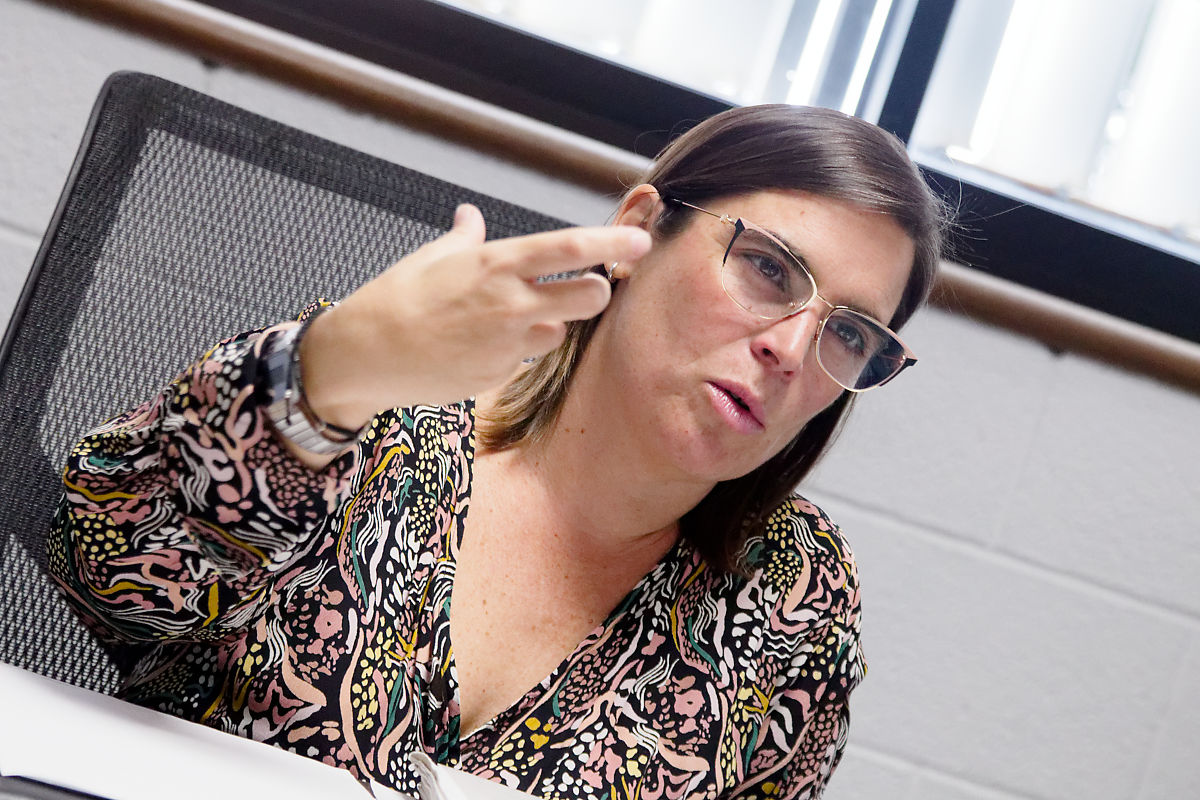
Laura Aguilera Ávila also leads the research group GENITUS, Established in September of this year, this research group is dedicated to the critical study of social dynamics related to gender, intersectionality, and social justice from a social work perspective, aiming to transform structural inequalities by integrating knowledge from the field with other related disciplines. "It is the first social work research group of its kind, comprised of social work professionals and coordinated by a social worker," she emphasizes, expressing satisfaction with the achievement.
The expert acknowledges that her field faces a staffing shortage, limited by the fact that her university degree was previously a diploma, meaning there weren't enough credits for graduates to later pursue a doctorate. As a result, the faculty has had to teach more credits than they are entitled to. “The positive side is that we've been able to teach many subjects, learn from the experience of holding different management positions, and we're a young field in terms of age and experience, a pioneer in many ways,” the university professor adds.
Therefore, she believes the institution should teach social work so that students know how to use tools like the "social record," a basic and standardized document that systematically collects essential data about a person or family. Aguilera Ávila envisions a future where research addresses people's needs, complementing technological tools like AI, while also anticipating that new needs will arise as a result. "The university must not lose sight of the fact that it is educating people, not just professionals, but citizens, since more and more families are studying there, fostering critical thinking and the capacity for reflection.".
Communications Office

 Spanish
 English
 French